

Rural Post Office Tax Rise: £29m Network Bill Shock
 • June 9, 2026
•
1 Comment
• June 9, 2026
•
1 Comment
Key Takeaways:
- £29 million additional tax burden: Rural Post Offices are facing significantly higher operating costs.
- 600 branches affected: Previously exempt branches are now required to pay business rates.
- Rural locations hit hardest: The average rural branch could face bills up to four times higher than in 2023-24.
- Closure concerns growing: Smaller branches may struggle to remain financially sustainable.
- Community impact: Local residents could lose access to essential postal, banking, and cash services.
- Government response: The Treasury has highlighted broader business support measures currently available.
- Future uncertainty: Postmasters are continuing to call for meaningful financial support and business rates reform.
Why Are Rural Post Offices Facing a £29 Million Tax Increase?

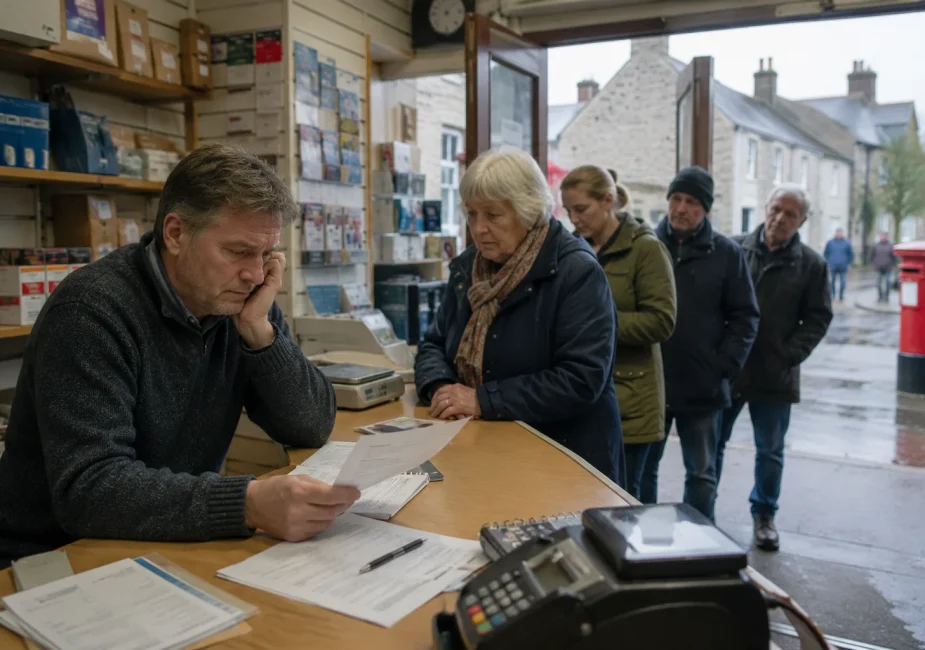
Rural Post Offices across Britain are warning that their future viability is under threat following a sharp increase in business rates. The additional £29 million burden comes after the latest business rates revaluation, which has significantly increased costs for many branches.
Unlike large retailers that can spread costs across multiple locations and revenue streams, many rural Post Offices operate as small independent businesses. Their profitability often depends on modest margins and a combination of postal, banking and retail services.
For some postmasters, the latest increase is arriving at a time when they are already dealing with higher wage costs, increased National Insurance contributions, inflationary pressures and rising utility bills. As a result, many operators believe the combined financial pressures are becoming increasingly difficult to absorb.
What Changed in the Business Rates Revaluation?
Business rates are a tax paid by businesses occupying non-domestic properties. They are based on a property’s rateable value, which is periodically reassessed to reflect changes in market conditions.
The latest revaluation, introduced in April, was the first major update since the Covid-19 pandemic. While the review aimed to reflect changing economic circumstances, it has created significant challenges for many Post Office branches.
Why Previously Exempt Branches Are Now Paying Business Rates?
One of the most significant changes is that around 600 branches have crossed the threshold for business rates liability.
These branches previously benefited from relief schemes or exemptions that effectively reduced their tax burden to zero. Following the revaluation, many no longer qualify for those protections.
As a result, businesses that had not previously budgeted for business rates are now facing entirely new annual costs, adding further strain to already tight operating budgets.
Why Are Some Rural Post Offices Facing a Four-Fold Increase in Business Rates?
One of the most alarming findings from the 2026 revaluation is that many rural Post Offices are not simply facing modest increases but potentially four-fold rises compared with previous years.
Industry analysis suggests some branches that benefited from substantial relief schemes are now seeing dramatically higher liabilities after crossing key rateable value thresholds.
For many operators, the issue is not simply the size of the increase but the speed at which costs have risen. A branch that previously paid little or nothing in business rates may suddenly face annual bills worth several thousand pounds.
Because Post Offices typically operate on relatively narrow margins, even small increases can affect profitability, while larger increases may fundamentally change whether a branch remains viable.
| Issue | Estimated Impact |
|---|---|
| Additional business rates burden | £29m |
| Branches newly liable | 600 |
| Branches facing higher costs | 2,500 |
| Rural branches most affected | Yes |
| Potential closure risk | Hundreds |
| Rates increase | Up to four-fold |
How Much Are Rural Post Offices Expected to Pay?
The financial impact varies considerably between locations, but industry research suggests rural branches are facing some of the steepest increases.
One quarter of Post Office branches are expected to pay more than £5,000 annually in business rates, while one in ten could face bills exceeding £10,000.
| Business Rates Impact | Estimated Effect |
|---|---|
| Average rural branch | Up to four times higher than 2023-24 |
| Some branches | Up to 200% increase |
| Branches paying over £5,000 annually | Around 25% |
| Branches paying over £10,000 annually | Around 10% |
| Newly liable branches | Approximately 600 |
For many independent operators, these figures represent a substantial increase in fixed costs that cannot easily be passed on to customers.
Why Are Countryside Branches Being Hit Harder Than Urban Locations?
The rural post office tax rise has attracted particular attention because countryside branches appear to be disproportionately affected.
Rural branches typically serve smaller populations, meaning customer volumes are lower than in towns and cities. Despite this, they often provide a wider range of essential services due to the lack of alternative facilities nearby.
Could Rural Post Office Closures Become More Common?
Industry representatives have expressed concern that the latest tax increases could accelerate branch closures.
Although not every branch will be affected to the same degree, operators facing multiple cost pressures may struggle to maintain profitability.
The Risk Facing Smaller Independent Branches
Independent postmasters generally have fewer financial resources than large corporate retailers. They often invest personal funds into their businesses and may have limited capacity to absorb rising expenses.
Where profitability becomes unsustainable, operators may decide to retire, sell their businesses or close entirely.
The concern is particularly acute in isolated rural areas where replacement operators can be difficult to find.
Why Are Industry Leaders Warning About Hundreds of Potential Closures?

The concern surrounding the rural post office tax rise extends beyond individual businesses. Post Office leaders have warned that if rising costs continue without targeted support, hundreds of branches could become financially unsustainable over the coming years.
The warning reflects the cumulative impact of multiple financial pressures arriving at the same time. In addition to higher business rates, operators are facing increased staffing costs, rising National Insurance contributions, utility inflation and ongoing pressure on retail margins.
For small community branches, these costs can quickly outweigh revenue growth.
Many rural Post Offices operate because dedicated postmasters continue serving their communities despite modest returns.
However, where profitability declines further, some operators may decide retirement or closure is the only practical option. The concern is greatest in remote locations where finding replacement operators has historically been difficult.
How Are Postmasters Responding to the Rising Cost Pressures?
Many postmasters have publicly expressed concerns regarding the cumulative effect of recent cost increases.
One frequently cited example is Paul Patel, who operates Dibden Purlieu Post Office in Hampshire. According to reports, his business rates bill increased by more than £2,000 while also facing higher staffing and National Insurance costs.
These experiences reflect a broader trend affecting operators throughout the network.
Many postmasters argue that while policymakers regularly recognise the importance of Post Offices, financial support has not always matched the scale of the challenges they face.
Are Business Rates the Only Financial Pressure Facing Rural Branches?
Business rates represent only one part of a much larger financial picture.
Many branches are simultaneously dealing with increased employment costs, inflation and changing consumer behaviour.
| Cost Pressure | Impact on Rural Branches |
|---|---|
| Business rates increases | Higher fixed taxation costs |
| National Insurance contributions | Increased payroll expenses |
| Minimum wage rises | Higher staffing costs |
| Energy costs | Increased operational expenditure |
| Inflation | Reduced profitability |
| Retail competition | Pressure on sales margins |
When combined, these factors create a challenging environment for small businesses attempting to maintain sustainable operations.
Why Does the Post Office Believe the Current Tax System Is Unfair?
The Post Office has argued that the existing business rates framework places a disproportionate burden on branches compared with other retailers.
Network leaders believe the tax structure does not adequately reflect the unique role played by independent Post Offices.
Concerns Raised by Post Office Chief Executive Neil Brocklehurst
Post Office Chief Executive Neil Brocklehurst has warned that the latest business rates changes could place significant pressure on rural branches that already operate on tight margins.
He argues that many community Post Offices are being treated like larger commercial retailers despite serving a very different role within local economies.
According to Brocklehurst, around 2,500 branches are expected to face higher business rates following the revaluation, with rural locations among the hardest hit.
He has called for reforms that better recognise the social and economic value of Post Offices, warning that continued cost increases could make it more difficult for some branches to remain viable and continue providing essential services to local communities.
How Do Post Office Business Rates Compare With Other Retailers?
The Post Office has highlighted a significant disparity between its network and the wider retail sector.
According to network figures, branches currently pay around 10 per cent of their gross value added in business rates. By comparison, the broader retail sector typically pays less than five per cent.
This comparison has fuelled concerns that Post Offices are shouldering a disproportionate tax burden despite performing important public service functions.
The debate has intensified discussions about whether the current system adequately recognises the role that community-focused businesses play within local economies.
What Essential Services Could Communities Lose If Branches Close?
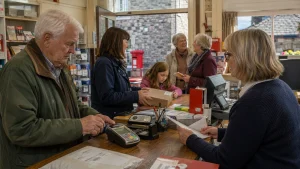
Potential closures could affect much more than postal services alone.
Modern Post Offices provide a broad range of functions that many communities depend upon daily.
Banking Services and Cash Access
As traditional bank branches continue to disappear from high streets and villages, Post Offices have increasingly become alternative banking hubs.
Residents often use them for cash withdrawals, deposits, balance enquiries and bill payments.
Without local branches, access to these services could become significantly more difficult.
What Is the Government’s Response to the Business Rates Concerns?
The Government has defended its approach while emphasising broader measures designed to support businesses.
Treasury officials have highlighted ongoing reforms aimed at improving the business environment and limiting excessive tax increases.
Government representatives have also pointed to initiatives intended to strengthen high streets, support economic growth and reduce administrative burdens on businesses.
However, many postmasters believe additional targeted support may be required to address the specific challenges facing rural branches.
Will the Treasury’s £4.3 Billion Support Package Be Enough?
The Treasury has cited a £4.3 billion package intended to help businesses manage business rates obligations.
Whether this support will adequately address concerns within the Post Office network remains a matter of debate.
Supporters argue the package demonstrates a commitment to helping businesses adapt to changing economic conditions.
Critics, however, contend that many rural Post Offices may continue to face significant financial pressures even after accounting for available relief measures.
The effectiveness of the package will likely become clearer as businesses assess their actual costs over the coming months.
What Impact Could Rural Post Office Closures Have on Local Economies?
The economic effects of closures could extend beyond individual communities.
Local businesses frequently rely on nearby Post Offices for banking services, parcel dispatch and customer transactions.
Reduced access to these services may increase operating costs and inconvenience for small enterprises.
Furthermore, branch closures can reduce footfall for neighbouring shops and services, potentially creating wider economic consequences for village centres.
The loss of a Post Office may therefore contribute to a gradual weakening of local commercial activity.
What Is the Post Office Doing to Support Postmasters and Secure the Network’s Future?

Alongside efforts to rebuild trust, the organisation is pursuing initiatives designed to improve long-term sustainability.
These measures aim to strengthen branch viability and enhance support for operators.
Plans to Increase Postmaster Pay
The Post Office has announced plans to increase postmaster remuneration by £250 million before the end of the decade.
The objective is to improve branch profitability and encourage continued participation within the network.
Higher remuneration could help offset some of the financial pressures affecting operators.
Timeline: How the Rural Post Office Tax Rise Developed in 2026
The current debate has developed over several months as branches began assessing the financial impact of the latest business rates revaluation.
| Date | Key Development |
|---|---|
| April 2026 | Updated business rates revaluation takes effect |
| April–May 2026 | Branches begin receiving revised assessments |
| May 2026 | Industry groups highlight rising liabilities |
| June 2026 | Post Office warns of significant network pressure |
| June 2026 | Concerns emerge regarding potential branch closures |
| Ongoing | Calls for additional government support continue |
The timeline demonstrates how concerns have escalated from a routine revaluation exercise into a wider debate about the future sustainability of rural community services.
Conclusion
The rural post office tax rise has evolved into a significant debate about the future of community services across Britain.
While the £29 million increase in business rates liabilities remains the headline issue, many operators argue the real challenge comes from the combined effect of taxation, staffing costs and broader economic pressures.
With some rural branches facing four-fold increases in rates and around 600 previously exempt locations becoming newly liable, concerns about long-term sustainability continue to grow.
Whether additional support or reform emerges in the coming months may determine whether rural Post Offices can continue serving as essential hubs for banking, postal services and community life.
Frequently Asked Questions
Will all rural Post Offices be affected by the business rates increase?
Not every branch will experience the same level of increase. However, many rural locations are expected to face significantly higher bills, particularly those that have moved above business rates exemption thresholds following the latest revaluation.
Why are rural Post Offices more vulnerable than larger retailers?
Rural Post Offices typically serve smaller populations and operate on tighter margins. Unlike major retail chains, they often lack the financial flexibility needed to absorb sudden increases in operating costs.
What services could disappear if a local Post Office closes?
Residents could lose access to postal services, banking facilities, cash withdrawals, bill payments and other community support functions. In some areas, alternative services may be located several miles away.
How many Post Offices have become newly liable for business rates?
Industry figures indicate that around 600 branches that were previously exempt have become liable for business rates following the recent revaluation process.
Is the Government offering support to affected businesses?
The Government has highlighted a wider package of business support measures, including business rates assistance. However, some industry representatives believe additional targeted support may be necessary.
How does the Post Office compare with other retailers regarding business rates?
According to network figures, Post Offices pay a larger proportion of their gross value added in business rates compared with many businesses in the wider retail sector.
What role do Post Offices play in rural communities?
Many branches act as essential community hubs, providing postal services, banking access, retail facilities and social support for residents who may otherwise have limited access to these services.



[…] a prepaid parcel to a participating Post Office is different from buying postage at its counter. Check that the branch supports your intended […]