
Morrisons Axing 100 Stores Over Rising Government Costs: Why Are Company-Owned Convenience Stores Closing Across the UK?
 • June 4, 2026
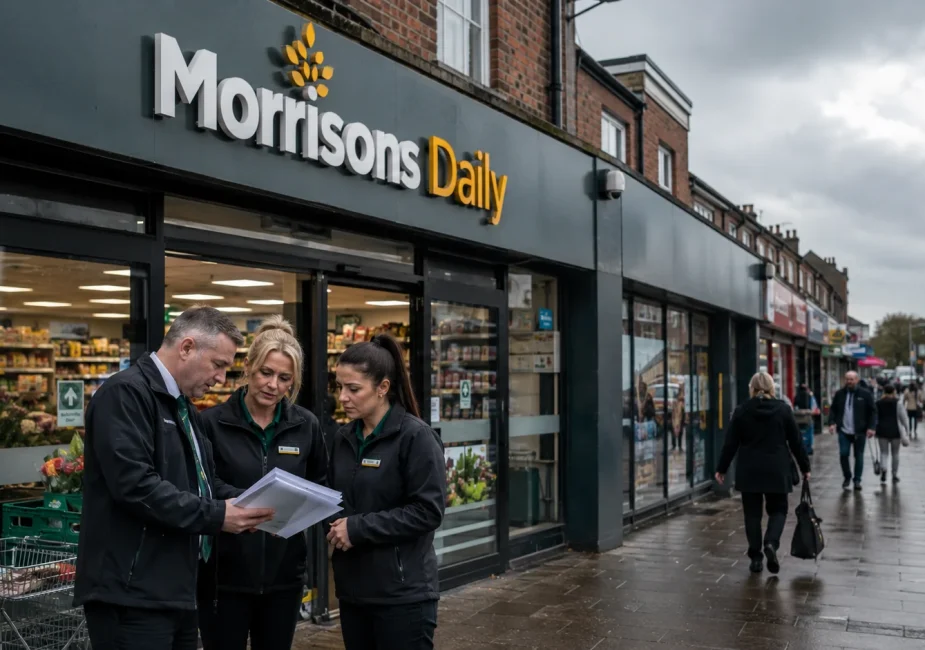
Key Takeaways:
- Planned Closures: Around 100 Morrisons Daily stores are expected to close.
- Main Reason: Persistent losses and rising operating costs.
- Stores Affected: Primarily former McColl’s locations acquired in 2022.
- Employee Impact: Hundreds of jobs could be affected.
- Growth Strategy: Morrisons plans to focus on profitable locations and franchise expansion.
- Retail Context: The move reflects wider pressures across the UK retail sector.
- Current Status: Staff consultations are ongoing.
Why Is Morrisons Planning to Close Around 100 Company-Owned Stores Across the United Kingdom?

Morrisons has announced plans to shut approximately 100 company-owned convenience stores across the UK as part of a strategic review of its retail estate.
The decision comes during a period of mounting financial pressure for supermarkets and convenience retailers, many of which are facing increased labour costs, higher energy bills, inflationary pressures, and changing consumer spending habits.
The company has stated that the stores earmarked for closure have experienced prolonged performance challenges and have remained loss-making despite efforts to improve trading conditions.
Rather than continuing to support underperforming locations, Morrisons has decided to focus investment on stores that can deliver sustainable growth and profitability.
The move highlights the increasingly difficult operating environment for convenience retailers. While convenience stores continue to play an important role in local communities, many smaller locations struggle to maintain healthy margins in a highly competitive market.
James Cartwright, a grocery retail analyst, noted: “Many convenience stores acquired through large-scale acquisitions can face profitability challenges long after integration. Retailers often conduct extensive reviews to identify locations where long-term sustainability is becoming increasingly difficult.”
For Morrisons, the closure programme represents a broader effort to strengthen the overall performance of its convenience division while ensuring resources are directed towards areas that offer stronger commercial returns.
What Has Morrisons Announced About Its Convenience Store Closure Programme?
The retailer has confirmed that around 100 company-owned Morrisons Daily stores are expected to close over the coming months. While the full list of affected locations has not yet been released, the company has already identified several branches that are scheduled to cease trading.
Morrisons has emphasised that the decision follows a detailed review of its convenience business. According to the company, every company-owned store is regularly assessed to determine whether it remains commercially viable and capable of delivering acceptable financial performance.
The closure programme specifically targets stores that have consistently failed to generate profits despite attempts to improve operations. These efforts included operational changes, investment initiatives, and performance improvement measures. However, some locations continued to struggle, leading the retailer to conclude that closure represents the most practical solution.
The announcement has attracted considerable attention because it affects a significant number of convenience stores at a time when many UK high streets are already experiencing retail challenges.
The closure programme is expected to be implemented in stages rather than through a single nationwide shutdown. Morrisons has begun consultations with affected employees and is reviewing each location individually before final decisions are made.
While approximately 100 stores have been identified for potential closure, additional announcements are expected as the review process progresses.
Which Morrisons Daily Stores Have Been Confirmed for Closure So Far?
Although the complete closure list has not yet been published, Morrisons has confirmed the first seven locations that are expected to close.
First Seven Morrisons Daily Locations Identified for Closure
The confirmed stores are concentrated in Yorkshire and surrounding areas, highlighting the regional nature of the initial announcement.
| Morrisons Daily Store | Location |
|---|---|
| Fairfax Avenue | Hull |
| Esk Close | Guisborough |
| Zetland Road | Loftus |
| Stokesley High Street | Middlesbrough |
| Queen Street | Redcar |
| Middle Street | South Driffield |
| Woodthorpe | York |
Although only seven stores have been publicly identified so far, Morrisons has indicated that the wider review covers approximately 100 locations across the United Kingdom. Customers in areas where former McColl’s stores were converted into Morrisons Daily branches may see further announcements over the coming weeks as consultations continue.
The company has not yet released a complete closure list, meaning additional stores could still be added to the programme. Local customers and employees are therefore being advised to monitor updates from Morrisons regarding any future announcements affecting their communities.
The publication of these locations has understandably raised concerns among local residents who rely on nearby convenience stores for everyday essentials. In many communities, Morrisons Daily stores serve as accessible shopping destinations for groceries, household goods, and daily necessities.
Why Are Former McColl’s Stores Being Targeted in the Closure Plans?
A significant proportion of the stores under review originated from Morrisons’ acquisition of McColl’s in 2022. This acquisition was designed to strengthen Morrisons’ presence within the convenience retail sector and expand its reach into local communities.
Morrisons’ Acquisition of McColl’s and the Integration Process
Following the acquisition, Morrisons converted numerous former McColl’s locations into Morrisons Daily stores. By 2024, many of these sites had been rebranded and integrated into the company’s wider convenience network.
However, not every location performed as expected. Some stores inherited longstanding operational and commercial challenges that proved difficult to overcome. Factors such as local competition, store size limitations, demographic changes, and location-specific issues contributed to weaker performance in certain branches.
While the acquisition provided Morrisons with valuable growth opportunities, it also brought a number of stores that required substantial investment and operational support. The current review suggests that some of these locations have not achieved the profitability levels originally anticipated.
How Have Rising Government Costs Influenced Morrisons’ Decision?

One of the key factors cited by Morrisons is the growing burden of government-related costs affecting retailers across the UK.
| Cost Pressure | Impact On Morrisons Daily Stores |
|---|---|
| National Insurance Increases | Higher employment costs |
| Wage Growth | Increased staffing expenses |
| Energy Costs | Higher store operating costs |
| Property Expenses | Reduced profit margins |
| Inflation | Increased supply chain costs |
| Lower Consumer Spending | Pressure on store sales |
Increasing Employment and Operating Expenses
Retailers have experienced rising wage obligations, increased National Insurance contributions, and higher operational costs in recent years. These expenses can significantly impact convenience stores, which often operate on relatively narrow profit margins.
For smaller stores, even modest increases in labour costs can have a substantial effect on profitability. As staffing represents one of the largest expenses in retail operations, rising employment costs have become a major concern for many businesses.
The Impact of Policy Changes on UK Retailers
Broader policy changes have also contributed to financial pressure across the retail sector. Businesses must continuously adapt to changing regulatory requirements while managing increasing operating expenses.
Rebecca Thornton, a convenience retail consultant, said: “Convenience stores are particularly sensitive to cost increases because their margins are often tighter than those of larger supermarkets. Rising labour and operational expenses can quickly transform a marginally profitable store into a loss-making location.”
These challenges help explain why retailers across the country are undertaking extensive reviews of their store portfolios.
What Challenges Have These Morrisons Daily Stores Faced Over Recent Years?
The stores identified for closure have reportedly experienced performance difficulties for several years.
Persistent Loss-Making Performance
Morrisons has indicated that many of the affected stores have consistently generated losses despite ongoing efforts to improve results. This prolonged underperformance has made it increasingly difficult to justify continued investment.
Factors contributing to weak performance may include declining footfall, increased competition from rival convenience retailers, changing consumer shopping habits, and local economic conditions.
Remedial Actions Taken Before Closure Decisions
Before deciding to close stores, retailers typically implement a variety of improvement measures. These may include revised product ranges, operational efficiencies, promotional campaigns, staffing adjustments, and store refurbishment projects.
According to Morrisons, such remedial actions were undertaken where appropriate. However, certain locations continued to struggle financially, leading to the conclusion that closure represented the most sustainable option.
How Many Employees Could Be Affected by the Planned Store Closures?
The closure programme could place around 365 jobs at risk across the Morrisons convenience store network. The retailer has started consultation procedures with affected staff and has stated that it will explore opportunities to redeploy employees to nearby stores or alternative positions within the wider business wherever possible.
As one of the UK’s largest supermarket employers, Morrisons has emphasised that reducing compulsory redundancies remains a priority throughout the consultation process. Final staffing impacts will become clearer once individual store reviews have been completed.
For workers, the uncertainty surrounding store closures can be particularly challenging. Retail employees often develop strong relationships with customers and local communities, making closures both a professional and personal concern.
The outcome of the consultation process will likely determine the final impact on staffing levels.
What Does Morrisons’ Official Statement Reveal About the Closure Strategy?
Morrisons has sought to reassure stakeholders that the closures are part of a carefully considered business review rather than a withdrawal from the convenience market.
Continuous Performance Reviews Across the Convenience Business
The retailer has emphasised that all company-owned stores are subject to ongoing performance assessments. This process enables management teams to identify locations that require additional support, restructuring, or closure.
The company maintains that the affected stores have faced challenges for several years and that closure decisions have only been proposed after thorough evaluation.
By concentrating resources on stronger-performing locations, Morrisons hopes to improve the overall health of its convenience business while continuing to serve customers effectively.
Are Morrisons’ Daily Closures Part of a Wider Business Restructuring Plan?
The closure programme forms part of a broader pattern of operational changes across Morrisons.
Previous Closures of Cafés, Florists and Fresh Food Counters
Over the past year, the retailer has also announced changes affecting in-store cafés, florists, and fresh food counters. These decisions were similarly driven by efforts to improve efficiency and adapt to changing customer behaviour.
Many supermarkets are reassessing services and store formats to ensure they remain aligned with consumer demand. As shopping habits evolve, retailers must balance customer expectations with operational realities.
These measures suggest that Morrisons is pursuing a wider strategy aimed at strengthening profitability and enhancing long-term competitiveness.
How Does the Closure Programme Fit Into Morrisons’ Long-Term Growth Strategy?
Despite the planned closures, Morrisons has repeatedly stated that convenience retail remains an important component of its future growth strategy.
Focus on Profitable Locations and Franchise Expansion
The company intends to continue expanding through franchise partnerships and carefully selected convenience store opportunities. By concentrating on stronger-performing locations, Morrisons hopes to create a more sustainable and resilient network.
| Strategic Objective | Expected Outcome |
|---|---|
| Close loss-making stores | Improve profitability |
| Focus on stronger locations | Increase operational efficiency |
| Expand franchise network | Support long-term growth |
| Reduce unnecessary costs | Strengthen financial performance |
| Improve convenience operations | Enhance customer experience |
Rather than signalling a retreat from convenience retailing, the closures appear designed to strengthen the division’s future prospects.
What Will Happen to Communities That Rely on Morrisons Daily Stores?
The closure of local convenience stores can have significant consequences for communities. Many residents rely on nearby stores for everyday shopping, particularly elderly individuals and those without access to private transport.
In some locations, the closure of a convenience store may reduce access to essential goods and services. Communities could face longer travel times to alternative supermarkets or retailers.
The extent of the impact will vary depending on the availability of nearby alternatives. Areas with multiple competing retailers may experience less disruption than locations where convenience options are limited.
How Will These Closures Affect the UK Convenience Store Market?
The planned closures reflect broader trends affecting convenience retail across Britain. Rising costs, evolving shopping habits, and intense competition continue to reshape the market.
Independent retailers and large supermarket-owned convenience chains alike are facing pressure to improve efficiency and maintain profitability. As a result, store portfolio reviews are becoming increasingly common.
The Morrisons decision may encourage other retailers to conduct similar assessments of their own convenience networks as they seek to navigate challenging market conditions.
Why Is Morrisons Restructuring Parts Of Its Business In 2026?
The convenience store closure programme forms part of a wider restructuring strategy designed to improve efficiency across Morrisons’ operations. In recent years, the retailer has reviewed several areas of its business, including cafés, fresh food counters, florists, and selected in-store services as customer shopping habits have evolved.
Management believes concentrating investment on stronger-performing locations will help create a more sustainable business model while maintaining competitiveness in an increasingly challenging retail environment. The company continues to view convenience retail as an important growth area despite the planned closures.
Which Other Major Retailers Have Recently Announced Store Closures or Restructuring Measures?
Morrisons is not alone in facing operational challenges. Several well-known retailers have recently announced restructuring measures or financial difficulties.
Quiz Clothing Administration Challenges
Fashion retailer Quiz entered administration, highlighting the challenges facing clothing retailers amid changing consumer spending patterns and increasing costs.
Poundstretcher’s Financial Concerns
Poundstretcher has also warned about financial pressures affecting its operations. Such developments illustrate the broader challenges currently affecting multiple sectors of the UK retail economy.
Together, these cases demonstrate that the pressures facing Morrisons are part of a much wider industry trend.
Could More Morrisons Daily Stores Be Added to the Closure List?

Given that only a small number of affected locations have been publicly identified so far, further announcements are expected.
The ongoing review process may result in additional stores being confirmed for closure as assessments continue. Customers and employees will likely monitor future updates closely.
However, the final number of closures will depend on the outcome of consultations and the company’s ongoing evaluation process.
What Can Customers Expect From Morrisons in the Months Ahead?
Customers can expect further updates regarding store closures, employee consultations, and future convenience store plans. Morrisons has indicated that convenience retail remains a core element of its growth ambitions despite the planned reductions.
The company is expected to continue investing in profitable locations while exploring opportunities for expansion through alternative business models.
For many customers, the coming months will provide greater clarity regarding which stores will remain part of the Morrisons network and how the retailer intends to shape its future convenience offering.
Conclusion
Morrisons’ decision to close around 100 company-owned convenience stores represents one of the retailer’s most significant restructuring programmes in recent years.
The closures are primarily focused on loss-making locations, many of which originated from the McColl’s acquisition, and reflect the growing cost pressures facing retailers across the United Kingdom.
While the move is expected to improve efficiency and profitability, it will inevitably affect employees, customers, and local communities. As consultations continue and additional locations are confirmed, the coming months will provide greater clarity on the full scale of the programme and Morrisons’ long-term plans for its convenience store network.
Frequently Asked Questions
Why is Morrisons closing around 100 company-owned stores?
Morrisons says many of the affected convenience stores have remained loss-making for several years, while rising employment and operating costs have increased financial pressure.
Which Morrisons Daily stores have been confirmed for closure?
The first confirmed locations include stores in Hull, Guisborough, Loftus, Middlesbrough, Redcar, Driffield, and York, with further announcements expected.
Are all Morrisons Daily stores at risk of closing?
No. Morrisons has stated that the review only affects selected underperforming company-owned stores, while many other locations will continue trading as normal.
How many jobs could be affected by the closures?
Around 365 jobs are believed to be at risk, although Morrisons is exploring redeployment opportunities for affected employees where possible.
Why are former McColl’s stores being targeted?
Many of the stores under review were acquired through Morrisons’ takeover of McColl’s in 2022 and have faced ongoing profitability challenges since integration.
When will the Morrisons store closures take place?
Closures are expected to happen gradually throughout 2026 following employee consultations and the completion of individual store reviews.
Is Morrisons planning to leave the convenience store market?
No. Morrisons has confirmed that convenience retail remains part of its long-term strategy and plans to focus on stronger-performing stores and franchise growth opportunities.