
British Heart Foundation: 150 Store Closures Planned Amid Challenging Retail Conditions
 • June 5, 2026
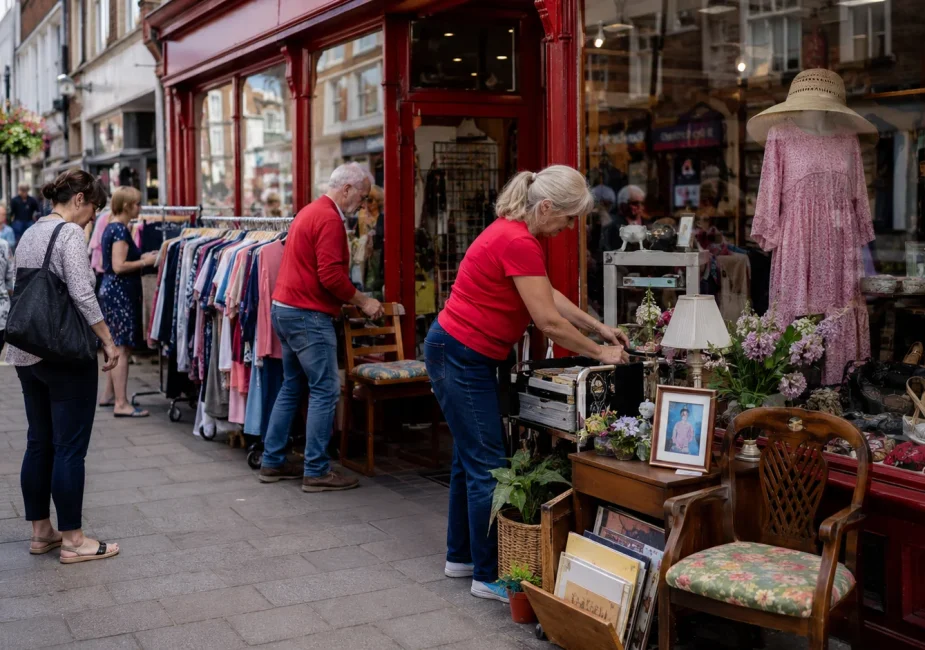
The British Heart Foundation (BHF) has announced plans to close around 150 charity shops over the next two years after a review of its retail operations. The charity says rising operating costs, inflationary pressures, changing consumer shopping habits and increased competition from online resale platforms have made some stores financially unsustainable. While the closures represent just under a quarter of BHF’s retail network, the organisation maintains that its overall financial position remains healthy and that the changes are intended to protect funding for life-saving cardiovascular research.
Key Takeaways:
- Planned Closures: Around 150 British Heart Foundation stores are expected to close over a two-year period.
- First Phase: Approximately 90 stores are scheduled to close by March 2027.
- Second Phase: The remaining affected stores are expected to close by March 2028.
- Main Reasons: Rising operating costs, inflation, changing shopping habits, and reduced High Street footfall.
- Financial Position: The British Heart Foundation states that its overall financial health remains strong.
- Future Focus: Greater emphasis on sustainable retail operations, digital fundraising, and online sales channels.
Latest British Heart Foundation Store Closure Update (June 2026)

The British Heart Foundation has confirmed that around 150 charity shops will close over the next two years following a major review of its retail operations. The charity currently operates approximately 640 stores across the UK, meaning the planned closures represent almost one-quarter of its retail estate.
According to the organisation, around 90 stores are expected to close by March 2027, with the remaining locations scheduled for closure by March 2028.
The decision follows increasing financial pressures affecting the charity retail sector, including rising employment costs, higher National Insurance contributions, inflation and changing consumer shopping habits.
Chief Executive Dr Charmaine Griffiths stated that while the decision was difficult, it was necessary to ensure the long-term sustainability of the charity’s fundraising operations and protect future investment into life-saving heart and circulatory disease research.
What Has the British Heart Foundation Announced About Store Closures?
The British Heart Foundation has confirmed plans to close approximately 150 charity shops across the United Kingdom following an extensive review of its retail operations. The announcement comes at a time when many organisations operating physical retail locations are facing mounting financial pressures and significant shifts in consumer behaviour.
The charity currently operates around 640 shops and stores throughout England, Scotland, Wales and Northern Ireland. The proposed closures represent just under a quarter of its existing retail estate, making it one of the most significant restructuring initiatives undertaken by the organisation in recent years.
According to the BHF, the decision was not driven by a single challenge. Instead, it reflects a combination of economic pressures, operational costs and evolving customer preferences that have affected the viability of certain locations.
The organisation has emphasised that these changes are part of a broader effort to ensure its retail division continues contributing effectively to the funding of cardiovascular research and public health initiatives.
Why Is the British Heart Foundation Planning to Close Around 150 Shops?
The primary reason behind the planned closures is the increasingly difficult trading environment facing the retail sector. Like many retailers across the UK, the British Heart Foundation has experienced higher operating costs that have placed pressure on store profitability.
Several factors have contributed to the decision. Inflation has increased expenses across multiple areas of the business, including rent, utilities, transportation and staffing. At the same time, customer shopping habits have evolved significantly, with more consumers choosing online marketplaces over traditional High Street stores.
The charity has stated that some locations are no longer generating sufficient income to justify their operational costs. As a result, maintaining those stores could divert resources away from the charity’s core mission of funding cardiovascular research.
Rather than waiting for financial challenges to worsen, the organisation has opted to take proactive measures designed to strengthen its long-term sustainability.
Why Are Charity Shops Across the UK Facing Increasing Pressure in 2026?
The challenges affecting the British Heart Foundation are part of a much wider problem facing retailers and charities throughout the United Kingdom.
Many organisations have experienced substantial increases in operating costs during the past two years. Rising National Insurance contributions, increases to the National Living Wage, higher utility bills and continued inflation have all increased the cost of running physical stores.
At the same time, traditional High Streets continue to face declining footfall as more consumers choose to shop online. Charity retailers must now compete not only with other charity shops but also with online resale platforms such as eBay, Vinted, Facebook Marketplace and Depop.
UK Retail Pressures in 2026
| Challenge | Impact on Charity Shops |
|---|---|
| National Insurance increases | Higher staffing costs |
| National Living Wage rises | Increased payroll expenses |
| Inflation | Higher operating costs |
| Reduced footfall | Lower in-store sales |
| Online resale platforms | Increased competition |
| Property costs | Reduced store profitability |
These pressures have prompted numerous retailers and charities to review their property portfolios. The British Heart Foundation’s restructuring programme reflects a broader trend across the retail sector rather than an isolated challenge affecting a single organisation.
Which British Heart Foundation Stores Are Closing?

One of the biggest questions following the announcement is which specific British Heart Foundation stores will be affected by the closure programme.
At present, the charity has not released a full list of locations scheduled to close. The organisation has stated that affected employees and volunteers will be informed before public announcements are made regarding individual stores.
Given the scale of the retail network, closures could potentially affect communities across England, Scotland, Wales and Northern Ireland. However, the exact geographical impact remains unclear until official location details are disclosed.
The British Heart Foundation has indicated that decisions are being based on factors such as store profitability, operating costs, lease commitments, local footfall levels and long-term sustainability. This means stores in both large cities and smaller towns could potentially be affected.
Supporters looking for updates are advised to monitor official British Heart Foundation announcements as further details regarding individual locations are expected to be released during the consultation process.
How Large Is the British Heart Foundation’s Current Retail Network?
The British Heart Foundation operates one of the largest charity retail networks in the United Kingdom. Its portfolio includes standard charity shops, furniture and electrical stores, donation centres and online retail channels.
The retail division has played a vital role in supporting the organisation’s fundraising efforts for decades. Revenue generated through donated goods helps fund research into heart and circulatory diseases, which remain among the leading causes of death in the UK.
Even after the planned closures, the charity will continue operating hundreds of stores nationwide. This highlights that the organisation is restructuring rather than withdrawing from retail activity altogether.
The size of the network also demonstrates the scale of the challenge facing charity retailers in a rapidly changing commercial environment.
How Have Changing Consumer Shopping Habits Influenced the Decision?
Consumer behaviour has evolved dramatically over the past decade. The growth of e-commerce, mobile shopping and online resale platforms has transformed how people buy and sell second-hand goods.
Many shoppers now browse digital marketplaces before visiting physical stores. This shift has altered customer expectations and changed the way retailers generate revenue.
For charity organisations, the impact extends beyond sales. Donor habits have also changed, with many individuals seeking more convenient methods for donating items or supporting charitable causes.
The British Heart Foundation has acknowledged these behavioural changes as an important factor in its review process. The charity believes its retail operations must evolve to remain relevant and financially sustainable in an increasingly digital marketplace.
Rather than resisting these trends, the organisation appears focused on adapting its retail strategy to align with modern consumer preferences.
What Did Chief Executive Charmaine Griffiths Say About the Closures?
British Heart Foundation Chief Executive Charmaine Griffiths described the decision as difficult but necessary. She acknowledged the challenges facing colleagues and volunteers while emphasising the charity’s commitment to its core mission.
According to Griffiths, cardiovascular disease remains one of the UK’s biggest health challenges. As a result, ensuring stable funding for research remains the organisation’s primary objective.
She highlighted that the retail review was undertaken to protect the long-term contribution that shops make towards supporting research programmes. While closures are never easy, the leadership team believes the changes are necessary to secure future sustainability.
The statement reflects the balancing act many charities face between maintaining a visible community presence and ensuring financial efficiency.
How Will the Store Closures Affect Employees, Volunteers and Local Communities?
The planned closures will inevitably affect employees, volunteers and local communities connected to the affected stores.
Many BHF shops rely heavily on volunteers who contribute their time to support fundraising efforts. For some individuals, these stores provide valuable social connections, work experience opportunities and a sense of community involvement.
Employees may face uncertainty regarding future roles within the organisation. The charity has indicated that it recognises the impact of these changes and intends to support affected colleagues throughout the transition process.
Communities may also lose convenient donation points, requiring supporters to use alternative stores or online channels. However, the BHF has stated that it remains committed to serving communities through its remaining retail locations and digital platforms.
How Important Are Charity Shops to British Heart Foundation Funding?
Charity shops represent a significant source of income for the British Heart Foundation. Revenue generated through donated goods helps finance research projects, awareness campaigns and support initiatives focused on cardiovascular health.
The retail division plays an important role in transforming donated items into funding that can support scientific breakthroughs and medical advances.
This explains why the organisation has chosen to review and restructure its retail estate rather than continue operating loss-making locations. Maintaining financially unsustainable stores could reduce the overall contribution retail makes towards research funding.
By concentrating resources on stronger-performing locations and digital channels, the charity hopes to maximise the funds available for its mission.
The decision demonstrates the importance of balancing fundraising opportunities with responsible financial management.
What Role Will Online Sales, Digital Channels and Changing Donor Behaviour Play in BHF’s Future Strategy?
Digital retail is expected to become increasingly important within the British Heart Foundation’s future strategy. Alongside its physical stores, the organisation already operates online sales channels through its website and eBay platforms.
These digital channels allow the charity to reach customers beyond local communities while providing additional opportunities to sell donated items.
Changing donor behaviour is also influencing strategic planning. Many supporters now expect flexible donation options, online engagement and convenient collection services.
Emma Richardson, an e-commerce consultant specialising in charitable retail, noted: “Digital channels are no longer supplementary for many charities. They have become an essential part of fundraising strategies because they allow organisations to reach wider audiences while adapting to modern shopping behaviours.”
Is the British Heart Foundation Facing Financial Difficulties?
The British Heart Foundation has been clear that its overall financial position remains healthy. The charity continues to benefit from strong fundraising performance and legacy income.
This distinction is important because the store closure programme should not be interpreted as evidence of a financial crisis. Instead, the organisation describes the changes as a strategic response to evolving retail conditions.
The review identified specific stores that were no longer financially sustainable, but the broader charity remains in a stable position.
In many respects, the announcement reflects proactive financial management rather than reactive cost-cutting. By addressing challenges early, the BHF aims to preserve resources for future research and charitable activities.
How Does This Compare With Similar Decisions by Other UK Charities?
The British Heart Foundation is not the only charity organisation reviewing its retail operations. Similar announcements have emerged across the sector as charities respond to changing economic conditions.
Cancer Research UK’s Store Closure Programme
Cancer Research UK previously announced plans to close around 90 High Street stores, with additional closures expected in the coming years. At the same time, the organisation revealed plans to expand through new out-of-town superstores.
This demonstrates how charities are increasingly exploring alternative retail models rather than relying exclusively on traditional High Street locations.
Wider Challenges Facing Charity Retailers
Many charities face comparable pressures, including inflation, changing shopping habits and increased competition from digital platforms.
Charity Retail Comparison
| Organisation | Retail Strategy Changes |
|---|---|
| British Heart Foundation | Around 150 store closures over two years |
| Cancer Research UK | High Street closures alongside superstore expansion |
| Wider Charity Sector | Increased focus on digital retail and efficiency |
The broader trend suggests that charity retail is entering a period of transformation rather than decline.
What Does the Future Look Like for the British Heart Foundation?

Although the closure of around 150 stores represents a significant change, the British Heart Foundation will continue operating one of the largest charity retail networks in the UK. Hundreds of stores will remain open, and the organisation continues to maintain a strong financial position.
The charity’s leadership has made it clear that the objective is not to reduce its commitment to communities but to ensure that fundraising resources are directed where they can have the greatest impact.
By focusing on sustainable retail operations, expanding digital channels and adapting to changing consumer behaviour, the British Heart Foundation aims to strengthen its ability to fund cardiovascular research for decades to come.
The restructuring programme reflects a strategic evolution rather than a retreat from retail activity, positioning the charity to respond more effectively to future challenges within the UK retail landscape.
Conclusion
The British Heart Foundation’s plan to close around 150 stores represents a significant but strategic restructuring of its retail operations. Faced with rising costs, changing consumer behaviour and increasing digital competition, the charity has concluded that some locations are no longer financially sustainable.
By focusing on sustainable retail operations, strengthening digital channels and protecting funding for cardiovascular research, the BHF aims to ensure that its mission continues to have a lasting impact across the UK.
Frequently Asked Questions
Will all 150 British Heart Foundation stores close at once?
No. The closure programme will be phased over two years, with around 90 stores expected to close by March 2027 and the remaining locations by March 2028.
Which British Heart Foundation stores are closing?
The British Heart Foundation has not yet released a full list of affected stores. Individual locations are expected to be announced after staff consultations have taken place.
Why is the British Heart Foundation closing stores?
The charity says rising operating costs, inflation, changing shopping habits and increased competition from online resale platforms have made some stores financially unsustainable.
Is the British Heart Foundation facing financial difficulties?
No. The organisation has stated that its overall financial position remains strong and that the closures are part of a strategic review rather than a financial crisis.
Will people still be able to donate to the British Heart Foundation?
Yes. Hundreds of BHF stores will remain open, and donations can also be made through the charity’s online services and collection programmes.
How many British Heart Foundation stores will remain open?
The charity currently operates around 640 stores. Even after the closure programme, the majority of its retail network will continue trading across the UK.
Will employees and volunteers lose their roles?
The BHF has said it will support affected employees through consultation processes and explore redeployment opportunities where possible. Volunteers may also be offered alternative placements.