
500 Financial Hardship Grant: How to Apply in the UK
 • November 27, 2026

People searching for 500 financial hardship grant how to apply are usually trying to find urgent financial help worth £500 or a similar amount.
However, there is no single UK-wide government scheme that guarantees every eligible applicant a fixed £500 hardship payment.
Financial hardship support is instead provided through local councils, devolved government schemes and some charities.
The amount available, application process and eligibility rules depend on where a person lives and why they need financial assistance.
In England, current GOV.UK guidance directs people struggling with essential costs towards support from their local council. Scotland, Wales and Northern Ireland operate their own crisis-support arrangements.
Is There Really a £500 Financial Hardship Grant in the UK?
The phrase £500 financial hardship grant can be misleading because it sounds like the official name of a national benefit or government payment. It is not.
Some councils, charities and specialist funds may offer awards of £500, up to £500 or amounts above or below that figure. Their rules can differ considerably.
A person facing financial difficulty should therefore focus on finding the support scheme that applies to their circumstances rather than searching only for an exact £500 payment.
The main routes differ across the UK:
| Area | Main Route for Emergency Support | Where to Check |
|---|---|---|
| England | Local Council Crisis Support | Relevant Local Council |
| Scotland | Scottish Welfare Fund Crisis Grant | Relevant Local Council |
| Wales | Discretionary Assistance Fund | Welsh Government |
| Northern Ireland | Discretionary Support | Finance Support Service |
In England, help from a council may cover essentials such as food, energy and water bills, essential household items and some housing costs. Applicants do not necessarily have to be receiving benefits.
People whose financial problems followed unemployment should also check whether they qualify for unemployment benefits in the UK, because longer-term income support is different from a one-off hardship award.
Official Ways to Verify a Government Hardship Grant
Anyone who sees an advert, social-media post or website claiming that the government is offering a £500 grant should verify it before submitting an application.
The GOV.UK Find a grant service allows users to search government grant opportunities, check who can apply and find application information.
However, household crisis support is often delivered separately through local authorities rather than appearing as one national personal grant.
A genuine offer should normally be traceable to the government body, council or recognised organisation responsible for providing it.
Applicants can use these checks:
- Check The Website Domain: Look for GOV.UK, GOV.WALES, mygov.scot, nidirect or the official website of the relevant council
- Confirm the Scheme Name: Search the exact name independently rather than relying only on a link in an advert
- Read the Eligibility Criteria: Genuine programmes should clearly explain who can apply
- Check the Application Process: Confirm that the application route matches the one published by the organisation responsible for the scheme
- Review the Payment Conditions: Establish whether the support is cash, vouchers, goods, a direct payment to a supplier or a repayable loan
- Avoid Guaranteed-Payment Claims: Legitimate discretionary support normally involves an assessment before an award is made
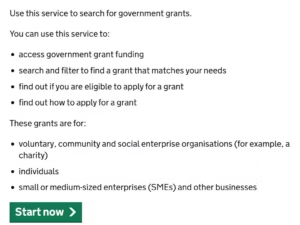
GOV.UK confirms that the Find a grant service can be used to search government grants, check eligibility and find out how to apply.
Care is particularly important when an online post centres on a precise payment figure.
The same issue arises with other widely shared benefit claims, including the £562 DWP payment claim, where a headline amount can easily be mistaken for a new universal payment.
Eligibility Rules for Financial Hardship Support
There is no single eligibility test covering every hardship grant in the UK.
A council, government body or charity may consider factors such as household income, available savings, family circumstances, residency and the reason emergency support is needed.
In England, current council support is aimed at people who are vulnerable or cannot afford essentials. GOV.UK also states that a person does not have to be receiving benefits to qualify for local help.
Circumstances that may lead someone to seek hardship assistance include:
- Sudden Loss Of Income: A person may have lost their job or experienced a significant reduction in working hours
- Unexpected Essential Costs: An urgent expense may leave a household unable to afford normal necessities
- Food Hardship: A household may not have enough money for groceries or essential meals
- Energy Problems: Support may be needed for electricity, gas, heating or water costs
- Essential Household Items: A broken cooker, fridge or other necessary appliance may create an immediate problem
- Emergency Circumstances: Fire, flooding, domestic abuse or another crisis may create urgent costs
Being on Universal Credit does not automatically mean a person will receive a hardship grant. Equally, being in work does not automatically rule someone out.
Some Universal Credit claimants facing costs connected with finding or starting employment may also qualify for the Flexible Support Fund.
That is separate from general household hardship assistance and is considered according to employment-related circumstances.
Applying for a Hardship Grant in England
Anyone in England searching 500 financial hardship grant how to apply should normally begin with their local council.
GOV.UK explains that councils decide how their support schemes operate, meaning eligibility criteria, application methods and the way assistance is provided can differ from one area to another.
A person who does not know which council is responsible for their address can use the official postcode-based council finder.
The application process will usually involve several steps.
- Find the Correct Local Council: Confirm which council covers the applicant’s home address.
- Locate the Council’s Financial Crisis Scheme: Search the official council website for crisis support, emergency assistance, local welfare support or hardship payments.
- Check the Eligibility Rules: Read the council’s conditions before applying because the rules may differ between neighbouring areas.
- Prepare Supporting Evidence: Applicants may be asked for details about household income, savings, benefits and the emergency expense.
- Complete the Official Application: Follow the application route given on the council website.
- Respond To Further Requests: The council may ask for additional documents before making a decision.
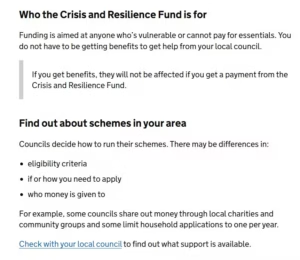
GOV.UK confirms that local councils can provide help with essential costs and that eligibility and application arrangements can vary by area.
A request for financial evidence does not automatically mean a claimant is under investigation. For example, providing documents for council support is different from DWP bank account checks or a review of an existing benefit claim.
Financial Hardship Support in Scotland, Wales and Northern Ireland
People outside England should use the support arrangements available in their part of the UK.
Scotland has the Scottish Welfare Fund. Crisis Grants are designed to help people on a low income deal with unexpected emergencies.
Applications are made through the person’s local council rather than directly through the Scottish Government. A person does not necessarily need to be receiving benefits to qualify.
Wales has the Discretionary Assistance Fund. Its Emergency Assistance Payment can help with essential costs such as food, gas, electricity, heating or emergency travel when a person is experiencing extreme financial hardship.
The fund also has Individual Assistance Payments for certain household items and independent-living needs.
Northern Ireland has Discretionary Support. A person in an extreme or exceptional situation may be offered a grant or an interest-free loan depending on their circumstances.
Support can include short-term living costs, essential household items and some emergency travel or housing-related costs.
The difference between a grant and a loan is important. A grant normally does not have to be repaid, while an interest-free loan must eventually be paid back.
Documents and Evidence Needed for an Application
Financial hardship schemes need enough information to determine whether an applicant meets their rules and whether there is an immediate need.
The exact documents vary, so applicants should use the checklist published by the scheme they are applying to.
Common requests may include:
- Proof Of Identity: Documents confirming who the applicant is
- Proof Of Address: Evidence showing where the applicant normally lives
- Income Information: Wage slips, benefit information or evidence that income has fallen
- Bank Statements: Recent account statements may be requested to assess available funds
- Savings Details: Applicants may need to disclose accessible savings
- Evidence Of The Emergency: A bill, invoice or other document may help demonstrate the financial problem
- Housing Information: Rent, tenancy or mortgage details may be relevant in some cases
- National Insurance Number: Some government support applications request this information
Applicants should provide accurate information and avoid altering financial documents requested as evidence.
Those already claiming Universal Credit should also distinguish a hardship application from an Enhanced Review Team Universal Credit check. The two processes serve different purposes.
What Financial Hardship Grants Can Cover?
Emergency financial assistance is generally intended to help with necessary costs rather than provide unrestricted spending money.
Depending on the scheme, support can potentially cover:
- Food And Groceries: Help when a household cannot afford essential food
- Gas And Electricity: Assistance with maintaining essential energy supplies
- Heating Costs: Support where a household cannot afford adequate heating
- Essential Appliances: Help with items such as cookers, fridges or washing machines where the scheme permits them
- Furniture And Bedding: Basic household items needed for safe day-to-day living
- Emergency Travel: Necessary journeys in circumstances recognised by the scheme
- Housing Costs: Certain schemes may help with specific housing-related expenses
Welsh Government guidance, for example, confirms that its Emergency Assistance Payment can cover essential costs including food, gas, electricity, heating oil and emergency travel.
Northern Ireland’s Discretionary Support can cover short-term living costs, basic household items and certain travel or rent-in-advance expenses. Some households may also qualify for disability-related support.
The rules for enhanced-rate PIP mobility are separate from hardship grants because PIP is based on the functional impact of a health condition or disability rather than an immediate financial emergency.
How £500 Payments and Award Amounts Are Decided?
A hardship scheme mentioning £500 does not necessarily mean every successful applicant receives £500.
There are several ways the figure may be used:
- Maximum Award: A fund might provide up to £500
- Individual Assessment: An applicant might receive an amount based on their actual emergency cost
- Specific Expense Limit: A scheme might cap support for a particular item or category
- Voucher Value: Assistance might be issued as vouchers rather than cash
- Direct Supplier Payment: Money might be paid directly towards an essential bill or item
- Charitable Award: A charity may use £500 as one of its grant limits
An award can therefore be lower or higher depending on the scheme. Some applicants may receive goods or vouchers without receiving cash at all.
This is why the phrase £500 financial hardship grant should not be interpreted as a promise that an applicant will receive exactly £500.
Spotting Fake Hardship Grant Offers and Scam Websites
Hardship payments are an attractive subject for scammers because people experiencing financial difficulty may feel pressure to act quickly.
GOV.UK warns that fraudulent calls, emails and messages can pretend to come from government services and may seek personal or banking information.
Possible warning signs include:
- Guaranteed £500 Payment: The advert promises money without checking eligibility
- Upfront Application Fee: The applicant is asked to pay before receiving the supposed grant
- Unfamiliar Website: The link does not lead to an official government, council or recognised organisation
- Urgent Pressure: The message claims the recipient has only minutes or hours to respond
- Request For Banking Passwords: The applicant is asked for login details or security codes
- No Clear Scheme Name: The advert does not identify the organisation responsible for the funding
- No Published Eligibility Rules: There is no explanation of who qualifies or why
Applicants should independently search for the scheme rather than relying on a social-media link.
Similar caution is useful whenever an unusually precise DWP payment amount circulates online. Checking the original government announcement before sharing personal information is more reliable than assuming a widely repeated claim must be genuine.
What to Do if an Application Is Refused?
A rejected hardship application does not necessarily mean the applicant has no other options.
The person should first read the decision carefully and identify why the application was unsuccessful.
Possible next steps include:
- Check For A Review Process: Some schemes allow applicants to ask for the decision to be reconsidered
- Provide Missing Evidence: A refusal may relate to information that was not supplied
- Check Alternative Council Schemes: Different forms of local assistance may have different eligibility rules
- Review Benefit Entitlement: The household may qualify for ongoing income support
- Look For Charitable Funding: Some charities provide grants based on location, employment history, disability or other circumstances
- Seek Independent Advice: Benefits or debt advisers may identify support the applicant has overlooked
Northern Ireland’s Discretionary Support scheme, for example, has a formal review procedure for applicants who disagree with a decision.
Benefit decisions follow their own challenge procedures. Someone disputing a disability-benefit decision may need a process such as PIP mandatory reconsideration rather than treating it as a hardship-grant appeal.
Other Emergency Financial Support Available in the UK
A hardship grant is only one possible source of help.
Someone experiencing serious financial pressure may qualify for a combination of emergency support and ongoing benefits.
Other possibilities can include:
- Universal Credit: Support for eligible people who are unemployed or on a low income
- Jobseeker’s Allowance: Contribution-based support may be available to some people looking for work
- Disability Benefits: Health conditions or disabilities can create entitlement under separate rules
- Carer Support: People providing qualifying care may be entitled to additional financial assistance
- Council Tax Support: Low-income households may qualify for help with Council Tax
- Housing Support: Some households may receive help towards qualifying housing costs
- Employment Support: Jobcentre assistance may help with certain costs connected with finding or starting work
- Charitable Grants: Specialist funds can provide help based on occupation, location, disability, family circumstances or other criteria
Carers should also consider how Carer’s Allowance is treated for tax and Universal Credit purposes because hardship assistance and ongoing benefit entitlement are separate issues.
The most useful approach is to assess the household’s overall position rather than concentrating exclusively on finding an exact £500 payment.
Conclusion
For anyone searching for how to apply for a £ 500 financial hardship grant, the most important point is that there is no single nationwide application for a guaranteed £500 government payment.
A person in England should normally begin by checking emergency financial assistance through their local council. Scotland uses the Scottish Welfare Fund, Wales has the Discretionary Assistance Fund and Northern Ireland provides Discretionary Support.
Some councils and charities may offer grants worth £500 or a similar amount, but eligibility and award values vary.
Before applying, the scheme should be verified through an official government, council or recognised organisation’s website.
Applicants should check the eligibility criteria, prepare any required evidence and avoid offers that promise guaranteed payments or request suspicious fees or banking information.
Frequently Asked Questions
Can Someone Apply for Hardship Support While Working?
Yes. Some schemes consider low income and financial need rather than employment status alone, so being in work does not automatically prevent an application.
Can Emergency Support Help With a Broken Washing Machine or Cooker?
Potentially. Some council and devolved-government schemes can help with essential household appliances, although local eligibility rules apply.
Can a Council Pay Support Without Giving the Applicant Cash?
Yes. Depending on the scheme, assistance may be provided through vouchers, household items, supplier payments or another form of support.
Will Savings Be Considered in a Hardship Application?
They may be. Many schemes consider available household resources, including savings, when assessing whether emergency assistance is needed.
Can Someone Apply Again After Receiving a Hardship Payment?
Possibly, but individual schemes may limit the number of awards within a particular period. Applicants should check the rules of the specific fund.
What Happens if Someone Cannot Provide All the Requested Evidence?
The application may be delayed or refused if essential information is missing. The applicant should contact the scheme and explain why a requested document cannot be supplied.
Can Someone Receive Both Benefits and a Charitable Grant?
Potentially. The rules depend on the particular charity and benefit involved, so applicants should check whether an award affects any other support they receive.