
Is Carer’s Allowance Taxable Income? UK Tax Rules Explained for 2026/27
 • October 16, 2026
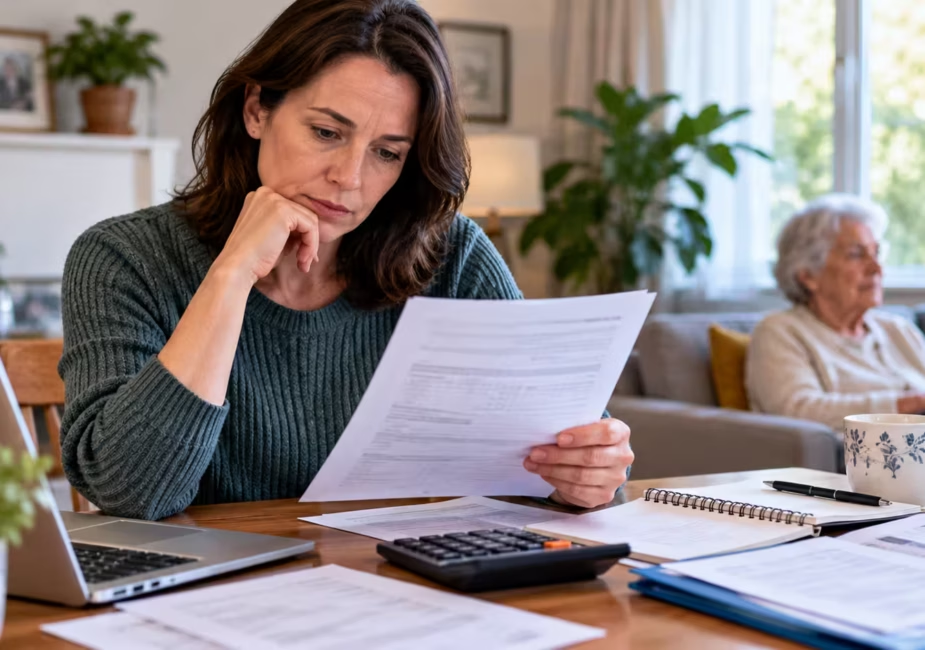
Yes, Carer’s Allowance is taxable income in the UK. However, receiving Carer’s Allowance does not automatically mean that a person will have Income Tax to pay.
Tax normally becomes relevant when a claimant’s overall taxable income, including Carer’s Allowance and other taxable earnings or pensions, exceeds their available Personal Allowance.
For the 2026/27 tax year, the standard Personal Allowance is £12,570. Carer’s Allowance is £86.45 per week, while the earnings limit for claiming Carer’s Allowance is £204 per week after specified deductions. These figures relate to different rules and should not be confused with one another.
This guide explains is Carer’s Allowance taxable income, when tax may become payable and how employment, pensions and Universal Credit can affect a claimant’s position.
Is Carer’s Allowance Taxable In The UK?
Carer’s Allowance is officially classed as a taxable state benefit. HM Revenue & Customs includes Carer’s Allowance among the social security benefits that are subject to Income Tax.
That does not mean every claimant pays tax on it.
Income Tax is generally calculated by considering a person’s total taxable income during the tax year. If that total remains within their available Personal Allowance, there may be no Income Tax to pay.
For example, a claimant whose only taxable income is Carer’s Allowance would ordinarily receive considerably less than the standard £12,570 Personal Allowance over a full tax year.
A claimant with wages, a taxable pension or another taxable source of income could have a different position because Carer’s Allowance is added to those taxable amounts when determining overall taxable income.
Why Carer’s Allowance Counts As Taxable Income?
Carer’s Allowance is different from several other benefits that are exempt from Income Tax.
Taxable state benefits include Carer’s Allowance and the State Pension, while benefits such as Universal Credit, Personal Independence Payment, Attendance Allowance and Pension Credit are generally listed as tax-free state benefits.
This distinction is important because a person may receive several benefits at the same time but not every payment is necessarily treated in the same way for Income Tax purposes.
When considering whether Carer’s Allowance is classed as income, the purpose of the calculation therefore matters. It is taxable income for Income Tax purposes, but separate benefit systems may apply their own rules when assessing entitlement.
Is Tax Deducted Directly From Carer’s Allowance?
Income Tax is not normally taken directly from each Carer’s Allowance payment before the claimant receives it.
Where tax becomes due, HMRC may instead account for taxable state benefits through the claimant’s tax arrangements. A tax code can take taxable state benefits into account so that tax is collected from another source of PAYE income, such as employment or a pension.
This means a claimant should not assume that Carer’s Allowance is tax-free simply because the full weekly benefit arrives in their bank account.
When Does Someone Pay Tax On Carer’s Allowance?
Whether someone pays tax on Carer’s Allowance depends primarily on their total taxable income.
For the 2026/27 tax year, the standard Personal Allowance remains £12,570. This is the amount of income most people can receive before Income Tax becomes payable, although an individual’s actual allowance can differ depending on their circumstances.
A claimant may therefore receive Carer’s Allowance without paying any Income Tax if their total taxable income remains below their available tax-free allowance.
Tax becomes more likely where Carer’s Allowance is combined with:
- Employment Income
- Self-Employment Profits
- State Pension Income
- Private Or Workplace Pension Income
- Other Taxable State Benefits
- Other Taxable Income
The important calculation is not simply how much Carer’s Allowance someone receives. It is the claimant’s total taxable income for the tax year.
How Does the Personal Allowance Affect Carer’s Allowance Tax?
The standard Personal Allowance for 2026/27 is £12,570.
If a claimant receives £86.45 per week in Carer’s Allowance for a full 52-week year, that would equal approximately £4,495.40.
On its own, that amount is below the standard Personal Allowance.
However, consider a claimant who also receives taxable earnings of £10,000 during the same tax year.
Their simplified taxable income could be:
| Income | Annual Amount |
|---|---|
| Employment Income | £10,000 |
| Carer’s Allowance | £4,495.40 |
| Total Taxable Income | £14,495.40 |
| Standard Personal Allowance | £12,570 |
| Amount Above Personal Allowance | £1,925.40 |
This simplified example demonstrates why the answer to “Do people pay tax on Carer’s Allowance?” depends on other income.
The exact tax due can vary according to the claimant’s circumstances, tax code and applicable Income Tax rates.
Carer’s Allowance With Other Taxable Income
Carer’s Allowance forms part of taxable income even where the claimant receives another taxable income source.
A person could therefore have no tax liability from Carer’s Allowance when it is their only taxable income but become liable for tax after starting work or receiving additional pension income.
Claimants should consider the combined annual amount rather than viewing Carer’s Allowance separately.
Carer’s Allowance Tax Thresholds And Limits
One of the easiest mistakes is to confuse the Carer’s Allowance earnings limit with the Income Tax Personal Allowance.
They are completely different rules.
For 2026/27:
| Rule | 2026/27 Figure | Purpose |
|---|---|---|
| Carer’s Allowance Rate | £86.45 Per Week | Amount Of Benefit Payable |
| Carer’s Allowance Earnings Limit | £204 Per Week | Helps Determine Eligibility When Working |
| Standard Personal Allowance | £12,570 Per Year | General Income Tax-Free Allowance |
The £204 weekly earnings limit does not mean that income below £204 per week is automatically tax-free.
Likewise, earning more than the Income Tax Personal Allowance does not by itself determine whether someone qualifies for Carer’s Allowance.
The two systems measure different things.
Carer’s Allowance Rate, Earnings Limit And Personal Allowance
From the 2026/27 year, Carer’s Allowance is payable at £86.45 a week to an eligible claimant.
A claimant who works can generally earn up to £204 per week after tax, National Insurance and certain allowable expenses while satisfying the Carer’s Allowance earnings condition.
Certain costs may be deducted when calculating earnings for Carer’s Allowance eligibility, including qualifying pension contributions and some work-related or care costs.
These deductions concern eligibility for the benefit. They should not automatically be assumed to produce the same result for Income Tax calculations.
Carer’s Allowance And Employment Income
Receiving Carer’s Allowance does not necessarily prevent someone from working.
A claimant may continue to qualify while employed or self-employed if their earnings remain within the relevant Carer’s Allowance limit after permitted deductions and all other eligibility conditions are met.
For 2026/27, that weekly earnings limit is £204.
Employment income and Carer’s Allowance can both contribute to the claimant’s overall taxable income.
This is why someone working part-time may need to pay Income Tax even though another claimant receiving only Carer’s Allowance does not.
Can Someone Work And Still Claim Carer’s Allowance?
Yes. A person can work and still receive Carer’s Allowance provided the eligibility rules continue to be satisfied.
For Carer’s Allowance purposes, qualifying earnings are assessed after certain deductions.
These may include:
- Income Tax
- National Insurance
- Certain Pension Contributions
- Qualifying Employment Expenses
- Certain Care Costs While The Claimant Works
The claimant must also continue providing at least 35 hours of care each week and satisfy the other qualifying conditions.
Someone whose earnings change should pay close attention to the eligibility limit because exceeding it can affect entitlement to Carer’s Allowance.
Can Carer’s Allowance Affect A Tax Code?
Yes, Carer’s Allowance can affect a claimant’s tax code where HMRC needs to collect tax due on taxable state benefits through another PAYE income source.
HMRC can take taxable state benefits into account when calculating a tax code. This may result in tax being collected through employment income or pension income rather than being deducted directly from the Carer’s Allowance payment.
A claimant who notices an unexpected tax-code change should check the income figures HMRC is using.
Carer’s Allowance And Pension Income
Pension income creates another important area where Carer’s Allowance and Income Tax can overlap.
Both Carer’s Allowance and the State Pension are taxable forms of income. Private and workplace pensions can also be taxable.
However, separate benefit rules restrict how Carer’s Allowance and the State Pension are paid together.
Is Carer’s Allowance Taxable For Pensioners?
Carer’s Allowance remains a taxable benefit where it is payable to a person who also has pension income.
Whether Income Tax is actually due depends on the person’s total taxable income and available tax allowances.
A pensioner receiving several taxable sources of income could reach the Income Tax threshold more easily than a claimant whose only taxable income is Carer’s Allowance.
Can Someone Receive Carer’s Allowance And State Pension Together?
A person cannot normally receive the full amount of both Carer’s Allowance and State Pension at the same time.
For 2026/27, GOV.UK states that where State Pension is £86.45 a week or more, a claimant will not receive a Carer’s Allowance payment.
Where State Pension is below £86.45 per week, Carer’s Allowance may be paid to make up the difference.
Even where no Carer’s Allowance payment is made because of this overlapping-benefit rule, entitlement to Carer’s Allowance can sometimes affect other benefits such as Pension Credit.
Carer’s Allowance And Universal Credit
Carer’s Allowance and Universal Credit can be received within the same household circumstances, but the interaction between the benefits is important.
When a claimant receives Carer’s Allowance, their Universal Credit payment is reduced by an amount equal to the Carer’s Allowance payment.
A claimant may also qualify for an additional Universal Credit carer amount where the relevant conditions are satisfied.
Does Carer’s Allowance Count As Income For Universal Credit?
Carer’s Allowance is taken into account when calculating Universal Credit.
This is separate from its Income Tax treatment.
Universal Credit itself appears on the government’s list of tax-free state benefits, while Carer’s Allowance is taxable.
A benefit can therefore be treated as income under one benefits calculation while having a different tax treatment.
This distinction is important when answering questions such as “Is Carer’s Allowance classed as income?” because there is not one universal definition that applies to every government calculation.
How HMRC Collects Tax On Carer’s Allowance?

Tax is not generally deducted directly by the Department for Work and Pensions from ordinary Carer’s Allowance payments.
If tax is due, HMRC can use the claimant’s wider tax arrangements to collect it.
For someone with PAYE employment or pension income, taxable state benefits may be reflected in the tax code applied to that other income.
Depending on individual circumstances, tax may be dealt with through:
- A PAYE Tax Code
- Employment Income
- Pension Income
- Self Assessment
- An HMRC Tax Reconciliation
Someone who believes HMRC has used an incorrect amount of Carer’s Allowance should check their tax code and current income information.
Example: Carer’s Allowance With Other Income
Consider a hypothetical claimant named Sarah.
Sarah provides more than 35 hours of care each week and qualifies for the full Carer’s Allowance rate of £86.45 per week.
Her annual Carer’s Allowance is approximately:
£86.45 × 52 = £4,495.40
Suppose Sarah also has taxable employment income of £9,000.
Her simplified annual taxable income would be:
£9,000 + £4,495.40 = £13,495.40
Compared with the standard 2026/27 Personal Allowance of £12,570, this would leave:
£13,495.40 − £12,570 = £925.40
In this simplified example, £925.40 falls above the standard Personal Allowance and could therefore be subject to Income Tax.
The calculation illustrates an important point. Carer’s Allowance does not suddenly become taxable only when a specific Carer’s Allowance threshold is crossed. It is already classified as taxable income. The claimant’s total taxable income determines whether tax actually becomes payable.
The example is illustrative only. Actual liability can differ because of tax codes, allowances and personal circumstances.
Carer’s Allowance Vs Carer Support Payment In Scotland
Carer’s Allowance is no longer the benefit that new applicants in Scotland generally apply for. Scotland uses Carer Support Payment instead.
People living in England or Wales continue to use the Carer’s Allowance system, subject to the eligibility rules.
For Income Tax purposes, the government lists both Carer’s Allowance and Carer Support Payment as taxable state benefits.
This means Scottish claimants should not assume that Carer Support Payment is tax-free simply because the benefit has a different name and is administered under a different system.
What Should Someone Do If They Receive Carer’s Allowance And Other Income?
A claimant receiving Carer’s Allowance alongside wages, pensions or other taxable income should consider their overall tax position rather than looking at the benefit in isolation.
Useful steps include:
- Check Total Taxable Income For The Tax Year
- Include Carer’s Allowance When Reviewing Taxable Income
- Check The Current Personal Allowance
- Review Any PAYE Tax Code
- Check That HMRC Has The Correct Income Figures
- Monitor Earnings Against The Carer’s Allowance Earnings Limit
- Report Relevant Changes To The Appropriate Government Department
- Seek Professional Tax Advice Where Circumstances Are Complex
It is particularly important to separate the £204 weekly Carer’s Allowance earnings limit from the £12,570 standard Personal Allowance. One concerns eligibility for Carer’s Allowance and the other concerns the amount of income generally available before Income Tax is due.
Conclusion: Is Carer’s Allowance Taxable Income?
Carer’s Allowance is taxable income in the UK, but many claimants will not actually pay Income Tax on the benefit if their total taxable income remains within their available Personal Allowance.
For 2026/27, Carer’s Allowance is £86.45 per week, the earnings limit for claiming is £204 per week after relevant deductions, and the standard Personal Allowance is £12,570. These figures perform different functions and should not be treated as interchangeable tax thresholds.
Tax becomes particularly relevant when Carer’s Allowance is combined with employment income, State Pension, private pensions or other taxable income.
A claimant should therefore look at their full annual taxable income and check that HMRC has accurate information rather than assuming Carer’s Allowance is tax-free because tax has not been deducted from the payment itself.
Frequently Asked Questions
Is Carer’s Allowance Taxable Income In The UK?
Yes. Carer’s Allowance is classed as a taxable state benefit. Whether someone actually pays Income Tax depends on their total taxable income and available Personal Allowance.
Do People Pay Tax On Carer’s Allowance?
Not necessarily. Someone whose total taxable income remains below their available Personal Allowance may have no Income Tax to pay.
Does Carer’s Allowance Count Towards The Personal Allowance?
Yes. Because Carer’s Allowance is taxable income, it contributes towards a claimant’s taxable income when assessing whether their available Personal Allowance has been exceeded.
Is Tax Deducted From Carer’s Allowance Automatically?
Tax is not normally deducted directly from each Carer’s Allowance payment. HMRC may instead collect tax through another PAYE source by adjusting the claimant’s tax code.
Does Carer’s Allowance Affect A Tax Code?
It can. HMRC may take taxable state benefits into account when calculating a tax code where tax needs to be collected through employment or pension income.
Is Carer’s Allowance Taxable If Someone Works?
Yes. Carer’s Allowance remains taxable when a claimant works. Employment earnings and Carer’s Allowance can both contribute towards total taxable income.
Is Carer’s Allowance Taxable For Pensioners?
Yes, where Carer’s Allowance is payable it remains taxable. State Pension is also taxable, although separate overlapping-benefit rules can restrict how much Carer’s Allowance is actually paid.
Does Carer’s Allowance Count As Income For Universal Credit?
Carer’s Allowance is taken into account when Universal Credit is calculated. Universal Credit is reduced by an amount equal to the Carer’s Allowance payment, although a claimant may separately qualify for the Universal Credit carer amount.