
Comprehensive Vs Third-Party Car Insurance: What UK Drivers Need To Know?
 • November 20, 2026
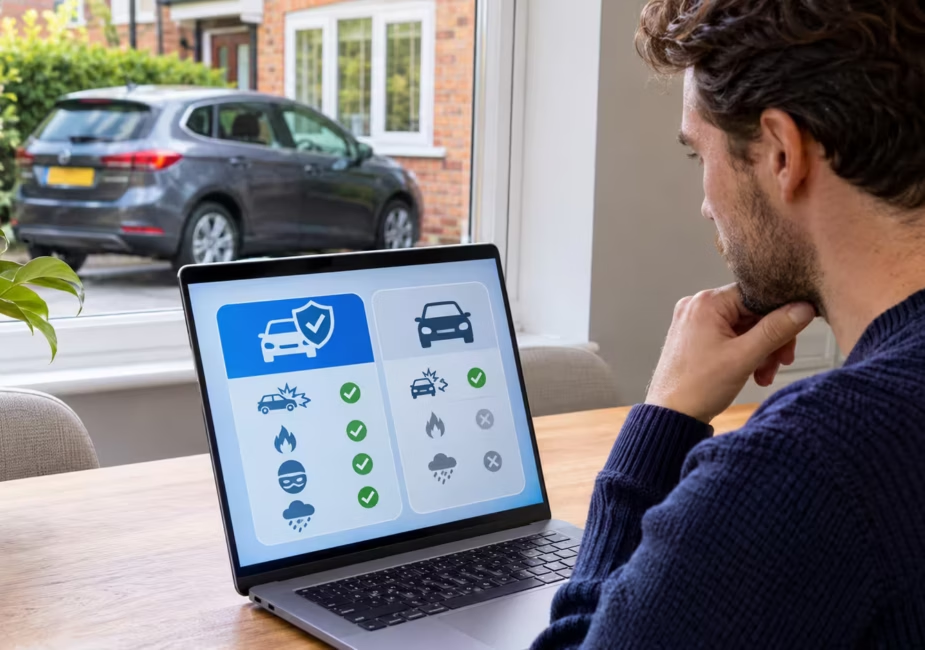
The main difference between comprehensive and third-party insurance is the level of protection provided for the policyholder’s own vehicle.
Third-party car insurance covers the cost of injury or damage a driver causes to other people and their property.
It is the minimum level of motor insurance required to drive legally on UK roads. It does not normally cover repairs to the insured driver’s own vehicle following an at-fault accident.
Comprehensive car insurance generally includes third-party protection while also covering damage to the insured vehicle in a wider range of circumstances.
Depending on the policy, this can include accidental damage, theft, fire and vandalism.
For anyone asking what is the difference between comprehensive and third party insurance, the simplest distinction is that third-party cover mainly protects against liabilities to others, while comprehensive insurance usually extends protection to the policyholder’s own car.
| Cover | Third-Party Insurance | Comprehensive Insurance |
|---|---|---|
| Injury To Other People | Usually Covered | Usually Covered |
| Damage To Other Vehicles | Usually Covered | Usually Covered |
| Damage To Other Property | Usually Covered | Usually Covered |
| Accidental Damage To Own Car | Not Normally Covered | Usually Covered |
| Theft Of Own Car | Not Covered | Usually Covered |
| Fire Damage To Own Car | Not Covered | Usually Covered |
| Vandalism To Own Car | Not Covered | Often Covered |
| Legal Minimum UK Cover | Yes | Exceeds The Minimum |
Exact protection depends on the individual insurance contract, exclusions and policy limits.
What Is Third-Party Car Insurance?
Third-party insurance is the minimum level of car insurance required by law for driving on UK roads and other public places.
It protects the driver against certain financial liabilities arising when another person is injured or their vehicle or property is damaged.
What Does Third-Party Insurance Cover?
A typical third-party car insurance policy can cover:
- Injury To Other People: Compensation and related liabilities when another person is injured
- Damage To Another Vehicle: Repair or replacement costs resulting from insured damage caused by the policyholder
- Damage To Property: Certain costs where a driver damages another person’s property
- Third-Party Legal Liability: Covered liabilities arising from an insured road incident
The important distinction is that these protections relate primarily to other people rather than the policyholder’s own car.
What Does Third-Party Insurance Not Cover?
Third-party insurance normally does not pay for damage to the policyholder’s own vehicle after an accident for which they are responsible.
It also does not normally provide cover for the policyholder’s car if it is stolen or damaged by fire.
Drivers wanting those additional protections would generally need third party, fire and theft or comprehensive insurance.
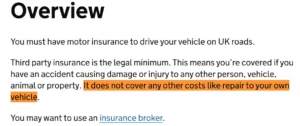
GOV.UK confirms that third-party insurance is the legal minimum and does not cover repair costs for the policyholder’s own vehicle.
What Is Comprehensive Car Insurance?
Comprehensive car insurance is the broadest of the three commonly available levels of UK motor insurance.
It normally includes third-party protection as well as cover for damage to the insured vehicle.
The Association of British Insurers states that comprehensive motor insurance typically covers damage to the policyholder’s own vehicle, damage to other vehicles, injuries to third parties and certain other insured losses.
What Does Comprehensive Insurance Cover?
Depending on the insurer and policy wording, comprehensive insurance can include:
- Third-Party Damage: Damage caused to another person’s vehicle or property
- Third-Party Injury: Covered liabilities when another person is injured
- Accidental Damage: Repairs to the insured vehicle after an eligible accident
- Theft: Loss of the vehicle where a valid theft claim is accepted
- Fire Damage: Damage or loss resulting from an insured fire
- Vandalism: Deliberate damage where included by the policy
- Medical Or Personal Accident Benefits: Certain policies provide additional protection for the insured driver
The policy excess may still apply when making an eligible claim, particularly for damage to the insured vehicle.
What Does Comprehensive Insurance Not Cover?
The word “comprehensive” should not be interpreted as meaning that every possible loss is automatically insured.
The ABI notes that comprehensive policies may or may not include benefits such as windscreen cover or a courtesy car.
MoneyHelper similarly recommends checking individual policy terms for areas such as personal belongings, vehicle recovery, keys, windscreen damage and courtesy-car arrangements.
A policy may also restrict or exclude claims involving unauthorised drivers or uses that fall outside the permitted use stated in the insurance contract.
For example, a standard private policy may not provide the required protection where a vehicle is being used for business purposes without appropriate business-use cover.
Maintaining a roadworthy vehicle is another important responsibility.
UK drivers should understand the requirements for keeping a car in good condition rather than assuming that holding comprehensive insurance removes wider legal or safety obligations.
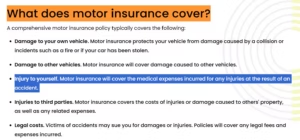
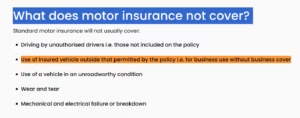 The Association of British Insurers explains that comprehensive insurance offers broader cover but does not necessarily include every feature.
Comprehensive Vs Third-Party Insurance: Key Differences
The biggest difference between comprehensive and third-party insurance is what happens when the policyholder’s own vehicle is damaged.
If a driver causes a collision and only has third-party insurance, eligible damage caused to the other person may be insured, but repairs to the driver’s own car would normally remain their responsibility.
With comprehensive insurance, eligible damage to the insured vehicle may also be covered, subject to the excess, exclusions and other terms of the policy.
Comprehensive cover also normally protects against theft and fire, whereas basic third-party insurance does not.
This difference can become particularly important where a vehicle would be expensive to repair or replace.
Drivers should also consider the changing cost of vehicle ownership as a whole.
Insurance premiums sit alongside expenses such as fuel, maintenance and UK car tax costs, so the lowest insurance premium does not necessarily produce the lowest overall motoring cost.
Is Third-Party Insurance Cheaper Than Comprehensive Insurance?
Third-party insurance is not necessarily cheaper than comprehensive insurance.
It may appear logical that a policy providing less protection should cost less, but insurance premiums are determined using broader risk factors.
MoneyHelper specifically notes that third-party insurance can cost more than policies offering a greater level of cover.
The ABI identifies factors insurers may consider when calculating a motor insurance premium, including:
- Driver Age: Age can affect the insurer’s assessment of risk
- Occupation: Some occupations may produce different insurance risk profiles
- Claims History: Previous claims can affect future premiums
- Local Area: Collision levels and vehicle crime in the area can influence pricing
- Vehicle Type: Performance, value, repair cost and other characteristics can matter
- Vehicle Storage: Where the vehicle is kept overnight may be considered
- Security Features: Alarms and immobilisers can form part of the insurer’s assessment
These factors mean two drivers with similar cars may receive very different quotations.
Telematics can also form part of modern risk management for some motorists.
The increasing role of driving data can be seen in changes affecting Motability Scheme black boxes for drivers under 30.
A motorist comparing comprehensive vs third-party insurance should therefore obtain quotations for each suitable level of cover rather than assuming that third-party insurance will automatically save money.
What Is Third Party, Fire And Theft Insurance?
Third party, fire and theft insurance sits between basic third-party insurance and comprehensive insurance.
It provides the third-party protection required for injury and damage caused to others while adding cover if the policyholder’s vehicle is stolen or damaged by fire.
It normally does not provide the same level of accidental-damage protection for the policyholder’s own car as comprehensive insurance.
| Type Of Insurance | Third-Party Damage | Theft | Fire | Own Accidental Damage |
|---|---|---|---|---|
| Third Party | Yes | No | No | No |
| Third Party, Fire And Theft | Yes | Yes | Yes | No |
| Comprehensive | Yes | Usually | Usually | Usually |
Again, third party, fire and theft should not automatically be assumed to be cheaper than comprehensive cover.
Comparing actual premiums and policy terms is more reliable than choosing solely according to the apparent level of protection.
Which Car Insurance Is Legally Required In The UK?
Drivers must generally have at least third-party insurance to use a motor vehicle on a road or other public place in the UK.
Section 143 of the Road Traffic Act 1988 establishes the requirement for insurance covering third-party risks, while GOV.UK describes third-party insurance as the legal minimum.
A roadworthy vehicle also generally needs insurance even when it is not regularly being driven unless it has been formally declared off the road through a Statutory Off Road Notification, known as SORN.
Driving without the required insurance can have serious consequences.
GOV.UK states that police can issue a £300 fixed penalty and six penalty points, while cases taken to court can result in an unlimited fine or disqualification. Police can also seize uninsured vehicles.
Insurance is only one part of a driver’s wider legal responsibility. Requirements concerning vehicle condition, licensing and road-safety rules continue to apply independently.
Drivers monitoring regulatory developments may also want to follow the position on the UK drink-drive limit and proposed changes in England and Wales.
Comprehensive Or Third-Party Insurance: Which Is Better?
Comprehensive insurance generally provides broader protection, but the most suitable policy depends on the vehicle, driver, premium and financial circumstances.
A driver should not choose between comprehensive or third-party insurance solely by looking at the policy name.
When Comprehensive Insurance May Be Suitable?
Comprehensive car insurance may be worth considering when:
- The Vehicle Has Significant Value: Repairing or replacing the car without insurance could create a substantial financial burden
- Own-Damage Protection Is Important: The driver wants protection against eligible accidental damage to their own vehicle
- The Car Is Essential For Daily Life: Losing access to the vehicle could create major practical problems
- The Premium Is Competitive: Comprehensive insurance may sometimes cost the same as or less than lower levels of protection
- The Driver Wants Broader Cover: Theft, fire and vandalism protection may be important depending on the policy
When Third-Party Insurance May Be Suitable?
Third-party insurance may be considered when:
- Comprehensive Quotes Are Unaffordable: A driver may find basic cover more accessible in their individual circumstances
- The Vehicle Has A Low Market Value: The driver may decide that paying personally for own-car repairs is an acceptable financial risk
- The Driver Understands The Limitations: They recognise that their own vehicle will normally not be insured against accidental damage or theft
Even for an older or inexpensive vehicle, third-party insurance should not automatically be selected.
The driver should compare actual quotations first because comprehensive cover can sometimes be competitively priced.
Changes in the used-car market can also affect decisions about vehicle replacement and value.
The closure of major retailers such as CarGiant’s West London retail operation illustrates why motorists should keep purchase, warranty, finance and insurance documentation clearly separated and up to date.
What Should Drivers Check Before Choosing Car Insurance?
The premium is important, but it should not be the only factor considered.
Drivers should compare what each policy actually provides:
- Policy Excess: Check both compulsory and voluntary excess amounts
- Accidental Damage Cover: Confirm exactly when damage to the insured vehicle is covered
- Theft And Fire Protection: Check the circumstances and exclusions applying to claims
- Windscreen Cover: Do not assume it is automatically included
- Courtesy Car Terms: Check when a replacement vehicle is available and for how long
- Personal Belongings: Review the maximum amount covered for items kept inside the car
- Approved Repairers: Check whether using a different repairer affects the claim
- Named Drivers: Confirm who is legally insured to drive the vehicle
- Business Use: Make sure the declared use matches how the vehicle is actually driven
- No-Claims Discount: Check how a claim could affect the discount
- Driving Other Cars: Never assume comprehensive insurance automatically provides this benefit
The last point is particularly important. The ABI explains that some policies provide Driving Other Cars cover, but it is not automatic.
Where it is included, the protection may be limited to third-party cover even when the driver has comprehensive insurance on their own vehicle.
MoneyHelper similarly advises motorists to check their policy details carefully before driving somebody else’s car.
The wider cost of running a vehicle should also be considered.
Fuel-price movements and temporary supply concerns can affect household motoring budgets, making it useful to distinguish insurance costs from developments such as the latest UK petrol and diesel supply position.
Conclusion: Choosing Between Comprehensive And Third-Party Insurance
Understanding what is the difference between comprehensive and third party insurance comes down to the extent of the protection provided.
Third-party insurance meets the legal minimum and generally covers injury or damage caused to other people and their property.
It does not normally protect the policyholder’s own vehicle from accidental damage, theft or fire.
Comprehensive insurance provides broader protection and normally includes cover for the insured vehicle as well as third-party liabilities.
However, comprehensive does not mean unlimited cover, and features such as courtesy cars, windscreen protection or driving other vehicles should never be assumed.
Drivers deciding between comprehensive vs third-party insurance should compare actual quotations, excesses, exclusions and benefits rather than choosing the apparently cheaper level of cover.
Because third-party insurance is not necessarily cheaper, checking several suitable policies can reveal which option provides the strongest balance between cost and protection.
Frequently Asked Questions
What Is The Main Difference Between Comprehensive And Third-Party Insurance?
Third-party insurance mainly covers injury or damage caused to other people, while comprehensive insurance normally adds protection for the policyholder’s own vehicle.
Is Third-Party Insurance Cheaper Than Comprehensive Insurance?
Not always. Third-party cover can sometimes cost more because insurers price policies according to overall risk rather than the amount of cover alone.
Does Third-Party Insurance Cover The Policyholder’s Own Car?
Normally no. It generally does not cover repairs to the policyholder’s own vehicle after an at-fault accident.
Does Comprehensive Insurance Cover Theft?
Comprehensive insurance normally provides theft protection, although the precise terms, exclusions and claim requirements should always be checked.
Does Comprehensive Insurance Cover Vandalism?
Many comprehensive policies cover vandalism or malicious damage, but the individual policy wording and applicable excess determine the exact protection.
Can Comprehensive Insurance Cover Driving Another Car?
Sometimes, but it is not automatic. A Driving Other Cars extension may be restricted to third-party cover, so the policy must be checked before driving another vehicle.
What Is The Minimum Car Insurance Required In The UK?
Third-party motor insurance is the legal minimum for using a vehicle on UK roads and other public places.