

What Part Of The Car Does The Law Require You To Keep In Good Condition?
 • October 31, 2025
•
1 Comment
• October 31, 2025
•
1 Comment
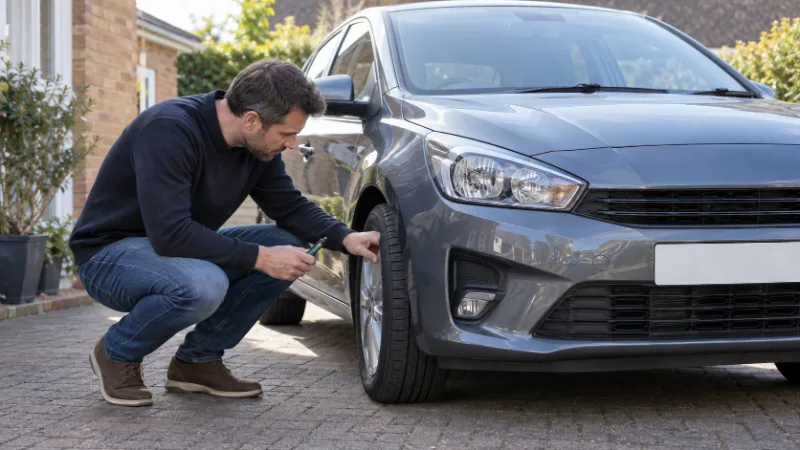
For this UK theory-test question, the answer you need to remember is seat belts. They form part of the vehicle’s essential safety equipment and must remain in a usable condition.
In practical driving, though, your responsibility does not stop there.
A car must remain roadworthy whenever it is used, which means safety-critical components such as the brakes, tyres, lights and windscreen also need to be properly maintained.
Having a current MOT does not remove that ongoing responsibility.
This is why it helps to separate the specific theory-test answer from the broader rules that apply to keeping a vehicle safe on the road.
Last Updated: 12.09.2026
What Is The Correct Theory-Test Answer?
You may see the question presented with the following options:
| Answer Choice | Is It Correct? |
|---|---|
| Door Locks | No |
| Transmission | No |
| Gearbox | No |
| Seat Belts | Yes |
The correct choice is seat belts.
The question focuses on a particular legal safety requirement, so it should not be interpreted as a complete list of every vehicle component that must be maintained. Other parts of the car can still affect whether the vehicle is safe and roadworthy.
Why Are Seat Belts The Correct Answer?
Seat belts are one of the vehicle’s main occupant-protection systems. They need to be properly fitted, securely anchored and capable of restraining the person using them.
Basic seat-belt checks include:
- Checking The Buckle Fastens Securely
- Looking For Cuts Or Serious Fraying
- Making Sure The Belt Pulls Out And Retracts Correctly
- Checking That The Belt Is Not Twisted Or Obstructed
- Making Sure Anchorage Points Appear Secure
- Paying Attention To Seat-Belt Or Airbag Warning Lights
The current DVSA MOT inspection guidance for seat belts and restraint systems requires inspectors to assess seat-belt security, condition and operation. The manual also covers components such as pretensioners and supplementary restraint systems where fitted.
A seat belt that looks acceptable at first glance may therefore still be defective if it does not buckle, retract or operate correctly.
Why Are Gearbox, Transmission And Door Locks Not The Correct Answer?
Gearbox, transmission and door locks are not the answers required for this particular theory-test question.
That does not mean faults involving these parts can always be ignored. A defect elsewhere in the vehicle can still affect whether it is safe or roadworthy.
The easiest way to remember the distinction is:
- Theory-Test Question: Seat Belts
- Everyday Roadworthiness: The Whole Vehicle
This prevents the common mistake of assuming that the theory-test answer means only seat belts have legal maintenance requirements.
Do Not Confuse This With The “Which Three” Theory-Test Question
Learner drivers may also encounter a similar question asking which three items the law requires to be kept in good condition.
That is a different multiple-answer question. Depending on the options provided, the relevant safety items can include seat belts, headlights and the windscreen.
Always read the wording carefully. If the question asks for one part and includes seat belts among the options, seat belts are the expected answer. If it specifically asks for three items, more than one selection is required.
This distinction is particularly useful when revising safety and your vehicle theory-test questions.
What Does UK Law Say About Keeping A Vehicle Roadworthy?
The real-world responsibility is much broader than the individual theory-test question.
The Highway Code rules for drivers and motorcyclists state in Rule 89 that drivers MUST make sure their vehicle and trailer comply with the relevant Construction and Use and lighting requirements.
Rule 97 also states that the vehicle MUST be legal and roadworthy before setting off.
A valid MOT does not guarantee that a car will stay roadworthy until its next test. A light can fail, a tyre can become damaged or a brake problem can develop at any point.
Drivers therefore need to deal with defects when they appear rather than waiting for the next MOT.
Which Parts Of A Car Need To Be Kept Safe And Roadworthy?
Seat belts may be the theory-test answer, but several other parts can affect whether a vehicle is safe to use.
| Car Part | What To Check |
|---|---|
| Seat Belts | Buckles, webbing, anchorage and operation |
| Tyres | Tread, pressure, cuts, bulges and damage |
| Brakes | Effective operation and warning signs |
| Lights And Indicators | Operation, visibility and condition |
| Windscreen And Wipers | Clear view, glass, wipers and washers |
| Mirrors | Security, condition and visibility |
| Steering And Suspension | Control, stability and unusual movement |
| Exhaust | Security, smoke, noise and leaks |
| Number Plates | Visibility, condition and correct display |
You do not need specialist mechanical knowledge to spot many common faults. Warning lights, unusual noises, changes in handling and visible damage should all be investigated rather than ignored.
What Checks Should You Make Before Driving?
A few basic checks can identify problems before they become dangerous.
Before Every Journey
You should make sure:
- Windscreen And Windows Give A Clear View
- Mirrors Are Clean And Correctly Positioned
- Lights Appear To Be Working
- Brakes Operate Normally
- No Obvious Tyre Damage Is Visible
- Warning Lights Do Not Indicate A Serious Problem
Regular Vehicle Checks
Other components should be checked according to the manufacturer’s recommendations, including:
- Tyre Pressure And Tread
- Engine Oil
- Coolant
- Brake Fluid
- Screen Wash
- Battery Condition
- Service Requirements
Before A Long Journey
Before travelling a significant distance, it is sensible to check tyres, lights, fluids, wipers and the overall condition of the vehicle.
Any known safety fault should be dealt with before starting the journey.
What Are The Legal Tyre Requirements?
For cars and light vans, tyres generally need at least 1.6mm of tread across the central three-quarters of the tyre and around its entire circumference.
Tread depth is only one part of tyre safety. Tyres should also be free from serious defects such as:
- Cuts
- Bulges
- Exposed Cords
- Significant Sidewall Damage
- Dangerous Or Uneven Wear
Tyre pressure should follow the vehicle manufacturer’s recommendation. The correct pressure can vary depending on the vehicle, tyre specification and load.
Because tyres provide the contact between the car and the road, poor condition can affect braking, grip, steering and stability.
What Are The Rules For Windscreens And Wipers?
Your windscreen needs to provide an adequate view of the road ahead.
Cracks, chips, stickers, dirt or other obstructions can become a problem if they substantially interfere with the driver’s view. Windscreen damage may also result in an MOT failure depending on its size, position and severity.
Wipers should clear the area needed by the driver effectively, while the washer system should provide enough fluid to clean the screen.
This becomes particularly important during rain, road spray or winter weather, when poor visibility can develop quickly.
How Many Mirrors Does A Car Legally Need?
There is no simple number that applies universally to every vehicle regardless of age and type.
Mirror requirements can vary according to factors such as the vehicle’s category and date of first use.
For a typical modern car, the important point is that its required mirrors should:
- Be Securely Attached
- Provide An Adequate View
- Be Properly Adjusted
- Not Be Seriously Damaged
- Remain Unobstructed
A cracked mirror does not automatically mean a vehicle is illegal in every situation, but damage that prevents an obligatory mirror from providing the required view needs attention.
What Are The Seat-Belt Rules For Children?
Drivers have additional responsibilities when carrying children.
Children normally need to use the appropriate child restraint until they reach the age or height at which the normal seat-belt rules apply. For younger passengers, choosing the correct restraint for the child’s size and circumstances is essential.
The driver is generally responsible for making sure children under 14 are correctly restrained.
Before setting off with children, check that:
- The Child Seat Is Suitable
- The Restraint Is Correctly Installed
- The Harness Or Seat Belt Is Secure
- The Belt Is Not Twisted
- The Child Is Properly Positioned
This should be treated as part of the normal pre-journey check rather than something to correct once the car is moving.
Are There Any Exceptions To The Seat-Belt Law?
There are limited circumstances in which a person may be exempt from wearing a seat belt.
These can include situations involving:
- Reversing A Vehicle
- Supervising A Learner Who Is Reversing
- Certain Medical Exemptions
- Some Taxi And Private-Hire Circumstances
- Certain Short-Distance Goods Deliveries
These are specific exceptions. They do not create a general right to drive without wearing a seat belt.
For most normal journeys, occupants should wear the appropriate seat belt or restraint where required.
What If You Drive A Company Car Or Vehicle For Work?
Vehicle condition is also important for employees, company-car drivers and businesses operating fleets.
Drivers should report defects promptly and should not continue using a vehicle if they know it has a serious safety problem.
Employers also need suitable systems for maintaining vehicles used for work.
The HSE guidance on keeping work vehicles safe recommends appropriate vehicle checks, planned maintenance, defect-reporting procedures and prompt repairs. It also states that privately owned vehicles used for work purposes should be safe.
For businesses, useful procedures can include:
- Routine Driver Checks
- Clear Defect Reporting
- Planned Servicing
- Tyre And Brake Inspections
- Prompt Repair Of Safety Defects
- A Clear Rule Against Driving Unsafe Vehicles
These measures can reduce breakdowns as well as road-safety risks.
MOT Test Vs Roadworthiness Law: What Is The Difference?
An MOT and roadworthiness are closely related, but they are not the same thing.
| Term | What It Means |
|---|---|
| Theory-Test Answer | The answer expected for a specific learner-driver question |
| MOT Test | Inspection of specified vehicle components at the time of testing |
| Roadworthiness | Whether the vehicle is currently safe and legal to use |
| Highway Code MUST Rule | A requirement supported by legislation |
Passing an MOT does not guarantee that nothing will go wrong afterwards.
For example, a vehicle could pass its test and then develop a damaged tyre, defective light or seat-belt fault a few days later. The driver cannot simply continue using the car until the next MOT because the previous certificate is still valid.
Roadworthiness is therefore an ongoing responsibility.
What Happens If Your Car Is Not Roadworthy?
Driving an unsafe vehicle can lead to enforcement action depending on the type and seriousness of the defect.
Possible consequences include:
- Fines
- Penalty Points
- MOT Failure
- Vehicle Prohibition
- Prosecution For Serious Offences
- Possible Driving Disqualification
- Increased Accident Risk
Certain offences, including illegal tyres, can carry penalties for each defective component.
Insurance can also become relevant following an accident. However, it is inaccurate to say that every vehicle defect automatically invalidates insurance.
The outcome can depend on the policy terms, circumstances and whether the defect was relevant to the incident.
The safest approach is to deal with known defects promptly and avoid using a vehicle that is clearly unsafe.
Conclusion
If you are asked “What part of the car does the law require you to keep in good condition?” in the common UK theory-test question, the answer is seat belts.
That answer should not be confused with your wider responsibilities as a driver. UK vehicle roadworthiness rules require the vehicle as a whole to remain safe and legal, including its tyres, brakes, lights, windscreen, mirrors, steering and other important systems.
A valid MOT is only part of that responsibility. Regular checks and prompt repairs help keep the car roadworthy between tests.
Frequently Asked Questions
What Part Of The Car Does The Law Require You To Keep In Good Condition?
For the common UK theory-test question, the expected answer is seat belts. In everyday driving, however, the whole vehicle must remain safe and roadworthy.
Are Seat Belts The Correct Answer In The UK Theory Test?
Yes. Seat belts are the correct option for the common singular question asking which part of the car the law requires you to keep in good condition.
Which Three Parts Does The Law Require You To Keep In Good Condition?
A separate theory-test question asks candidates to choose three items from a list. Depending on the question presented, the relevant answers include safety items such as seat belts, headlights and the windscreen.
Does A Valid MOT Mean My Car Is Roadworthy?
Not necessarily. An MOT confirms the vehicle met the applicable test requirements when it was inspected. A fault can develop afterwards and make the vehicle unsafe.
What Car Checks Should I Make Before Driving?
Check that you have a clear view through the windscreen, the mirrors are usable, lights work, brakes operate correctly and there are no obvious tyre defects. Other fluids and maintenance items should be checked regularly.
Can I Drive With A Damaged Seat Belt?
A required seat belt should be secure and operate correctly. Serious webbing damage, a defective buckle or a belt that does not work properly should be repaired before relying on it.
Who Is Responsible For A Company Car Being Roadworthy?
Businesses have responsibilities for vehicles used for work, while drivers should also carry out appropriate checks, report defects and avoid driving a vehicle they know is unsafe.



[…] density, collection vehicle design, available storage and existing waste contracts can all influence how councils organise their […]