Is There Going to Be a Petrol Shortage in the UK?
 • March 2, 2026
A nationwide petrol shortage is not currently confirmed in the UK, but fuel prices are rising sharply and the risk of local supply disruption remains higher because of global oil-market volatility and Middle East tensions.
The more immediate concern for motorists and businesses is expensive petrol and diesel rather than widespread empty forecourts. Local petrol stations could still run short temporarily if deliveries are delayed or panic buying causes an unusual surge in demand.
- No Nationwide Shortage: There is currently no confirmed UK-wide petrol shortage.
- Prices Are Rising: Petrol and diesel prices have increased significantly, putting more pressure on motorists and businesses.
- Local Shortages Are Possible: Individual petrol stations can temporarily run out because of delivery delays or unusually high demand.
- Global Risks Remain: Middle East tensions, oil-price movements and shipping disruption could increase future supply pressure.
- Panic Buying Can Make Things Worse: Sudden increases in demand can empty local forecourts even when national fuel supplies remain available.
- Main Risk Right Now: The current situation points more towards higher fuel costs than a genuine nationwide petrol shortage.
Last Updated: 12.09.2026
Is There a Petrol Shortage in the UK Right Now?
There is currently no confirmed nationwide petrol shortage UK motorists need to prepare for. Fuel remains available across the country, although availability at individual forecourts can vary.
It is important to distinguish between three different situations:
Situation What It Means
Rising Fuel Prices Petrol remains available but becomes more expensive
Local Petrol Shortage Individual stations temporarily run out
Nationwide Fuel Shortage Large-scale supply or distribution problems affect many areas
A station displaying empty pumps does not necessarily mean the country is running out of petrol.
Local stocks can be affected by delivery schedules, unusually high demand or motorists filling up more frequently because they fear shortages.
This distinction is particularly important when searching for a petrol shortage UK today, because rapidly increasing prices can create the impression that physical fuel supplies are disappearing even when the underlying issue is predominantly cost.
Petrol Shortage UK September 2026 Update
The fuel market has changed considerably since earlier in 2026.
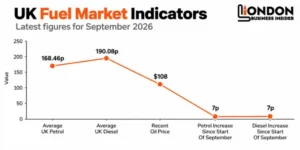
According to the RAC’s latest fuel-price update, average prices on 11 September stood at:
Fuel Market Indicator Latest Position
Average UK Petrol 168.46p Per Litre
Average UK Diesel 190.08p Per Litre
Recent Oil Price Nearly $108 Per Barrel
Petrol Increase Since Start Of September Around 7p Per Litre
Diesel Increase Since Start Of September Around 7p Per Litre
These figures show why searches for UK petrol shortage 2026, fuel shortage UK and rising petrol prices have returned to attention.
The key point is that rapidly rising wholesale prices do not automatically indicate that petrol is physically unavailable.
Why Are People Worried About a Petrol Shortage?
Several risks are occurring at the same time.
Rising Global Oil Prices
UK petrol and diesel prices are closely connected to international oil and refined-fuel markets.
When crude oil and wholesale fuel become more expensive, those costs eventually reach filling stations. Sterling also matters because international oil markets are largely priced in US dollars.
The current rise therefore affects both household motoring costs and businesses that rely heavily on road transport.
Middle East Tensions And The Strait Of Hormuz
The Strait of Hormuz remains one of the most important shipping routes for international energy supplies. Any serious restriction on tanker movements can increase oil prices even before physical supplies reaching the UK are affected.
Markets react quickly because traders price in the possibility of future disruption.
A prolonged interruption could create much greater pressure than a short-lived period of political or military tension.
Shipping And Distribution Disruption
A fuel shortage UK scenario does not necessarily require the world to run out of crude oil.
Problems can occur elsewhere in the supply chain, including shipping delays, refinery outages, port disruption and problems moving refined petrol or diesel between terminals and forecourts.
Panic Buying And Local Fuel Shortages
Panic buying can create shortages that did not previously exist.
Forecourt supply chains normally operate around predictable levels of demand.
If large numbers of motorists suddenly decide to fill their tanks at the same time, individual petrol stations can exhaust their available stocks before scheduled deliveries arrive.
That is why unnecessarily filling vehicles or fuel containers because of shortage rumours can make local disruption worse.
Are UK Petrol And Diesel Supplies Running Low?
There is not currently enough evidence to describe the situation as a nationwide petrol and diesel shortage.
Government forecourt stock statistics are not published as a real-time national dashboard.
The Department for Energy Security and Net Zero publishes road-fuel sales, deliveries and stock data periodically, rather than providing live stock levels for every petrol station.
The next dataset covering 27 September 2026 is scheduled for release in October.
This means reports of individual stations running low should not automatically be interpreted as proof of a national UK fuel shortage 2026.
Diesel deserves particular attention because its average price is currently considerably higher than petrol.
Businesses using diesel vans, HGVs and other commercial vehicles may therefore experience substantial cost pressure even without a physical diesel shortage UK.
How To Check Petrol Availability Near You?
Drivers concerned about petrol availability near me should first identify several nearby forecourts rather than relying on one usual petrol station.
The government’s Fuel Finder service supplies current petrol and diesel prices and forecourt information to participating third-party apps and websites. Petrol stations are required to report price changes within 30 minutes.
Fuel Finder should not, however, be confused with a nationwide live petrol-stock system.
It helps motorists identify stations and compare current prices, but motorists concerned about actual availability may still need to check with a particular forecourt or operator.
The Competition and Markets Authority reported in August 2026 that retailers registered with Fuel Finder accounted for around 99% of UK road-fuel sales, making its underlying data considerably more comprehensive than earlier voluntary price-reporting systems.
What Is Happening To UK Petrol And Diesel Prices?
The September increase has been particularly significant.
Average petrol reached 168.46p per litre and diesel 190.08p by 11 September, meaning both had risen approximately 7p since the beginning of the month.
For a typical 55-litre tank, a 7p increase represents another £3.85 per fill-up.
Fuel duty is not currently responsible for that September increase.
The temporary 5p-per-litre fuel duty reduction has been extended until 31 December 2026, meaning the main petrol and diesel duty rate remains 52.95p per litre for the remainder of the year under current policy.
The current pressure is therefore primarily associated with international energy markets and wholesale fuel costs rather than a September fuel-duty increase.
Could The Strait Of Hormuz Cause A UK Petrol Shortage?
It could increase the risk, but disruption to the Strait of Hormuz would not automatically mean UK petrol stations immediately run dry.
The first effect would normally be seen through international oil and wholesale fuel prices.
If disruption became severe and prolonged, shipping availability, freight costs and physical supplies could then come under greater pressure.
The UK is less vulnerable than a country dependent on a single supplier because it obtains crude and refined petroleum products from several international sources.
However, diversification does not completely protect motorists from price shocks because oil and refined fuels trade within international markets.
A serious and prolonged disruption to major Gulf shipping routes would therefore be more likely to cause higher UK petrol prices first, followed by potential supply problems if the disruption continued.
What Would Cause A Nationwide Petrol Shortage In The UK?
A genuine nationwide shortage would probably require more than one problem occurring simultaneously.
Potential triggers include:
- Major Global Supply Disruption: A prolonged reduction in international oil or refined-fuel supplies
- Refinery Problems: Serious outages reducing the production of petrol or diesel
- Import Disruption: Problems affecting ports, terminals or tanker deliveries
- Distribution Problems: Severe disruption affecting the movement of fuel from terminals to forecourts
- Industrial Action: Prolonged disruption involving key transport or fuel-distribution workers
- Panic Buying: A sudden nationwide increase in consumer demand
- Infrastructure Damage: Serious disruption affecting major energy or transport infrastructure
Normal market volatility alone is unlikely to produce the same effect as several of these events happening together.
How Much Emergency Fuel Does The UK Have?
The UK maintains emergency oil stocks to protect against severe international supply disruption.
As a member of the International Energy Agency, the UK is required to maintain oil stocks equivalent to at least 90 days of net imports. Government reporting showed that total stocks in July 2025 were equivalent to around 120 days of net imports.
That does not mean every petrol station contains 90 or 120 days of fuel.
Emergency oil stocks exist within the wider supply system and can be released as part of emergency measures. Forecourts operate with much smaller inventories and depend on regular replenishment.
This explains how individual petrol stations could temporarily run out while significant strategic reserves still exist nationally.
Could UK Refinery Problems Cause Fuel Shortages?
Refinery disruption is another potential risk, although the UK fuel system also relies significantly on imports.
Government security-of-supply reporting shows that the UK was a net importer of petroleum products in 2024, while maintaining access to major international trading centres and suppliers.
The government has also assessed the conversion of Grangemouth into a fuel-import terminal as capable of supporting continued supply resilience.
A single refinery problem therefore would not necessarily cause a nationwide petrol shortage in the UK.
Risk would increase if refinery problems occurred alongside serious import, shipping or distribution disruption.
Could Petrol Reach £2 Per Litre In 2026?
Petrol reaching £2 per litre remains possible under an extreme scenario, but it should not be treated as the expected outcome.
Petrol would probably require another substantial deterioration in energy-market conditions before the national average approached £2.
Factors that could push prices significantly higher include:
- Further Oil Price Increases: A sustained surge in crude and refined-fuel costs
- Middle East Escalation: Severe disruption affecting major oil-producing countries or shipping routes
- Sterling Weakness: A weaker pound making dollar-priced energy more expensive
- Higher Freight Costs: Increased tanker, shipping and insurance expenses
- Supply Constraints: Refinery or distribution problems reducing available fuel
Current petrol prices are already much higher than they were earlier in 2026, but there remains a significant difference between approximately 168p and a national average of £2.
What Happens If Petrol Stations Start Running Out Of Fuel?
Local petrol stations can run out considerably faster than the national fuel supply.
If shortages begin appearing in individual areas, drivers may encounter longer queues, temporarily closed pumps or restrictions on particular fuel grades.
Petrol stations with lower prices can experience heavier demand because motorists naturally favour cheaper fuel.
Supermarket forecourts may therefore sell through available stock faster during periods of unusually high demand.
A few empty forecourts should not automatically be interpreted as evidence of an impending nationwide petrol shortage today.
Patterns matter more. Widespread shortages across several regions combined with delivery disruption and official warnings would be more significant indicators.
What Should Drivers Do During A Petrol Shortage?
Motorists can reduce unnecessary pressure on the fuel network by continuing to refuel sensibly rather than reacting to rumours.
Practical steps include:
- Avoid Panic Buying: Filling more frequently than necessary increases pressure on local supplies
- Check Nearby Forecourts: Have alternative petrol stations available before travelling
- Plan Essential Journeys: Combine trips where practical
- Compare Fuel Prices: Large price differences can exist between nearby stations
- Maintain Your Vehicle: Correct tyre pressure and regular servicing can reduce unnecessary fuel consumption
- Drive Smoothly: Heavy acceleration and unnecessary high speeds increase fuel use
Drivers should also avoid carrying unnecessary quantities of petrol because fuel storage introduces significant fire and safety risks.
How To Make Fuel Last Longer During A Fuel Shortage?
Efficient driving becomes particularly useful if petrol prices remain elevated or local availability becomes temporarily restricted.
Smooth acceleration, anticipating traffic and avoiding unnecessary braking can reduce consumption. Maintaining the correct tyre pressure is also important because underinflated tyres increase rolling resistance.
Removing unnecessary weight from a vehicle and avoiding excessive idling can further reduce fuel consumption.
These measures will not protect motorists from higher petrol prices, but they can reduce how frequently a vehicle needs refuelling.
How Would A Petrol Shortage Affect UK Businesses?
Businesses can feel the economic effects of fuel disruption even when petrol remains physically available.
Logistics businesses, construction companies, tradespeople, delivery operators, taxi firms and organisations operating vehicle fleets are particularly exposed.
Business Area Potential Impact
Logistics Higher distribution and haulage costs
Construction More expensive travel between sites
Trades Higher van and call-out costs
Retail Increased supplier and delivery charges
Hospitality More expensive food and goods distribution
Taxi And Private Hire Higher operating costs
Small Businesses Pressure on margins and cash flow
A sustained petrol and diesel price increase can eventually affect businesses with little direct fuel consumption because suppliers may pass transport costs further through the supply chain.
How Can Businesses Prepare For Fuel Supply Disruption?
Businesses dependent on road transport should treat fuel resilience as part of normal continuity planning.
Fleet managers can identify alternative filling stations, monitor local fuel prices, optimise routes and establish clear rules about when drivers should refuel.
Businesses should also understand which journeys are genuinely essential. Where appropriate, meetings can move online, deliveries can be consolidated and routes can be reorganised to reduce unnecessary mileage.
Companies operating on narrow margins may also need to review whether contracts allow temporary fuel surcharges when transport costs rise dramatically.
Will There Be A Petrol Shortage Later In 2026?
A nationwide petrol shortage UK later in 2026 cannot be ruled out, particularly while international oil markets remain volatile, but current evidence does not make a prolonged national shortage the most likely scenario.
The factors worth watching are broader than the price displayed at petrol stations.
A genuine deterioration would be more likely if the UK experienced several warning signs simultaneously, such as prolonged disruption to major shipping routes, significant refinery problems, restrictions on fuel deliveries and widespread reports of forecourts running out.
For now, the stronger risk is that motorists and businesses continue paying significantly higher fuel prices.
Conclusion
So, is there going to be a petrol shortage in the UK?
As of 12 September 2026, there is no confirmed nationwide petrol shortage. Petrol and diesel remain available, although localised shortages can occur and international supply risks remain elevated.
What has changed significantly is price. Petrol is now around 168p per litre nationally and diesel around 190p, while international oil prices have risen sharply.
Drivers should therefore distinguish between high fuel prices, temporary local shortages and a genuine national fuel crisis.
Avoiding panic buying is particularly important. Petrol supply networks are designed around normal purchasing patterns, and sudden surges in demand can turn concerns about shortages into real local availability problems.
Frequently Asked Questions
Is There A Petrol Shortage In The UK Today?
There is no confirmed nationwide UK petrol shortage as of 12 September 2026. Some local petrol stations may temporarily experience low stocks, but this does not necessarily indicate a national supply problem.
Is There Going To Be A Petrol Shortage Soon?
A shortage cannot be ruled out if international supply or UK distribution deteriorates significantly.
However, the immediate issue remains higher petrol and diesel prices rather than a confirmed widespread loss of supply.
Is There A Fuel Shortage In The UK?
There is currently no confirmed nationwide fuel shortage UK affecting petrol and diesel availability. International energy-market disruption has nevertheless increased supply risks and pushed prices sharply higher.
Is There Going To Be A Diesel Shortage In The UK?
There is no confirmed nationwide diesel shortage UK, although diesel prices are particularly high. Average diesel reached 190.08p per litre on 11 September 2026.
Why Do Petrol Stations Run Out Of Fuel?
Individual petrol stations can run out because of unusually high demand, delayed deliveries, local distribution problems or panic buying. Local shortages do not necessarily mean national fuel stocks are exhausted.
Does The UK Have Emergency Petrol Reserves?
The UK maintains emergency oil stocks and is required through its International Energy Agency membership to hold stocks equivalent to at least 90 days of net imports.
These national reserves should not be confused with the fuel physically held at individual petrol stations.
Can I Store Petrol At Home During A Fuel Shortage?
Petrol should not be stockpiled simply because shortages are feared.
Under the HSE petrol storage rules, up to 30 litres can generally be stored at home or other non-workplace premises without notifying the local Petroleum Enforcement Authority, provided suitable containers and storage requirements are followed.
Larger quantities are subject to additional requirements.