Morrisons Leominster Closure Petition: 2026 Post Office Fight
 • May 25, 2026
Key Takeaways:
- Closure proposal: Morrisons Daily Leominster and associated Post Office services face possible closure.
- Staff response: Employees launched a petition and sought community backing.
- Community concern: Residents fear reduced access to essential local services.
- Economic context: Morrisons cited cost pressures affecting operations.
- Wider significance: The situation reflects broader challenges facing UK retail and local amenities.
Why Has the Morrisons Leominster Store Been Earmarked for Closure? 
The proposed closure of Morrisons Daily in Leominster formed part of a wider announcement that Morrisons was reviewing approximately 100 loss-making locations across the UK. According to public statements, increasing operational costs and difficult trading conditions have influenced these decisions.
For communities such as Leominster, however, the closure represents more than a business adjustment. Smaller local stores often provide practical daily services that extend beyond grocery shopping.
Employees indicated that the proposed decision came as a shock and that staff had limited time to process the announcement before local reaction began building.
While closure proposals are often presented as operational decisions, communities frequently view them differently. In towns such as Leominster, convenience stores increasingly act as local service hubs rather than simple grocery outlets. When closures involve combined services such as retail and postal access, residents often focus less on the brand itself and more on preserving practical day-to-day access.
The challenge facing retailers in 2026 continues to centre around balancing local presence with commercial sustainability. Rising labour costs, operating expenses, and changing consumer patterns have placed pressure on convenience formats.
What Did Morrisons Say About the Planned Store Closures Across the UK?
Morrisons indicated that rising operating costs and ongoing commercial pressures had increased the need to review parts of its convenience estate across the UK. Reports surrounding the wider programme suggested that loss-making locations were being reassessed to determine long-term viability.
For staff and residents in Leominster, however, the concern extends beyond financial performance alone. Local reaction has centred around whether service importance, community dependence and accessibility should play a larger role when reviewing stores that provide more than retail shopping.
Across the UK retail sector, closures rarely occur because of a single factor.
Decisions often combine multiple influences including:
- Store profitability
- Property and lease obligations
- Labour expenditure
- Local demand changes
- Distribution costs
- Competition from alternative retail channels
Retail groups increasingly evaluate whether smaller locations continue supporting long-term strategy.
Common Factors Behind UK Retail Store Closure Decisions
| Factor | Retail Impact | Community Impact |
|---|---|---|
| Increased staffing costs | Higher operating expenses | Potential job losses |
| Reduced footfall | Lower revenue | Fewer local shopping options |
| Inflation | Higher overheads | Increased consumer pressure |
| Competition | Margin reduction | Shift in shopping habits |
| Supply chain costs | Reduced profitability | Service availability changes |
Why Are Staff at Morrisons Daily Leominster Calling the decision Devastating?
Staff described feeling heartbroken after learning that the store could close despite serving local customers for an extended period.
For employees, closure concerns are not solely about employment. Many convenience stores develop strong community relationships where staff become familiar faces supporting daily routines.
Staff Response and Internal Communication
According to public comments, staff communicated internally before informing the wider public and quickly moved towards collective action.
The emotional impact of closure announcements often extends into uncertainty regarding:
- Future employment
- Financial security
- Customer relationships
- Community identity
Retail staff frequently become informal community support networks, especially where stores also host postal services.
Professor Helen Drake, Retail Economics Specialist, stated: “Smaller community stores frequently carry responsibilities beyond sales. Once additional services such as postal access disappear, communities often feel the impact far more deeply than standard retail closure figures suggest.”
This sentiment reflects why staff reaction has attracted public attention.
How Did the Morrisons Leominster Closure Petition Begin?
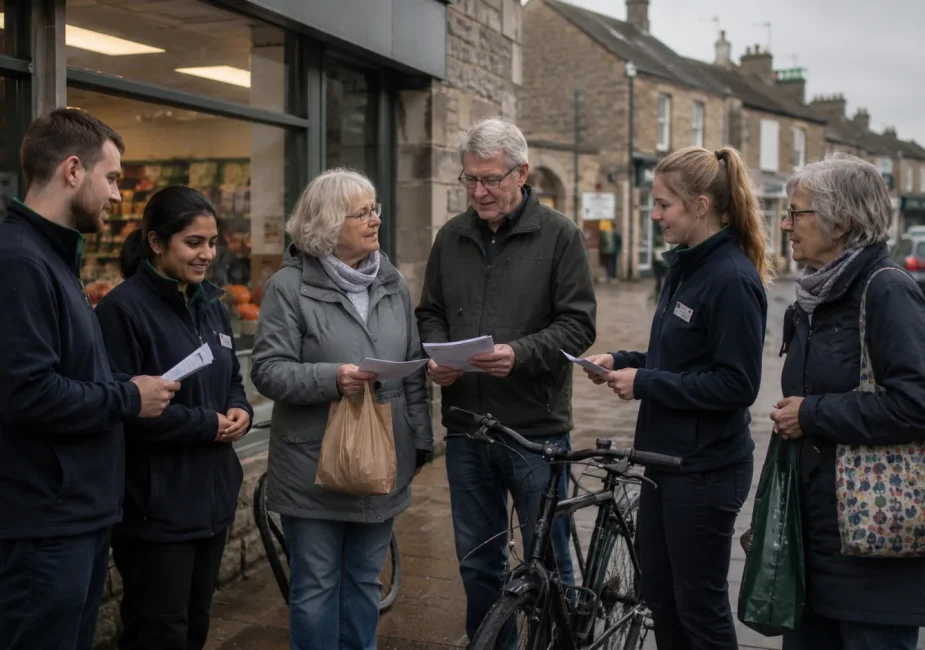
The Morrisons Leominster closure petition began shortly after employees publicly shared concerns regarding the possible closure.
Staff communicated that local support would be critical if they hoped to encourage a review of the proposal.
Petitions remain a visible method for communities to demonstrate measurable concern. While they do not guarantee reversal, they can influence public discussion and encourage engagement with businesses and representatives.
Community petitions generally aim to:
- Demonstrate demand
- Collect public evidence
- Increase media attention
- Encourage stakeholder dialogue
Local businesses and organisations may also support campaigns when closures affect wider town activity.
What Is the Morrisons Leominster Closure Petition Asking Morrisons to Reconsider?
The Morrisons Leominster closure petition is not simply asking the company to ignore commercial realities. Instead, campaign support appears focused on encouraging Morrisons to reassess whether alternative operating approaches could preserve essential services while improving sustainability.
Key areas residents and supporters may want reviewed include:
- Extending consultation before closure decisions
- Publishing clearer performance criteria
- Retaining local Post Office access
- Exploring revised opening hours
- Testing lower-cost operating models
- Considering local partnership solutions
Many community-led campaigns aim to show that closure should not automatically become the first solution where stores continue delivering wider public value.
Timeline of the Morrisons Leominster Closure Campaign
| Stage | Development |
|---|---|
| Closure proposal emerges | Staff become aware of review |
| Community concern begins | Residents raise service concerns |
| Petition activity starts | Public backing develops |
| Local discussion expands | Focus moves beyond retail |
| Review period | Stakeholders seek alternatives |
| Awaited outcome | Final decision remains pending |
How Are Residents and Local Supporters Trying to Influence the Outcome?
Community campaigns often become more effective when they move beyond signatures alone.
Supporters may attempt to increase visibility through:
- Public awareness campaigns
- Local representative engagement
- Community discussions
- Social sharing and local media attention
- Demonstrating regular customer demand
- Highlighting dependency on Post Office services
Where closure proposals affect essential access, organised community response can become an important part of the wider review process.
What Concerns Do Residents Have About Losing the Leominster Post Office?

One of the strongest themes emerging from public reaction relates to the Post Office service attached to the Morrisons location.
Post Office facilities continue to play a central role for many groups including:
- Elderly residents
- People without easy transport access
- Small business operators
- Residents requiring identity and financial services
The closure concern therefore extends beyond retail access.
Residents may need to travel further for routine tasks previously completed locally.
Services Commonly Accessed Through Local Post Office Branches
| Service | Importance |
|---|---|
| Parcel collection and returns | Daily household and business needs |
| Banking support | Cash deposits and withdrawals |
| Bill payments | Essential account management |
| Government services | Official documentation |
| Postal services | Business and personal communication |
The loss of combined retail and postal access can create cumulative inconvenience for local communities.
Why Is Losing a Combined Store and Post Office More Significant?
Many residents use locations such as Morrisons Daily for multiple tasks during a single visit. Losing both services simultaneously may create additional travel requirements and inconvenience.
Combined store and postal facilities often support:
- Banking access
- Parcel collection and returns
- Everyday grocery shopping
- Bill payments
- Identity verification services
- Support for elderly residents
This is one reason the closure discussion has generated stronger public reaction than a standard retail announcement.
How Could the Closure Affect Local Customers and Essential Services?
The practical effect of closure varies across demographic groups.
For some residents, supermarket alternatives may exist nearby. For others, convenience and accessibility remain major concerns.
Local stores contribute value through:
- Short travel distances
- Familiar staffing
- Flexible opening hours
- Combined service locations
The concern becomes greater when closures affect individuals who depend on nearby essential services.
The Leominster discussion reflects a national question about whether commercial viability should carry equal weight alongside local accessibility.
Why Is the Morrisons Daily and Post Office Combination Important to Leominster?
Combined-use locations increasingly form part of modern retail strategy. Customers often combine grocery shopping with administrative tasks, reducing unnecessary travel.
This creates efficiency for residents and generates stable footfall for retailers. Where these combined formats close, replacement options are not always immediate.
For Leominster residents, the concern appears linked to preserving practical convenience rather than simply maintaining one retailer.
What Economic Pressures Are Influencing Morrisons’ Closure Decisions?
Retail operations continue experiencing pressure from multiple directions. Businesses face rising expenditure while consumers remain cautious about spending.
Cost Pressures and Changing Retail Conditions
Current pressures commonly include:
- Wage increases
- Utility expenses
- Supply chain costs
These pressures force retailers to review store networks.
Retail Cost Pressures and Operational Effects
| Cost Area | Business Effect | Potential Store Outcome |
|---|---|---|
| Labour | Reduced margins | Staff restructuring |
| Energy | Increased operating cost | Store review |
| Logistics | Distribution expense | Consolidation |
| Property | Occupancy pressure | Location closure |
| Compliance | Administrative burden | Efficiency measures |
Daniel Mercer, UK Retail Operations Consultant, explained: “Retail closures are rarely a judgement on local staff performance. Businesses increasingly evaluate whether each location aligns with long-term operating models and financial sustainability.”
Understanding these wider pressures provides additional context to the Leominster proposal.
Could Government Policy Be Contributing to Retail Closures?

Retail closures rarely happen because of a single external factor. Businesses usually assess a combination of operating costs, customer demand, local performance and long-term strategy.
However, community reactions increasingly show that residents expect greater transparency when decisions affect access to important local services.
In situations such as Leominster, public attention has shifted toward understanding how retailers balance financial sustainability with community expectations.
This wider conversation may become increasingly important as more combined retail-service locations are reviewed across the UK.
How Might the Proposed Closure Impact Leominster’s Local Economy?
Even smaller stores contribute economic value.
Their closure can affect:
- Local employment
- Supplier activity
- Customer movement
- Adjacent businesses
Reduced footfall may influence nearby independent retailers. At the same time, spending patterns can shift to alternative locations.
Economic impact therefore, depends on how quickly replacement services become available and whether customer activity remains local.
Are There Alternative Solutions to Closing the Morrisons Leominster Store?
Closure does not always represent the only available option.
Potential alternatives sometimes considered across retail include:
| Alternative | Possible Benefit | Limitation |
|---|---|---|
| Reduced opening hours | Lower operating costs | Customer inconvenience |
| Store redesign | Efficiency gains | Upfront investment |
| Service partnerships | Maintains community access | Operational complexity |
| Franchise model | Shared responsibility | Brand consistency |
| Partial service retention | Maintains essential access | Limited commercial return |
Each option carries trade-offs and depends on operational feasibility.
Exploring alternatives often becomes a central objective of local campaigns.
What Does This Situation Reveal About the Future of Local Retail and Post Office Services?
The Morrisons Leominster closure petition reflects broader changes affecting local retail. Communities increasingly expect retailers to serve both commercial and social functions.
At the same time, businesses continue facing pressure to improve efficiency.
Future retail success may depend on creating formats that balance:
- Financial sustainability
- Community access
- Multi-service convenience
- Operational flexibility
Leominster’s experience highlights the growing importance of local engagement during periods of change.
Could Community Support Influence the Final Outcome?

Public campaigns do not automatically reverse closure decisions, but they often increase visibility and encourage further review.
Community engagement may contribute through:
- Demonstrating local demand
- Increasing media attention
- Encouraging stakeholder discussion
- Highlighting service dependency
- Exploring alternative operating options
The Leominster campaign reflects how local communities increasingly want involvement in decisions that reshape everyday services.
Conclusion: Can the Morrisons Leominster Closure Petition Change the Outcome?
The Morrisons Leominster closure petition has developed into more than opposition to one proposed store closure. For many residents, the discussion now centres on protecting local access, preserving employment and maintaining services that support everyday life.
The campaign also reflects wider questions facing UK retail about how businesses balance efficiency with community needs. Whether the final decision changes or proceeds, the response in Leominster has shown how strongly local communities value accessible services and meaningful consultation.
Frequently Asked Questions
Why are communities increasingly launching petitions against retail closures?
Communities often use petitions to demonstrate local demand and draw attention to potential economic or social consequences. Petitions can also encourage dialogue between residents, businesses and public representatives.
How do supermarket closures affect local high streets?
Closures may reduce customer footfall, influence neighbouring businesses and limit convenience for residents. Effects vary depending on replacement services and local shopping patterns.
What role does a Post Office play in smaller towns?
Post Offices support postal, banking and administrative services that remain important for residents and local businesses, particularly where alternatives are limited.
Can public petitions influence business decisions in the UK?
Petitions do not guarantee outcomes but may encourage further review, increase visibility and demonstrate measurable community concern.
Will the Leominster Post Office remain open if Morrisons closes?
Post Office arrangements can vary depending on closure decisions and future service planning. Residents often seek clarification because combined locations may not automatically continue operating independently.
Has Morrisons reversed store closure decisions before?
Retailers sometimes review proposals following consultation and community response, although outcomes depend on operational and commercial assessments.
How many signatures does a local closure petition usually need to gain attention?
There is no fixed number. Visibility, media attention, stakeholder engagement and evidence of community reliance often influence how much attention a petition receives.