Do DPD Charge for Redelivery in the UK? Fees, Delivery Attempts and Scam Warnings
 • March 24, 2026
DPD does not normally charge a UK recipient a separate fee to rearrange a standard missed delivery.
After an unsuccessful attempt, the options available may include another delivery date, leaving the parcel with an eligible neighbour, choosing an approved safe place or redirecting it to a participating DPD Pickup location.
The precise choices depend on the service purchased by the sender and the instructions attached to the parcel. Recipients should therefore follow the options displayed in their official tracking information rather than assuming every parcel follows the same process.
Key points for recipients:
- Standard redelivery does not normally involve a separate recipient fee.
- Delivery options vary according to the sender and service.
- Parcel changes should be made through official DPD tracking.
- Unexpected payment links should be treated cautiously.
- Customs charges and retailer re-dispatch fees are separate from standard redelivery.
A missed-delivery message should always be verified independently before personal, banking or card details are entered.
What Is DPD Redelivery?
DPD redelivery is the process used when a parcel cannot be successfully handed over during its original delivery attempt. The parcel is not necessarily returned to the sender immediately because another delivery or collection option may be available.
Depending on the sender’s instructions, the recipient may be able to:
- Select another delivery date
- Nominate an eligible neighbour
- Authorise an approved safe place
- Redirect the parcel to a DPD Pickup location
- Follow another option displayed through parcel tracking
Redelivery should not be confused with placing a completely new shipment. It is also separate from customs charges, import duties or a retailer charging to send an order again after it has already been returned.
The tracking status for the individual parcel is the most reliable indication of which options are available.
Why Are DPD Parcels Sometimes Undelivered?
Even the most efficient courier services can occasionally face issues that prevent successful delivery. Parcels may go undelivered due to common situations such as the recipient not being at home, incorrect or incomplete address details, or restricted access to the property.
In some cases, deliveries also fail if the parcel requires a signature or is too large to be left in a safe place.
Common reasons include:
- Recipient unavailable at the time of delivery
- Incorrect or missing address details
- Limited or restricted access to the property
- Signature-required or oversized parcels
Additional factors like bad weather, traffic delays, or operational challenges can also play a role. To minimise disruption, DPD usually sends notifications and may leave a “sorry we missed you” card, allowing customers to quickly rearrange delivery and stay informed.
How Are Missed Deliveries Handled by DPD?
When a DPD delivery is unsuccessful, the tracking record should be updated to show what happened and what the recipient can do next. The available action may include another delivery attempt, redirection to a Pickup location or delivery to an approved neighbour or safe place.
DPD Online states that it may make up to three delivery attempts before returning an undeliverable parcel. However, recipients should still follow the parcel-specific tracking information because sender instructions and service conditions can affect the process.
A parcel marked as delayed is not necessarily the same as a parcel showing a failed delivery attempt.
Delays may occur before the item reaches the local driver, while a missed attempt normally means that delivery was tried at the address. Similar distinctions between operational delays and unsuccessful delivery attempts are explained in the coverage of Royal Mail delivery delays.
If tracking stops updating or no redelivery option appears, the recipient should contact the retailer or sender as well as DPD. In many online purchases, the retailer holds the delivery contract and may need to investigate the parcel.
Does DPD Charge For Redelivery On Missed Deliveries?
DPD standard redelivery does not normally involve a separate charge for the recipient. After an unsuccessful attempt, another delivery or collection option may be made available through the parcel’s official tracking information.
According to the DPD Online delivery FAQs, DPD may make up to three attempts before returning an undeliverable parcel. However, the precise process can depend on the service purchased by the sender and the instructions attached to the shipment.
Recipients should therefore follow their parcel-specific tracking updates rather than assuming every delivery follows the same sequence.
A payment appearing elsewhere in the parcel journey is not necessarily a DPD redelivery fee.
Retailer Re-dispatch Charges
If a parcel is returned to the retailer after unsuccessful delivery attempts, the retailer may charge new postage before sending the order again. This is a retailer re-dispatch charge rather than a fee for rearranging the original DPD delivery.
Premium Delivery Services
Timed, express and weekend delivery can be separately purchased services. They should not be described as penalties imposed because the recipient missed a delivery. Weekend arrangements also vary between couriers, as shown by the availability of DHL Saturday delivery and Evri weekend delivery.
Customs And Import Charges
International parcels may legitimately attract customs duties, import VAT or handling charges. These relate to customs clearance and are separate from standard domestic redelivery.
Any unexpected request for payment should be verified through official tracking or directly with the retailer before card or banking details are provided.
How Can You Arrange A DPD Redelivery?
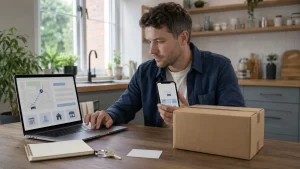
A DPD delivery should be rearranged through the parcel’s official tracking options. The safest approach is to open the myDPD app or navigate independently to the official DPD tracking service rather than following a link in an unexpected message.
DPD tracking provides real-time parcel information and may display options for recipients expecting a delivery.
The usual process is:
- Enter the parcel reference and any other requested verification details.
- Review the latest tracking event.
- Select one of the options available for that parcel.
- Confirm the new delivery or collection instruction.
- Retain the confirmation until the parcel has arrived or been collected.
Possible choices can include a different delivery day, an eligible neighbour, an approved safe place or a participating Pickup location. Not every option will be available for every parcel because restrictions may be set by the sender or the delivery service.
If no changes can be made through tracking, the recipient should contact DPD or the retailer that dispatched the order.
Can DPD Leave Parcels With A Neighbour Or In A Safe Place?
DPD may deliver a parcel to an eligible neighbour or leave it in an approved safe place when that option has been authorised and is suitable for the shipment.
DPD’s official information states that parcels may be left with a neighbour or in a safe place where this has been requested by the sender or recipient.
A safe place should be:
- Protected from rain and adverse weather
- Not clearly visible from the road
- Accessible to the driver
- Suitable for the parcel’s size
- Secure enough to reduce the risk of loss or theft
Some parcels cannot be left unattended because of sender restrictions, identification requirements, age checks, signatures or the nature of the contents.
Recipients should not leave sensitive access information in a public delivery note. Where a safe place is unsuitable, redirecting the parcel to an authorised neighbour or collection point may offer a more secure alternative.
How Do DPD Pickup Shops Work?
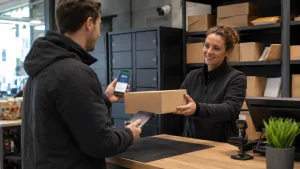
DPD Pickup locations allow eligible parcels to be collected from a participating shop or locker rather than delivered to the recipient’s home. The option can be useful for people who are unavailable during the normal delivery window or who do not have a suitable safe place.
DPD operates an extensive UK network of parcel shops and lockers, including locations connected with Post Office and Sainsbury’s. Availability still depends on the parcel, service and sender instructions.
Collecting From A Post Office Branch
According to the official Post Office DPD guidance, the recipient should bring the DPD pickup pass sent by email or SMS. The pass contains the collection code and explains whether additional photo identification is required.
Where the pickup pass cannot be produced, the recipient may still be able to collect the parcel by presenting:
- A passport or driving licence
- A utility bill or bank card as additional verification
A DPD parcel delivered to a participating Post Office branch is normally held for seven days. If it is not collected during that period, DPD returns it to the sender.
These instructions apply specifically to participating Post Office branches. Other DPD Pickup shops or lockers may use different verification and collection procedures, so the recipient should follow the message supplied for the individual parcel.
Collection arrangements also vary between courier networks. For example, Evri parcel shops use their own collection codes, location network and holding procedures.
How to Protect Yourself From DPD Redelivery Scams?

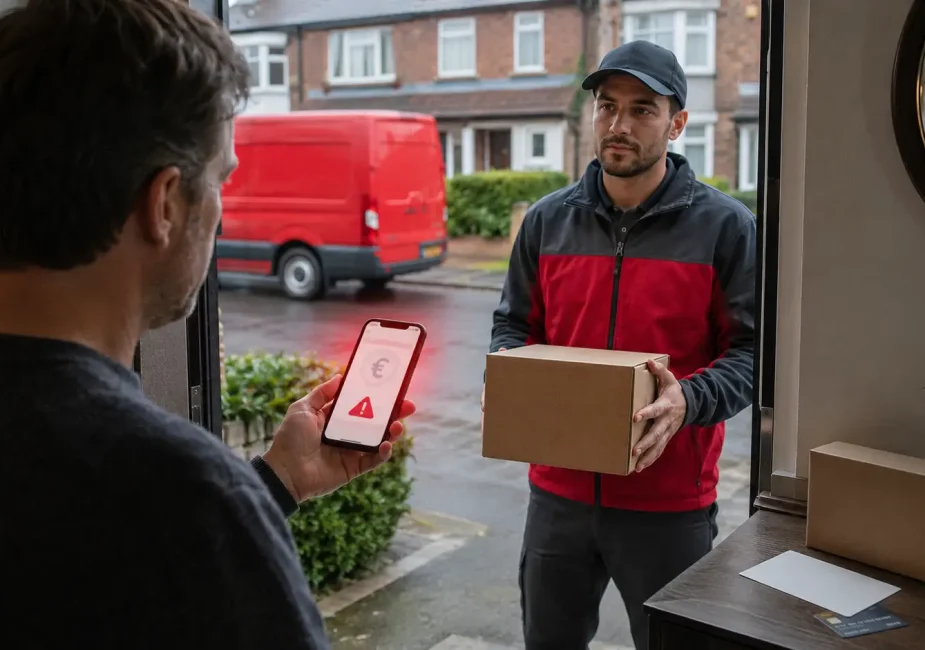
Unexpected parcel messages asking for a small redelivery payment are a common form of phishing or “smishing”. The message may claim that delivery failed and that a charge must be paid before another attempt can be made.
Do not use the appearance of the link, company logo or parcel-reference format as proof that a message is genuine. Fraudsters can imitate courier branding and create web addresses that resemble legitimate delivery pages.
A safer response is to:
- Avoid replying to the message
- Avoid clicking its link
- Avoid entering personal or financial details
- Open the official DPD app or tracking page independently
- Compare the message with the parcel’s actual tracking status
- Contact the retailer when the parcel cannot be verified
Ofcom advises people not to engage with suspicious messages, click their links or share personal and financial information. Suspicious mobile texts can be forwarded free of charge to 7726 through most UK mobile networks. The procedure is explained in Ofcom’s scam-message guidance.
The same small-payment tactic is also used in messages pretending to come from other couriers. The article on Evri scam text messages supports this point by covering fraudulent delivery links and payment demands using another major UK courier’s name.
If card or bank information has already been provided, the recipient should contact the relevant financial provider immediately and report the incident through the appropriate official fraud-reporting channel.
Conclusion
DPD standard redelivery does not normally require a separate payment from the recipient, but the available options depend on the sender and the service used.
Official tracking should be used to select another delivery date, nominate an approved neighbour or safe place, or redirect an eligible parcel to a Pickup location.
Recipients should distinguish ordinary redelivery from premium services, customs charges and retailer re-dispatch fees. Unexpected payment messages should never be trusted solely because they use DPD branding or contain a parcel number.
Verifying the parcel independently provides the safest way to avoid both delivery problems and phishing attempts.
FAQs
Does DPD Charge for Standard Redelivery?
DPD does not normally charge the recipient a separate fee to rearrange a standard missed delivery. The options available depend on the sender and the service used.
Does DPD Automatically Attempt Delivery Again?
DPD Online states that it may make up to three delivery attempts. Recipients should rely on their parcel tracking because the process can vary according to the service and sender instructions.
Can a DPD Parcel Be Sent to a Pickup Shop?
An eligible parcel may be redirected to a participating shop or locker when that option appears in official tracking. Not every parcel can be redirected.
How Long Does Post Office Hold a DPD Parcel?
A participating Post Office branch normally holds a DPD parcel for seven days from its arrival. An uncollected parcel is then returned to the sender.
What Identification Is Needed for DPD Collection?
The DPD pickup pass explains whether photo identification is required. Without the pass, a Post Office branch may request photo ID together with a utility bill or bank card.
What Should You Do With a DPD Redelivery Payment Text?
Do not click the link or enter card details. Open official tracking independently, verify the parcel and forward a suspicious mobile text to 7726.
Editorial Note:
This guide has been prepared using current information published by DPD, Post Office and Ofcom. Delivery choices can vary according to the sender, service and collection location, so the instructions displayed in official parcel tracking should take priority.