John Lewis Blakelands Warehouse Closure: 40-Year Depot Shut
 • May 27, 2026
Key Takeaways:
- We visited Milton Keynes to understand the reality behind the closure.
- Blakelands had operated for more than four decades within the John Lewis network.
- Investment is now focused on automated logistics at Magna Park 3.
- Most affected employees were reportedly moved into other operational roles.
- The closure reflects wider changes happening across UK retail and fulfilment.
Why Has John Lewis Closed the Blakelands Warehouse After More Than 40 Years?
When we left London and travelled to Milton Keynes, one question framed the entire journey: why would a retailer close a distribution centre that had supported operations for more than four decades?
From the outside, warehouse closures can often look straightforward an old site closes, a new one opens and operations move elsewhere. But standing in the area and looking at the broader context surrounding John Lewis’ logistics network, the picture appeared more layered.
Blakelands was not a failed site. It had history, operational importance and long-standing value to the company. Yet modern retail no longer works under the same conditions that built warehouses like this.
Standing in Milton Keynes and reviewing how retail infrastructure around us had evolved, we realised customer expectations now demand something fundamentally different from what warehouses built decades ago were originally designed to support.
Consumers increasingly expect next-day availability, faster stock visibility, flexible delivery windows and seamless movement between digital and physical shopping journeys.
When viewed through that lens, the question stopped being why John Lewis closed Blakelands and became whether Blakelands could realistically keep evolving at the pace modern retail now requires.
That shift in perspective changed how we interpreted the closure entirely.
What Actually Happened at the John Lewis Blakelands Warehouse Closure?
When we travelled from London and reached Milton Keynes, one thing became immediately clear: the closure itself was no longer being treated locally as a future proposal or operational review it had already become part of the area’s changing logistics identity.
Walking around the wider distribution environment and comparing public company statements with what had actually happened on the ground helped us understand that this was not simply a warehouse shutting its doors.
The Blakelands distribution centre had operated for more than four decades and had supported part of the wider John Lewis fulfilment network through changing retail cycles, customer expectations and evolving logistics demands.
What also became clearer as we reviewed the wider operational footprint was the scale of what had actually closed.
The Blakelands site was not a small regional facility it operated as a warehouse spanning approximately 220,900 square feet, supporting distribution activity across parts of the wider John Lewis network over multiple decades.
Standing nearby and reflecting on the physical footprint helped us understand why the announcement attracted attention beyond Milton Keynes itself.
What stood out to us during our investigation was the scale of transition rather than the scale of closure.
Instead of reducing logistics presence, the direction appeared focused on transferring capability into newer infrastructure designed around automation, operational flexibility and long-term fulfilment efficiency.
From our reporting perspective, that distinction matters.
A warehouse closure often creates an assumption of contraction. What we observed here suggested something different older infrastructure stepping aside for a newer operating model.
| What We Observed | What It Suggests |
|---|---|
| Long-established site closure | Strategic infrastructure change |
| Investment shifting elsewhere | Logistics modernisation |
| Continued employee focus | Workforce retention |
| Automation expansion | Future fulfilment capability |
The Role of the Blakelands National Distribution Centre
Looking into the history of the site, it became clear that Blakelands had served a practical and strategic purpose for years.
The facility contributed to wider distribution operations supporting stock movement, fulfilment activity and store replenishment. Its location in Milton Keynes also made logistical sense due to regional connectivity.
For many years, this type of infrastructure formed the operational backbone of large retailers.
The Decision Behind the Closure
As we reviewed the company’s wider announcements and developments, one theme repeatedly appeared: future readiness. The closure coincided with stronger investment into automated capability at Magna Park 3.
Rather than continuing to scale traditional infrastructure, John Lewis appears to be restructuring around systems capable of delivering greater efficiency over time.
| Operational Area | Blakelands Model | New Strategic Direction |
|---|---|---|
| Infrastructure age | More than 40 years | Modern logistics investment |
| Fulfilment approach | Traditional distribution | Automated processing |
| Expansion capability | Limited | Higher scalability |
| Long-term priority | Existing operations | Future network development |
Walking away from our research at this stage, the closure felt less like an ending and more like a reallocation of operational confidence.
What We Learned About Why the Site Was Not Expanded Instead
As we continued speaking with people familiar with logistics operations and reviewing the wider retail transition happening across the UK, another question kept appearing in our notes: why not simply modernise Blakelands instead of closing it?
The more we explored that question, the more the answer appeared connected to infrastructure age rather than operational failure.
Warehouse transformation today is rarely limited to replacing equipment.
Modern fulfilment increasingly depends on integrated layouts, automation compatibility, larger processing capability and systems designed around predictive inventory movement.
Retrofitting sites originally developed under older operational assumptions can become increasingly complex.
From our assessment, John Lewis appears to have concluded that future investment generated greater long-term value elsewhere. What We Heard About Workforce Confidence During the Transition
Throughout our reporting, this became one of the most important areas to understand because closures often become defined entirely by numbers.
What we found instead was repeated emphasis around preserving operational experience.
The people working inside these environments carry years of process knowledge, local coordination understanding and practical fulfilment expertise that cannot simply be recreated overnight.
Looking at how the transition was publicly communicated, the message appeared focused on continuity rather than replacement. From our perspective, that changed the tone of the story.
What Did John Lewis Say About the Blakelands Warehouse Closure?

Before travelling, we reviewed public comments from John Lewis leadership to understand how the business itself framed the closure. What stood out was the tone.
The language surrounding the transition acknowledged the history of the site while focusing heavily on continuity and future investment.
Rather than presenting the closure as a cost-saving measure, John Lewis described it as part of a broader logistics transformation. That distinction matters.
In retail, the message around a closure often reveals how a company wants stakeholders to interpret change.
Acknowledging the contribution of the Blakelands team
As we continued our analysis, one detail repeatedly surfaced the emphasis placed on employees.
John Lewis highlighted the contribution made by teams who had worked through years of operational change and maintained the warehouse over decades.
That focus suggested the company wanted to preserve institutional knowledge rather than lose it.
Retail operations consultant Mark Benson reflected on transitions like this: “Businesses often discover that infrastructure can be replaced faster than operational experience. Keeping people connected to the network becomes one of the strongest indicators that transformation is being managed strategically.”
That observation aligned with the wider messaging surrounding the closure.
How Did the Blakelands Distribution Centre Support John Lewis Operations?
During our investigation, we kept returning to a broader question: what exactly disappears when a warehouse closes? The answer, we found, is rarely just a building.
Distribution centres connect inventory, store operations and customer fulfilment into a single system. Blakelands formed part of that system for decades.
Supporting Stores and Customer Fulfilment Across the UK
Looking at how John Lewis structures operations nationally, it became clear that sites like Blakelands supported a continuous flow of goods across multiple channels.
This includes maintaining stock availability, supporting customer orders and helping coordinate wider logistics activity.
| Operational Function | Contribution |
|---|---|
| Store replenishment | Supported stock continuity |
| Inventory coordination | Improved availability |
| Customer fulfilment | Enabled order movement |
| Distribution support | Connected regional operations |
| Logistics planning | Increased operational consistency |
From our perspective, this explains why closures of this scale attract attention even when replacement infrastructure already exists. Warehouses are often invisible until they change.
Why Is John Lewis Investing in Automation at Magna Park 3?
This was the point where our reporting shifted from asking what closed to asking what is replacing it. When we examined John Lewis’ direction, automation quickly emerged as the centre of the conversation.
The investment at Magna Park 3 appears designed to support operational speed, efficiency and adaptability. That trend extends well beyond one retailer.
Across the UK, distribution networks are being rebuilt around systems capable of handling more complex demand patterns.
The Next Phase of Logistics Transformation
As we analysed the move, automation looked less like a technology story and more like a retail survival strategy. Retailers increasingly need infrastructure that can respond faster to changes in buying behaviour.
| Automation Focus | Expected Result |
|---|---|
| Inventory systems | Better visibility |
| Processing speed | Faster fulfilment |
| Warehouse coordination | Improved efficiency |
| Data integration | Smarter forecasting |
| Operational flexibility | Increased resilience |
Supply chain analyst Rebecca Holt explained it this way: “Retail logistics is increasingly becoming a predictive environment rather than a reactive one. Facilities built around automation are designed to adapt continuously.”
From our assessment, Magna Park 3 appears positioned to support that transition.
Did John Lewis Outgrow the Blakelands Site?
When we stepped back from individual announcements and looked at the wider logistics landscape around Milton Keynes, we started asking a different question.
Was Blakelands actually underperforming or had retail simply moved beyond the conditions it was originally built for? That distinction became increasingly important.
For decades, facilities like this represented efficient distribution infrastructure. But retail today operates under different assumptions.
Orders move faster.
Inventory decisions happen in real time. Customer journeys stretch across multiple channels.
Warehouses increasingly need to behave like technology platforms rather than storage environments.
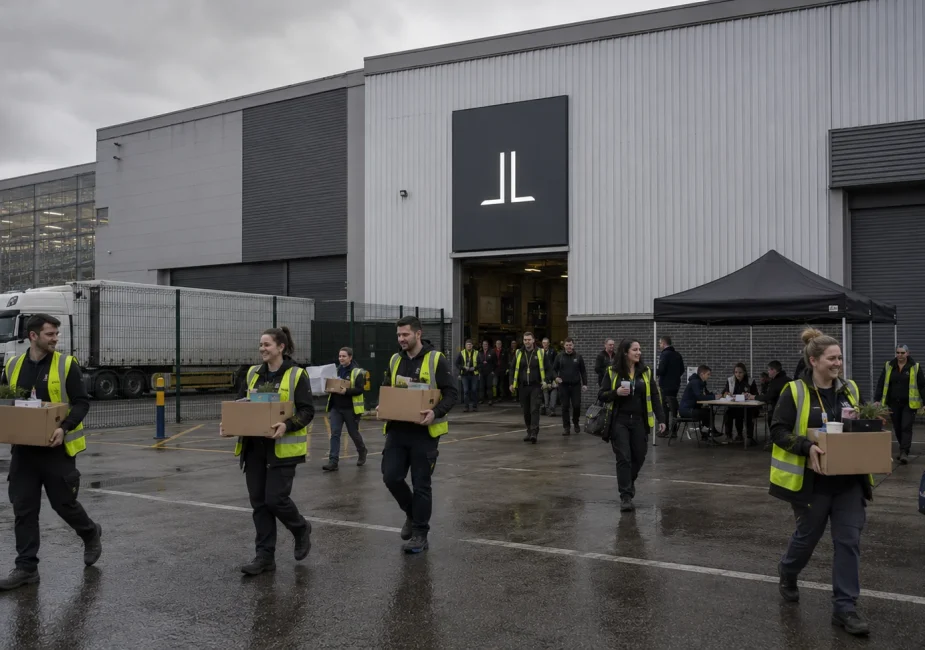
What Happens to Employees Affected by the Warehouse Closure?
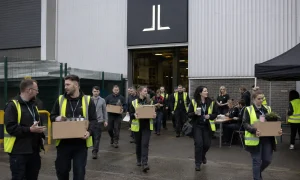
This was one of the questions we considered most closely throughout our reporting. Warehouse closures naturally raise concerns around workforce impact.
However, public statements surrounding the transition repeatedly highlighted internal movement rather than broad displacement.
Redeployment and workforce transition within the network
According to company information, the majority of affected partners secured opportunities elsewhere within the wider John Lewis distribution operation.
From our perspective, this detail significantly changes how the closure can be interpreted. Infrastructure investment becomes easier to understand when accompanied by efforts to preserve employment continuity.
That does not remove uncertainty, but it changes the context. As we compared how closures are normally communicated against the messaging surrounding Blakelands, one detail continued standing out.
The company repeatedly framed the transition around retaining operational knowledge rather than replacing it.
From what we reviewed, the majority of affected Partners appeared to remain connected to the wider logistics network through internal movement opportunities.
How Does the Closure Fit Into John Lewis’ £800m Digital Transformation Programme?
As we connected logistics changes with wider company activity, the closure became easier to place into context. John Lewis is not simply changing warehouses.
The business is investing across digital systems, commerce platforms and customer experience.
Linking Logistics Investment With Digital Growth
From our analysis, fulfilment and digital strategy are becoming increasingly dependent on each other. Customers may notice smoother shopping journeys, but behind those experiences sits infrastructure capable of supporting them.
As we continued connecting logistics decisions with broader company investment activity, the scale became easier to understand.
The closure appears to sit within John Lewis’ wider £800 million transformation programme, which focuses on upgrading fulfilment capability, digital commerce infrastructure, customer experience systems and operational efficiency across the business.
From our perspective, Blakelands looked less like an isolated warehouse decision and more like one visible stage within a significantly larger retail transition.
Why Is John Lewis Expanding Through AI and New Commerce Platforms?
During our review of recent developments, another pattern became clear. John Lewis is positioning itself in places where customers increasingly discover products.
The company’s plans around digital commerce and AI-supported discovery indicate that retail journeys continue to evolve.
Partnership With Commercetools and AI-powered Discovery
We viewed this as part of a broader effort to reduce friction between product discovery and purchasing.
Retail strategist Daniel Mercer described the shift clearly: “Customers increasingly move between inspiration platforms and buying platforms without treating them as separate experiences.”
That perspective helps explain why logistics and digital investment are increasingly happening simultaneously.
What Does the Launch on TikTok Shop Say About John Lewis’ Retail Strategy?
Looking at the wider strategy, TikTok Shop appears less like experimentation and more like market positioning.
John Lewis selected categories that naturally align with social commerce behaviour and tested how customers interact outside traditional retail channels.
From our analysis, the move reflects an effort to remain present wherever purchasing decisions begin. Retail increasingly appears to reward accessibility rather than channel loyalty.
What Impact Could the Blakelands Warehouse Closure Have on Milton Keynes?
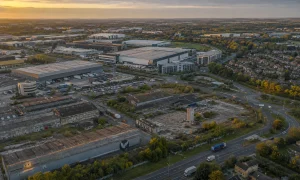
After spending time analysing the local context, one conclusion became difficult to ignore. Milton Keynes remains deeply connected to UK logistics.
Although Blakelands has closed, investment elsewhere suggests the area itself continues to hold strategic value. What changes is not necessarily the location but the type of infrastructure businesses choose to prioritise.
For local observers, that distinction may become increasingly important over time.
What Does This Closure Mean for the Future of John Lewis and UK Retail Logistics?
By the end of our reporting, the closure felt less like a standalone event and more like an example of where retail is heading. Long-serving facilities are increasingly being measured against automation capability, digital integration and fulfilment speed.
For John Lewis, the Blakelands closure appears to reflect confidence in future infrastructure rather than withdrawal from operations. Across retail, similar decisions may become more common.
Conclusion: What Comes Next After the John Lewis Blakelands Warehouse Closure?
After travelling from London and examining both the operational changes and local context in Milton Keynes, we left with a different conclusion than we expected at the start.
The John Lewis Blakelands warehouse closure did not feel like a withdrawal. It felt like redistribution.
The building may have closed, but the wider logistics strategy appeared to continue expanding around it.
What happens next will likely depend less on the closure itself and more on whether newer infrastructure delivers the flexibility, speed and resilience retailers increasingly depend on.
From what we observed throughout this investigation, John Lewis appears willing to trade legacy infrastructure for future capability and that may become a far more common story across UK retail in the years ahead.
Frequently Asked Questions
Why did John Lewis close the Blakelands warehouse?
From our analysis, the closure appears linked to wider logistics modernisation and investment in automation rather than a reduction in retail activity.
How large was the John Lewis Blakelands warehouse?
From our reporting and review of public information, the Blakelands distribution centre covered approximately 220,900 square feet and operated within the John Lewis logistics network for more than four decades before closure.
Where is Magna Park 3 located?
Magna Park 3 is located in Milton Keynes and is becoming an important part of John Lewis’ future logistics network.
Were employees offered alternative roles?
John Lewis stated that most affected employees secured opportunities elsewhere across its distribution operations.
Is this closure part of a larger strategy?
Yes. The closure appears connected to wider investment across digital transformation, fulfilment capability and customer experience.
Will customers notice operational changes?
Customers may experience improvements through faster fulfilment and stronger inventory coordination rather than visible changes.
How is AI connected to this strategy?
AI supports product discovery and helps retailers become more accessible across evolving digital environments.