
London Driverless Taxi Safety Concerns 2026: TfL Approves Wayve and Uber Robotaxi Trials
 • May 26, 2026
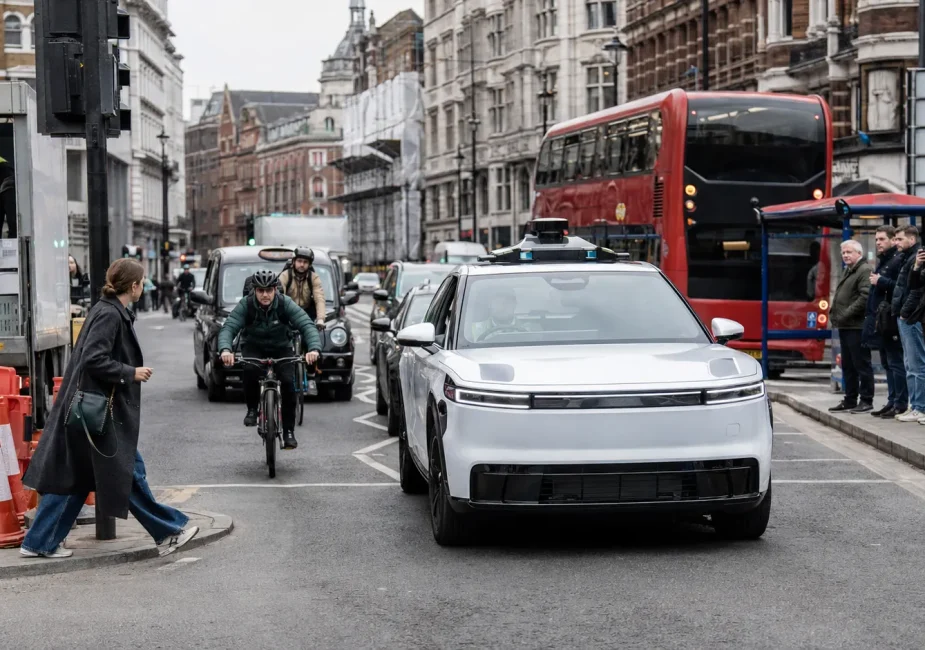
Are Fully Driverless Taxis Operating in London in 2026? Not yet as a normal, widely available commercial service.
London has moved significantly closer to driverless taxis in 2026, but there is an important distinction between autonomous driving with a safety driver and a genuinely driverless passenger service.
Transport for London has granted Private Hire Vehicle licences to Wayve autonomous vehicles that Uber plans to use for passenger rides later in summer 2026.
The vehicles can perform the driving task using Wayve’s AI system, but a trained, TfL-licensed private hire driver will initially remain onboard to supervise and take control if necessary.
That means Londoners should not interpret the latest approval as permission for thousands of completely unmanned taxis to begin operating immediately.
Under current government guidance, a vehicle monitored by a safety driver is treated differently from one legally operating without human monitoring.
Last Updated: 11 August 2026
What Changed With TfL’s August 2026 Driverless Taxi Approval?
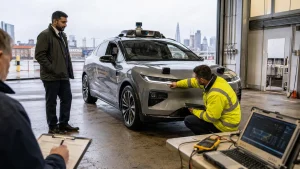
The major change came on 5 August 2026, when TfL granted Private Hire Vehicle licences to Wayve’s autonomous Ford Mustang Mach-E vehicles.
According to Wayve’s August 2026 announcement, the vehicles passed TfL inspection requirements and will operate through Uber’s existing private hire framework.
More than 100,000 Londoners had joined Uber’s interest list within the previous eight weeks, showing that public curiosity about the technology is already considerable.
Reports indicated that 15 vehicles received licences. The early passenger programme is expected later in summer 2026 before any broader public launch.
| August 2026 position | Current status |
|---|---|
| Wayve autonomous vehicles | TfL private hire licences granted |
| Vehicle used | Electric Ford Mustang Mach-E |
| Uber involvement | Passenger booking platform/operator |
| Early passenger rides | Planned for later summer 2026 |
| Safety driver | Yes |
| Fully driverless service | Not yet generally available |
| Wider AV framework | Still being implemented |
Why Will Human Safety Drivers Still Be Required?
Wayve’s vehicles are designed to control the journey autonomously, but the first passenger rides will still have a licensed driver onboard.
This is not merely a technical precaution. Government guidance draws a legal distinction between trials where a driver remains ready to intervene and pilot deployments where the vehicle operates without safety-driver monitoring.
For passengers, that means the early London experience will look more like a highly automated private hire journey than the completely driverless robotaxis already operating in parts of the United States.
The continued presence of licensed drivers also means conventional driving and licensing requirements still matter during this stage, alongside wider changes affecting DVLA driving licence rules.
Why Are London Driverless Taxi Safety Concerns Increasing?
Driverless taxis are attracting greater scrutiny because London’s debate has moved from speculation to deployment.
The challenge is not simply whether a vehicle can follow a mapped route.
London roads contain pedestrians stepping into traffic, cyclists filtering between vehicles, buses pulling away from stops, delivery vans blocking lanes, temporary roadworks, emergency vehicles and streets originally designed long before motor transport existed.
These are precisely the circumstances in which an autonomous driving system must interpret context rather than merely recognise objects.
Government proposals for self-driving vehicles specifically address temporary restrictions, roadworks, rapidly changing conditions, vulnerable road users and emergency-service interactions, showing that regulators regard these as central safety issues rather than unusual exceptions.
What Safety Concerns Have Westminster Council and London Authorities Raised?
Westminster has become one of the most vocal areas of concern because any large-scale deployment would have to function in some of London’s most complicated streets.
In May 2026, Westminster transport adviser Hugh Brennan warned that driverless taxis could create a serious collision risk, particularly when autonomous systems encounter situations that do not fit expected road patterns.
The wider debate also includes congestion. A robotaxi does not necessarily stop contributing to traffic when it has no passenger. Empty vehicles may reposition themselves, travel to another booking or circulate while waiting for demand.
Safety therefore overlaps with transport policy. London has long sought to reduce unnecessary car traffic, so autonomous services will be judged not only on whether individual vehicles avoid crashes but also on how thousands of additional journeys might affect London’s streets.
How Concerned Are Londoners About Driverless Taxis?
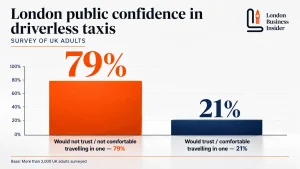
Public confidence remains one of the biggest barriers.
Research referenced by the London Assembly’s 2026 autonomous passenger vehicle investigation found that 79% of London respondents would not trust a driverless car or feel comfortable travelling in one, while 21% said they would.
The research surveyed more than 2,000 UK adults.
Those figures are particularly interesting because Londoners were still reported as being more receptive than respondents in other UK regions.
Operators therefore face two tests. Their vehicles must satisfy regulators, but passengers also need enough confidence to actually use them.
What Recent Robotaxi Incidents Have Raised Public Safety Questions?
Some of the incidents influencing London’s debate have happened overseas rather than in the UK, but they demonstrate the types of edge cases regulators are examining.
In June 2026, Waymo recalled nearly 3,900 US robotaxis after a software issue created a risk that vehicles could enter closed freeway construction zones.
Emergency-service interaction has also attracted regulatory attention. In July 2026, US safety regulators called on autonomous-vehicle companies to improve how vehicles respond around emergency scenes following reports of robotaxis obstructing or interfering with first responders.
These cases do not prove that the same failures will occur in London. Different companies use different technology, operating conditions and safety systems.
They do demonstrate why temporary road layouts and emergency situations matter so much. London’s autonomous vehicles will have to deal reliably with precisely these unpredictable conditions.
Are Robotaxis Actually Safer Than Human-Driven Taxis?
There is not yet enough London-specific driverless operating data to give a definitive answer.
Supporters argue that autonomous systems remove several major human risk factors.
A computer does not become tired, distracted or intoxicated, and government figures cited in its 2026 consultation state that human error was a contributory factor in 88% of recorded road collisions in Great Britain in the underlying 2020 analysis.
That makes existing human-driving risks, including distraction and drink-driving limits in the UK, an important part of any fair comparison.
There is also encouraging international evidence. Waymo currently reports substantially lower rates of serious-injury, airbag-deployment and injury-causing crashes than its human-driver benchmarks across the US locations included in its dataset.
However, those figures come from Waymo’s own operating data and different road environments, so they should not automatically be treated as proof of how the technology will perform in London.
Autonomous systems remove some human weaknesses but create different risks involving software, sensors, unusual road situations, remote support and cybersecurity.
The real question is therefore not whether machines or humans are universally safer. It is whether an approved autonomous system can demonstrate consistently safer performance within the exact conditions where it is permitted to operate.
What Are the Different Levels of Autonomous and Self-Driving Cars?
The SAE classification runs from Level 0 to Level 5. The most important distinction is between systems that merely assist a human and systems that actually take responsibility for the driving task.
| Level | Automation | What the vehicle does | Human role |
|---|---|---|---|
| Level 0 | No driving automation | May provide warnings or momentary assistance | Driver controls vehicle |
| Level 1 | Driver assistance | Controls steering or acceleration/braking | Driver continuously monitors |
| Level 2 | Partial automation | Can control steering and acceleration/braking together | Driver must continuously supervise |
| Level 3 | Conditional automation | Drives itself under defined conditions | Human must take over when requested |
| Level 4 | High automation | Handles driving and fallback within its permitted operating area/conditions | Human driver not required within those conditions |
| Level 5 | Full automation | Can perform the complete driving task under all road conditions | No human driver required |
A Level 2 vehicle should therefore not be described as genuinely driverless simply because it can steer and control speed.
Level 4 is particularly important for robotaxis. Wayve and Uber have separately discussed Level 4 robotaxi deployment, while Waymo’s established ride-hailing technology is also designed around high automation within defined operating areas.
How Do Wayve and Other Driverless Taxi Systems Work?
There is no single sensor configuration used by every autonomous vehicle company.
Wayve’s newly licensed London Ford Mustang Mach-E vehicles use the Wayve AI Driver with surround cameras and radar. Wayve describes its approach as AI-led rather than relying primarily on extensive hand-coded rules and high-definition maps.
Waymo uses a different approach combining cameras, radar, LiDAR, detailed maps and onboard computing.
That distinction matters because discussions about “driverless car technology” often imply every vehicle operates in the same way.
How Do Cameras, Radar and AI Detect Road Conditions?
Cameras can identify signs, signals, lane markings, pedestrians and other visual information. Radar is particularly useful for judging the distance and speed of surrounding objects.
AI software then processes these inputs to determine what is happening and what the vehicle should do next.
The hardest problem is not detecting an object. It is interpreting its meaning.
A system may correctly identify a delivery van ahead, for example, but still needs to decide whether the van is moving, temporarily stopped, blocking the lane or about to open a door into the path of a cyclist.
Do All Autonomous Vehicles Use LiDAR?
No. LiDAR uses laser pulses to build a detailed three-dimensional picture of a vehicle’s surroundings, and companies including Waymo use it extensively.
Wayve’s London vehicles are described as using surround cameras and radar alongside its AI Driver.
Sensor architecture therefore depends on the developer.
Could London’s Roads Make Driverless Taxis Harder to Operate Safely?
London is an unusually demanding environment for automated driving.
Cyclists may filter between stationary traffic. Pedestrians can emerge from behind buses. Temporary traffic lights can replace permanent junction arrangements. Roadworks can move lane boundaries overnight.
Historic streets can also create tight spaces where vehicles must negotiate with other road users rather than simply follow obvious lane markings.
Pedestrian safety deserves particular attention. Changes to issues such as pavement parking rules in England demonstrate how street design and vehicle behaviour can directly affect people walking or using mobility aids.
Government’s proposed automated-vehicle principles specifically state that self-driving systems should interact safely with pedestrians, cyclists, motorcyclists, children, older adults and disabled people.
Are Self-Driving Cars Legal in the UK?
Yes, but the answer depends on what is meant by “self-driving”.
Automated-vehicle technologies have been trialled legally in Britain for years, where companies follow existing road law and the government’s trialling code. During a conventional supervised trial, a safety driver or operator must remain ready and able to resume control.
The position changed further in 2026 with the introduction of the self-driving vehicle pilot scheme.
Companies can apply to deploy vehicles without a safety driver, provided the vehicle, automated driving system, operating organisation and passenger service satisfy the relevant requirements.
That does not mean any vehicle marketed with “autopilot”, “hands-free” or similar features can legally be treated as driverless. Many consumer systems remain driver-assistance technology and require the person behind the wheel to stay responsible.
Who Regulates Driverless Taxis in London: TfL, DVSA or the Government?
Responsibility is shared.
TfL remains important because it regulates London’s taxi and private hire system. The first Wayve/Uber vehicles were licensed through the normal private-hire framework because a TfL-licensed human driver remains onboard.
For genuinely driverless passenger operations under the new pilot framework, the structure is different.
The Vehicle Certification Agency assesses whether vehicles can safely and legally drive themselves for pilot deployment.
The Driver and Vehicle Standards Agency handles functions relating to Automated Passenger Service applications on behalf of the Secretary of State, including assessment, consultation, monitoring and enforcement.
Local licensing authorities such as TfL must also provide consent where the proposed service resembles a taxi or private hire operation.
How Ready Is London for Driverless Taxis?
Explore where London’s robotaxi rollout actually stands, test the difficult road situations autonomous vehicles will need to handle and see why passenger confidence remains a major challenge.
Early Wayve and Uber passenger rides are expected to include a trained TfL-licensed safety driver.
What Stage Is London Actually At?
Select each stage to understand the difference between today’s supervised vehicles and a genuinely driverless service.
A licensed human driver remains onboard
Wayve’s autonomous vehicles can perform the driving task, but the initial London passenger phase still includes a trained private hire driver who can intervene when required.
Put a Robotaxi Into a London Road Situation
Choose a situation. The panel explains why that everyday London event becomes an important autonomous-driving test.
Temporary roadworks change the normal route
London roadworks can move lane boundaries, introduce temporary signals and replace familiar junction arrangements. An automated vehicle must recognise the new environment rather than rely on the road looking exactly as expected.
Would Londoners trust a driverless car?
Research referenced by the London Assembly’s 2026 autonomous passenger vehicle investigation.
Before You Call It “Driverless”
Open each question to see what the current London situation actually means.
What Is an Automated Passenger Service Permit?
An Automated Passenger Service, or APS, permit provides a specific route for regulating passenger services using automated vehicles.
For a London robotaxi service, an operator seeking genuinely driverless deployment would have to pass several stages rather than obtaining one simple “robotaxi licence”.
The vehicle’s capability must be assessed, the operating organisation must meet applicable requirements and the passenger service itself must receive the necessary permit and local consent.
Government guidance also makes clear that passengers in a genuinely automated passenger service do not carry responsibility for how the vehicle drives.
What New Driverless Vehicle Safety Rules Are Being Considered in 2026?
The regulatory system is still developing.
On 17 June 2026, the Department for Transport opened a consultation on statutory safety principles for automated vehicles. The government’s 2026 self-driving vehicle safety consultation remains open until 9 September 2026.
The draft framework says authorised self-driving vehicles should reach a level of safety equivalent to or higher than careful and competent human drivers and should improve road safety overall.
The proposed principles cover compliance with traffic laws, vehicle control, hazard detection, weather and road conditions, predictable behaviour, vulnerable road users, emergency services and recognising the limits of an automated system.
These requirements are particularly relevant to London because temporary roadworks, mixed road users and unpredictable traffic conditions are everyday features rather than rare exceptions.
Who Is at Fault if a Driverless Car Crashes?
The answer depends heavily on whether the vehicle was legally driving itself or whether a human driver remained responsible.
When Could the Driver Be Responsible?
During the type of supervised autonomous rides Wayve and Uber are initially preparing for London, a licensed human driver remains onboard and ready to intervene.
Government guidance says trials requiring a safety driver are distinct from legally driverless pilot deployments. In conventional trials, the driver or operator retains responsibility for the vehicle in broadly the same way as another road user.
A person using ordinary Level 1 or Level 2 driver-assistance features also remains responsible for monitoring and driving safely.
When Could the Operator or Manufacturer Be Responsible?
The position changes once a vehicle is legally operating in self-driving mode.
Under the Automated and Electric Vehicles Act 2018, an insurer is generally liable in the first instance where an insured automated vehicle causes an accident while driving itself.
If an automated vehicle is uninsured, liability may instead fall on the vehicle owner in circumstances covered by the Act.
The Automated Vehicles Act 2024 creates a more extensive future responsibility structure, including authorised self-driving entities responsible for the automated driving system and operators responsible for vehicles making journeys without a user in charge.
Full implementation of that broader framework is currently intended for the second half of 2027.
How Does Insurance Work After a Driverless Car Accident?
For a vehicle legally driving itself under the current applicable framework, the legislation is designed so an injured person does not first have to determine whether a software developer, manufacturer or another technical party caused the failure before pursuing compensation.
The insurer can have first-instance liability and may later pursue another responsible party where the law allows.
Individual cases could still involve questions about contributory negligence, insurance status, unauthorised modifications or software updates, so liability cannot be determined from the fact that a vehicle contained autonomous technology alone.
How Will Driverless Taxi Incidents Be Investigated?

Data will become critical.
An autonomous vehicle can potentially record information about its speed, system status, detected objects, driving mode and actions taken immediately before an incident.
The 2026 safety framework provides for continuing monitoring and an independent investigation function, while the government expects safety data to play a role in determining whether automated systems remain suitable for operation.
This could make some crashes technically easier to reconstruct than incidents involving only conflicting human recollections.
However, regulators will still need access to reliable data and enough transparency to understand why a system made a particular decision.
How Much Do Driverless Cars Cost in the UK?
There is no standard UK retail price for a fully driverless Level 4 or Level 5 consumer car in August 2026, because vehicles capable of normal unsupervised driving are not yet being sold to British motorists as mainstream consumer products.
Cars with sophisticated driver-assistance systems are commercially available, but those features should not be confused with a genuine robotaxi.
For context, the standard Ford Mustang Mach-E on which Wayve’s London vehicles are based currently starts at roughly £48,000–£51,000, depending on the current Ford offer and specification.
However, buying a normal Mustang Mach-E does not give the buyer Wayve’s autonomous robotaxi technology.
Wayve’s autonomous hardware and software are being deployed as part of a commercial fleet partnership rather than offered as an ordinary consumer option with a published UK retail price.
The same distinction applies across the market. Consumers can buy cars with advanced cruise control, lane assistance, automated parking and other increasingly sophisticated technologies, but full autonomous capability remains a separate category.
How Could Cybersecurity Threats Affect Driverless Taxi Safety?
Autonomous taxis depend on software, communications systems, sensor data and regular updates, which means physical road safety and digital security increasingly overlap.
A cyberattack affecting navigation, vehicle communications, fleet operations or software integrity could potentially create more serious consequences than a conventional business IT breach.
Government pilot requirements consequently include operator cybersecurity obligations, while wider autonomous-vehicle regulation is developing separate cyber-resilience measures.
The challenge reflects a wider shift in which cybersecurity risks for businesses increasingly affect physical operations as well as company data.
What Passenger Safety Protections Will Robotaxis Need?
Passenger protection extends beyond avoiding collisions.
Driverless services need reliable arrangements for emergencies, passenger communication, accessibility, remote assistance and situations where a vehicle cannot continue its journey.
Government APS rules also require attention to the needs of older and disabled passengers and include provisions covering safeguarding and service monitoring.
For public confidence, passengers will need to know what happens if the vehicle stops unexpectedly, who they contact during an emergency and whether remote assistance is immediately available.
How Could Driverless Taxis Affect Black Cabs and Private Hire Drivers?
Automation could eventually create substantial changes across London’s taxi and private hire workforce.
Robotaxis could allow companies to operate vehicles for longer periods without conventional driver shifts, potentially reducing labour costs. At the same time, widespread deployment could threaten some existing driving jobs.
However, the transition is unlikely to happen overnight.
The first Wayve/Uber passenger rides still require licensed private hire drivers, and commercial driverless services remain constrained by vehicle approvals, permits, geographic operating limits and public acceptance.
The employment effect will therefore depend largely on how quickly fleets scale after the pilot stage rather than the mere arrival of autonomous technology.
Could Robotaxis Increase or Reduce London Congestion?
Both outcomes are possible.
Autonomous fleets could use vehicles more efficiently, match supply more closely to passenger demand and potentially reduce the need for private car ownership.
But there is also a risk of increasing vehicle mileage.
A human taxi driver eventually finishes work and parks. An autonomous vehicle could reposition itself repeatedly between passengers or travel empty to an area where demand is expected.
The London Assembly is examining whether autonomous passenger vehicles are compatible with wider London transport targets, including traffic reduction and the goal of increasing journeys made by walking, cycling and public transport.
This means a robotaxi could be individually safe while still creating wider transport problems if deployment adds too many vehicles to already congested streets.
Which Companies Are Planning Driverless Taxi Services in London?
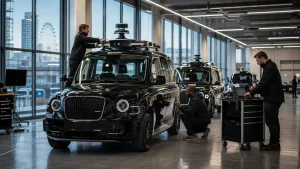
Wayve and Uber
Wayve and Uber are currently among the closest to visible passenger deployment.
TfL granted private hire licences to Wayve vehicles on 5 August 2026, and selected passengers are expected to receive early access later in summer. A trained safety driver will remain onboard during this phase.
Wayve has been testing autonomous technology on London roads since 2018 and uses an AI-led driving approach developed extensively on UK roads.
Waymo
Alphabet-owned Waymo is also preparing for London.
Waymo announced plans to bring its fully autonomous ride-hailing service to the capital and began autonomous driving in London with trained specialists behind the wheel in April 2026.
Its stated ambition is ultimately to offer passenger journeys without a human behind the wheel, although such a service would still require the relevant UK approvals before commercial operation can begin.
When Could Fully Driverless Taxis Launch in London?
There is currently no single guaranteed date when any Londoner will be able to open an app and immediately order an unsupervised robotaxi anywhere in the capital.
The first Wayve/Uber supervised passenger rides are planned for later summer 2026. Companies can also apply under the government’s driverless pilot framework for operations without a safety driver.
However, approval depends on the vehicle, operating organisation, intended geographic area and passenger-service arrangements.
The government’s wider Automated Vehicles Act framework is currently intended to be implemented fully in the second half of 2027.
London is therefore entering a transitional period rather than switching suddenly from conventional taxis to fully autonomous fleets.
What Needs to Happen Before Large-Scale Robotaxi Deployment?
Large-scale adoption will require substantially more than proving that a vehicle can complete a demonstration journey.
Operators will need to demonstrate safe performance across difficult road conditions, establish reliable incident and emergency procedures, satisfy vehicle and passenger-service regulation, protect systems against cybersecurity threats and show that fleets can coexist with pedestrians, cyclists, buses, taxis and emergency services.
The technology will also need to retain public confidence after inevitable scrutiny of incidents and unusual vehicle behaviour.
London’s first autonomous passenger journeys may therefore prove more important as a source of evidence than as an immediate transport revolution.
What Should London Passengers Know Before Using a Driverless Taxi?
The most important point is to understand what level of autonomy is actually being offered.
A vehicle that steers, brakes and navigates automatically is not necessarily legally driverless. During Wayve and Uber’s first London passenger phase, a trained human driver will remain onboard.
Passengers should also distinguish between regulatory approval and a claim that autonomous vehicles are incapable of making mistakes. No transport system is risk-free.
What matters is whether operators can demonstrate that autonomous vehicles meet the required safety standard consistently, including during roadworks, emergencies and other difficult London conditions.
FAQs
Are driverless taxis legal in London?
Driverless passenger services can operate where the vehicle and service obtain the necessary approvals under the applicable UK framework. Supervised autonomous testing is already legal, while operations without a safety driver require additional regulatory approval.
Can you currently book a fully driverless taxi in London?
Not as a normal widely available service as of 11 August 2026. Wayve and Uber are preparing supervised passenger journeys for selected users later in summer.
Are Wayve and Uber launching robotaxis in London?
Yes. TfL granted Private Hire Vehicle licences to Wayve autonomous vehicles on 5 August 2026, moving the partnership closer to passenger operation.
Will London robotaxis have a driver?
The initial Wayve/Uber passenger rides will. A trained TfL-licensed private hire driver will supervise the vehicle and can take control if required.
Are driverless taxis safer than normal taxis?
There is promising international evidence that some autonomous systems can reduce particular types of crashes, but there is not yet enough London-specific driverless operating data to declare robotaxis universally safer.
What level of automation is considered fully self-driving?
SAE Level 4 can operate without a human driver within specific approved conditions or areas. Level 5 represents full automation across all road and environmental conditions.
Are Level 3 self-driving cars legal in the UK?
Automation technology can be used or trialled where it complies with applicable UK law, but Level 3 capability does not automatically make a car legally approved as self-driving. Mercedes-Benz, for example, currently states that its Level 3 DRIVE PILOT feature is not available in the UK.
Who is at fault if a driverless car crashes?
It depends on the driving mode. A human remains responsible during many supervised or driver-assistance situations. Where an approved automated vehicle causes an accident while legally driving itself, the UK’s automated-vehicle insurance and liability framework can instead place first-instance civil liability on the insurer and responsibility for automated driving on regulated organisations.