
HMRC Raids 2026: What the 30,000 High Street Interventions Really Mean
 • August 10, 2026
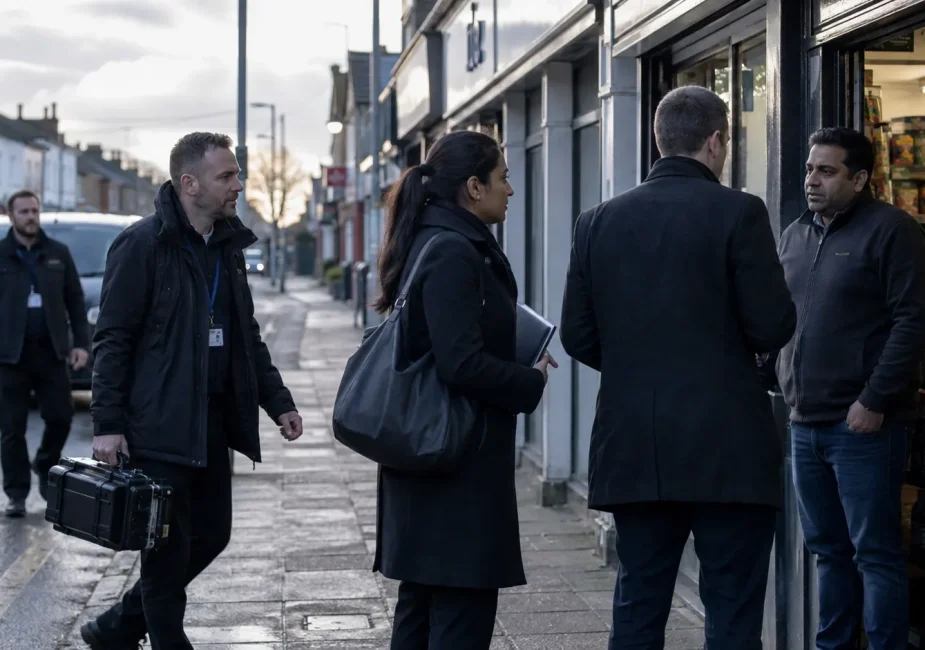
HMRC raids in 2026 are part of a wider UK enforcement campaign targeting suspected tax evasion, money laundering and till fraud. HMRC plans at least 30,000 high-street-linked interventions in 2026–27, but these are not all physical raids.
30,000 Does Not Mean 30,000 Raids:
The figure includes visits, investigations, warning letters and seizures, not just searches of business premises.
High Street Businesses Are Under Scrutiny:
HMRC has highlighted sectors including vape shops, barbers, souvenir shops and convenience stores where compliance risks are identified.
Till Fraud Is a Key Focus:
HMRC is targeting electronic sales suppression, where digital sales records are manipulated to hide transactions or reduce reported tax.
London Visits Show the Approach:
In June 2026, HMRC made unannounced visits to six central London souvenir shops and downloaded till data for follow-up enquiries.
Is HMRC Really Carrying Out 30,000 Raids in 2026?

No. The official announcement does not say HMRC is carrying out 30,000 physical raids.
HMRC initially announced on 12 June 2026 that it would make more than 30,000 interventions on the high street during 2026–27. Its
Transformation Roadmap update, published on 2 July, subsequently described the commitment as at least 30,000 high-street-linked interventions.
That distinction is important for anyone searching for HMRC high street raids 2026.
A raid is only one possible type of enforcement activity.
The much larger intervention figure covers several forms of action, meaning a business receiving a letter or being subject to a compliance investigation may count towards the programme without officers conducting a physical search of its premises.
What Does HMRC Mean by an Intervention?
HMRC has specifically said its 2026–27 interventions can include:
- unannounced visits
- tax investigations
- organised-crime investigations
- seizures
- warning letters
- action involving money laundering
- National Minimum Wage enforcement
- action against illicit tobacco and vape sales
- measures against rogue directors
- enforcement relating to till fraud
The HMRC 30,000 interventions 2026 programme should therefore be understood as a broad enforcement campaign rather than a plan for 30,000 raids.
What Is the Difference Between an HMRC Visit and a Raid?
An unannounced HMRC visit should not automatically be described as a criminal raid.
HMRC can conduct different types of investigations under different legal powers.
In a formal criminal investigation, HMRC has access to criminal investigation powers and safeguards, including circumstances where a search warrant permits officers to search premises and seize relevant material. The legal basis and safeguards depend on the type of investigation and jurisdiction.
By contrast, HMRC itself described the June operation at six London souvenir shops as “unannounced visits”, despite the involvement of multiple enforcement agencies and the downloading of till data.
This is why terms such as HMRC dawn raids 2026, HMRC visits and HMRC interventions should not be treated as interchangeable.
How Well Do You Understand the 2026 HMRC Crackdown?
HMRC is stepping up high-street enforcement, but a commonly quoted figure can easily give readers the wrong impression.
What Actually Counts as an Intervention?
Select an action to see how it fits into the crackdown.
Test Your HMRC Crackdown Knowledge
Three quick questions. How many can you get right?
1. Does “30,000 interventions” mean 30,000 physical raids?
2. Which issue is a specific HMRC focus in 2026?
3. Are all barbers, vape shops and convenience stores suspected of wrongdoing?
Which Businesses Are Being Targeted in the HMRC Crackdown?
HMRC says its UK-wide investigations will target people and organisations behind businesses linked to high-street harm, particularly where premises are suspected of being used as fronts for tax crime or money laundering.
The government has specifically referred to:
- vape shops
- barbers
- souvenir shops
- candy or sweet shops
- convenience stores
- other cash-intensive high-street businesses.
That does not mean businesses operating in these sectors are automatically suspected of wrongdoing.
The enforcement programme is targeted at suspected non-compliance and criminal exploitation, rather than legitimate businesses simply because they operate within a particular trade.
Why Are Vape Shops and Tobacco Retailers Under Scrutiny?
Illicit vapes and tobacco form one part of the wider HMRC crackdown 2026.
HMRC says its planned interventions include action targeting illicit vape and tobacco sales, while the department's broader high-street strategy aligns with government work covering tobacco, alcohol, vaping, anti-money laundering and National Minimum Wage enforcement.
The issue also extends beyond tax. The government's High Street Organised Crime Unit is intended to coordinate enforcement against businesses linked to wider organised criminality.
Why Are Barbers, Souvenir Shops and Cash-Intensive Businesses Being Examined?
HMRC says its increased high-street activity will target the full range of tax risks and illegal activity associated with cash-intensive businesses.
The concern is not the use of cash itself. Rather, authorities are looking for evidence of activities such as concealed sales, tax evasion, money laundering and other forms of suspected criminal exploitation.
HMRC has specifically identified vape shops, barbers, souvenir shops, candy stores and convenience stores when describing businesses that may be used as fronts for money laundering and tax crime.
For legitimate operators, the distinction matters: a sector being highlighted as an enforcement risk does not establish wrongdoing by an individual business.
What Is HMRC Looking for During High Street Investigations?

The HMRC high street crackdown 2026 extends well beyond undeclared cash takings.
HMRC's official programme identifies tax evasion, money laundering, National Minimum Wage breaches, illicit products, rogue directors and manipulation of electronic sales records among its areas of focus.
Till Fraud and Electronic Sales Suppression
One particularly important area is electronic sales suppression, or ESS.
HMRC defines electronic sales suppression as manipulating digital sales records to hide or reduce the value of transactions, thereby lowering reported turnover and tax liabilities.
This can involve illegal software designed for tax evasion or misuse of legitimate point-of-sale system features.
The HMRC till fraud crackdown is not limited to businesses using such systems. HMRC has said it will target both providers and end-users of electronic tools used to manipulate sales records, conceal sales, launder money or evade tax.
The issue has become even more relevant during 2026. On 23 June, HMRC opened a consultation on potential software standards for electronic and mobile point-of-sale systems aimed at reducing opportunities for electronic sales suppression.
Tax Evasion, Money Laundering and Organised Crime
The government's high-street campaign is deliberately cross-agency because suspected illegal businesses can create risks that fall under several different authorities.
HMRC is focused on tax offences, but its enforcement partners can include police, Immigration Enforcement, Trading Standards, the National Crime Agency and other government bodies.
The government said in June that the National Crime Agency estimates at least £12 billion in criminal cash is generated in the UK annually, with around £1 billion laundered through high-street businesses such as mini-marts, barber shops, vape stores and sweet shops.
National Minimum Wage and Labour-Related Breaches
HMRC's 30,000-intervention programme also specifically covers businesses involved in National Minimum Wage breaches.
The department says its wider high-street work is intended to tackle risks including tax fraud and labour exploitation, demonstrating why an operation that starts with concerns about one type of non-compliance can involve several enforcement bodies.
What Happens During an HMRC Unannounced Visit?
There is no single procedure that applies to every HMRC unannounced visit in 2026 because HMRC's actions depend on the purpose and legal basis of the investigation.
The central London operation provides one confirmed example of how a multi-agency intervention can work.
HMRC visited six souvenir shops alongside Home Office Immigration Enforcement, Westminster Council Trading Standards and Metropolitan Police officers.
Full till data downloads were completed by HMRC at all six premises, with tax compliance enquiries scheduled to follow.
Can HMRC Examine or Download Till Data?
HMRC's June operation confirms that full till data downloads can form part of targeted enforcement activity.
Electronic sales data may be relevant where HMRC is investigating potential suppression or manipulation of transactions. The department's separate 2026 consultation explains that ESS involves altering digital sales records to understate transactions and reduce tax liabilities.
However, the fact that till data was downloaded at the six London shops should not be interpreted as evidence that every HMRC visit will involve the same procedure.
Can Other Agencies Attend With HMRC?
Yes. The 2026 campaign specifically involves cooperation between government and enforcement bodies.
During the London visits, HMRC officers were accompanied by Immigration Enforcement, Trading Standards and Metropolitan Police officers.
Separately from HMRC's tax activity, the operation resulted in three immigration-related arrests, a £40,000 civil penalty issued to one business for employing an illegal worker, and Trading Standards seizures valued at £5,433.
Those outcomes are important to attribute correctly: HMRC did not make all of the arrests or seizures simply because it participated in the operation.
London Shop Visits Show How HMRC Enforcement Can Work
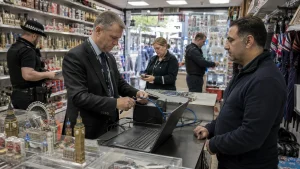
The six central London souvenir-shop visits are one of the clearest public examples associated with HMRC raids 2026, although HMRC itself described them as unannounced visits.
The shops sold products including London, UK and royal-family-themed gifts, as well as magic and wizarding merchandise.
HMRC completed full till data downloads at every location and announced that tax compliance enquiries would follow.
Immigration Enforcement made three arrests connected with immigration offences, while a £40,000 civil penalty was issued to one business over illegal working.
Trading Standards seized 289 disposable vapes, 173 squishy toys and other items including counterfeit goods and unsafe travel adapters.
The operation demonstrates the multi-agency nature of the campaign but should not be treated as a template for every HMRC intervention across the UK.
HMRC Is Expanding Its High Street Enforcement Programme
The 30,000 interventions are part of a wider expansion of HMRC's enforcement capacity rather than an isolated series of HMRC shop raids in 2026.
HMRC's July Transformation Roadmap says the department will undertake at least 30,000 high-street-linked interventions during 2026–27 while collaborating with other agencies.
The High Street Organised Crime Unit
The enforcement programme also connects with the government's High Street Organised Crime Unit.
The government announced £30 million of funding for the wider high-street organised crime response. The unit brings together HMRC with other government departments, police and enforcement partners, Trading Standards and the National Crime Agency.
The government has separately said it intends to strengthen powers for tackling illegal businesses, including plans to extend how long certain closure orders can last. Regulations connected with those plans were expected to be laid by the end of 2026.
Hundreds of Criminal Investigators Are Being Added
HMRC's enforcement capacity is also increasing.
The June announcement said a new team of 350 criminal investigators had been recruited to tackle small-business evasion, with around half of their work focused on harmful high-street businesses and the people behind them.
HMRC's July roadmap expresses the commitment in capacity terms, saying 50% of the criminal-investigator capacity within its new Small Business Evasion and Enforcement team will be dedicated to high-street businesses linked to illegal activity.
Separately, HMRC says it plans to recruit another 1,100 compliance officers during 2026–27 as part of a broader commitment to add 5,500 compliance officers by 2029–30.
What Could Happen After an HMRC Intervention?
There is no automatic outcome from an HMRC intervention.
The programme covers activity ranging from warning letters through to organised-crime investigations and seizures. What follows will depend on the circumstances, evidence found and legal powers being used.
An intervention may lead to further tax compliance enquiries, as HMRC has already said will happen following the six London visits. More serious suspected offending may instead trigger criminal investigation procedures.
It would therefore be misleading to suggest that every HMRC tax raid in the UK results in prosecution, a penalty or seizure.
Equally, describing every HMRC contact as a routine check would understate the seriousness of the enforcement campaign.
HMRC has explicitly said it intends to disrupt organised criminal networks and the people controlling or enabling businesses linked to illegal high-street activity.
What Should UK Businesses Know About HMRC Raids in 2026?
For legitimate businesses, the practical message from the HMRC crackdown 2026 is relatively straightforward: accurate records and genuine transactions matter.
Keep Sales, Tax and Till Records Accurate
Businesses using electronic or mobile point-of-sale systems should ensure sales information accurately reflects transactions.
HMRC's definition of electronic sales suppression focuses specifically on deliberate manipulation of digital sales records to hide transactions and reduce reported tax liabilities.
The fact that HMRC downloaded till data during its central London operation also demonstrates the importance electronic records can play in high-street compliance investigations.
Understand the Difference Between Compliance Activity and Criminal Searches
Not every contact from HMRC amounts to a raid.
HMRC's 30,000 figure encompasses numerous forms of intervention, while formal criminal search activity can involve separate investigatory powers and safeguards.
Businesses facing a serious investigation should establish what type of HMRC action is taking place rather than relying on broad terms such as “raid” or “inspection”.
When Professional Advice May Be Appropriate
Where an HMRC matter has escalated into a serious tax investigation, suspected fraud enquiry or formal criminal search, businesses may wish to obtain advice from an appropriately qualified tax or legal professional.
This article provides general information about the 2026 enforcement campaign and should not be treated as advice on how to respond to a particular HMRC investigation.
What Happens Next With HMRC's 2026–27 Crackdown?
HMRC's high-street programme is intended to be sustained and nationwide rather than a short-term series of operations.
As of 10 August 2026, HMRC's published Transformation Roadmap continues to commit the department to at least 30,000 high-street-linked interventions during 2026–27 and to collaboration with other enforcement agencies.
Attention is expected to remain on suspected tax evasion, till manipulation, illicit goods, money laundering, labour-related violations and organised criminal use of high-street premises.
Meanwhile, separate government proposals would increase the maximum duration of certain closure orders, with relevant secondary legislation expected later in 2026. Those changes should be described as planned measures until they are actually brought into effect.
Conclusion
HMRC raids 2026 is an understandable way to search for information about the government's expanding enforcement campaign, but the central figure needs careful explanation.
HMRC is not saying that 30,000 businesses will be physically raided. It has committed to at least 30,000 high-street-linked interventions in 2026–27, ranging from warning letters and compliance activity to unannounced visits, investigations and seizures.
The crackdown is particularly focused on suspected illegal activity involving cash-intensive high-street businesses, tax fraud, money laundering, illicit tobacco and vapes, labour exploitation and electronic sales suppression.
For readers following HMRC high street raids in 2026, the most useful distinction is therefore between the scale of the overall intervention programme and the much narrower category of formal physical raids or criminal searches.
FAQs
1. Is HMRC carrying out 30,000 raids in 2026?
No. HMRC's official commitment is to undertake at least 30,000 high-street-linked interventions during 2026–27. These can include unannounced visits, warning letters, tax investigations, organised-crime investigations and seizures, so they should not all be described as physical raids.
2. Which businesses is HMRC targeting in 2026?
HMRC has identified vape shops, barbers, souvenir shops, candy stores and convenience stores when discussing high-street premises suspected of being used for tax crime, money laundering or other illegal activity. This does not mean legitimate businesses in those sectors are automatically under suspicion.
3. Can HMRC turn up at a business without warning?
HMRC has confirmed that unannounced visits form part of its 2026–27 high-street intervention programme. It carried out such visits at six central London souvenir shops in June 2026. The legal basis and powers available will depend on the type of investigation being conducted.
4. What happens during an HMRC raid or unannounced visit?
There is no single procedure covering every intervention. During the June London operation, HMRC downloaded full till data at six businesses and said tax compliance enquiries would follow. Formal criminal searches can involve different powers, including search warrants in appropriate circumstances.
5. Why is HMRC targeting till fraud in 2026?
Electronic sales suppression, or till fraud, involves manipulating digital sales records to hide or reduce transactions and lower reported tax liabilities. HMRC is targeting both users and providers of tools used for this purpose and opened a consultation on point-of-sale software standards in June 2026.
6. Can HMRC seize goods during an investigation?
Seizures are one of the enforcement actions HMRC lists within the wider 2026–27 high-street programme. Whether property can be seized in an individual case depends on the powers being exercised and the circumstances of the investigation.
7. Are HMRC raids happening across the UK in 2026?
The wider enforcement programme is UK-wide. HMRC has said it and its partners will carry out investigations across the country, although individual enforcement activity will depend on intelligence, suspected risks and specific investigations.