
How Memorial Care Firms Are Professionalising a Traditional Industry?
 • May 12, 2026

A Traditional Service That Has Stayed Loosely Defined
Some service sectors become structured early. The offer is clear, the process is easy to follow, and customers know what they are buying. Others stay vague for years. Demand exists, the work gets done, but the category itself remains loosely defined. Memorial care has often sat in that second group.
For a long time, headstone cleaning and memorial maintenance have commonly been treated as secondary work rather than a specialist field in their own right. That has left the market fragmented.
Standards vary, methods vary, and the quality of the result often depends more on the individual operator than on any recognisable service model. From a business perspective, that usually points to an immature category.

Why Expectations Are Changing?
That is now starting to shift. Customers expect clearer communication, a better level of presentation, and a more defined process from start to finish. Even in traditional service sectors, people are used to proper booking confirmation, clearer service descriptions and more confidence in what will happen once the work is agreed.
Memorial care is catching up to that. There is also a wider change in how the service is being understood. Headstone cleaning is less likely to be seen now as a quick cosmetic job and more likely to be understood as part of the long-term care of a memorial.
That changes the logic of the purchase. A one-off tidy-up and a specialist memorial-care service are not the same proposition, even if they may look similar at first glance.
What is Changing in Memorial Care?
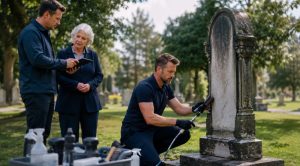
The shift is fairly simple on the surface, but meaningful underneath:
- Clearer service scope
- More consistent on-site delivery
- Better customer communication
- Stronger emphasis on stone-specific methods
- Specialist firms treating memorial care as a core service
In a fragmented market, those things matter. They help customers understand what they are paying for, and they make it easier for specialist businesses to stand apart from less structured operators.
A Clearer Example of the Standalone Model
Rather than treating memorial cleaning as an occasional add-on, businesses such as GraveClean have built their offer around a specialist headstone cleaning service, placing memorial care at the centre of the model rather than on the edge of it.
That matters because the service is not being fitted into a wider list of unrelated work. It is the reason the business exists. That is a stronger commercial position than it may first appear.
A standalone specialist can shape its processes around the realities of the category itself, refine the service more deliberately, and build stronger recognition because the offer is easier to understand. Customers know what the business does, and the business knows exactly what it is there to do.
What This Says About the Wider Market?
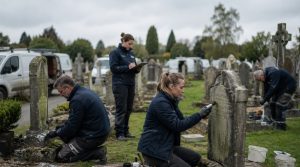
The more interesting point is what this says about the sector as a whole. Memorial care is still a niche, but it shows many of the signs of a category moving into a more mature phase. It has historically been fragmented, loosely defined, and often absorbed into adjacent trades rather than standing confidently on its own.
That is usually how traditional markets change. A few firms define the offer more clearly than everyone else. They raise expectations around process, presentation and consistency. Over time, that changes how customers assess the whole category.
Memorial care appears to be moving into that stage now, and the businesses treating it as a standalone field are likely to be the ones that define the market standard.