
What Do UK-EU Closer Ties Mean for Trade and Travel?
 • April 18, 2026
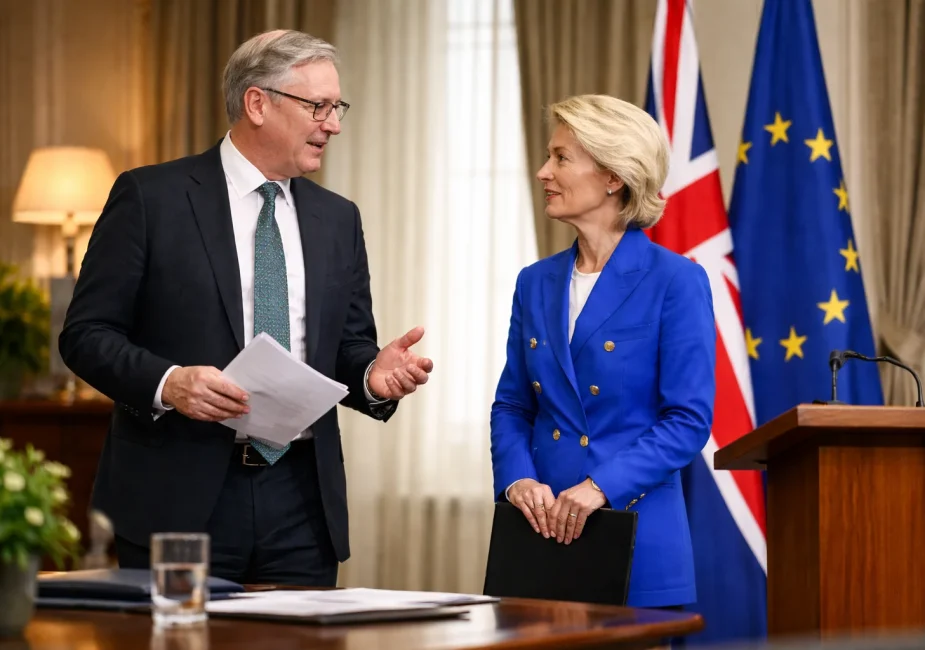
UK-EU closer ties could make trade and travel easier by reducing post-Brexit barriers without taking the UK back into the EU.
The government is seeking limited agreements with Brussels in areas such as food exports, youth mobility, carbon trading and education, while still ruling out membership of the single market or customs union.
For businesses, this may mean less paperwork and lower costs. For travellers, it could create more opportunities to study, work and move around Europe.
Key developments include:
- Reduced red tape for UK exporters
- Simpler food and agricultural trade
- Possible youth mobility and work schemes
- The UK’s return to erasmus+
- Smoother business travel and border processes
- Closer cooperation on energy and carbon markets
However, many Brexit-era rules and customs checks would still remain.
What Does “UK-EU Closer Ties” Actually Mean?
UK-EU closer ties refers to a more cooperative relationship between Britain and the European Union in selected areas. It does not mean the UK is rejoining the EU, re-entering the single market or returning to the customs union.
Instead, the government wants a more targeted arrangement in sectors where both sides benefit. That includes reducing trade barriers, aligning some regulations, improving energy security and creating new travel and education opportunities.
Nick Thomas-Symonds, the UK’s minister for EU relations, recently described the approach as:
“ambitious and ruthlessly pragmatic”
The emphasis is on choosing agreements that improve the UK economy while keeping formal Brexit red lines in place.
The change in tone reflects the fact that nearly ten years after the Brexit referendum, many businesses still face expensive delays, customs paperwork and lost market access when trading with Europe.
Why Is the UK Seeking Closer Ties with the EU Now?
The push for UK-EU closer ties is happening because the world has become more unstable. The continuing war in Ukraine, rising energy prices and worsening global trade tensions have made governments across Europe more focused on cooperation.
At the same time, relations between the UK and the United States have become more uncertain. That has encouraged the UK to strengthen links with nearby European partners.
Economic Pressures After Brexit
British companies still face high costs when trading with the EU. Exporters must deal with health certificates, customs checks and additional paperwork that did not exist before Brexit.
According to ministers, more than one million export health certificates have been issued since 2023, creating extra costs for UK firms. Food and drink businesses have been particularly affected.
Housing Secretary Steve Reed said:
“Brexit led to a collapse in UK exports of one-fifth. We’ve lost jobs, we’ve lost investment, people have lost wages.”
The government believes that closer ties with the EU could help reverse some of those losses without formally undoing Brexit.
Growing Public Support
Public opinion has also shifted. Recent polling suggests many voters now support a closer relationship with Europe, especially younger people and business owners.
The argument is increasingly less about ideology and more about practical benefits. Rather than debating whether Brexit was right or wrong, the focus is on reducing its negative impact.
Shared Security Concerns
The UK and EU are already working more closely on defence and security because of the conflict in Ukraine and wider geopolitical instability.
This broader cooperation has made it easier for both sides to discuss stronger links in other areas, including trade and travel.
Which UK-EU Agreements Are Being Discussed?
Several specific agreements are currently being negotiated or considered. These are intended to make trade and travel easier without changing the UK’s overall Brexit position.
- A Food and Agricultural Safety Agreement
- A Carbon Emissions Trading Link
- A Youth Mobility or “Experience” Programme
- UK Participation in Erasmus+
- Possible Access to the EU Electricity Market
- Selective Alignment With EU Rules in Certain Industries
Food and Agricultural Safety
The proposed food and agricultural agreement could reduce border checks and paperwork for products such as meat, dairy and fresh produce.
This would be especially important for UK exporters selling to the EU or Northern Ireland. Businesses could face fewer inspections and lower compliance costs.
Carbon Emissions Trading
The UK is also discussing a link between its carbon trading scheme and the EU’s system. That could help British firms avoid extra carbon costs when exporting to Europe.
Industries such as manufacturing, steel and chemicals could benefit from greater certainty and fewer barriers.
Youth Mobility and Erasmus+
One of the most significant travel-related changes could be a new youth mobility scheme. This would allow young people from the UK and EU to work, study or live in each other’s countries for a limited period.
The UK is also set to rejoin Erasmus+, the EU’s student exchange programme. That could give British students easier access to universities and study opportunities across Europe.
Roberta Metsola, President of the European Parliament, recently said:
“There is no alternative to a strong and constructive EU-UK relationship.”
How Could Closer UK-EU Ties Affect Trade?
Trade is likely to be the area where UK-EU closer ties make the biggest difference. The EU remains Britain’s largest export market, yet Brexit has increased the cost and complexity of selling goods across Europe.
Closer ties could reduce some of those barriers.
The Main Trade Benefits:
- Fewer Customs Checks for Selected Goods
- Lower Paperwork Costs for Exporters
- Faster Border Processing
- Improved Certainty for Businesses
- Easier Access to European Supply Chains
The food, drink and manufacturing sectors would probably benefit first because they are most affected by regulatory checks.
Current Post-Brexit Barrier Possible UK-EU Reset Measure Likely Business Impact
Export health certificates for food products Food safety agreement Lower costs and faster exports
Separate carbon systems Linked emissions trading schemes Reduced costs for manufacturers
Customs delays at borders Simpler customs arrangements Faster deliveries and fewer delays
Different product regulations Limited rule alignment Easier access to EU markets
The government believes that a food agreement and carbon trading deal alone could add £9 billion to the UK economy by 2040.
Which UK Businesses Could Benefit the Most?
UK-EU closer ties are likely to support businesses that rely on European customers, supply chains, or regulations.
SMEs could benefit the most, as they are often hardest hit by customs paperwork, certification costs, and border delays. Simpler processes would make trading easier without large compliance teams.
Food and drink producers are also key beneficiaries, as exporters of meat, dairy, and fresh produce face strict checks and extra documentation.
A new agreement could reduce these barriers. Manufacturers and EU-regulated sectors like pharmaceuticals and chemicals may also benefit from closer alignment of standards, lowering duplication and costs.
Key sectors expected to benefit include:
- SMEs and small exporters
- Food and drink producers
- Manufacturers and supply chain businesses
- Pharmaceutical and chemical firms
- Universities and research organisations
Business Sectors and Benefits from UK-EU Closer Ties:
Business Type Likely Benefit From Closer Ties
SMEs Lower paperwork and compliance costs
Exporters Faster trade and fewer border delays
Food & drink producers Easier access to EU markets
Manufacturers Simpler product standards and supply chains
Education & research More funding and easier partnerships
EU-regulated firms Reduced duplication of rules and testing
While some sectors may see limited short-term change, closer UK-EU ties could provide valuable support for businesses that rely on European trade.
What Could Closer Ties Mean for Travel Between the UK and EU?
Travel is another area where people could notice practical changes.
For ordinary tourists, the basic rules are unlikely to change immediately. British passport holders would still be able to travel to the EU for short visits without a visa.
However, UK-EU closer ties could make longer-term travel, work and study easier.
Changes That Could Affect Travellers
- A Youth Mobility Programme for Under-30s
- Simpler Study Opportunities Through Erasmus+
- Easier Business Travel
- Potential Improvements to E-gate Access
- Closer Cooperation on Transport and Energy
Travel Area Current Situation Possible Change Under Closer Ties
Student exchanges Limited access after Brexit Return to Erasmus+
Young people working abroad More restrictions than before New youth mobility scheme
Business travel More paperwork for longer visits Easier short-term work arrangements
Airport travel Manual passport checks in some EU states Greater use of e-gates
Youth Mobility and Study Opportunities
A youth mobility agreement could allow young people to spend time in Europe for work, study or travel. The programme would probably be time-limited and apply only to younger age groups.
For students, the return to Erasmus+ could be particularly important. British students would again be able to study in EU universities with more financial and administrative support.
This would benefit universities, language schools and businesses that depend on international talent.
Business Travel
Business travel between the UK and EU became more complicated after Brexit. Employees travelling for meetings, events or temporary work sometimes need additional documents or face restrictions.
Closer ties could simplify short-term business travel, particularly in sectors where UK and EU regulations become more aligned.
That would help companies that regularly send staff to Europe.
Will Closer Ties Remove All Brexit-Related Barriers?

No. Even if the UK and EU agree on several new arrangements, many Brexit-related barriers will remain.
The government has repeatedly ruled out rejoining the single market or customs union. That means there will still be customs procedures and border checks for many products.
There are also limits to how far the EU is willing to go without asking the UK to follow more European rules.
French MEP Natalie Loiseau warned:
“The closer the UK wants to get to the EU single market, the more it will have to align with EU rules and regulations.”
That is the key trade-off. The UK can reduce some friction, but only by accepting more regulatory alignment in certain areas.
What Are the Main Political and Economic Trade-Offs?
The debate over UK-EU closer ties is not only about economics. It is also about sovereignty.
Supporters argue that the UK is using its post-Brexit freedom to choose the areas where cooperation makes sense. Critics argue that aligning with EU rules turns Britain into a “rule taker” rather than a “rule maker”.
There are also financial costs. Rejoining Erasmus+ is expected to cost around £570 million in its first year. Participation in other EU programmes may also require payments.
At the same time, refusing to cooperate could continue to cost British businesses billions through lost exports and trade barriers.
The political challenge for the government is to balance those competing pressures: keeping Brexit promises while making trade and travel easier.
Conclusion
UK-EU closer ties are unlikely to reverse Brexit but could improve trade and travel. Businesses may face less red tape, exporters could access European markets more easily, and young people may gain study and work opportunities.
Key benefits are expected in food, manufacturing, and education. However, barriers will remain as the UK is not rejoining the single market or customs union.
Ultimately, success depends on both sides reaching practical compromises for a stronger, more workable relationship.
FAQs About UK-EU Closer Ties
Is the UK Rejoining the EU Through Closer Ties?
No. The government has said repeatedly that it does not intend to rejoin the EU, the single market or the customs union.
Will UK-EU Closer Ties Make Exporting Easier?
Potentially yes. A food agreement and selective rule alignment could reduce customs paperwork and border delays for UK exporters.
Which Industries Could Benefit the Most?
Food and drink, manufacturing, pharmaceuticals, technology and education are likely to benefit the most.
Will Travel Rules for UK Tourists Change?
Short-term tourist travel is unlikely to change significantly. UK citizens should still be able to visit the EU without a visa for short stays.
What Is the Proposed Youth Mobility Scheme?
It is a proposed programme that would allow young people from the UK and EU to work, study or travel in each other’s countries for a limited period.
How Could Erasmus+ Affect UK Students?
Rejoining Erasmus+ would make it easier and cheaper for British students to study in European universities.
Are UK-EU Closer Ties a Soft Brexit Reversal?
Supporters say it is a practical reset rather than a Brexit reversal. Critics believe it could gradually move the UK closer to EU rules again.