
Kaboodle Kitchen Company Closure Explained After Immediate Shutdown Announcement
 • May 6, 2026

Why Has Kaboodle Kitchen Company Closed Down?
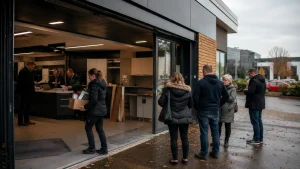
Kaboodle Kitchens officially ceased trading after the business entered voluntary liquidation following serious cash flow difficulties.
The British kitchen and appliance company confirmed the closure through a statement published on its website, informing customers, suppliers and staff that trading had stopped with immediate effect.
The sudden announcement drew attention across the UK retail and home improvement sectors because the company had been operating for nearly two decades and had established multiple sites across Britain.
The closure also highlighted the growing financial pressure affecting many businesses connected to housing, construction and home improvement services.
According to the company’s statement, insolvency practitioners from BRI Business Recovery and Insolvency were appointed to oversee the liquidation process.
This means the company reached a stage where it could no longer continue meeting its financial obligations while operating normally.
Cash Constraints Led to Immediate Liquidation
The main reason cited for Kaboodle’s collapse was cash constraints. In simple terms, the company no longer had enough available working capital to sustain operations, manage liabilities and continue trading effectively.
Commercial Director David Simpson confirmed this publicly in a LinkedIn statement, saying:
“I’m sad to formally advise that Kaboodle is to be liquidated as a result of cash constraints.”
This statement immediately sparked discussions about the wider financial difficulties currently affecting retailers and home improvement companies throughout the UK.
Cash flow problems can develop for many reasons, especially within industries tied closely to construction and consumer spending.
Businesses in the kitchen retail sector often deal with:
Financial Pressure Impact on Business
Rising supplier costs Reduced profit margins
Lower customer spending Fewer orders and installations
Inflation Increased operational expenses
Delayed payments Cash flow shortages
Higher energy costs Increased overheads
Housing market slowdown Reduced kitchen demand
Retail analysts have suggested that many mid-sized businesses are finding it increasingly difficult to absorb rising costs while also maintaining competitive pricing.
“One of the most damaging issues for retailers is prolonged pressure on cash reserves,” explained one insolvency expert discussing recent business failures in Britain.
Kitchen companies are particularly exposed because they rely heavily on property activity, renovation spending and long term supplier relationships. When housing activity slows or consumer confidence weakens, businesses in this sector often experience an immediate reduction in demand.
Kaboodle’s collapse came shortly after the company reportedly announced plans to move away from the housebuilding sector because of difficult market conditions. This suggests that the business had already been attempting to restructure operations before the final shutdown occurred.
Insolvency Practitioners Appointed to Handle Closure
BRI Business Recovery and Insolvency has now taken responsibility for overseeing Kaboodle’s voluntary liquidation process.
Voluntary liquidation is a formal insolvency procedure used when directors decide a business can no longer continue operating because debts and financial obligations cannot realistically be managed.
The insolvency practitioners are responsible for:
- Managing company assets
- Communicating with creditors
- Handling customer claims
- Reviewing financial records
- Supervising asset sales
- Distributing available funds
Customers and suppliers are expected to receive direct communication explaining how claims can be submitted during the liquidation process.
The liquidation process usually follows several stages.
Stage Description
Company stops trading Business operations cease immediately
Insolvency practitioners appointed External administrators take control
Creditors notified Suppliers and customers informed
Assets reviewed Company inventory and finances assessed
Claims submitted Creditors apply for repayment
Assets sold Funds generated to repay debts
The process can take several months, depending on the size of the business and the complexity of outstanding financial obligations.
Industry experts note that voluntary liquidation often represents the final stage after businesses exhaust other recovery options.
The immediate closure indicates that Kaboodle likely faced severe short-term liquidity problems that made continued trading impossible.
What Did Kaboodle Say About Its Immediate Shutdown Announcement?

Kaboodle’s official statement confirmed the permanent closure and advised customers that the company had ceased trading immediately.
The wording of the announcement reflected the seriousness of the financial situation and confirmed that insolvency procedures had already begun.
Customers were informed that they would receive further updates directly from the appointed insolvency practitioners regarding orders, claims and collections.
The company’s statement also made it clear that inventory storage would no longer be possible after a specified deadline, creating urgency for customers with pending collections.
Public Statements From Company Leadership
Commercial Director David Simpson addressed the closure publicly through LinkedIn, acknowledging the emotional impact on employees and stakeholders.
“My thoughts and appreciation go to all those employees involved in the insolvency, it’s a distressing time for all.”
The statement was widely shared within retail and business circles because it reflected the personal consequences often associated with business collapses.
Many employees working within kitchen supply, installation and distribution services now face uncertainty regarding employment and future opportunities.
Retail industry observers also discussed how rapidly conditions can deteriorate for companies operating in sectors vulnerable to changing consumer spending patterns.
“The retail environment remains extremely challenging for businesses dependent on discretionary household spending,” one market analyst commented after the announcement.
The immediate nature of the shutdown created significant disruption because many customers were in the middle of renovation projects or awaiting installations.
Some customers reportedly expressed concerns online regarding:
- Delayed deliveries
- Refund eligibility
- Incomplete installations
- Warranty support
- Product collections
Because the company ceased trading immediately, many customers were left waiting for further clarification from liquidators regarding their specific situations.
Immediate Effects of the Shutdown
The sudden closure created operational problems for several groups connected to the business.
Affected Group Immediate Impact
Customers Delayed orders and uncertainty
Employees Potential redundancy concerns
Suppliers Outstanding payment risks
Installers Disrupted projects
Contractors Interrupted schedules
Businesses operating within the kitchen sector often manage complex logistics involving suppliers, fitters, manufacturers and warehousing. When operations stop suddenly, disruptions can spread quickly across multiple areas.
Industry observers noted that immediate closures often happen when companies can no longer safely continue trading without increasing financial liabilities.
“Directors have legal responsibilities once insolvency becomes unavoidable,” explained one corporate recovery specialist.
This means company leadership may have reached a point where closure became the only legally responsible option.
How Will The Kaboodle Kitchens Closure Affect Customers?

Customers are among the groups most directly affected by the liquidation announcement.
Individuals who ordered kitchens, appliances or installation services now face uncertainty regarding deliveries, collections and refunds.
The company stated that customers would be contacted directly regarding the next steps in the liquidation process.
What Happens to Existing Orders and Stock Collections?
Kaboodle informed customers that purchased stock must be collected no later than May 8 because the company could no longer continue storing inventory.
This announcement created urgency for customers who had already paid for products awaiting collection or delivery.
Products potentially affected include:
- Kitchen units
- White goods
- Appliances
- Fittings
- Installation materials
The inventory situation may become more complicated once insolvency practitioners begin reviewing and securing company assets.
Customers with existing orders may fall into different categories depending on the stage of their purchase.
Customer Situation Potential Outcome
Fully collected order No further action required
Paid but awaiting collection Immediate collection needed
Awaiting delivery Subject to liquidation review
Installation incomplete Possible disruption
Deposit paid only Claim may be required
Financial experts often advise consumers to act quickly following retailer insolvencies.
Customers are also encouraged to keep all documentation linked to their orders, including invoices and payment confirmations.
Can Customers Submit Refund or Compensation Claims?
Kaboodle stated that customers would receive information regarding how to submit claims during the liquidation process.
However, obtaining refunds from insolvent companies can be difficult because customers often become unsecured creditors.
Repayment outcomes depend on several factors, including:
- Available company assets
- Creditor priority rankings
- Payment method used
- Existing legal protections
Consumers who paid by credit card may have additional protection under Section 75 of the Consumer Credit Act.
Payment Method Possible Protection
Credit card Section 75 protection
Debit card Chargeback possibility
Bank transfer Limited protection
Finance agreement Depends on lender terms
Some customers may also need to contact manufacturers separately regarding warranties for appliances or kitchen products supplied through Kaboodle.
Consumer advocates have stressed the importance of acting quickly.
What Services Did Kaboodle Kitchens Provide Across The UK?

Kaboodle operated as a kitchen supply and installation business serving several regions across Britain.
The company maintained operations in:
- Highbridge
- Basingstoke
- Stevenage
- Telford
- Leeds
Founded in 2005, the business developed a reputation within the home improvement sector through its appliance supply and kitchen installation services.
Kitchen and Appliance Supply Services
Kaboodle specialised in providing:
Service Area Description
Kitchen units Domestic kitchen fittings
White goods Household appliances
Installation services Kitchen fitting support
Manufacturer support Product installation services
Home fittings Interior kitchen solutions
The company worked closely with manufacturers and installers to provide complete kitchen solutions for both residential and commercial projects.
Many businesses within the sector rely on integrated service models where supply and installation services operate together. This creates efficiency but can also increase operational complexity during periods of financial stress.
Kaboodle’s business model appeared closely connected to both renovation demand and housing market activity.
Apprenticeship and Skills Development Programmes
One notable aspect of Kaboodle’s operations was its apprenticeship partnership with North Hertfordshire College.
The programme aimed to develop installation and fitting skills within the kitchen industry.
Training initiatives like this are often viewed as important because the construction and fitting sectors continue facing skilled labour shortages across the UK.
The closure may therefore affect not only employees but also trainees and educational partnerships linked to the business.
Industry groups have increasingly warned that insolvencies within construction-related sectors can create long-term workforce challenges.
Did Market Challenges Contribute To The Kaboodle Company Closure?

Market conditions appear to have played a major role in Kaboodle’s financial difficulties.
Only weeks before entering liquidation, the company reportedly announced plans to reduce involvement in the housebuilding sector because of ongoing challenges.
This decision suggested that management had already recognised weakening conditions within key areas of the business.
Housebuilding Sector Slowdown and Industry Pressure
The slowdown in UK housing activity has affected numerous businesses connected to kitchens, appliances and home installations.
When fewer homes are built or sold, demand for fitted kitchens often declines.
This creates a chain reaction throughout the supply network.
Market Condition Effect on Kitchen Businesses
Reduced homebuilding Lower kitchen demand
Fewer renovations Declining customer orders
High interest rates Reduced borrowing for projects
Inflation Increased operating costs
Many consumers have delayed large renovation projects because of rising living costs and economic uncertainty.
Kitchen businesses also face challenges connected to warehousing, logistics and installation staffing, all of which carry substantial ongoing costs.
Wider Economic Challenges Facing UK Retailers
Kaboodle’s closure reflects wider instability affecting British retail businesses.
Retailers across several sectors continue dealing with:
- Inflationary pressure
- Rising wages
- Higher business rates
- Increased transport costs
- Energy price increases
- Reduced discretionary spending
For businesses operating on tighter margins, prolonged economic pressure can gradually erode profitability and liquidity.
Industry observers believe more restructuring may occur across home improvement retail if economic conditions remain difficult throughout 2026.
The combination of weaker demand and rising operational costs has created one of the toughest trading environments many retailers have experienced in recent years.
Conclusion
Kaboodle Kitchens’ immediate shutdown marks another significant business closure within the UK home improvement sector.
The company’s collapse into voluntary liquidation was primarily linked to cash constraints, but wider economic and market pressures also appear to have contributed.
Customers are now dealing with uncertainty surrounding orders, refunds and stock collection deadlines, while employees and suppliers face the consequences of the company’s insolvency.
The closure also reflects broader challenges affecting retailers connected to construction, kitchens and household spending across Britain.
As economic pressures continue, the Kaboodle case may become another example of how difficult trading conditions are reshaping the UK retail landscape.
FAQs
Who owned Kaboodle Kitchens?
Kaboodle Kitchens operated as an independent British kitchen and appliance company founded in 2005.
When did Kaboodle Kitchens stop trading?
The company announced that it ceased trading with immediate effect following its liquidation announcement.
Can customers still collect purchased stock?
Yes, customers were advised to collect purchased stock no later than May 8.
What is voluntary liquidation?
Voluntary liquidation is a process where a company formally closes because it can no longer meet its financial obligations.
Will customers automatically receive refunds?
Not necessarily. Customers may need to submit claims through the liquidation process or contact payment providers.
Where did Kaboodle operate in the UK?
The company operated across Highbridge, Basingstoke, Stevenage, Telford and Leeds.
Why are UK kitchen retailers facing financial pressure?
Many retailers are dealing with rising costs, weaker consumer spending, inflation and slower housing market activity.