Is BrewDog Going Bust? Latest News, Ownership and Future Plans
 • March 31, 2026
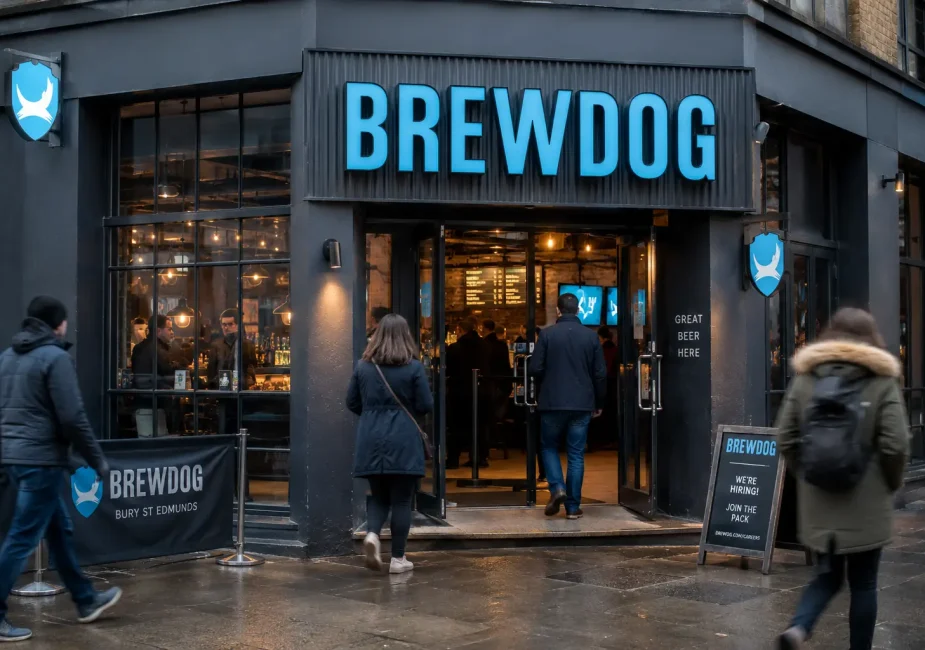
BrewDog PLC went into administration on 2 March 2026, but the BrewDog brand has not disappeared.
Its original company suffered a formal financial collapse, while US-based Tilray Brands acquired its global brand, UK brewing operations and selected pubs in a £33 million rescue deal.
BrewDog beer remains available, several pubs have reopened, and Tilray has announced substantial investment in rebuilding the business.
However, the collapse left former shareholders, employees and creditors facing significant financial losses.
The latest financial results also suggest an important change. Tilray reported that BrewDog achieved profitability in its first quarter of fiscal 2027, although the long-term sustainability of the recovery remains uncertain.
What Is the Latest Update on BrewDog?
The latest BrewDog news suggests that the business is moving from emergency restructuring towards a longer-term recovery strategy under Tilray Brands.
The situation has changed considerably since March.
Alongside reopening pubs and investing in beer distribution, Tilray has introduced new leadership, launched a major marketing campaign and reported an improvement in BrewDog’s financial performance.
Recent Announcements From Tilray Brands
Several announcements provide evidence of how BrewDog is operating under its new ownership.
| Date | BrewDog Announcement | What It Means |
|---|---|---|
| 2 March 2026 | Tilray Acquired Core Assets For £33 Million | BrewDog's Brand And Selected Operations Survived |
| 22 September 2026 | Tilray Reported £50 Million Of Investment And 16 Bar Reopenings | Recovery Investment Was Underway |
| 28 September 2026 | BrewDog Announced Senior Leadership Appointments | Management Was Strengthened Across Commercial And Hospitality Operations |
| 8 October 2026 | Tilray Reported BrewDog Profitability In Its First Quarter | An Early Sign Of Improved Trading Performance |
In September, BrewDog launched its Under New Ownership campaign to emphasise its future within Tilray.
The company also announced partnerships, expanded promotional activity and additional drinks offerings across participating bars.
These developments show that Tilray is actively operating the brand rather than simply holding its trademarks.
Has BrewDog Returned to Profit?
On 8 October, Tilray announced that BrewDog had achieved profitability during its first fiscal quarter, which ended on 31 August 2026.
Tilray’s wider beverage division generated $101.5 million in quarterly revenue, representing an 82% increase from the equivalent period a year earlier.
However, this figure represents Tilray’s overall beverage business, not BrewDog’s standalone revenue.
The announcement is therefore encouraging, but it does not establish that the historic BrewDog PLC has become solvent or that the acquired operation has achieved sustained annual profitability.
What Happened When BrewDog Went Into Administration?
BrewDog entered administration on 2 March 2026 following years of substantial losses, financial pressure and unsuccessful efforts to secure sufficient investment.
The company had expanded from an independent Scottish craft brewer into an international operation involving breweries, bars, hotels and other hospitality ventures.
Although the brand remained recognisable, its financial position had deteriorated.
The administrators, AlixPartners, arranged an asset sale that allowed parts of the business to continue operating.
How Did the £33 Million Rescue Deal Work?
Tilray acquired BrewDog’s global brand and intellectual property, UK brewing operations and 11 strategic brewpubs in the UK and Ireland.
The transaction was structured as an asset purchase rather than a takeover of all the historic company’s liabilities.
This distinction matters because BrewDog’s operating brand survived while the original company remained in administration.
The arrangement shares characteristics with other hospitality rescues, including the Revolution Bars closures and administration, where selected venues continued trading after a restructuring.
At the time of BrewDog’s rescue transaction, 38 company-operated bars were reported to have closed, with 484 redundancies and 733 jobs preserved.
Which BrewDog Assets Were Sold?
The initial acquisition covered the BrewDog name, its beer brands, UK brewing facilities and selected venues.
These included important properties such as DogTap Ellon, Waterloo, Canary Wharf, Manchester and Edinburgh DogHouse.
Other assets and international operations were addressed through separate transactions.
The official Companies House record continues to identify BrewDog PLC as being in administration.
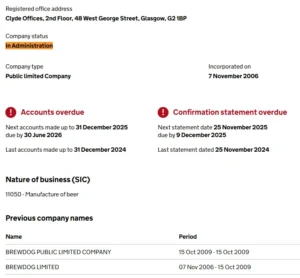
Companies House confirms that BrewDog PLC remains in administration despite the sale of its operating assets.
Who Owns BrewDog Now?
Tilray Brands owns BrewDog’s global brand and principal acquired operating assets, with the UK transaction completed through Tilray Brands UK Ltd.
Tilray is a North American company with interests across beverages, cannabis, wellness and consumer products.
Its ownership marks a major change for BrewDog, which had built its reputation around independent brewing and unconventional marketing.
Under Tilray, the business is being integrated into a larger international beverage platform with established production, distribution and commercial operations.
An asset purchase does not automatically transfer responsibility for every debt owed by the previous company.
This difference between an insolvent legal entity and the assets sold to a buyer can also be seen in the M Squared Lasers collapse and subsequent asset sale.
Is James Watt Still Trying to Buy BrewDog Back?
BrewDog co-founder James Watt attempted to buy back the business through his new drinks venture, Second Best.
In July 2026, Watt announced that he had submitted an offer to acquire BrewDog assets from Tilray.
The proposal attracted attention because Watt also discussed opportunities for former Equity for Punks investors to regain an ownership interest.
However, Tilray chief executive Irwin Simon publicly indicated that BrewDog was not for sale and would remain within the group.
There has been no confirmed subsequent transaction returning ownership of BrewDog to Watt.
BrewDog’s current company notice also states that the brand and Tilray have no association with Watt’s separate commercial ventures.
Why Did BrewDog Go Bust?
BrewDog’s collapse was not the result of one isolated financial problem.
It followed years of aggressive expansion, mounting losses, expensive operating commitments and difficulties maintaining profitability.
Founded in 2007 by James Watt and Martin Dickie, BrewDog became one of Britain’s best-known craft beer businesses.
Its early development reflected the appeal of independent entrepreneurship and brand-led growth, an approach also discussed in examples of UK entrepreneurs who built businesses from early ideas.
However, the scale and financial demands of BrewDog’s later operations were very different from its early years.
How Did BrewDog Fall From a Billion-Pound Valuation?
BrewDog became associated with a valuation of around £1 billion following a major investment by TSG Consumer Partners in 2017.
That transaction involved approximately £213 million of investment for a stake of about 22%.
However, the financing structure also included preferred shares with an 18% compounded annual return entitlement under certain exit or capital-return conditions.
This created a substantial preference over ordinary shareholders, although it did not guarantee that TSG would recover its money in an insolvency.
By the time administrators arranged the rescue sale, the price paid for selected operating assets was only £33 million.
The two valuations are not directly comparable. One reflected an investment in a growing company, while the other represented the distressed sale of particular assets.
Nevertheless, the enormous difference illustrated how dramatically BrewDog’s financial circumstances had changed.
Did Rapid Expansion and Financial Losses Cause the Collapse?
BrewDog’s ambitions extended beyond producing beer.
The company invested in international breweries, hospitality venues, hotels and other projects, significantly increasing its operating commitments.
Its financial statements showed continuing losses despite substantial sales.
| Financial Year | Reported Pre-Tax Loss |
|---|---|
| 2022 | Approximately £30.5 Million |
| 2023 | Approximately £59.2 Million |
| 2024 | Approximately £36.7 Million |
BrewDog reported approximately £357 million in revenue for 2024, showing that a business can generate significant sales without achieving profitability.
Maintaining breweries and hospitality venues requires expenditure on employees, energy, property, distribution and equipment.
These pressures became more difficult to absorb as consumer spending weakened and operating costs increased.
The challenges were not unique to BrewDog. Wider cost pressures facing UK SMEs have affected businesses across labour-intensive sectors.
The proposed closure of Sharp’s Brewery in Cornwall also illustrates the difficulties facing parts of Britain’s brewing industry.
Did Leadership Problems Contribute to Its Decline?
BrewDog also experienced substantial criticism concerning its workplace culture and management practices.
James Watt stepped down as chief executive in May 2024 after leading the company for 17 years.
The controversies created reputational challenges during a period when the company required financial stability and confidence from employees, customers and investors.
However, workplace criticism should not be treated as the sole cause of administration.
The collapse involved overlapping financial, operational and management issues.
How Much Debt Did BrewDog Have Before Its Collapse?
BrewDog’s financial problems extended well beyond the amount recovered through its rescue sale.
Administrators’ reports published after the collapse revealed significant amounts owed to banks, employees, tax authorities and other creditors.
What Did the Latest Administrators’ Report Reveal?
The September 2026 update provided further information about the recovery prospects of different creditor groups.
| Creditor Category | Reported Position |
|---|---|
| BrewDog PLC Unsecured Creditors | Approximately £190 Million Owed, With Less Than 1p Per £1 Expected |
| BrewDog Retail Unsecured Claims | Approximately £207 Million In Claims, With No Distribution Expected |
| HSBC Banking Facilities | More Than £61 Million Owed Across Facilities, With An Estimated £16.8 Million Shortfall |
| Retail Employee Wages And Holiday Pay | Approximately £489,000 Outstanding |
| HMRC Claim Against BrewDog Retail | Approximately £2.4 Million Owed, With No Distribution Expected |
| HMRC Preferential Claim Against BrewDog PLC | Approximately £3.66 Million Expected To Be Repaid |
These figures relate to different legal entities and creditor categories. They should not be added together because some reported claims may overlap or involve intercompany obligations.
The September report shows that the rescue sale did not generate sufficient proceeds to repay every creditor.
This is an important feature of business insolvency. Even companies with significant turnover and valuable assets can experience severe cashflow problems.
The Jerram Falkus administration provides another example of how substantial reported revenue does not necessarily protect a company from financial collapse.
What Happened to BrewDog’s Creditors and Suppliers?
Many unsecured creditors face the possibility of recovering little or none of the money owed to them.
These include businesses that supplied products and services to BrewDog before the administration.
Reports identified unpaid bills affecting companies in food production, hospitality supply, cleaning and other service industries.
For smaller suppliers, the loss of a significant customer can create serious difficulties.
Secured lenders generally have stronger recovery rights than ordinary unsecured suppliers, although their recoveries depend on the security, administration costs and available assets.
The creditors’ situation demonstrates why the survival of a familiar brand should not be confused with the financial recovery of its former operating companies.
What Happened to BrewDog Investors and Employees?
BrewDog’s administration affected more than its financial backers.
Thousands of people had connections to the company as employees, shareholders, suppliers and customers.
The rescue preserved part of the business, but it did not eliminate the financial consequences of the original collapse.
Did Equity for Punks Investors Lose Their Money?
BrewDog raised approximately £75 million through its Equity for Punks crowdfunding campaigns, attracting around 220,000 investors over the years.
The scheme enabled customers and craft beer enthusiasts to purchase shares in the company.
Many investors hoped that a future stock market flotation or business sale would provide an opportunity to realise a financial return.
However, the administration left ordinary shareholders without a recovery.
The Equity for Punks shares in the old BrewDog company did not become shares in Tilray.
Private equity investor TSG Consumer Partners also suffered losses, with administrators’ reporting indicating that it would not recover its equity investment or approximately £27.6 million associated with outstanding financing.
Although James Watt has proposed new ownership opportunities through his separate business, these should not be confused with repayment of the original BrewDog shares.
How Many BrewDog Employees Lost Their Jobs?
The March administration resulted in widespread job losses, particularly across the company-operated bar estate.
Initial reports identified 484 redundancies, while 733 jobs were preserved through the Tilray transaction.
Later administration reporting used somewhat different totals for particular entities and employee-transfer groups.
The financial impact extended beyond redundancy.
The September report identified approximately £489,000 in unpaid wages and accrued holiday pay associated with BrewDog’s retail operation.
Former employees were provided information about government statutory insolvency support, which can cover eligible claims subject to legal limits.
The human consequences resemble those experienced during other retail and hospitality failures, including the administrations of Claire’s and The Original Factory Shop, where jobs and creditor payments were affected by financial restructuring.
Are BrewDog Bars Still Open in the UK?
Yes. BrewDog bars continue operating in the UK, despite the closure of numerous venues during the original administration.
The initial rescue transaction included 11 strategic brewpubs, but this figure should not be interpreted as the total number of BrewDog venues still operating.
Franchised locations, separately operated sites and subsequent reopenings mean that the wider estate is more extensive.
Which BrewDog Pubs Have Reopened?
In September, Tilray reported that it had reopened 16 BrewDog bars following the acquisition.
One notable example was BrewDog Inverurie in Scotland, which reopened in June under a community-focused operating model.
The initiative was designed to strengthen connections with local residents and organisations while testing a different approach to hospitality management.
The reopening programme provides evidence that some venues considered commercially unviable during the original restructuring could operate under new arrangements.
However, reopening does not guarantee that every former BrewDog location will eventually return.
The challenge of maintaining profitable high-street premises is also visible in the wider Costa Coffee closures across the UK, where changing customer habits and operating costs have influenced individual store decisions.
What Happened to BrewDog’s International Operations?
Tilray also expanded its control of BrewDog-related assets outside the UK.
In March, it completed the acquisition of BrewDog’s Australian business, including brewing operations in Brisbane and associated hospitality assets.
The company separately agreed to acquire selected US operations, including brewery and hospitality assets in Ohio.
These developments suggest that Tilray views BrewDog as an international drinks platform rather than solely a Scottish brewing business.
Future overseas expansion will depend on distribution opportunities, regional demand and financial performance.
Is BrewDog Profitable Again Under Tilray?
BrewDog’s financial outlook has improved according to Tilray’s latest published results.
In October, Tilray announced that BrewDog had achieved profitability in its first fiscal quarter following the acquisition.
This represents an important contrast with the repeated losses recorded by the original BrewDog group before administration.
However, understanding the financial figures requires separating BrewDog’s performance from that of its parent company.
What Did Tilray’s October Financial Results Reveal?
Tilray reported the following results for the quarter ending 31 August 2026.
| Financial Measure | Reported Result |
|---|---|
| Tilray Total Quarterly Revenue | $257.1 Million |
| Tilray Beverage Division Revenue | $101.5 Million |
| Beverage Revenue Growth | 82% Year On Year |
| Beverage Gross Margin | 41% |
| BrewDog Profitability | Achieved During The Quarter, According To Tilray |
| Tilray Group Net Result | $40 Million Net Loss |
The reported profitability of BrewDog does not mean that the entire Tilray group was profitable.
Nor does the available announcement provide a complete standalone annual profit figure for BrewDog.
The distinction matters because quarterly improvement is not the same as guaranteed long-term financial recovery.
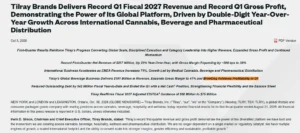
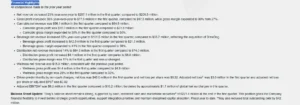
Tilray’s October financial results report BrewDog’s return to profitability and stronger beverage division revenue.
How Is Tilray Using Its £50 Million Investment?
In September, Tilray reported approximately £50 million of investment in BrewDog following the acquisition.
The funding covered business stabilisation, working capital, employees and infrastructure needed to support future growth.
Its strategy has also included renewed advertising, product innovation, partnerships and improvements across the pub estate.
BrewDog’s marketing activity has featured established products such as Punk IPA, Hazy Jane and Lost Lager, alongside new drinks and promotions.
Tilray has also introduced American craft beer brands into selected BrewDog bars.
These activities suggest a strategy based on improving the commercial performance of established products while expanding the business’s distribution opportunities.
What Are BrewDog’s Future Plans for 2027?
BrewDog’s future depends on whether Tilray can translate the early recovery into a financially sustainable business.
The new owner has outlined ambitions to increase distribution, improve hospitality performance and strengthen international operations.
Its plans for 2027 are therefore focused on profitability and disciplined growth rather than simply reopening every previously closed venue.
How Is Tilray Investing in BrewDog’s Recovery?
Tilray originally forecast that the acquired brewing and related operating assets could generate approximately $200 million in annual net revenue and $6 million to $8 million in adjusted EBITDA during fiscal 2027.
These are company projections, not guaranteed financial results.
Tilray also expected the acquired business to become cash-flow positive during fiscal 2027 as integration and efficiency improvements took effect.
The distinction between cashflow and accounting profitability is important.
A company can report an operating profit while still requiring money for capital expenditure, debt obligations or working capital.
Future results will show whether BrewDog can consistently generate enough cash to support its operations.
Will BrewDog Open More Pubs and Expand Internationally?
Further expansion is possible, but Tilray has not confirmed that every closed BrewDog pub will reopen.
The company has demonstrated interest in selective reopening through its investment in the bar estate and the Inverurie community model.
Its international strategy also creates opportunities to expand beer distribution through established networks.
In September, BrewDog announced additional senior appointments covering marketing, hospitality, category management and international commercial development.
These included Gemma Hampton-Stone as Managing Director of Bars and Hospitality and Faisal Khan as Commercial Director for beverages across markets outside Europe.
The appointments indicate that the company is building management capacity to support future growth.
However, expansion is likely to depend on factors such as:
- Customer Demand: Whether Consumers Continue Buying BrewDog Products
- Hospitality Profitability: Whether Individual Pubs Can Cover Their Operating Costs
- Distribution Growth: Whether Tilray Can Secure Additional Retail And International Sales
- Financial Discipline: Whether The Company Can Avoid Repeating Its Previous Expansion Problems
- Brand Confidence: Whether BrewDog Can Rebuild Trust Among Customers And Commercial Partners
Can BrewDog Maintain Profitability in 2027?
The early financial results provide reasons for cautious optimism.
Tilray has access to international distribution infrastructure, experienced management and a diversified drinks portfolio.
These resources may help BrewDog operate more efficiently than it did before administration.
However, there are still meaningful risks.
The UK hospitality sector continues to face wage pressures, high property costs, business rates and changing consumer spending patterns.
BrewDog must also rebuild confidence after years of controversy, financial losses and shareholder disappointment.
The key question is no longer simply whether BrewDog can survive as a brand.
It is whether its new operating structure can generate sustainable profits without depending on another period of expensive expansion.
Conclusion: Is BrewDog Going Bust or Making a Comeback?
BrewDog’s original company has already experienced a financial collapse, entering administration in March 2026. However, its beer brands and principal operating assets survived through Tilray’s £33 million acquisition.
Since taking ownership, Tilray has invested in the business, reopened pubs, expanded commercial activities and reported an initial return to profitability.
BrewDog is therefore continuing as an active business under new ownership, rather than disappearing following administration.
Nevertheless, the financial consequences for the old company’s shareholders, employees and creditors remain significant.
The outlook for 2027 is more encouraging than it appeared at the point of collapse, but BrewDog’s long-term recovery will depend on consistent trading performance, effective cost control and the success of Tilray’s investment strategy.
Frequently Asked Questions
Has BrewDog Officially Gone Bust?
Yes. BrewDog PLC entered administration on 2 March 2026, but its brand and principal operating assets were acquired by Tilray and continue trading.
Is BrewDog Still in Administration?
BrewDog PLC remains listed as in administration at Companies House. The acquired BrewDog operations continue separately under Tilray ownership.
Who Owns BrewDog Now?
Tilray Brands acquired BrewDog’s global brand, intellectual property, UK brewing operations and selected pubs in March 2026.
Is BrewDog Making a Profit Again?
Tilray reported that BrewDog achieved profitability during its first fiscal quarter ending August 2026, although sustained annual profitability has not yet been established.
Are BrewDog Pubs Still Open?
Yes. BrewDog pubs continue trading in the UK, and Tilray reported reopening 16 bars by September 2026.
Will BrewDog Investors Get Their Money Back?
Former Equity for Punks shareholders are not expected to recover their original investments through the administration. New ownership offers would be separate arrangements.
What Is the Future of BrewDog in 2027?
Tilray plans to improve cashflow, expand distribution and strengthen BrewDog’s operations, but future profitability and pub expansion remain dependent on commercial performance.