

How On Site Personnel Strengthen Protection in Commercial Properties?
 • April 16, 2026
•
1 Comment
• April 16, 2026
•
1 Comment

Commercial property security is under heightened scrutiny as business environments become more complex, placing greater emphasis on effective safety and risk management. Visible on site personnel are now vital for protecting various locations, helping to deter incidents and ensure operational continuity.
This article details the practical contributions of on site teams, their coordination with modern systems, and the professional standards needed for reliable property security.
How On Site Personnel Strengthen Commercial Property Protection in Modern Business Environments?
With more mixed-use spaces and changing workplace occupancy patterns, property risk has become increasingly complex. Security guards help ensure that commercial premises uphold high standards of safety and reassurance for tenants, visitors, and owners.
High-profile incidents and ongoing risks like theft and disruptions can have considerable financial consequences for operations.
As businesses review steps to protect assets, recognising the significance of on site personnel in current protection strategies is increasingly important.
Changing Commercial Property Risk Demands New Strategies

Commercial properties today face a wide variety of developing threats. Changes in building occupancy, such as flexible workspaces and shared facilities, increase the need for security solutions that can adapt to shifting requirements. Mixed-use developments now require more sophisticated management approaches to address differing risk profiles and user expectations.
Along with these operational shifts, expectations about duty of care have increased. Businesses must demonstrate thorough, demonstrable safety practices to fulfil regulatory obligations and protect their reputation.
The direct costs associated with theft, vandalism, trespassing, and operational disruptions stay significant, leading to a greater focus on proactive prevention and timely response procedures.
Visible Deterrence and Value of Early Intervention
On site personnel create a physical presence that deters unwanted activity. They are trained to identify suspicious behaviour or unauthorised access promptly, reducing the chance of issues escalating into major incidents.
The importance of these roles is particularly evident in high-traffic or high-value locations, where visibility strongly influences offender behaviour and enhances security.
In many buildings, managing access is essential to day-to-day operations. On site staff verify visitor identities, supervise entry points, and coordinate deliveries or contractors, ensuring only authorised people are allowed into sensitive areas. Well-trained teams deliver appropriate responses and provide direct support to occupants experiencing emergencies or disturbances.
Effective Integration With Technology and Procedures
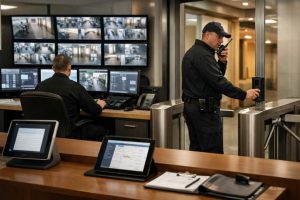
While electronic tools such as CCTV, alarms, and access controls are crucial, experienced on site personnel enhance these measures by offering real-time judgement and direct intervention.
They support physical security technology by investigating alerts, assisting with reception duties, and addressing unusual situations that automated systems may miss. It is standard for security staff to collaborate with control rooms and use digital tools to oversee properties efficiently.
Clear post orders, structured reporting routines, and effective handover procedures are central to successful property protection. Accurate documentation supports regulatory compliance and maintains operational continuity, helping organisations learn from incidents and comply with audit or insurance requirements.
Communication between shifts is essential for consistent risk monitoring, ensuring all staff understand their responsibilities and minimising misunderstandings.
Professional Standards and Deployment Tailored to Property Types
Comprehensive training and high professional standards are essential for effective on site security. Important skills include conflict resolution, situational awareness, and delivering a professional, customer-facing service.
On site personnel are expected to stay vigilant, approachable, and impartial, promoting a secure environment for everyone on the premises.
Deployment strategies are selected to fit each property’s particular needs. Single-tenant offices may require a stationary security presence at main entrances, while multi-tenant complexes or distribution centres often use mobile patrols for more extensive coverage.
At retail or industrial sites, the balance between consistent visibility and operational flexibility determines the proportion of fixed and mobile roles. Ensuring that team size, positioning, and working patterns match building activity is vital for effective, efficient security provision.
Evaluating Effectiveness and Supporting Operational Resilience
Businesses use specific key performance indicators to measure the success of on site security arrangements. Standard metrics include rates of incidents, average response times, compliance with visitor protocols, and qualitative feedback from building users. Monitoring these indicators allows for continuous improvement and adaptation to evolving risk landscapes.
Problems such as unclear job scopes, ineffective briefings, or mismatches between personnel and site requirements can impede security outcomes. Regularly reviewing role definitions and updating reporting practices help to address these challenges, resulting in more flexible, dependable protection.
Well-organised on site security contributes to ongoing business continuity, reinforces safety standards, and builds resilience into everyday operations without relying solely on complex technology.



[…] The abolition of Section 21 does not mean landlords can never recover their properties. […]