
DWP Extra Payment 2025 – What It Is and Who Will Receive It?
 • December 10, 2025

With rising living costs continuing to place pressure on UK households, many people are turning their attention to government support in 2025, particularly the so-called “DWP extra payments”.
These payments have become a point of national interest, especially among vulnerable groups who previously benefitted from the automatic Cost of Living Payments.
But as we approach the colder months of 2025, confusion abounds. Are there any new government-backed payments? Who qualifies for them? Are online rumours about £500 or £600 payouts true? And more importantly, how can people ensure they get the right support without falling victim to misinformation?
This guide breaks down everything you need to know about the DWP extra payment 2025, what’s real, what’s not, and how to access legitimate financial help this winter.
Why Are DWP Extra Payments a Hot Topic in 2025?

DWP “extra payments” continue to attract attention because they were a lifeline during the peak cost-of-living crisis, with automatic support issued between 2022 and 2024 for pensioners, disabled claimants and low-income households. Those payments required no application, which made them widely understood and highly visible.
In 2025, the system looks different. Instead of large nationwide Cost of Living Payments, most support now comes through targeted, locally managed schemes, including:
- Household Support Fund (HSF): Council-based, need-tested
- Discretionary hardship support: Awarded on assessment
Complicating matters, viral rumours claiming a “£500 December 2025 DWP payout” have caused misinformation and speculation.
With no confirmed repeat of earlier mass payments, claimants are rightfully asking what support remains, who qualifies, and how access has changed under this new targeted model.
What Happened to the Previous Cost of Living Payments?
The government’s Cost of Living Payment programme ended in early 2024 after several successful rounds of automatic support. These payments were issued in set amounts, such as £301, £300, and £299, and were credited directly to eligible individuals’ bank accounts.
This initiative offered much-needed relief for millions during a period of high inflation and economic uncertainty. But it was also clearly communicated as a temporary measure, and no further rounds have been confirmed for 2025.
This shift has left many unsure about what support is still available. With no more blanket payments from central government, attention has turned to localised help via councils and ongoing schemes like the Cold Weather Payment and HSF.
What Exactly Is the DWP Extra Payment in 2025?

In 2025, the term “DWP extra payment” doesn’t refer to a single national scheme. Instead, it covers a range of smaller support payments, including:
- The Household Support Fund (HSF): Financial help with food, energy, and essential bills, available via your local council.
- Cold Weather Payments: £25 for each 7-day cold spell during winter, paid automatically to eligible individuals.
- Reduced Deductions from Universal Credit: Meaning some claimants retain more of their benefits.
There is no confirmed £500 or £600 universal DWP payment for December 2025. Many such claims circulating online refer to either HSF support (which varies by location) or are unverified rumours. Any legitimate payments are detailed only through official government and council channels.
How Does the Household Support Fund Work in 2025?
The Household Support Fund (HSF) is a key source of financial help in 2025. It’s a £700 million fund distributed to local councils across England, Scotland, Wales, and Northern Ireland to assist residents with the rising cost of living.
However, support varies significantly by area. Each local authority is responsible for deciding who qualifies, how much support is given, and what the application process looks like.
Some councils prioritise pensioners and families with children, while others focus on Universal Credit claimants or people with disabilities.
What Does the Fund Cover?
Eligible residents can typically receive help with:
- Food and essential groceries
- Gas and electricity bills
- Rent arrears and council tax
- Clothing, school uniforms, and white goods
How to Access the Fund?
Applications must be made directly through your local council’s website. Councils will list eligibility criteria, required documentation, and whether funds are still available.
Because this fund is not automatic, it’s crucial to act early, especially during the colder months when demand spikes.
Who Can Apply for the Household Support Fund This Winter?
Eligibility for the Household Support Fund is not uniform across the UK. Unlike previous nationwide schemes, this support is distributed based on local council discretion, meaning access can be limited depending on where you live.
Common criteria that councils may consider include:
- Income level and employment status
- Household size and dependents
- Whether you’re receiving benefits (Universal Credit, Pension Credit, etc.)
- Disability or health conditions
- Risk of fuel poverty or eviction
In many areas, the fund prioritises families with young children, elderly residents, and those living in fuel poverty.
However, due to budget limits, being eligible does not always guarantee funding. Early application is key, and some councils use a first-come, first-served basis.
How Does the Cold Weather Payment Scheme Operate in 2025?

Cold Weather Payments continue to provide reliable winter relief for vulnerable residents. This scheme offers £25 for every 7-day period of cold weather (defined as zero degrees Celsius or below) between 1 November 2025 and 31 March 2026.
Who Qualifies?
This payment is automatically triggered for individuals receiving specific benefits, such as:
- Pension Credit
- Income-based Jobseeker’s Allowance
- Income-related Employment and Support Allowance
- Universal Credit (with health-related or family elements)
- Support for Mortgage Interest
No action is required to apply. If a cold spell hits your postcode, the payment is made within 14 working days directly into your benefit account.
Cold Weather Payment Overview:
| Criteria | Details |
|---|---|
| Temperature Threshold | 0°C or below for 7 consecutive days |
| Payment Amount | £25 per qualifying 7-day period |
| Payment Window | 1 Nov 2025 – 31 Mar 2026 |
| Eligibility | Automatically triggered if eligible |
| Payment Method | Direct to benefit bank account |
Are the Rumours About £500 or £600 DWP Payments True?
Social media has played a major role in spreading claims that the DWP will issue new £500 or £600 payments in December 2025. While the posts circulate widely, there is no official confirmation of any such lump-sum support.
Most of these rumours originate from speculation rather than policy, with some confusing local Household Support Fund awards for national payments.
In other cases, misleading posts are created solely to attract clicks or gather personal information from claimants.
Anyone who sees these claims should verify details through their local council or GOV.UK and avoid sharing bank, identity, or National Insurance information with unverified platforms. Until formally announced, these suggested figures remain unconfirmed and unofficial.
How Can You Apply for Support Through Your Local Council?
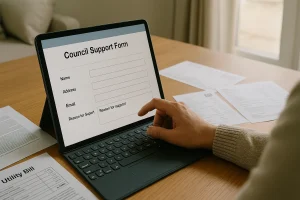
Applying for support in 2025 largely means navigating your local council’s support portal. Most councils have a dedicated Household Support Fund or Financial Hardship page.
Steps to Apply:
- Visit your council’s official website
- Search for “Household Support Fund 2025” or “cost of living help”
- Complete the online form with required evidence (ID, proof of income, benefit statements)
- Await confirmation via email or post
Not all applications are approved, especially in high-demand areas. Councils will usually notify applicants within 2–3 weeks depending on the volume.
Key Documents Often Required:
| Document Type | Purpose |
|---|---|
| Proof of Address | Confirms residency in council area |
| Proof of Income | Shows employment or benefits status |
| Bank Statement | Verifies recent transactions and hardship claims |
| Benefit Letters | Confirms eligibility for specific DWP schemes |
| Utility Bills | Confirms fuel and energy hardship |
With funding controlled locally rather than nationally, success depends on accurate documentation, timely application and clear evidence of financial hardship.
What Precautions Should You Take to Avoid DWP Payment Scams?
As interest in financial support rises, so too does the activity of scammers. Texts, emails, and social media posts claiming to offer guaranteed DWP payments are often fraudulent.
Be wary of:
- Messages asking for personal or banking details
- Fake websites that mimic government platforms
- “Too good to be true” offers or unverified claims
Legitimate DWP and council schemes never ask you to input sensitive information outside secure websites. Always ensure the web address begins with “https” and ends with “.gov.uk” or your local council’s domain.
What Should You Do Now If You Think You’re Eligible?

If you believe you may qualify for support in 2025, acting early is essential, as many schemes run on limited budgets and close once funds are exhausted.
Begin by checking your local council’s website for updates on the Household Support Fund, as eligibility rules and application windows change regularly.
If the portal is closed, keep an eye on future announcements or reopening dates. You should also stay aware of weather alerts, as Cold Weather Payments are issued automatically to eligible claimants during extended freezing conditions.
Reviewing your benefits statement is also worthwhile, particularly for Universal Credit, as recent changes may already have reduced deductions. Being prepared and proactive gives you the best chance of securing financial support when you need it.
Conclusion
The idea of “DWP extra payment 2025” may be a bit misleading, as there is no single new universal payment scheme like in previous years.
However, significant support is still available, particularly through the Household Support Fund and Cold Weather Payments.
By staying informed, applying early, and checking information only from official sources, UK residents can still access meaningful financial relief this winter. As support becomes more localised, awareness and action will be key in securing help for those who need it most.
Frequently Asked Question
How do I find out if my area is offering the Household Support Fund in 2025?
You should visit your local council’s website and search for the latest updates on Household Support Fund availability.
Can pensioners receive DWP extra payments this winter?
Yes, pensioners may qualify for both the Household Support Fund and Cold Weather Payments depending on their local council and benefit eligibility.
Are Universal Credit recipients automatically included in extra payments?
Not in all cases. While Cold Weather Payments are automatic, the Household Support Fund typically requires an application.
What happens if I miss the application deadline for the Household Support Fund?
Funds are usually limited and time-sensitive. Missing a deadline may mean waiting until the next round of support opens, if any funds remain.
Will there be any tax implications for receiving extra DWP payments?
Most support payments, including Cold Weather and HSF assistance, are non-taxable and don’t affect your tax return.
What other help is available if I’m not eligible for DWP payments?
You might be able to access help from local food banks, utility vouchers, debt support charities, and Citizens Advice services.
How often are Cold Weather Payments reviewed or updated?
They are reviewed daily during the payment window (November to March) and triggered based on actual temperatures in your postcode area.