
How Many Times Can You Get an Advance on Universal Credit?
 • February 2, 2026

The number of times you can get a Universal Credit advance depends entirely on the type of loan you request. You are restricted to one New Claim Advance per application to bridge the initial five-week wait.
However, you can receive multiple Change of Circumstances Advances, provided each request is tied to a separate, verified change that increases your benefit entitlement.
For emergency or one-off costs, you can also get multiple Budgeting Advances over the lifecycle of your claim, but the DWP enforces a strict “one active loan at a time” rule, meaning any previous Budgeting Advance must be fully repaid before a new one can be authorized.
Key Takeaways:
- Strict Limits by Advance Type: You are restricted to one New Claim Advance per application. You can claim multiple Change of Circumstances Advances for distinct, verified life changes, but you can only hold one active Budgeting Advance at a time.
- 24-Month Repayment Window: Modern advance applications feature a maximum 24-month repayment timeline. This extended window lowers the impact of automatic monthly deductions on your standard allowance.
- Limited Hardship Pauses: If you experience severe financial hardship, repayments can be temporarily paused. This relief is strictly capped at 6 months for Budgeting Advances and 3 months for New Claim or Change of Circumstances Advances.
- Savings Threshold Reductions: Having more than £1,000 in personal savings or capital will reduce your approved Budgeting Advance amount pound-for-pound by the excess amount.
- No Formal Right of Appeal: DWP refusals for Budgeting Advances cannot be taken to an independent tribunal or formally appealed. If denied, your best options are requesting an internal DWP re-review or seeking non-repayable Local Welfare Assistance from your local council.
This guide explains what each Universal Credit advance is for, how often you can apply, how repayments work, and what alternatives are available if your request is refused.
What Exactly Is a Universal Credit Advance?

A Universal Credit advance is a form of short-term financial support designed to help people who need money before their regular Universal Credit payments begin or increase. It allows you to access funds earlier, based on the amount you’re expected to receive in future payments.
An advance is not extra benefit money; it is a loan that must be repaid. Any amount you receive is automatically deducted from your future Universal Credit payments over an agreed period.
While no interest is charged, these deductions can reduce your monthly income until the advance is fully repaid.
You can request an advance through your Universal Credit online account, by contacting the Universal Credit helpline, or by speaking to your work coach.
Approval depends on your circumstances and the Department for Work and Pensions’ assessment of what you can realistically repay.
What Types of Advances Can You Apply for Through Universal Credit?
There are three types of Universal Credit advances available, and understanding each one is key to knowing how often you can receive them and under what conditions.
New Claim Advance – Help Before Your First UC Payment
When you first make a UC claim, you won’t receive your initial payment for about five weeks. The New Claim Advance allows you to receive up to 100% of your first monthly entitlement in advance, helping you cover essentials like rent, food, and utilities.
It’s important to note:
- You can usually apply once per new claim
- If you initially ask for less than the full amount, you may later request a top-up
- The total advance cannot exceed the value of your expected first UC payment
Change of Circumstances Advance – Support When Your Situation Changes
This type of advance is for people who report a change in circumstances that leads to an increase in their Universal Credit award.
It might include:
- Moving to a higher-rent property
- A new child or dependent
- Starting or ending a relationship that affects your benefit entitlement
You can apply for a Change of Circumstances Advance multiple times, but only if each application is linked to a different, verified change in your circumstances. You must also apply before the increased payment is made, otherwise, you’ll have to wait for your new assessment period.
Budgeting Advance – Assistance with Essential One-Off Costs
This advance helps cover unexpected, one-off costs that are necessary but not part of your usual monthly budget. For example:
- Replacing a broken appliance
- Paying for job interview travel
- Covering funeral costs or emergency repairs
To qualify, you typically need to:
- Have received UC (or other eligible benefits) for at least 6 months
- Not exceed the income and savings thresholds
- Not be currently repaying another Budgeting Advance
You can apply for Budgeting Advances more than once, but only after the previous one is fully repaid. You can’t have two active at the same time.
How Many Times Can You Get a New Claim Advance on Universal Credit?

Generally, you can receive a New Claim Advance only once for each new Universal Credit claim. Its purpose is to help cover essential costs during the five-week wait before your first regular payment arrives. In most cases, you won’t be able to request another New Claim Advance after this initial payment has been made.
That said, there is some limited flexibility. If you originally asked for less than your full estimated entitlement and later realise you need additional support, you may be able to request a top-up.
This must stay within your calculated Universal Credit amount and must be requested before your first payment is issued.
Once your full Universal Credit payment starts, you cannot receive another New Claim Advance for the same claim. For this reason, it’s important to carefully assess your short-term financial needs before applying.
Can You Request Another Advance While Still Repaying One?
Whether you can request another advance while repaying one depends entirely on the type of advance and your current repayment situation.
- New Claim Advance: You can only get one per claim. A top-up may be allowed if you initially took less than the maximum, but no full second advance will be granted for the same claim.
- Change of Circumstances Advance: Yes, you can apply again, provided the advance is for a different verified change to your entitlement.
- Budgeting Advance: You cannot apply for another if you’re still repaying one. The DWP strictly enforces a one-at-a-time rule for Budgeting Advances.
Before approving a new advance, the DWP will assess:
- Existing deductions
- Your ability to manage financially
- The urgency of your situation
Speak to your work coach for clarity and personalised advice.
Real-Life Example: David’s Experience with Multiple Advances
David, a warehouse worker from Birmingham, applied for Universal Credit after redundancy and received a £500 New Claim Advance to cover rent and essentials during the five-week wait.
A few months later, irregular part-time income and a broken washing machine led him to receive a £300 Budgeting Advance.
When his boiler failed shortly after, David applied for another advance but was refused because he was still repaying the previous Budgeting Advance.
His work coach then helped him access Local Welfare Assistance and charitable support for repairs. David’s experience highlights how strict the rules are and why checking repayment status matters before reapplying.
How Much Can You Actually Borrow Through a Universal Credit Advance?
The amount you can borrow through a Universal Credit advance depends on the type of advance, your household situation, and your repayment ability. While there are set maximums, the actual amount offered may be less, especially if the DWP believes higher deductions would cause hardship.
Maximum Advance Amounts by Type
| Advance Type | Amount | Eligibility Notes |
|---|---|---|
| New Claim Advance | Up to 100% of first UC payment | One per claim, with possible top-up before first payment |
| Change of Circumstances | Based on increased entitlement | Multiple applications allowed for different changes |
| Budgeting Advance – Single | Up to £348 | One active at a time, must repay in full before reapplying |
| Budgeting Advance – Couple | Up to £464 | Based on income, savings, and affordability |
| Budgeting Advance – With Kids | Up to £812 | Larger maximum reflects higher living costs |
Note on Eligibility for Children: To qualify for the maximum £812 child rate, the child must be under 16, or count as a ‘qualifying young person’.
A dependent counts as a qualifying young person up to the 31st of August following their 19th birthday, provided they remain in full-time, non-advanced education (such as a local school or sixth-form college).
How Your Savings (Capital) Can Reduce Your Advance?
It is important to know that the Department for Work and Pensions (DWP) checks your savings and capital before deciding how much you can borrow for a Budgeting Advance. Capital includes any personal savings, investments, or certain types of property you own.
If you have more than £1,000 in capital, the Jobcentre will reduce your approved Budgeting Advance amount pound-for-pound by the excess amount.
- Example: If you meet all the criteria for an £812 advance but have £1,250 in a savings account, your excess capital is £250. The DWP will deduct that £250 from your advance, meaning the maximum amount you will actually receive is £562.
The DWP considers these core factors when determining your overall loan cap:
- Your household type.
- Current outstanding deductions.
- Whether your budget allows for repayment within 24 months.
Your work coach can help estimate how much you might be eligible to borrow.
What’s the Best Way to Apply for a Universal Credit Advance?
Applying for a Universal Credit advance is usually straightforward, but the method you choose can affect how quickly your request is processed. Understanding the steps involved can help reduce delays and make the process clearer.
Here are the steps to apply for a Universal Credit advance:
Step 1: Apply through your Universal Credit online journal
This is the quickest option for most people. You can submit your request directly from your account by selecting the advance payment option and clearly explaining your situation.
Step 2: Speak to your work coach
If your circumstances are more complex, such as a joint claim or recent changes, your work coach can guide you through the application and ensure your request is accurate.
Step 3: Contact the Universal Credit helpline
This option is useful if you have limited internet access, accessibility needs, or an urgent situation that requires speaking to someone directly.
When applying, be prepared to explain why you need the advance, how much you are requesting, and what the money will be used for. Most advances are paid within a few working days, with faster payments possible in emergencies if all details are provided clearly.
What Can a Universal Credit Advance Be Used For?
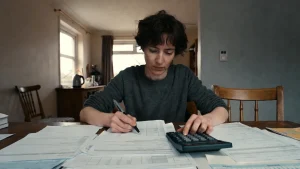
Universal Credit advances, particularly Budgeting Advances, are intended for essential, one-off expenses, not ongoing or everyday costs. The DWP sets strict guidelines on what qualifies.
What You Can and Can’t Use an Advance For?
| Allowed Expenses | Disallowed Expenses |
|---|---|
| Moving costs & tenancy deposits | Food, groceries, and toiletries |
| Furniture, white goods, or household safety tools | Standard rent or mortgage payments |
| Work-related travel & interview expenses | Personal loan or credit card repayments |
| Funeral costs or home security repairs | Ongoing household utility bills (gas/electric) |
| Maternity & baby essential costs | Ongoing subscription fees |
If you’re facing regular shortfalls, explore Discretionary Housing Payments, Local Welfare Schemes, or seek support from Citizens Advice for more sustainable assistance.
What Are the Repayment Rules and Deductions for Advances?
Repaying a Universal Credit advance is straightforward but can impact your monthly budget. Once your advance is approved, the repayments begin from your next UC payment and continue until the full amount is recovered.
Repayment terms offer a maximum window of 24 months, which helps ease the immediate financial pressure
That said, how much is deducted depends on how much you owe and what your standard UC allowance is.
- Pausing or Delaying Your Repayments: If you are facing severe financial hardship and cannot afford the automatic deductions, you can ask the DWP to temporarily pause or delay your repayments. The maximum time you can pause depends entirely on the type of advance you received:
- Budgeting Advances: Repayments can be delayed for up to 6 months if you show you cannot afford them.
- New Claim or Change of Circumstances Advances: Repayments can usually only be delayed for up to 3 months (or just 1 month if your advance was tied to a change that increased your Universal Credit amount).
- The December 2024 Rule: Standard repayment periods for advances requested on or after 4 December 2024 are set to a maximum of 24 months. If you are managing an older advance requested before this date, it will normally follow the legacy 12-month repayment timeline.
Why Might Your Advance Application Be Refused?
While Universal Credit advances are widely available, not every request is approved. There are several common reasons the DWP may refuse an application, even if you previously received an advance without issue.
Reasons for refusal may include:
- You’re still repaying a previous advance (especially Budgeting Advances)
- Your existing deductions already reach the allowable limit
- Your income or savings are above eligibility thresholds
- The DWP considers your request not urgent or believes you can manage until your next payment
- You have outstanding benefit overpayments or sanctions in place
What can you do if your advance is refused?
Legally, you cannot formally appeal a refused Budgeting Advance, and the decision cannot be taken to an independent tribunal.
However, you do have options if you are left without options:
- Ask for a Re-review: You can formally ask the DWP to look at the decision again. This is highly effective if you can provide fresh evidence or show that your financial circumstances have worsened since your initial application.
- Speak to your Work Coach: Ask them to review your affordability assessment metrics directly to see if a smaller loan amount can be approved instead of a flat refusal.
Remember, refusal doesn’t always mean you’re permanently ineligible; it may just mean the timing or circumstances don’t meet DWP criteria right now.
What Are the Alternatives If You Can’t Get Another Advance?

If you’re unable to get a Universal Credit advance, either because you’re still repaying one or your request has been refused , it’s important to know that other forms of support may still be available.
These options are designed to help people cover essential costs and manage short-term financial pressure when advances aren’t an option.
| Support option | What it helps with | Key things to know |
|---|---|---|
| Hardship Payments | Basic living costs if your UC is reduced due to sanctions | Repayable; usually available only if you can’t meet essential needs |
| Discretionary Housing Payments (DHP) | Rent shortfalls or housing costs | Provided by local councils; short-term and means-tested |
| Local Welfare Assistance | Emergency food, heating, or essential items | Varies by council; often non-repayable |
| Charitable Support & Food Banks | Food parcels, grants, debt advice | Support available through groups like Turn2Us, The Trussell Trust, and StepChange |
If your advance is declined, it’s worth discussing these alternatives with your work coach, a housing officer, or an adviser. They can help you understand what support you may qualify for and guide you through the application process.
Conclusion
The number of times you can receive an advance on Universal Credit depends on the type of support and your circumstances. Some advances are limited to one per claim, while others may be available more than once if your entitlement changes or after previous amounts are repaid.
Although advances can help with short-term financial pressure, they are not guaranteed and must be repaid through future Universal Credit payments.
Understanding the rules, planning repayments carefully, and seeking guidance from your work coach can help you decide whether an advance is the right option
FAQs About Universal Credit Advances
Can I apply for a Universal Credit advance if I’m self-employed?
Yes, but your recent income will be reviewed, and affordability must be shown.
Does getting an advance affect future Universal Credit entitlement?
No, but it reduces your monthly payment due to automatic deductions.
How long does it take to receive a Universal Credit advance?
Usually within 3 working days, or sooner if the situation is urgent.
What happens if I stop claiming UC before I repay the advance?
You must still repay it. The DWP Debt Management team will contact you to arrange repayment.
Can I ask for more time to repay my advance?
Yes. If you’re struggling, request an extension or temporary pause in deductions.
Is a Budgeting Loan the same as a Budgeting Advance?
No. Budgeting Loans are for legacy benefits. UC claimants are eligible for Budgeting Advances only.
Will an advance show up on my credit report?
No. UC advances are not credit-checked and won’t affect your credit score.