The Rise of UK Cake Sheds: A Booming Business Trend Facing a Make-or-Break Licensing Crisis
 • June 8, 2026
Key Takeaways:
- Growing Entrepreneurial Trend: Cake sheds allow home bakers to sell goods directly from their property, with many evolving into full-time, lucrative micro-businesses.
- High Revenue Potential: Leveraging social media, high-demand operations can generate between £500 and £1,000+ per week.
- Regulatory & Licensing Crisis: The 2026 trend is facing intense scrutiny under the Local Government (Miscellaneous Provisions) Act, with some councils demanding over £1,000 for street trading licences.
- Strict Compliance Required: Operators must adhere to food business registration, Level 3 Food Safety certification, and Natasha’s Law allergen labelling to maintain legality.
- Future Uncertainty: While consumer support remains strong, the long-term viability of the trend depends on how local authorities interpret trading laws and whether clearer national guidance emerges.
What Is a Cake Shed and Why Is It Becoming a Popular UK Business Trend?
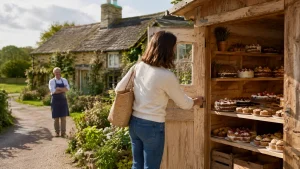
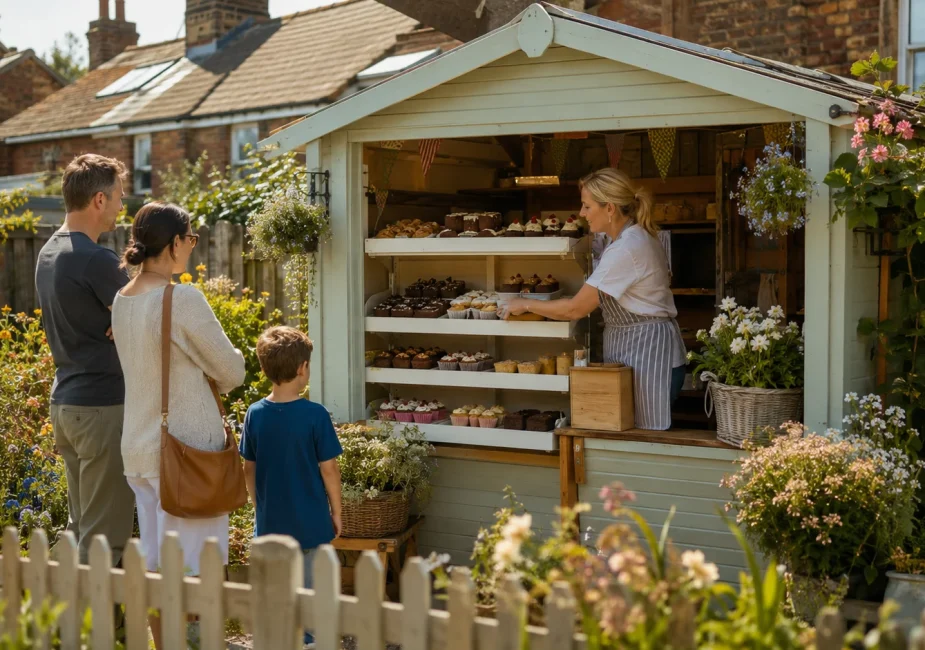
Cake sheds are small self-service structures that allow customers to purchase homemade baked goods directly from local bakers. Typically positioned in front gardens, driveways, or near residential roads, these sheds contain cakes, brownies, cookies, traybakes, and other sweet treats. Customers select their items and leave payment through an honesty box or digital payment method.
The concept combines several trends that have become increasingly popular in recent years. Consumers are seeking locally produced products, small businesses are looking for affordable ways to reach customers, and many people want alternatives to traditional retail experiences.
Unlike a conventional bakery, a cake shed does not require expensive retail premises, multiple employees, or high overhead costs. This lower barrier to entry has made the model particularly attractive to home bakers who want to monetise their skills without making a major financial commitment.
The simplicity of the concept is one of its greatest strengths. Customers gain access to freshly baked products, while bakers can serve their local communities directly from home.
Why Are Cake Sheds Appearing Across the UK So Quickly?
The rapid growth of cake sheds can be linked to several social and economic changes that have emerged over the past few years.
Firstly, many people discovered or expanded their baking skills during the COVID-19 pandemic. With more time spent at home, baking became both a hobby and a creative outlet. As restrictions eased, some bakers began exploring ways to generate income from their newly developed skills.
Secondly, the cost-of-living challenges facing households encouraged many individuals to look for additional income streams. A cake shed provides a relatively affordable way to start a business compared with opening a traditional shop.
Thirdly, consumers increasingly value local businesses. Purchasing from a nearby cake shop often feels more personal than buying from a large supermarket chain. Customers know where their food comes from and enjoy supporting members of their own community.
As awareness spreads through social media and word of mouth, new cake sheds continue to appear across villages, towns, and cities throughout the country.
Why Have Cake Sheds Become a National News Story in 2026?
What began as a small-scale home baking trend has become a national talking point across the UK. During 2026, cake sheds attracted significant media attention as councils began reviewing whether some operators should be subject to street trading regulations.
The debate quickly expanded beyond baking. Supporters argued that cake sheds represent modern entrepreneurship, giving individuals an affordable way to generate income from home. Critics questioned whether businesses selling food directly to the public should face stricter oversight.
The discussion gained further momentum when reports emerged that some operators could face licensing fees exceeding £1,000 per year. This sparked strong reactions from local communities, many of whom viewed cake sheds as valuable independent businesses rather than commercial retailers.
How Did the Home Baking Boom Contribute to the Growth of Cake Sheds?
Home baking has experienced remarkable growth over the past decade. Television programmes, social media content, and online baking communities have encouraged more people to experiment with baking at home.
Many home bakers initially started by making cakes for family gatherings, birthdays, and local events. As confidence grew, so did the desire to sell products commercially.
Cake sheds emerged as a practical solution. Rather than investing in market stalls or commercial premises, bakers could establish a local point of sale directly outside their homes.
The model has proven particularly effective because it allows bakers to test demand before committing to larger business investments. If customer demand increases, operators can gradually expand production while maintaining relatively low operating costs.
| Factor | Impact on Cake Shed Growth |
|---|---|
| Increased interest in baking | More people developing baking skills |
| Pandemic-era home hobbies | Growth in home-based enterprises |
| Flexible working culture | More time available for side businesses |
| Consumer support for local businesses | Strong community demand |
| Social media exposure | Wider customer reach |
The combination of these factors has created favourable conditions for the growth of cake sheds across the UK.
Why Are Consumers Choosing Cake Sheds Over Traditional Bakeries?
Consumer behaviour has shifted significantly in recent years. Many shoppers now seek experiences that feel more authentic, local, and community-focused.
Cake sheds offer something different from traditional retail environments. Customers often enjoy the novelty of selecting products from a small roadside shed. The honesty-box model also creates a sense of trust between the business owner and the customer.
In addition, many cake shed operators produce limited batches. This means customers can access freshly baked items that may not be available elsewhere.
Another important factor is convenience. Residents can quickly purchase treats without travelling to a high street bakery or shopping centre.
How Does the Cake Shed Business Model Work?
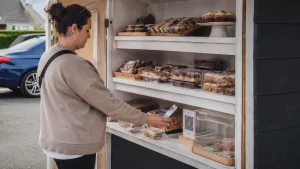
The cake shed business model is intentionally simple, allowing bakers to focus on product quality rather than complex retail operations.
Most operators prepare baked goods from their home kitchens, stock their sheds during opening hours, and allow customers to browse independently. This self-service approach reduces staffing requirements while providing flexibility for both sellers and buyers.
The model is particularly attractive because operating costs are often significantly lower than those associated with traditional retail businesses.
The High-Street Alternative: Weekly Earnings and Viral Demand
While many assume roadside honesty boxes are simply casual hobbies, successful UK cake sheds have rapidly evolved into lucrative, full-time operations.
Driven heavily by video platforms like TikTok, operations like The Lavender Cake Shed, run by Danielle Edgington in Kings Heath, Birmingham, demonstrate the massive commercial scale of the movement.
Open seven days a week from 09:00 to 21:00 BST, Danielle’s driveway setup draws queues of customers travelling from neighbouring towns like Redditch and Solihull to sample classic British bakes, including old-school sprinkle cakes, brownies, cookies, and lemon drizzle.
This hyper-local demand generates impressive revenues between £500 and £1,000 a week, prompting operators, many of whom are mothers seeking flexibility with childcare, to transition from casual home bakers into full-time micro-entrepreneurs.
The Honesty Box Payment System
One of the most distinctive aspects of cake sheds is the honesty-box system. Customers select products and leave payment without direct supervision.
While some people may initially question whether the system works, many operators report high levels of customer honesty. Communities often take pride in supporting local businesses, which helps maintain trust-based transactions.
Modern operators frequently supplement cash payments with QR codes and digital payment options, making transactions more convenient for customers.
Who Is Driving the UK Cake Shed Movement?
The cake shed movement is being driven by a diverse group of entrepreneurs, but several patterns have emerged.
Many operators are parents seeking flexible work arrangements that fit around family responsibilities. Others are experienced bakers looking to transition from hobby baking to business ownership. Some simply view cake sheds as a low-risk entrepreneurial opportunity.
The movement demonstrates how small-scale entrepreneurship can flourish when barriers to entry remain relatively low.
How Are Cake Sheds Helping People Build Successful Home Baking Businesses?
For many operators, cake sheds represent more than an additional income source. They serve as a stepping stone towards broader business growth.
The model allows entrepreneurs to build a customer base, test products, develop brand recognition, and generate revenue without major financial risk.
Food business mentor Oliver Grant explained: “Many successful food businesses begin with a simple direct-to-consumer model. Cake sheds give bakers an opportunity to understand customer preferences before investing in larger commercial operations.”
This gradual growth approach reduces risk while allowing entrepreneurs to build confidence and experience.
Why Is Social Media Playing a Major Role in Cake Shed Success?
Social media has become one of the most powerful growth drivers behind the UK cake sheds business trend.
Platforms such as TikTok, Instagram, and Facebook allow bakers to showcase products, announce stock availability, and build relationships with customers. A short video featuring freshly baked brownies or decorated cupcakes can generate significant local interest.
Unlike traditional advertising, social media provides an affordable marketing channel that can reach thousands of potential customers within a specific geographic area.
How Much Money Can Cake Shed Owners Earn in the UK?
The earning potential of a cake shed varies considerably depending on location, product pricing, customer demand, operating days, and marketing efforts. while others have developed high-demand businesses that consistently generate between £500 and £1,000+ per week.
One of the biggest advantages of the cake shed model is its relatively low overhead costs. Unlike a traditional bakery, operators do not usually need to pay commercial rent, employ multiple staff members, or invest heavily in shop fittings.
This means a larger proportion of revenue can contribute towards profit once ingredient costs, packaging, utilities, insurance, and compliance requirements have been covered.
The BBC case study of Danielle Edgington illustrates the potential scale of the opportunity. Her cake shed reportedly generates between £500 and £1,000 per week, demonstrating that strong local demand can transform a home baking venture into a viable full-time business.
However, success is not guaranteed. Earnings depend heavily on consistency, product quality, customer loyalty, and the ability to maintain stock levels.
| Business Stage | Typical Characteristics | Potential Weekly Revenue Range |
|---|---|---|
| Hobby Cake Shed | Limited opening days, local customers | £50–£200 |
| Growing Side Business | Regular operating schedule, repeat customers | £200–£500 |
| Established Cake Shed | Strong local reputation, social media presence | £500–£1,000+ |
| High-Demand Operation | Regional customer attraction and extensive product range | £1,000+ |
While revenue figures can appear attractive, operators must remember that costs, taxation, insurance, and compliance obligations affect overall profitability.
Why Are Cake Sheds Becoming Important Community Spaces?
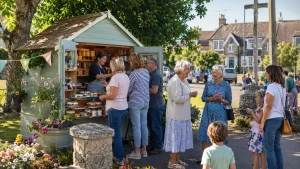
Beyond their commercial value, cake sheds are increasingly becoming part of local community life.
Many customers visit regularly, turning a simple purchase into a weekly routine. Unlike large retailers, cake sheds often create personal relationships between business owners and customers. People become familiar with product offerings, seasonal specials, and the individual behind the business.
This community-focused aspect has contributed significantly to the popularity of the trend. Supporting a local baker often feels more meaningful than purchasing from a national chain because the economic benefits remain within the local area.
What Legal Requirements Must Cake Shed Owners Meet?
Although cake sheds often appear informal, they are still food businesses and must comply with various legal requirements.
Many new operators mistakenly assume that selling from home removes the need for regulation. In reality, food safety and business registration obligations apply regardless of business size.
Meeting these requirements helps protect consumers and demonstrates professionalism.
Business Registration Requirements
Anyone selling food to the public generally needs to register their food business with their local authority.
Registration is usually straightforward and allows environmental health officers to understand where food is being prepared and sold. Operating without registration can lead to enforcement action, making compliance an essential first step for aspiring cake shed owners.
Food Hygiene and Safety Regulations
Food safety remains one of the most important responsibilities for cake shed operators. Operators must obtain a Level 3 Food Safety and Hygiene certificate to ensure food is handled, prepared, and stored in a fully compliant environment.
Home-based kitchens will be inspected by an environmental health officer to assign an official food hygiene rating, protecting customers while helping these micro-businesses build trust and credibility within the community.
Furthermore, allergen information is critical within the baking industry because core products inherently contain ingredients such as eggs, milk, nuts, wheat, and soya. Under Natasha’s Law, any food that is pre-packed for direct sale (PPDS), which applies to items individually wrapped and ready for takeaway from a roadside structure, must feature full ingredient listings directly on the packaging.
All 14 mandatory allergens must be clearly highlighted and emphasised (such as bolding wheat, milk, or eggs) to ensure absolute transparency and guarantee that buyers can easily manage dietary restrictions before making a trust-based transaction.
Are Cake Sheds Legal in the UK?
Yes, cake sheds are generally legal in the UK, provided operators comply with the relevant food business regulations. Selling homemade cakes from a residential property does not automatically require a traditional retail premises, but business owners must still follow food safety laws.
Most operators are required to register their food business with their local authority before trading. Environmental health officers may inspect food preparation areas, and businesses must provide clear allergen information for customers.
The area creating the greatest uncertainty involves street trading legislation. Some councils believe certain cake shed operations fall within existing street trading rules, while others do not currently require additional permissions.
Because interpretations vary between local authorities, anyone planning to open a cake shed should contact their local council before starting operations. Doing so can help avoid compliance issues and provide clarity regarding local requirements.
Do Cake Sheds Need a Street Trading Licence?
This question has become one of the most discussed topics within the cake shed community.
The answer often depends on how local authorities interpret existing legislation and the specific circumstances of the business.
Understanding the Local Government (Miscellaneous Provisions) Act
Street trading regulations are generally governed by the Local Government (Miscellaneous Provisions) Act.
The legislation states that individuals selling goods in a street may require a street trading licence or consent. However, applying these rules to cake sheds can be complex because many operate from private residential properties.
As cake sheds continue to grow in popularity, interpretations of the legislation may continue to evolve.
What Happened in Nottinghamshire’s Cake Shed Licensing Dispute?
The Nottinghamshire situation became one of the most widely discussed examples of regulatory scrutiny affecting cake shed businesses.
Several operators reportedly received notices suggesting that they may require street trading licences. The issue quickly attracted public attention and generated significant debate within local communities.
The controversy highlighted the uncertainty many operators feel regarding future regulatory requirements.
The Street Trading Crackdown: Inside the £1,007 Licence Dispute
As the trend spreads from rural country roads into urban driveways, it has triggered intense regulatory scrutiny under the Local Government (Miscellaneous Provisions) Act. The Act mandates that anyone selling or offering items for sale on a street must hold valid street trading consent.
The legal battle reached a boiling point in Nottinghamshire when Bassetlaw District Council enforcement officers hand-delivered notices to eight local owners, including Heather Price of The Retford Bakeshed, stating they must fork out an exact £1,007 for a street trading licence or face a matching £1,000 fine.
Council officers recommend against exemptions, pointing out that top-tier, high-traffic cake sheds are estimated to pull in up to £90,000 annually.
Local operators have stated this is a “make or break” situation. For home-bakers like Chloe (who operates a shed in nearby Worksop) and Natalie Brooks (who runs her garden setup in Rhodesia since January), these fees are described as completely “crippling.”
While community backlash has forced a temporary pause on enforcement actions, the impending council decisions across areas like Bassetlaw and Birmingham, where potential license fees range wildly from £1,000 to £3,000, will ultimately decide if these small community ventures can survive.
Could Licensing Costs Threaten the Future of Cake Sheds?
For some operators, additional licensing costs could create significant financial pressure.
The appeal of cake sheds largely stems from their affordability and accessibility. Introducing substantial annual fees could alter the economics of the model, particularly for businesses generating modest revenues.
However, larger and more established operators may be better positioned to absorb additional compliance costs if required.
| Potential Benefit of Licensing | Potential Challenge of Licensing |
|---|---|
| Greater regulatory clarity | Higher operating costs |
| More consistent enforcement | Reduced profitability |
| Increased consumer confidence | Barrier for small operators |
| Formal recognition of businesses | Possible closure of smaller sheds |
| Standardised compliance requirements | Reduced growth of new entrants |
The future impact will depend on how individual councils choose to interpret and implement existing regulations.
How Are Cake Shed Owners Responding to Regulatory Uncertainty?
Many operators are proactively engaging with councils and seeking clarification regarding their legal obligations.
Rather than waiting for enforcement action, business owners are increasingly taking steps to ensure compliance with food safety and registration requirements while monitoring developments relating to licensing.
This approach helps reduce uncertainty and demonstrates a commitment to operating responsibly.
What Challenges Are Facing the UK Cake Shed Business Trend?
Although cake sheds continue to grow in popularity, several challenges could influence future development.
Regulatory uncertainty remains a key concern. Operators must also manage rising ingredient costs, changing consumer spending habits, and increasing competition as more sheds enter the market.
Maintaining product quality while scaling operations can present additional difficulties. Businesses that grow rapidly may face pressure to increase production without compromising standards.
Another challenge involves balancing customer demand with personal workload. Many successful operators report long hours spent baking, marketing, restocking, and managing administrative responsibilities.
How Are Cake Sheds Reshaping Britain’s Small Business Landscape?
The rise of cake sheds represents more than a baking trend. It reflects broader changes occurring within the UK’s small business sector.
Over the past decade, many entrepreneurs have moved towards low-overhead business models that can be operated from home. Rising commercial rents, increased operating costs, and changing consumer habits have encouraged business owners to seek alternative ways of reaching customers.
The trend also highlights the increasing importance of micro-businesses within local economies. While individual cake sheds may appear small, collectively they contribute to entrepreneurship, local spending, and community engagement.
Small business adviser Martin Fletcher observed: “What makes cake sheds interesting is that they remove many of the traditional barriers to entry. People can test a business idea, build a customer base, and generate revenue without committing to the costs associated with a physical retail premises.”
What Does the Future Hold for Cake Sheds in the UK?
The future of cake sheds will likely depend on a combination of consumer demand, regulatory developments, and the ability of operators to adapt.
Current demand remains strong in many areas. Consumers continue to value locally produced goods, independent businesses, and personalised customer experiences. These factors suggest that cake sheds could remain popular for years to come.
However, the sector may become more professionalised as it matures. Operators may invest in improved branding, enhanced payment systems, dedicated baking facilities, and stronger compliance processes.
Conclusion: Why the UK Cake Sheds Business Trend Reflects the Changing Face of British Entrepreneurship?
The UK cake sheds business trend demonstrates how innovation can emerge from simple ideas. What started as a practical way for home bakers to sell surplus products has evolved into a growing movement that combines entrepreneurship, community engagement, and local commerce.
For many operators, cake sheds provide a flexible route into business ownership without the costs associated with traditional retail premises. While regulatory discussions surrounding licensing may influence future developments, strong consumer demand and community support continue to drive growth.
As more bakers explore opportunities within the home baking sector, cake sheds are becoming an increasingly visible symbol of modern British micro-business entrepreneurship.
Frequently Asked Questions
Are cake sheds legal in the UK?
Yes, cake sheds are generally legal if operators register their food business, follow hygiene regulations, and comply with any local authority requirements.
Do cake shed owners need a street trading licence?
Not always. Licensing requirements vary between councils, and some local authorities are still reviewing how existing street trading laws apply to cake sheds.
How much can a cake shed business earn?
Earnings vary by location and demand. While some operators view their setups as a modest side income generating £50 to £200, highly successful, high-demand cake sheds utilizing viral social media marketing report weekly revenues between £500 and £1,000+.
Why have cake sheds become controversial in 2026?
The controversy centres on whether small home-based cake businesses should be required to pay street trading licence fees and comply with additional regulations.
Do cake sheds need food hygiene inspections?
Yes. Home-based food businesses can be inspected by environmental health officers to ensure they meet food safety and hygiene standards.
Why are cake sheds becoming so popular across the UK?
Their popularity is driven by low start-up costs, growing support for local businesses, social media exposure, and the demand for flexible home-based income opportunities.
What is the future of the UK cake sheds business trend?
The trend is expected to continue growing, although future expansion may depend on how councils regulate cake sheds and whether clearer national guidance is introduced.