
700 Parking Fines and Beach Chaos: Inside the Sefton Coast Bank Holiday Disruption
 • May 27, 2026
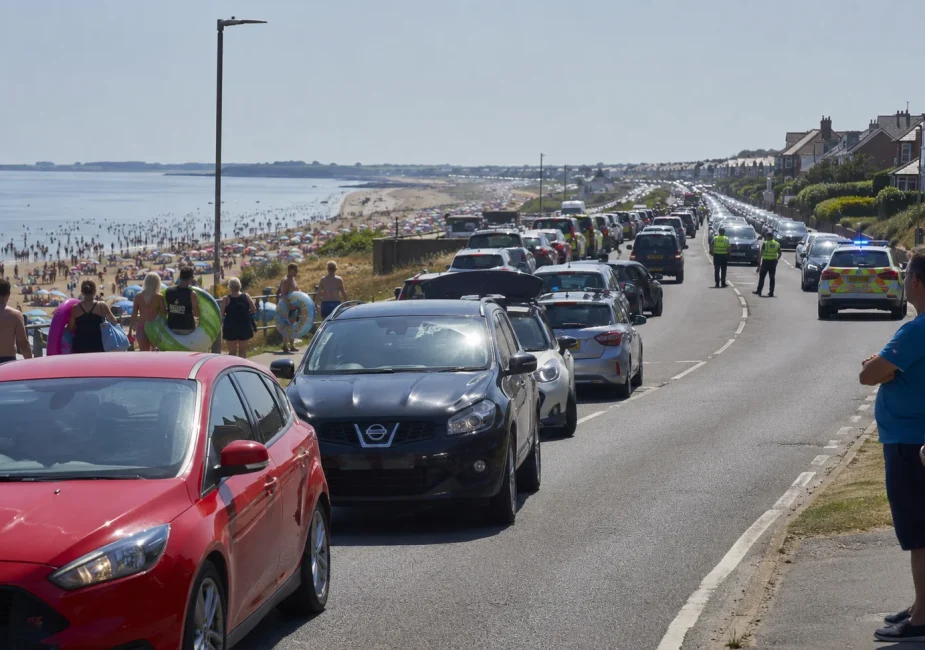
I travelled from London to Sefton expecting to document a busy bank holiday at the coast. Instead, I arrived to find roads under pressure, parking restrictions being actively enforced, emergency services managing movement, and residents questioning whether local infrastructure had reached its limits. The headline figure of more than 700 parking fines quickly became the public symbol of the weekend, but after spending time on the ground and speaking to people locally, it became clear that the disruption was shaped by more than enforcement. Heatwave conditions, concentrated visitor demand and operational limitations combined to create a weekend that exposed wider challenges facing the Sefton coastline.
Key Takeaways:
- The disruption extended beyond parking and reflected broader infrastructure pressure.
- Heatwave conditions accelerated visitor numbers across Sefton’s coastline.
- Residents experienced congestion, delays and access concerns.
- Enforcement activity highlighted the challenge of balancing tourism with local needs.
- Future planning may require stronger transport and visitor management strategies.
What Triggered the Sefton Coast Bank Holiday Disruption During the 2026 Heatwave?
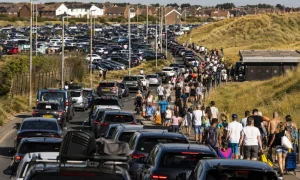
When I left London to report on the situation in Sefton, the expectation was straightforward. A heatwave over a bank holiday weekend normally means crowded beaches, heavier traffic and local authorities preparing for increased demand. What I did not expect was to encounter a situation that residents repeatedly described as unusually difficult to manage.
As I moved through the coastal area and listened to conversations taking place among residents, visitors and people working locally, one point became immediately clear: the disruption was not caused by one isolated issue.
The heatwave created ideal conditions for travel. Families, groups of friends and day visitors were drawn towards the coast at the same time. Beaches became a destination not just for local communities but for visitors travelling from surrounding regions.
That sudden concentration of arrivals appeared to trigger a chain reaction.
Car parks reached capacity earlier than expected. Drivers who could not find spaces began circulating repeatedly around local roads. As congestion increased, movement slowed, and restrictions became more visible. Areas designed to handle busy weekends appeared to struggle under the intensity of demand.
What stood out during conversations was that most residents did not object to visitors themselves. Instead, concern centred on how quickly normal pressure escalated into operational disruption.
One resident explained that summer weekends had always been busy, but this felt different because multiple roads became difficult to navigate at the same time.
The more I observed, the more it appeared that Sefton experienced what urban planners sometimes describe as demand compression where large numbers of visitors arrive within a short window and place immediate pressure on fixed infrastructure.
| Trigger | Immediate Effect | Longer-Term Consequence |
|---|---|---|
| Heatwave conditions | Sharp increase in visitor arrivals | Capacity pressure |
| Bank holiday timing | Concentrated travel periods | Traffic congestion |
| Limited parking | Overflow into surrounding roads | Enforcement escalation |
| High beach demand | Crowded access points | Resident frustration |
| Reduced road flexibility | Delayed movement | Operational strain |
By the end of the first stage of reporting, it was becoming difficult to view the weekend as an isolated disruption. It felt more like a stress test for coastal infrastructure.
How Did 700 Parking Fines Become a Symbol of the Bank Holiday Chaos?
Before arriving in Sefton, the number that dominated headlines was simple: more than 700 parking fines.
Numbers like that immediately attract attention because they appear measurable and direct. But after spending time speaking with people locally, I realised those fines represented something far larger than rule enforcement.
For many residents, the fines became visible evidence of how difficult movement and access had become.
During the day, I watched vehicles repeatedly enter already crowded areas looking for alternatives after designated parking reached capacity. Roads that appeared manageable early in the morning looked completely different only hours later.
Some drivers attempted to stop temporarily. Others searched side roads. Enforcement became increasingly visible because authorities appeared focused on keeping routes open and maintaining safe access.
Enforcement measures and local authority response
- What emerged from conversations was a complicated balance.
- Residents wanted access protected.
- Visitors wanted practical alternatives.
- Authorities appeared to be managing both expectations simultaneously.
Transport and infrastructure consultant Mark Ellison reflected on this challenge during discussions around coastal management: “Enforcement becomes highly visible when demand exceeds available capacity. People often focus on penalties, but the real issue is usually whether infrastructure has enough flexibility to absorb unusual visitor spikes.”
That observation reflected what I was seeing throughout the day. The fines became symbolic because they represented the point where visitor demand collided directly with operational limits.
Rather than seeing enforcement as the story itself, many people I spoke with viewed it as evidence that existing systems were being pushed beyond normal conditions.
Why Did Visitor Numbers Create Pressure Across Sefton’s Coastal Areas?
One of the questions I returned to repeatedly while interviewing people was simple: if Sefton regularly experiences busy periods, why did this particular weekend feel different?
The answer seemed to lie in timing and concentration. Visitors did not arrive steadily throughout the day.
Instead, arrivals became compressed into peak periods driven by weather conditions and holiday schedules.
Walking through coastal areas, I noticed how quickly facilities reached capacity. Movement became slower. Access points became busier. People began adjusting plans in real time.
Several local business owners described unusually high interest early in the day followed by operational pressure later as congestion affected customer movement.
The coastline itself did not appear unprepared for tourism. The challenge appeared to come from intensity.
| Area Under Pressure | What I Observed | Local Effect |
|---|---|---|
| Beach access routes | Higher concentration of arrivals | Slower entry |
| Parking areas | Early saturation | Overflow demand |
| Public facilities | Extended usage | Waiting times |
| Road networks | Reduced traffic flow | Delays |
| Service response | Increased coordination | Operational pressure |
From my conversations, there was little disagreement that tourism remains valuable. The question was whether current systems can continue operating effectively during increasingly extreme weather events.
How Did Traffic Congestion Affect Residents and Beach Access?
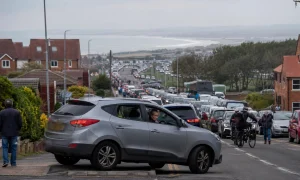
Traffic became one of the clearest ways to understand the disruption because it affected almost everyone regardless of whether they lived locally or travelled to visit.
Driving through parts of Sefton, I noticed how congestion created a ripple effect. Road delays extended journey times. Vehicles searching for parking slowed surrounding movement.
Local access became increasingly unpredictable. Several residents described adjusting routine activities simply to avoid peak periods. What struck me most was that disruption continued even for people who had no intention of visiting the beach.
Access challenges and movement across key coastal routes
Access concerns extended beyond convenience.
When roads become difficult to navigate, concerns naturally shift towards emergency response capability, resident movement and overall public safety. Traffic systems generally function best when movement remains continuous.
During periods of concentrated demand, even small disruptions can create wider consequences.
Urban mobility specialist Rebecca Turner explained this dynamic clearly: “Coastal transport systems are often designed around expected seasonal averages. Heatwave conditions compress travel demand into shorter windows and remove normal flexibility.”
Her observation mirrored conditions I experienced throughout the reporting process.
The issue appeared less about road design and more about how roads behave under unusual pressure.
How Did Police and Emergency Services Respond to the Sefton Coast Disruption?
One of the most visible aspects of the weekend was the presence of police and operational teams managing movement and responding to developing conditions.
From conversations locally, the expectation did not appear to be that authorities would eliminate congestion entirely. Instead, people seemed to expect coordination, communication and maintaining safe access.
As conditions became busier, enforcement and public messaging appeared to become more visible.
Operational priorities and public safety actions
From what I observed and what residents described, emergency response efforts appeared focused on keeping access routes available, maintaining public safety and reducing situations that could escalate into larger disruptions.
This included managing vehicle movement, monitoring high-footfall areas and responding to reports that required intervention.
Former emergency coordination adviser Helen Carter described the challenge in a way that stayed with me throughout the day: “When large visitor numbers combine with weather events, emergency planning shifts quickly from response to maintaining continuity. Keeping roads open often becomes as important as responding to incidents.”
That perspective helped explain why parking controls and visible operational presence became such a noticeable part of the weekend.
Rather than reacting to one issue, services appeared to be balancing multiple demands simultaneously.
What Long-Term Changes Could Prevent Future Sefton Coast Disruption?
By this stage of my reporting, conversations had moved beyond what happened and towards whether the situation could realistically be improved in future.
There was no indication from people I spoke with that anyone expected empty beaches during warm weather. Most accepted that popular coastal destinations naturally become busy.
The discussion instead focused on managing peaks more effectively.
Several recurring ideas emerged during interviews: improving travel information before arrival, redirecting vehicles earlier and helping visitors make decisions before reaching congestion points.
After speaking with residents and observing conditions throughout the day, the strongest impression was not opposition to tourism but frustration with how quickly normal conditions escalated. Several people suggested that clearer guidance before arrival may reduce pressure more effectively than relying on enforcement once congestion has already formed.
| Management Approach | Potential Benefit | Challenge |
|---|---|---|
| Real-time parking updates | Reduces unnecessary circulation | Requires public adoption |
| Temporary shuttle services | Limits vehicle volume | Additional operational cost |
| Earlier traffic controls | Improves flow | Visitor compliance |
| Travel alerts | Better planning | Timing of communication |
| Alternative access guidance | Distributes demand | Awareness |
One observation stood out repeatedly: infrastructure becomes more effective when people receive information before congestion begins rather than after.
What Impact Did the Disruption Have on Local Communities and Businesses?
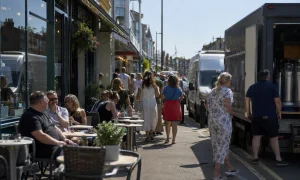
After spending more time speaking to people directly affected, I noticed that reactions varied depending on experience.
Businesses generally recognised the economic value of increased visitor numbers. For some, busy weekends represent important trading opportunities.
At the same time, several people described practical challenges. Deliveries became less predictable. Movement between locations slowed.
Customer patterns shifted during peak congestion. Residents discussed something slightly different daily routines.
People spoke about changing travel times, delaying journeys and planning around expected pressure. What became clear was that disruption does not affect everyone equally. For visitors, delays may be temporary.
For residents and local operators, repeated periods of disruption can become cumulative over time.
What Environmental Pressures Emerged Along the Sefton Coast?
As the day progressed, the discussion moved beyond traffic and enforcement and towards something that residents mentioned more often than I expected environmental pressure.
Sefton’s coastline is not simply a recreational destination. It is also a space that supports natural habitats while serving local communities and visitors throughout the year.
I noticed conversations increasingly focused on how visitor concentration affects the coastline itself. Residents spoke about maintaining access without creating unnecessary strain on surrounding areas.
Protecting coastal spaces during peak visitor periods
Environmental management during busy periods often becomes a balancing exercise.
Authorities and local communities are not necessarily trying to reduce visits they are trying to prevent conditions where popularity creates avoidable pressure.
Several people described the importance of preserving access while encouraging better visitor planning.
The broader concern was whether repeated high-pressure weekends could gradually change how the coastline functions during future peak periods.
From my observations, environmental discussions were not presented as restrictions they were framed as long-term protection.
Are Existing Infrastructure and Transport Links Enough for Peak Holiday Demand?
By this point in my reporting, this became one of the most important questions. Busy weekends are expected.
What seemed less expected was how quickly normal conditions shifted into widespread disruption.
Infrastructure tends to be judged during average operating conditions. What this weekend appeared to reveal was how systems respond under concentrated demand.
Driving through affected areas, I noticed that movement often became difficult not because roads completely stopped working, but because flexibility disappeared.
Once parking filled and traffic slowed, choices narrowed quickly. Residents raised similar concerns. Several explained that once congestion begins, alternative routes become limited and delays can spread beyond coastal areas.
This does not necessarily suggest infrastructure failure.
Instead, it raises questions about whether current capacity assumptions still reflect changing visitor behaviour and increasingly warm weather periods.
| Infrastructure Area | Observed During Peak Demand | Possible Consideration |
|---|---|---|
| Road access | Slower movement | Dynamic traffic planning |
| Parking capacity | Early saturation | Overflow strategies |
| Visitor communication | Mixed awareness | Real-time updates |
| Public transport links | Limited uptake | Greater promotion |
| Local access routes | Increased pressure | Access prioritisation |
What became clear throughout the day was that infrastructure planning is no longer only about average demand it increasingly needs to account for extreme peak conditions.
What Does the Sefton Coast Bank Holiday Disruption Reveal About Growing Seasonal Tourism Challenges?
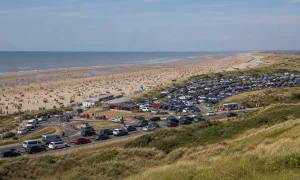
As I travelled back to London after completing interviews and observations, I found myself thinking less about the headline figure of 700 parking fines and more about what the weekend appeared to represent.
The disruption seemed to reveal a wider challenge that extends beyond Sefton.
Popular destinations increasingly face concentrated demand created by weather patterns, holiday timing and changing travel behaviour. That combination creates pressure points that traditional planning models may not always anticipate.
One thing residents repeatedly expressed was that they wanted the coast to remain open, active and welcoming. But there was also recognition that popularity brings responsibility for visitors, authorities and long-term planning alike.
What happened during the bank holiday weekend felt less like an isolated event and more like a visible example of how seasonal tourism pressures are changing.
Conclusion
Travelling from London to investigate the Sefton Coast bank holiday disruption changed the way I viewed the story. Before arriving, the headline centred on 700 parking fines and reports of beach chaos.
After speaking with residents and observing conditions directly, the picture appeared more layered. Heatwave conditions accelerated visitor demand, while infrastructure, transport and operational systems faced concentrated pressure.
The challenge appeared to be creating systems that allow Sefton’s coastline to remain accessible, safe and sustainable during increasingly busy seasonal periods.
Frequently Asked Questions
How are parking restrictions enforced along the Sefton Coast during peak periods?
Parking restrictions are generally enforced through patrol activity, designated control measures and access monitoring designed to maintain safe movement. During exceptionally busy weekends, enforcement may become more visible because authorities prioritise keeping routes open and reducing disruption.
What alternatives are available when beach car parks reach capacity?
Alternative approaches can include public transport, arriving outside peak periods or using official travel updates where available. Planning before departure often reduces unnecessary delays and parking difficulties.
How can residents stay informed during future coastal disruption events?
Residents can follow official updates, local travel information and community notices during peak periods. Early awareness helps people plan journeys and avoid periods of expected congestion.
What role do emergency services play during busy bank holiday weekends?
Emergency services support public safety, maintain operational access and coordinate responses across areas experiencing pressure. Their role extends beyond incidents and often includes managing continuity during high-demand periods.
Are environmental protections increased during periods of high visitor numbers?
Environmental management measures can become more visible during peak periods to help reduce pressure on coastal spaces and support long-term preservation efforts.
Could public transport reduce future congestion along the Sefton coastline?
Public transport may help reduce vehicle concentration if supported by clear communication and practical access options. However, overall impact depends on visitor uptake and coordinated planning.