Is BrewDog Going Bust in the UK? Latest 2026 Update
 • March 31, 2026
UK Business Update
Is BrewDog Going Bust in the UK? Latest 2026 Update
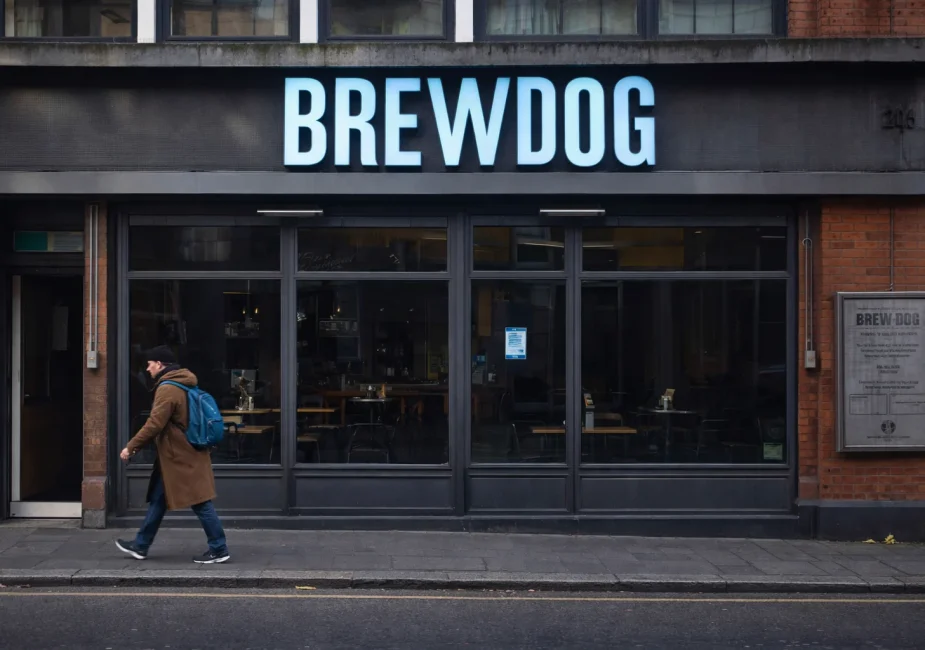
BrewDog entered administration in March 2026 after years of losses, with Tilray buying key parts of the business in a £33 million rescue deal. While the brand continues in reduced form, dozens of bars have closed and investors have been wiped out.
Administration
March 2026
Sale Value
£33 Million to Tilray
Impact
38 Bars Closed & 484 Job Losses
Key Insight
BrewDog has effectively gone bust in its original form. Although the brand survives under Tilray, the administration process has led to major closures, hundreds of redundancies and total losses for Equity for Punks shareholders.
“Despite significant interest, we did not receive any offer that would have preserved BrewDog in its entirety.” — AlixPartners
If you’re wondering whether BrewDog is going bust, the situation is more serious than you might expect. The company entered administration in March 2026 after facing years of financial losses, rising debts, and slowing growth.
While the BrewDog brand is still operating under new ownership by Tilray, the original business has effectively collapsed.
Here’s what you need to know:
- BrewDog entered administration in early March 2026
- Tilray acquired the UK brewing business, brand, and 11 pubs for £33 million
- 38 BrewDog bars closed immediately
- Around 484 employees lost their jobs
- Over 200,000 Equity for Punks investors lost their investment
- The BrewDog name continues, but the original company no longer exists
This means that while you may still see BrewDog products and locations, the company behind them has fundamentally changed.
Who is BrewDog?
BrewDog was founded in 2007 by James Watt and Martin Dickie in Aberdeenshire, with the aim of challenging the traditional British beer market.
Its flagship beer, Punk IPA, quickly gained popularity and helped establish BrewDog as a leading craft brewery in the UK.
Over time, the company expanded rapidly into a global brand with over 100 bars, multiple breweries, and thousands of employees. Its bold marketing and “punk” identity made it stand out from competitors.
BrewDog also launched the Equity for Punks scheme, attracting over 200,000 investors who contributed more than £100 million, supporting its fast growth despite underlying financial pressures.
Is Brewdog Going Bust in the UK in 2026?
Yes, BrewDog has effectively gone bust in the UK. The company entered administration in early March 2026 after failing to return to profit.
In legal terms, BrewDog did not go directly into liquidation. Instead, administrators were appointed to sell off the business and recover as much money as possible for creditors. However, for most people, administration on this scale means the company has gone bust.
The original BrewDog company no longer exists in the form that customers and investors knew. The only reason the brand still appears to survive is because Tilray purchased parts of the business.
Without that sale, BrewDog would likely have shut down entirely, including its brewery, bars and product range. Instead, only a much smaller version of the business continues to operate under new ownership.
What Happened to Brewdog in March 2026?
In March 2026, BrewDog faced a major turning point as the company officially entered administration, marking the collapse of its original business structure.
Years of financial losses, rising debts, and an inability to secure a buyer for the entire operation forced administrators to step in. Rather than saving the business as a whole, a partial sale was arranged, significantly reducing BrewDog’s scale.
This moment reshaped the company’s future, leaving only selected assets and operations to continue under new ownership while much of the original business was shut down.
The Administration Process
BrewDog entered administration after administrators concluded that the business could no longer continue in its existing form. The company had spent years making losses and could not find a buyer willing to purchase the entire operation.
Instead, administrators arranged a distressed sale. US drinks company Tilray agreed to buy BrewDog’s UK brewing operations, the brand and 11 pubs for £33 million.
What Tilray Actually Bought?
Tilray’s purchase included:
- The main brewery in Ellon, Aberdeenshire
- The BrewDog brand and product range
- Eleven pubs across the UK
- Certain operational assets and staff
However, the deal did not include all of BrewDog’s bars, international operations or wider business divisions.
What Was Left Behind?
The remaining parts of BrewDog were not saved. Thirty-eight bars closed immediately, and nearly 500 employees lost their jobs.
The business that once operated around 100 bars globally was reduced to a much smaller network almost overnight.
Part of BrewDog Outcome in March 2026
UK brewing business Sold to Tilray
BrewDog brand Sold to Tilray
11 pubs Remained open
38 UK bars Closed immediately
Equity for Punks shares Became worthless
Original company Entered administration
One of the strongest official comments came from administrator AlixPartners, which said:
“Despite significant interest, we did not receive any offer that would have preserved BrewDog in its entirety.”
That statement underlined how serious BrewDog’s financial position had become before the collapse.
Why Did Brewdog Go Into Administration?
BrewDog went into administration due to a combination of long-term financial losses, rapid overexpansion, and growing operational pressures that the business could no longer sustain.
The Financial Problems Behind Brewdog’s Collapse
BrewDog had been losing money for several years. Reports suggest the company lost around £148 million over the past five years. It had not made a profit since 2019.
Several factors pushed BrewDog into financial trouble:
- Rising energy costs and wages
- Higher National Insurance and business rates
- Falling demand in hospitality after the pandemic
- Large debts and expensive loans
- A £25 million Covid loan that needed repaying
The company also struggled because many of its bars stopped generating the level of sales needed to support the business. Expansion had created high costs, but revenues did not grow quickly enough to match them.
Did Brewdog Expand Too Quickly?
BrewDog’s rapid growth became one of its biggest weaknesses. The company opened bars across the UK and overseas, invested in hotels, launched a distilling arm and even experimented with projects such as BrewDog Airlines.
By 2024, BrewDog had become too large and too expensive to sustain.
The company was operating:
- More than 100 bars worldwide
- Multiple breweries
- Hotels and hospitality venues
- Distilling and spirits operations
Former chief executive James Watt later admitted this himself, saying:
“At times we expanded too fast and diversified too broadly.”
Leadership Mistakes and Company Controversies
BrewDog’s reputation also suffered because of repeated controversies around leadership and workplace culture. Former employees described a “culture of fear”, while a number of allegations about internal behaviour damaged the brand.
James Watt stepped down as CEO in 2024, and Martin Dickie left the company the following year. By that point, confidence in the business was already falling.
How Much Money Did Brewdog Lose Before It Collapsed?
The most striking part of BrewDog’s collapse is how dramatically its value fell. Only a few years ago, BrewDog was presenting itself as a billion-pound company. By 2020, it claimed a valuation of around £1.8 billion.
Yet in March 2026, the core business was sold for just £33 million.
BrewDog Financial Measure Value
Claimed peak valuation Around £2 billion
Sale price to Tilray £33 million
Reported losses over five years £148 million
Covid loan outstanding £25 million
Equity for Punks money raised More than £100 million
This huge difference shows how badly BrewDog’s finances had deteriorated. The company’s value was based on continued growth, but that growth never arrived.
The 2017 deal with private equity firm TSG Consumer Partners also played a major role. TSG invested heavily in BrewDog, but the agreement included preference shares and a high return requirement. That meant BrewDog needed to keep growing rapidly every year simply to satisfy its investors.
When growth slowed, the business became increasingly difficult to sustain.
What Happened to Brewdog Bars and Staff After the Company Went Bust?
The administration had an immediate impact on BrewDog employees and customers. Thirty-eight bars shut down across the UK, including venues in Aberdeen, Glasgow, Edinburgh, Stirling, Perth and St Andrews.
Around 484 workers were made redundant. Many employees were told during a short online meeting with little warning.
Bryan Simpson from Unite criticised the process, saying:
“It is the worst mass redundancy I have dealt with, including during the pandemic.”
A real-time example came from one former BrewDog bar manager in Glasgow, who posted an online review after the announcement.
The employee wrote that staff were given less than half an hour’s notice before the call and were “left shocked, angry and completely in the dark about what happened next”.
The following locations were among the bars that closed immediately:
- Aberdeen Castlegate
- Aberdeen Union Square
- Glasgow Merchant City
- Glasgow Argyle Street
- Edinburgh Cowgate
- Inverurie
- Perth
- St Andrews
- Stirling
Only 11 BrewDog pubs remained open under Tilray.
Did Brewdog Investors Lose All Their Money?
Yes, BrewDog investors lost almost everything. The biggest victims were the people who invested through Equity for Punks.
More than 200,000 shareholders had put money into BrewDog over the years. Many believed they were supporting an independent company and expected that the business would eventually grow in value.
Instead, administrators confirmed that no equity holders would receive any return from the sale.
This happened because private equity firm TSG Consumer Partners held preference shares. These gave TSG the right to be paid first if BrewDog was sold. By the time creditors, lenders and TSG had been considered, there was nothing left for ordinary investors.
One frustrated shareholder told the BBC:
“There’s nothing for us. It’s being sold at a knock-down price.”
For many people, this became one of the most controversial aspects of BrewDog’s collapse. The company had spent years encouraging customers to become part of the “punk” movement, yet those same supporters were left with nothing when the business failed.
Where Are Brewdog Bars Still Open in the UK?
Following the administration and partial sale to Tilray, BrewDog’s UK presence has been significantly reduced, leaving only a limited number of venues still operating.
Which Brewdog Venues Are Still Open After the Tilray Deal?
Although many locations closed, a smaller group of BrewDog venues continues to trade under Tilray.
These include key sites such as the DogHouse hotel in Edinburgh and the DogTap venue at the Ellon brewery in Aberdeenshire. A few pubs in major cities have also remained open due to stronger financial performance.
- Core sites like DogHouse Edinburgh and DogTap Ellon are still operating
- Selected city locations have been retained for profitability
- Many Scottish venues, including Aberdeen and Glasgow, have closed
The future of these remaining pubs depends on Tilray’s strategy, with further reviews likely as the company focuses on maintaining only the most sustainable locations.
What Could Happen to the Remaining Brewdog Estate?
The future of the remaining BrewDog pubs now depends on Tilray’s long-term plans for the brand. The company is expected to keep only the strongest-performing venues while reviewing whether any other sites could be reopened, sold or converted into franchise operations.
There is also uncertainty around BrewDog’s overseas bars and US operations, as some of those assets were not included in the original rescue deal. Tilray may eventually decide to sell, restructure or close more locations if they are not financially viable.
For now, the surviving BrewDog bars represent a much smaller version of the company than the one customers knew before administration.
Who Owns Brewdog Now and What Does Tilray Plan to Do With the Brand?
Tilray now owns the core BrewDog business in the UK. The company acquired the brand, the brewery and selected pubs as part of the £33 million deal.
Tilray is best known as a North American drinks and cannabis company, so its takeover of BrewDog surprised many people. However, the company believes the BrewDog name still has commercial value.
Tilray has already stated that it wants BrewDog to continue operating in a reduced form. In a message to former investors, the new owners said they wanted Equity for Punks members to remain “ambassadors for the brand”.
Whether customers accept that new version of BrewDog remains to be seen. The brand still has recognition, but it also carries the baggage of the company’s collapse.
Can Brewdog Recover After Going Bust in the Uk?
BrewDog can still survive as a brand, but it is unlikely to return to the position it once held. The company’s reputation has been damaged by the administration, the investor losses and the treatment of employees.
At the same time, BrewDog still has several advantages. Punk IPA remains a well-known beer, and the brand still has loyal customers. Under Tilray, BrewDog may become a smaller, more stable company focused on brewing rather than rapid expansion.
The real challenge is trust. Customers, staff and investors all feel let down. Rebuilding that trust will take years.
Sharon Graham of Unite said after the collapse:
“BrewDog workers built this brand. They deserved respect. Instead, they were treated as disposable pawns.”
That criticism may define BrewDog’s legacy just as much as its beers once did.
Conclusion
BrewDog has effectively gone bust in the UK after entering administration in March 2026. Although the brand still exists under Tilray’s ownership, the original company has collapsed, with 38 bars closed, hundreds of jobs lost and investors left with nothing.
The rescue deal saved part of the business, but it also highlighted the risks of rapid expansion, high debt and poor financial management.
BrewDog may survive as a smaller beer brand, yet its reputation and future remain uncertain after one of the biggest UK craft beer failures.
FAQs About Is Brewdog Going Bust
Could BrewDog customers still use gift cards and loyalty rewards after administration?
Some gift cards and rewards may still be accepted in the remaining Tilray-owned venues, but those linked to closed bars are unlikely to be honoured.
Why did BrewDog’s Equity for Punks scheme become controversial?
The scheme became controversial because ordinary investors lost everything while larger investors with preference shares were protected.
Was BrewDog still making a profit before it entered administration?
No. BrewDog had not reported an annual profit since 2019.
Did James Watt personally lose money when BrewDog collapsed?
James Watt lost the remaining value of his shares, although he had already earned millions from earlier share sales.
Were BrewDog’s international breweries included in the sale?
No. Some overseas operations, including parts of the US and Australian business, were not included in the original Tilray deal.
How many people worked for BrewDog before the redundancies?
Before the closures, BrewDog employed well over 1,000 people across its UK operations.
What does BrewDog’s collapse mean for the wider UK craft beer industry?
It shows that even well-known craft beer brands are vulnerable if they expand too quickly and take on too much debt.