Burnham Impact on UK Exchange | What It Means for Britain Markets?
 • May 16, 2026
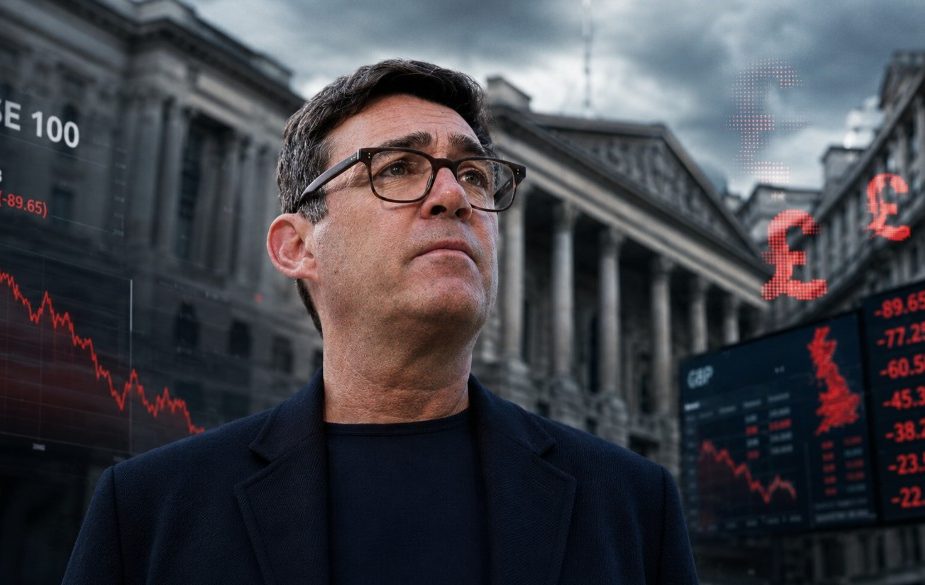
The Burnham impact on UK exchange has quickly become one of the biggest concerns for British investors and financial markets.
Following Andy Burnham’s move towards a potential Labour leadership challenge, UK stocks, gilts and sterling all came under pressure as traders reacted to fears of political instability, higher government borrowing and weaker fiscal discipline.
Investors are now closely watching whether Britain could face a prolonged period of market volatility.
Key highlights:
- FTSE 100 and FTSE 250 recording sharp losses
- Sterling falling to a one-month low
- UK borrowing costs rising to multi-year highs
- Concerns over higher public spending and fiscal loosening
- Rising oil prices adding inflationary pressure to the UK economy
These combined factors have intensified uncertainty across Britain’s financial markets and raised concerns about investor confidence in the UK economy.
Why Has the Burnham Impact on UK Exchange Shaken Investor Confidence?
Financial markets usually prefer stability, especially when economic conditions are already uncertain. The Burnham impact on UK exchange has shaken investor confidence because speculation around Andy Burnham’s political ambitions raised concerns about Britain’s future fiscal direction.
Key Reasons Investors Became Nervous
- Reports of a possible challenge to Keir Starmer created political uncertainty.
- Investors feared a potential leftward shift in taxation, borrowing, and public spending.
- UK equities, government bonds, and sterling came under pressure at the same time.
- Traders worried that higher borrowing could worsen debt and inflation risks.
- Market sentiment weakened as investors reassessed Britain’s policy outlook.
Overall, the concern is not only about political leadership but also about how future fiscal decisions could affect UK markets, borrowing costs, and investor confidence.
“Markets are reacting less to personalities and more to uncertainty around fiscal credibility and long-term borrowing,” said a senior UK macro strategist at a London investment firm.
The speed of the market reaction shows how sensitive Britain’s economy remains to political developments.
What Triggered the Sharp Fall in UK Stocks and Sterling?
The immediate trigger came after Andy Burnham confirmed plans to pursue a parliamentary return through a by-election route, opening the possibility of a future leadership challenge within Labour.
Burnham’s Return to Westminster and Leadership Speculation
Burnham’s political positioning intensified concerns following Labour’s poor local election results and growing criticism of Keir Starmer’s leadership. Investors interpreted the development as a sign that political uncertainty could continue for months.
Many analysts believe the markets are worried less about Burnham personally and more about the potential for prolonged instability inside government leadership circles.
Market Reaction Across FTSE 100, FTSE 250 and Sterling
The reaction across UK financial markets was swift:
| Market Indicator | Movement |
|---|---|
| FTSE 100 | Fell around 1.7% |
| FTSE 250 | Dropped roughly 1% |
| Pound Sterling | Fell to one-month low |
| 10-Year Gilts | Rose above 5% yield |
The pound weakened sharply against the dollar as traders reduced exposure to UK assets. At the same time, bond markets sold off due to fears surrounding future borrowing requirements.
This broad decline reflected growing concerns that political developments could undermine economic confidence across Britain.
How Did Political Uncertainty Push the FTSE 100 and FTSE 250 Lower?
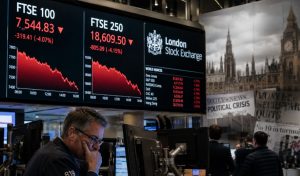
Political instability often affects domestic-focused companies more severely, which explains why both the FTSE 100 and FTSE 250 experienced significant pressure.
The FTSE 250, which contains more UK-focused businesses, reflected investor worries about slowing economic growth, inflation risks and reduced consumer confidence. Meanwhile, the FTSE 100 also fell as international investors moved away from UK assets.
Market analysts highlighted several immediate pressures affecting equities:
- Leadership uncertainty within Labour
- Concerns over increased government spending
- Rising borrowing costs
- Higher oil prices linked to Middle East tensions
- Weakening investor confidence in sterling assets
Sectors such as utilities and mining stocks experienced some of the largest declines as investors shifted towards safer assets. Despite global factors contributing to market weakness, the domestic political situation clearly amplified pressure on British stocks.
The decline also reflected concerns that prolonged instability could discourage foreign investment into the UK market.
Why Are UK Gilt Yields Rising to Multi-Year Highs?
Government bond yields surged as investors demanded higher returns for holding UK debt during a period of rising political uncertainty.
The 10-year gilt yield moved above 5%, while 30-year yields reached levels not seen since the late 1990s. These movements are significant because they directly affect government borrowing costs, mortgage pricing and wider economic confidence.
Market analysts fear that if fiscal discipline weakens, Britain could face larger deficits and higher debt-servicing costs.
Market pressure indicators included:
| Financial Measure | Latest Market Reaction |
|---|---|
| 10-Year Gilt Yield | Above 5.1% |
| 30-Year Gilt Yield | Highest in 28 years |
| Sterling vs Dollar | Near one-month low |
| Weekly Gilt Volatility | Highest in nearly two years |
The sharp movement in gilts reminded many investors of previous episodes where markets reacted aggressively to concerns over fiscal management.
“Bond markets are signalling that investors want reassurance Britain will maintain credible fiscal discipline,” noted a European fixed-income analyst.
Rising gilt yields also create wider economic consequences because they increase borrowing costs for businesses and households.
Could Andy Burnham’s Fiscal Approach Increase Pressure on Britain’s Economy?
Investor concern largely centres on fears that a Burnham-led government could pursue more expansionary fiscal policies.
Concerns Over Higher Borrowing and Public Spending
Burnham has previously argued for greater infrastructure spending and suggested defence spending could potentially sit outside normal fiscal rules. These comments unsettled investors because they implied the possibility of larger deficits and increased government borrowing.
At a time when public finances are already under pressure, markets remain highly sensitive to any suggestion of fiscal loosening.
Investor Worries About Fiscal Rules and Debt Markets
The UK government’s fiscal framework is designed to reassure investors that borrowing will remain under control over the long term. Any perception that those rules may weaken tends to increase gilt yields rapidly.
Financial institutions have already warned that even moderate increases in deficit spending could significantly raise borrowing costs.
The Growing Political Risk Premium in UK Financial Markets
Investors now appear to be pricing a higher “political risk premium” into UK assets. This means traders are demanding extra compensation for holding sterling, gilts and British equities due to uncertainty surrounding future leadership and economic policy.
| Investor Concern | Potential Market Impact |
|---|---|
| Higher Government Borrowing | Rising gilt yields |
| Looser Fiscal Rules | Weaker pound |
| Political Instability | Lower investor confidence |
| Increased Public Spending | Inflation concerns |
Despite the market concerns, some economists argue that Britain’s fiscal constraints may ultimately limit how far any government can shift spending policies.
This suggests markets may continue reacting emotionally in the short term while waiting for clearer political direction.
How Are Oil Prices and Global Tensions Adding to UK Exchange Volatility?

While UK politics dominated headlines, global events also intensified pressure on financial markets. Rising tensions surrounding Iran and concerns over disruption in the Strait of Hormuz pushed oil prices significantly higher.
As a major oil importer, the UK faces additional inflation risks when crude prices surge. Higher energy costs can increase transport expenses, raise business operating costs and reduce consumer spending power.
Brent crude prices climbed sharply during the same period that UK political uncertainty escalated, creating a double challenge for investors.
Several global pressures contributed to market volatility:
- Escalating Middle East tensions
- Rising Brent crude oil prices
- Inflation concerns across Europe
- Weak investor appetite for risk assets
- Uncertainty surrounding global trade discussions
The combination of domestic political instability and global inflation risks created a particularly difficult environment for UK markets.
“External shocks become far more damaging when markets are already nervous about domestic political leadership,” explained a senior economist at an international investment bank.
These pressures could continue affecting the UK exchange if geopolitical tensions remain elevated.
What Does the Pound’s Decline Mean for British Businesses and Investors?
Sterling’s decline reflects weakening confidence in Britain’s short-term economic outlook. The pound fell sharply against the dollar and euro as investors reduced exposure to UK assets.
A weaker pound can create mixed outcomes for the economy. Exporters may benefit because British goods become cheaper internationally, but import costs rise significantly, particularly for energy and raw materials.
For households and businesses, a weaker currency can contribute to higher inflation through increased import prices. This creates additional pressure on the Bank of England and may complicate future interest rate decisions.
The pound’s recent weakness also highlights concerns about long-term investor confidence in UK economic management.
Are International Investors Losing Confidence in the UK Market?

Global investors closely monitor political stability when allocating capital, and recent developments have raised concerns about Britain’s attractiveness as an investment destination.
The sell-off in UK assets suggests that some international funds are becoming more cautious towards British markets. Political uncertainty, rising borrowing costs and weakening sterling all contribute to a less favourable investment environment.
However, some analysts argue that Britain still benefits from strong financial institutions, deep capital markets and relatively resilient corporate earnings. These strengths may help stabilise investor confidence once political uncertainty eases.
For now, though, the burnham impact on UK exchange continues to dominate market sentiment.
What Could Happen Next for Britain Stocks, Gilts and the UK Exchange?
The coming months are likely to remain volatile as investors assess political developments and economic data.
If political tensions within Labour continue escalating, markets may keep pricing higher risk into UK assets. On the other hand, clearer fiscal commitments and leadership stability could help calm investor fears.
Much will also depend on inflation trends, oil prices and central bank policy decisions globally.
Potential future scenarios include:
- Markets stabilise if political uncertainty fades
- Gilt yields rise further if borrowing fears intensify
- Sterling remains under pressure amid fiscal concerns
- UK equities recover if investor confidence improves
Ultimately, Britain’s financial markets are entering a period where political developments may have an unusually strong influence on investor behaviour.
The burnham impact on UK exchange has become a major test of how resilient UK financial markets remain during periods of political uncertainty.
Conclusion
The burnham impact on UK exchange has highlighted how quickly political uncertainty can influence Britain’s financial markets. Falling stocks, rising gilt yields and a weaker pound reflect growing investor concerns over fiscal policy, borrowing and economic stability.
While global pressures such as rising oil prices also contributed to market volatility, leadership tensions within Labour remain central to investor sentiment.
The coming months will be critical in determining whether UK markets regain confidence or face prolonged uncertainty.
FAQs About
How does a Labour leadership challenge affect financial markets?
Leadership uncertainty can increase investor caution, causing declines in stocks, bonds and currency values due to fears over future economic policy changes.
Why do investors monitor government borrowing costs closely?
Higher borrowing costs can increase pressure on public finances, raise mortgage rates and slow economic growth across the wider economy.
What is the relationship between political stability and the pound?
Stable governments generally support stronger investor confidence, while political turmoil can weaken currency demand and reduce foreign investment.
How can rising oil prices impact the UK economy?
Higher oil prices can increase inflation, raise business costs and reduce consumer spending power, especially in energy-importing economies like the UK.
Why are FTSE 250 companies more sensitive to domestic political changes?
The FTSE 250 contains more UK-focused businesses, making it more exposed to local economic and political developments.
What is meant by a political risk premium in financial markets?
It refers to additional risk investors price into assets when political uncertainty increases the chance of economic instability.
Can UK markets recover quickly after political uncertainty?
Yes, markets often stabilise once investors gain clarity about leadership direction, fiscal policy and economic strategy.