England Bin Collection Rules 2026: What Changed, What Households Must Separate and What Comes Next?
 • December 30, 2025
Last Updated: 26.09.2026
The England bin collection rules 2026 have changed how households separate food waste, recycling and general rubbish.
From 31 March 2026, the government’s Simpler Recycling requirements introduced a more consistent approach across England, with councils expected to collect the same core recyclable materials.
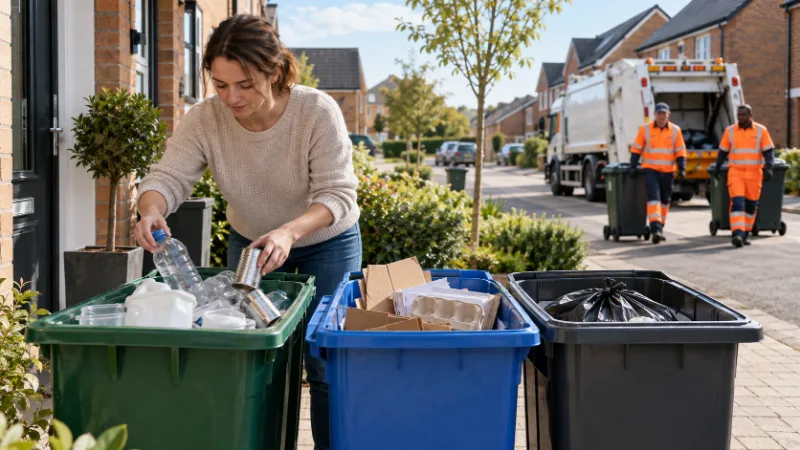
Households now generally separate waste into food waste, paper and card, other dry recycling and residual rubbish.
Food waste must normally be collected every week, while councils still have flexibility over containers and the frequency of most other collections.
The reforms do not mean every household must have four wheelie bins. Local authorities can use boxes, bags, communal bins or other arrangements depending on housing type, available space and local collection systems.
When Were the New Bin Collection Rules Introduced?
The changes form part of the government’s wider Simpler Recycling programme. Businesses and other relevant non-household premises were brought into the system from 31 March 2025, followed by household recycling changes from 31 March 2026.
The reforms were introduced because recycling services had varied considerably between local authorities.
Materials collected in one area were sometimes rejected in another, making recycling difficult to understand when people moved between councils or workplaces.
From 31 March 2026, the default household waste streams became:
- Food And Garden Waste
- Paper And Card
- Glass, Metal And Plastic
- Residual Non-Recyclable Waste
The government’s household Simpler Recycling requirements also confirm that plastic film and plastic bags are due to become part of required plastic recycling collections from 31 March 2027.
Why Were England’s Bin Collection Rules Changed?
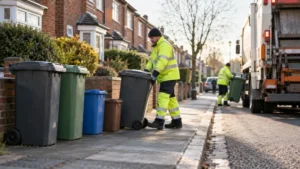
The main purpose of the changes is to reduce the differences between recycling systems across England.
Previously, local authorities could have noticeably different rules about the materials they accepted. This contributed to household confusion and increased the possibility of recyclable materials ending up in residual waste.
The new framework establishes a common group of recyclable materials that waste collectors are expected to collect.
The changes are intended to:
- Make Recycling Rules More Consistent Across England
- Increase The Amount Of Material Recycled
- Reduce Recyclable Waste Going Into Residual Rubbish
- Reduce Confusion About Which Materials Can Be Recycled
- Improve The Quality Of Materials Collected For Recycling
- Increase The Separate Collection Of Household Food Waste
However, consistency in recyclable materials does not mean every council must operate an identical collection service.
What Changes Have Made the Recycling System Better in 2026?
One of the most significant improvements is the introduction of weekly separate food waste collections.
Removing food scraps from general waste can reduce the amount of rubbish households place in their main residual bin.
It also allows collected food waste to be sent for appropriate treatment rather than simply remaining mixed with non-recyclable rubbish.
Another major improvement is greater consistency over recyclable materials. Households should increasingly encounter the same core material categories regardless of where they live in England.
The system also provides clearer separation between paper and card and other recyclable materials where this is practical.
For households, the main improvements include:
- Weekly Food Waste Collection
- More Consistent Recycling Categories
- Greater Separation Of Recyclable Materials
- Clearer Guidance About What Councils Should Collect
- A Wider Range Of Plastics Due To Follow From 2027
The effectiveness of the changes will still depend heavily on how well individual councils implement them.
What Waste Must Households Separate Under The 2026 Rules?
Household collections are now based around four main waste streams.
Food Waste
Food waste includes most ordinary kitchen scraps and leftovers, such as:
- Fruit And Vegetable Peel
- Leftover Meals
- Bread, Pasta And Rice
- Meat And Fish
- Bones
- Eggshells
- Tea Bags And Coffee Grounds
Food waste must normally be collected from households at least weekly and free of charge.
Paper And Card
Paper and cardboard are generally expected to be separated from other dry recycling.
Common recyclable materials include:
- Newspapers
- Magazines
- Cardboard Packaging
- Cereal Boxes
- Envelopes
- Office Paper
Households should keep paper and cardboard reasonably clean and dry.
Items such as wet wipes, nappies, sanitary products and heavily contaminated paper are not part of the standard paper recycling stream.
Plastic, Metal And Glass Recycling
Other dry recyclable materials include many everyday packaging products, such as:
- Plastic Bottles
- Plastic Pots
- Plastic Tubs
- Plastic Trays
- Food And Drink Cans
- Metal Tins
- Clean Foil
- Glass Bottles
- Glass Jars
- Cartons
People should still check their council’s instructions because the type of container and collection process can differ locally.
General Waste
Residual waste is material that cannot be placed in the standard recycling or food waste collections.
Examples can include:
- Nappies
- Sanitary Products
- Wet Wipes
- Pet Waste
- Broken Ceramics
- Certain Non-Recyclable Packaging
Items such as batteries and electrical products may require specialist recycling rather than placement in the general rubbish bin.
Do The 2026 Rules Mean Every Household Needs Four Bins?
No. Four waste streams do not necessarily mean four individual wheelie bins.
This is one of the most important distinctions under the England bin collection rules 2026.
A council might provide a household with a combination of:
- Wheelie Bins
- Recycling Boxes
- Reusable Sacks
- Food Waste Caddies
- Communal Containers
Flats may have shared recycling and food waste bins rather than individual containers for each property.
Housing density, collection vehicle design, available storage and existing waste contracts can all influence how councils organise their systems.
Therefore, people should not assume that another council’s bin arrangement will automatically be introduced in their own area.
Why Can Some Councils Still Mix Paper And Card With Other Recycling?
Paper and card are supposed to be collected separately from plastic, glass and metal by default, but there are exceptions.
A waste collector can collect paper and card alongside other dry recyclables when separate collection is not technically practicable, not economically practicable or provides no significant environmental benefit.
However, the authority must be able to justify that decision through a written assessment.
Government guidance on collecting paper and card with other dry recyclables explains the assessment requirements and the factors authorities should consider.
This means two neighbouring councils can comply with Simpler Recycling while still operating slightly different recycling arrangements.
Will Food Waste Be Collected Every Week?
Yes. Weekly food waste collection is one of the clearest national requirements.
Food waste must be collected from households at least once a week. Councils cannot simply require households to put food scraps into general rubbish because their existing waste service does not include food recycling.
The weekly frequency is particularly important because food waste can quickly cause smells, pests and hygiene issues when stored for long periods.
Garden waste is different.
Councils may charge households for an optional garden waste service. Where food and garden waste are collected together, households must still have access to the required free weekly food waste service.
Will Councils Provide Food Waste Caddies For Free?
Government guidance says households should be provided with appropriate containers for separate food waste collection.
This will commonly involve:
- A Small Indoor Kitchen Caddy
- A Larger Outdoor Food Waste Container
The weekly collection itself must be free.
Councils are not required to provide free caddy liners, however. Households should therefore check whether their authority supplies liners or recommends particular types.
The exact size, colour and design of food waste containers can differ between councils.
Will General Waste Collections Become Fortnightly Or Three-Weekly?
There is no nationwide rule requiring every council to move general rubbish collections to once every two or three weeks.
Some local authorities may decide that less frequent residual waste collections are suitable because households are removing food and more recyclable materials from the black bin.
Others can continue more frequent collections.
The result is that one council could retain weekly general waste collections while another operates fortnightly or three-weekly collections.
Households should therefore distinguish between the national Simpler Recycling requirements and local decisions about collection schedules.
Weekly food waste is nationally required, but the frequency of ordinary residual waste collection remains largely a matter for individual waste collection authorities.
Can You Be Fined For Putting Something In The Wrong Bin?
The introduction of Simpler Recycling did not create an automatic £400 fine for households that accidentally put an incorrect item in a recycling bin.
This became an important issue before the March 2026 rollout after reports suggested households could face substantial fines for recycling certain items incorrectly.
The Defra Press Office clarified that claims about new £400 recycling fines were incorrect. Its clarification on fines under Simpler Recycling states that the reforms did not introduce such an automatic penalty.
Existing household waste enforcement rules are separate. A council may take action where waste is presented incorrectly in circumstances that cause a nuisance, but an ordinary recycling mistake should not be confused with an automatic fine.
A contaminated recycling bin may also be left uncollected, depending on local policy.
How Have The New Rules Changed Daily Life For Households?
For many households, the biggest everyday change is having another container in the kitchen for food scraps.
Residents may also have to separate paper and cardboard more carefully and remember additional collection schedules.
The effect will depend on the recycling service that existed before March 2026. Homes in areas that already had comprehensive recycling and weekly food waste collections may notice relatively little difference.
Households in areas without separate food collections face a bigger adjustment.
Common practical changes include:
- Separating Food Waste From General Rubbish
- Managing Additional Caddies Or Containers
- Checking Several Collection Schedules
- Keeping Paper And Card Dry
- Learning Which Materials Have Been Added To Recycling
- Reducing The Amount Put Into General Waste
Once the system becomes familiar, households may find that considerably less material needs to go into their residual rubbish bin.
How Do The New Bin Rules Affect Flats And Communal Properties?
Flats are covered by the household Simpler Recycling requirements.
However, residents of apartment buildings should not expect four individual wheelie bins outside every property.
Councils and building managers can use communal containers where that is the practical way to provide recycling services.
A block of flats might therefore have separate communal facilities for:
- Food Waste
- Paper And Card
- Mixed Dry Recycling
- General Rubbish
Providing sufficient storage space can be more difficult in apartment developments, particularly older buildings that were not designed with several recycling streams in mind.
Clear labelling and convenient bin locations are particularly important because contamination by a small number of residents can affect communal recycling.
How Do The 2026 Bin Rules Affect London Households?
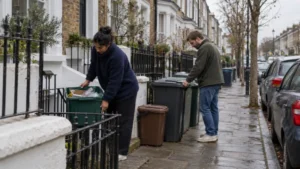
London presents particular challenges because housing varies significantly between boroughs.
Some residents live in detached or terraced homes with enough outside space for several containers. Others live in tower blocks, mansion blocks, converted properties or flats where individual bins are impractical.
As a result, London boroughs can implement the same national recycling requirements in different ways.
A household may receive individual food waste caddies, while residents in a large block could use a shared food recycling container.
Collection frequencies can also differ.
The important point is that the national reforms standardise what materials need to be collected much more than how each borough must physically collect them.
London residents should therefore follow the instructions issued by their own borough rather than copying the bin system used elsewhere in the capital.
Why Can Bin Collection Systems Still Differ Between Councils?
Simpler Recycling does not create one identical bin system for every street in England.
Councils still need to design services around local conditions, including:
- Housing Types
- Road Access
- Available Storage
- Existing Waste Contracts
- Collection Vehicles
- Recycling Infrastructure
- Population Density
The objective is greater consistency in recyclable materials while retaining enough flexibility for councils to operate practical services.
This explains why bin colours can remain different and why one council may use sacks while another uses wheelie bins.
Residents should concentrate on what belongs in each local container, rather than expecting national standardisation of bin colours and designs.
What Problems Are Councils Still Facing With The 2026 Rollout?
The transition requires much more than distributing new bins.
Councils may need additional food waste vehicles, collection crews, storage facilities, treatment capacity and revised collection routes.
Flats and densely populated areas can create additional practical difficulties because communal areas may have limited room for extra containers.
Existing waste contracts can also affect how quickly collection systems can be changed.
Some authorities have transitional arrangements affecting the timing of food waste implementation.
Where an authorised transition applies, households should continue following the collection system provided by their council until they are told that it has changed.
What Should Households Do If Their Council Has Not Fully Introduced The Changes?
Residents should not create their own recycling arrangement simply because they have heard that national rules have changed.
Until the council provides the necessary collection service, households should follow the instructions currently issued for their property.
Residents can:
- Check Their Council’s Current Recycling Rules
- Read Any New Collection Calendar
- Use New Containers Only As Instructed
- Keep Food Waste Separate Once The Service Starts
- Check Instructions Before Disposing Of Unusual Items
- Report Missing Containers Through Their Council
This is especially important during transition periods because nearby authorities may be operating different systems.
What Changes Again From March 2027?
The next major stage is scheduled for 31 March 2027.
From that date, plastic film packaging and plastic bags are due to be included in the plastic recycling materials that collectors must collect.
This is significant because flexible plastics have traditionally been excluded from many kerbside recycling services.
They can include items such as:
- Plastic Carrier Bags
- Plastic Wrapping
- Flexible Packaging
- Certain Plastic Films
Until the new requirement applies locally, households should continue following their council’s existing advice.
Some flexible plastics may currently be accepted through supermarket collection points or other specialist schemes rather than household recycling bins.
Conclusion
The England bin collection rules 2026 represent a major change in how household recycling is organised.
Since 31 March 2026, councils have been required to work towards a more consistent system covering food waste, paper and card, other dry recyclables and residual rubbish.
The reforms have made weekly food waste collection particularly important, while also increasing consistency in the recyclable materials households can expect councils to collect.
However, Simpler Recycling does not mean identical bins, colours or rubbish collection frequencies everywhere. Local authorities still determine many practical details of their services.
For households, the safest approach is to understand the national rules while continuing to follow the specific collection instructions issued by their local council.
Frequently Asked Questions
Are Four Bins Compulsory In England In 2026?
No. The rules establish four main waste streams, but they do not require every household to have four individual wheelie bins. Councils can use boxes, sacks, communal bins and other container arrangements.
Is Weekly Food Waste Collection Compulsory?
Yes. Food waste must generally be collected from households at least weekly and the collection must be provided free of charge. Some local authorities have transitional arrangements affecting when their service begins.
Can Councils Collect General Waste Every Three Weeks?
Councils can determine suitable general waste collection frequencies. There is no national rule requiring all councils to use three-weekly collections, so schedules can differ between areas.
Can You Get A £400 Fine For Using The Wrong Bin?
The 2026 Simpler Recycling reforms did not introduce an automatic £400 fine for accidentally putting an item in the wrong recycling container.
Existing household waste enforcement provisions operate separately and apply in more specific circumstances.
Do Flats Have To Follow The New Recycling Rules?
Yes. Flats are included. However, residents may use communal recycling and food waste containers instead of having individual wheelie bins for every property.
Can Paper And Card Still Be Collected With Other Recycling?
Yes, in certain circumstances. Paper and card are separate by default, but councils can collect them with other dry recycling where separate collection is not technically or economically practicable, or provides no significant environmental benefit.
The decision must be supported by an assessment.
When Will Plastic Bags And Film Be Added To Recycling Collections?
Plastic film packaging and plastic bags are scheduled to become part of required plastic recycling collections from 31 March 2027. Until then, households should follow their council’s current instructions.