
In FX, Discipline is the Edge: Why Beginners Lose When They Confuse Speed With Skill?
 • February 13, 2026
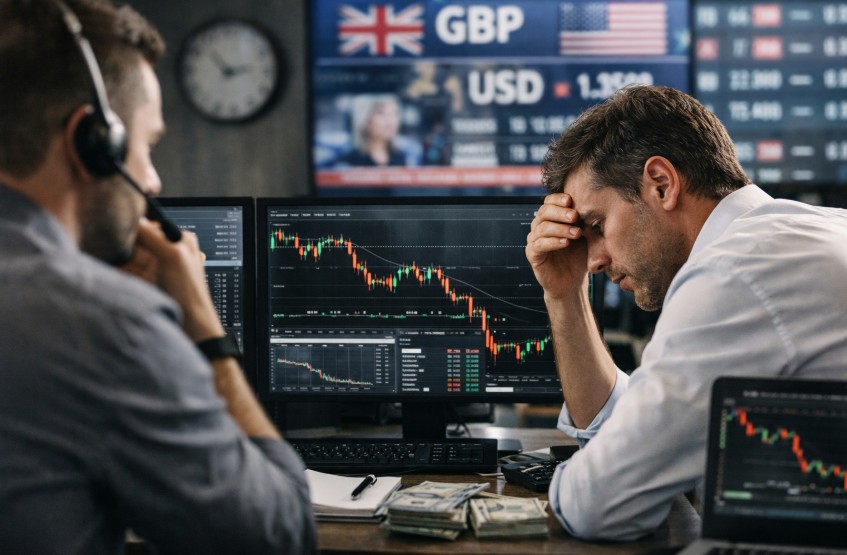
Why Beginners Lose Money in Forex When They Confuse Speed With Skill?
Currency Markets Are Liquid, Not Forgiving
Foreign exchange is often promoted as the most accessible major market in the world. It is open nearly around the clock, highly liquid and constantly discussed. That accessibility is real, but it hides an uncomfortable truth: accessibility does not make FX simple. It makes mistakes easier to place and faster to punish.
For UK businesses and private participants alike, currency moves affect real outcomes, from import costs and pricing decisions to overseas revenue conversion and margin planning.
FX is not a niche side topic. It is embedded in day-to-day commercial life. Yet many newcomers approach it as a game of quick reactions rather than structured decision-making. That is usually where losses begin.
The Macro Picture Creates Two-way Risk

Current market conditions are especially demanding because narratives flip quickly. A single data release or central-ank remark can change expectations in hours. Trends can look clean until they abruptly reverse. In this environment, certainty is expensive and often temporary.
New traders tend to overreact to the latest headline and underweight positioning, liquidity and timing risk. Professionals do the opposite. They think in scenarios, not certainties.
They plan for “if this, then that,” instead of betting everything on one elegant forecast. The key difference is psychological as much as analytical. Beginners often try to be right. Professionals try to stay solvent.
Build Rules Before Placing Risk
A beginner rulebook should be written before any trade goes live. Maximum loss per position, maximum daily drawdown, and conditions that invalidate a trade idea should be explicit. Without these rules, emotion fills the gap, and emotion is a terrible risk manager under volatility.
It is also essential to separate macro opinion from execution quality. You can correctly interpret a policy trend and still lose money because your entry is poor, your size is too large, or your stop discipline fails under pressure.
Learning forex trading for beginners is valuable when it focuses on mechanics and behaviour, not bold predictions. Position sizing, volatility awareness and exit discipline matter more than finding the perfect entry pattern.
The Hidden Tax of Overtrading

One of the biggest beginner errors is frequency. High market availability creates the illusion that more trades mean more opportunity. In practice, overtrading often degrades judgement, increases costs and amplifies emotional fatigue. Quality drops as quantity rises. A smaller set of well-structured decisions tends to outperform constant reactive participation.
This is especially true in choppy, headline-driven conditions where signals are noisy. Patience is not passive in FX. It is active risk control. Choosing not to trade when conditions are unclear is often a profitable decision in disguise.
What Durable Performance Actually Looks Like?
Durable FX performance is not built on dramatic wins. It is built on consistency: controlled losses, repeatable process and disciplined exposure. Traders who last do not avoid being wrong.
They avoid being wiped out when wrong. That distinction is everything. For UK readers, whether operating a business with currency exposure or learning the market directly, the strategic principle is the same.
Treat FX as a risk system first and an opportunity set second. If discipline leads, the market can be navigated intelligently. If excitement leads, the market usually sends the bill quickly.