Lloyds Bank Closures 2026 – 2027 | Full Closing Branch List, Timeline and Impact
 • January 2, 2026
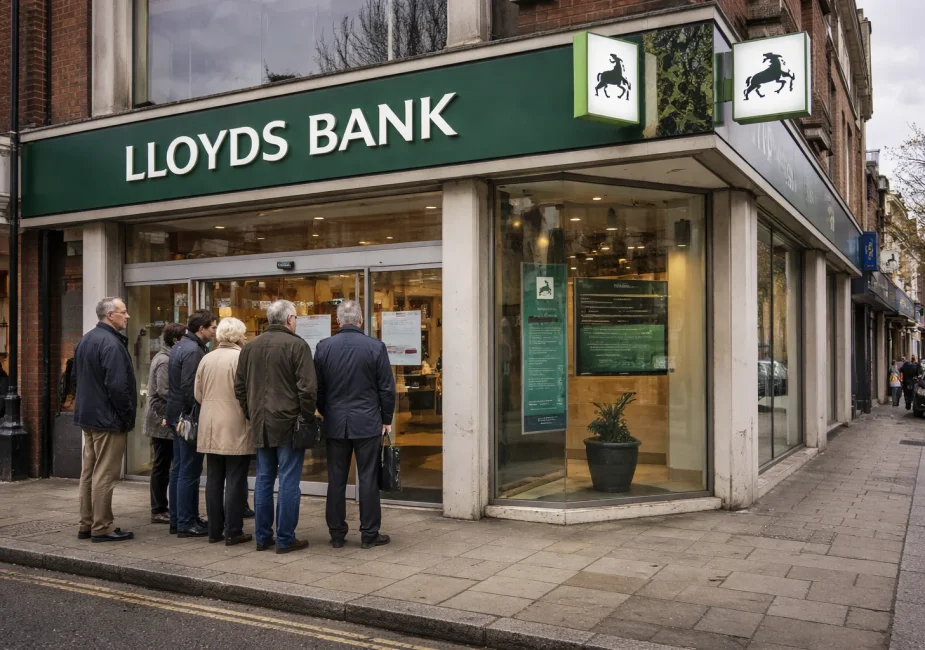
🏦 LLOYDS BANK CLOSURES 2026–2027 – QUICK OVERVIEW
Total Impact: Over 150+ Lloyds Banking Group branches (Lloyds, Halifax & Bank of Scotland) closing between early 2026 and March 2027.
Key Focus Areas: Birmingham, London, Cardiff, Midlands towns, coastal South West communities and selected Northern regions.
📍 Confirmed 2026 Closures Include:
January 2026 – 17 branches including Alfreton, Penzance, Lewes & Havant
March 2026 – Brigg, Caterham, Hucknall, Manchester Moston & more
Summer 2026 – Multiple Birmingham & London consolidations
🔎 Why Are Closures Happening?
Decline in high street footfall
Growth in digital and mobile banking usage
Cost restructuring across Lloyds Banking Group
Branch reviews and FCA guidelines apply before final decisions.
💳 What Alternatives Are Available?
610+ remaining UK branches after restructuring
Access via Halifax & Bank of Scotland (co-servicing)
11,000+ Post Office branches
Community Bankers & Banking Hubs where approved
Lloyds mobile & online banking platforms
💬 Key Takeaway: “For most customers, banking is moving from the high street to the smartphone — but physical access points are being retained where communities still depend on them.”
While Lloyds Bank closures will reshape many high streets, the bank states that alternative access including shared Banking Hubs and Post Office services will remain available. If your branch is affected, reviewing the official Part 1 and Part 2 closure documents is the first step to planning your next move.
Why Are Lloyds Bank Closures Happening in 2026–2027, and What’s Driving the Changes?

The current wave of Lloyds Bank closures is largely driven by a sustained shift towards digital banking and a decline in in-branch visits.
Like many high street banks, Lloyds Banking Group has reported a continued fall in footfall, with more customers choosing mobile apps, online banking platforms and 24/7 messaging services.
A spokesperson for Lloyds Banking Group said:
“Customers want the freedom to bank in the way that works for them, and we offer more choice and ways to manage money than ever before.”
Digital banking grew rapidly during the pandemic and continues to rise, with most everyday transactions now completed remotely. As a result, maintaining large physical branch networks has become more expensive.
Lloyds Banking Group, including Lloyds Bank, Halifax, and Bank of Scotland, is restructuring its branch network to cut costs while increasing investment in digital infrastructure.
Another official statement from Lloyds explains:
“Closing a branch is always a very difficult decision and we spend a great deal of time assessing where and when we do this and how to minimise the impact it may have on our customers.”
The closures are therefore positioned not as a withdrawal of services, but as part of a broader transformation strategy, one that reflects wider industry trends across Santander, NatWest, Barclays and other major UK banks.
How Many Lloyds Bank Branches Are Closing Between 2026 and 2027?
Across the group, more than 150 branches are expected to close between early 2026 and March 2027. This includes:
- 53 Lloyds Bank branches scheduled to close by summer 2026
- 31 Halifax branches are closing in the same period
- Additional Bank of Scotland closures through to March 2027
- Previously announced closures bringing total reductions to over 140 branches within two years
Once all currently announced closures are completed, Lloyds is expected to operate approximately 610 UK branches, significantly fewer than a decade ago.
Overview of Lloyds Banking Group Closures (2026–2027):
Brand Estimated Closures Timeline Notes
Lloyds Bank 50+ in 2026 March–August 2026 Additional closures into 2027
Halifax 30+ in 2026 March–July 2026 Further closures in 2027
Bank of Scotland 90+ May 2026–March 2027 Announced alongside group strategy
Total (Group) 150+ Early 2026–March 2027 Ongoing restructuring
This continued consolidation reflects both falling in-branch visits and increased investment in digital services.
How Does Lloyds Decide Which Branches to Close, and What Rules Must It Follow?

Lloyds follows a structured review process before confirming branch closures. The bank publishes two key documents known as Closing Branch Reviews, alongside regulatory compliance checks.
The Two-Part Branch Review Process
When a closure is announced, you can access:
- Part 1 Review – Explains how the decision was made, including branch usage data and alternative banking options.
- Part 2 Review – Published at least two weeks before closure, summarising feedback from community engagement.
Regulatory Oversight and Access to Cash
Under Financial Conduct Authority (FCA) guidance, banks must consider customer impact and alternative access to services. LINK, the UK’s cash access network, also reviews whether communities require additional support.
Possible mitigation measures include:
- Community Banker visits
- Establishment of a Banking Hub
- Deposit services in nearby areas
- Enhanced Post Office banking access
A Lloyds spokesperson stated:
“When making changes to our branch network, we always look to understand the impact on our customers – including how they continue to access banking services.”
Closure Decision Framework:
Stage What Happens What You Should Do
Announcement Part 1 Review published Check alternative branches
LINK Review Access to cash assessed Monitor Banking Hub decisions
Community Feedback Consultation period Raise concerns if needed
Part 2 Review Summary published Prepare for transition
Closure Date Branch shuts Switch to alternative access
This structured approach ensures regulatory compliance and transparency, even though it does not prevent closures.
Which Lloyds Bank branches are closed in January 2026?
The first major cluster of Lloyds Bank closures in 2026 occurred in January. The closed locations include:
January 2026 Confirmed Lloyds Bank Closures:
Town/City Branch Address Closure Date
Alfreton 21 High Street DE55 7DR 19/01/2026
Ammanford 19 Quay Street SA18 3DB 12/01/2026
Bideford 5 High Street EX39 2AD 13/01/2026
Chester-le-Street 81–85 Front Street DH3 3AJ 14/01/2026
Fleet — 13/01/2026
Gillingham (Dorset) — 08/01/2026
Havant — 19/01/2026
Hedge End — 21/01/2026
Hedon — 28/01/2026
Ivybridge — 14/01/2026
Lewes — 19/01/2026
Mitcham — 08/01/2026
New Addington — 14/01/2026
Penzance — 21/01/2026
Petersfield — 21/01/2026
Swadlincote — 20/01/2026
Totnes — 08/01/2026
These closures span the Midlands, South West, South East and parts of Wales, signalling the broad geographic spread of the restructuring and reinforcing the group-wide nature of the changes.
Which Lloyds Bank Branches Are Closing in February and March 2026?
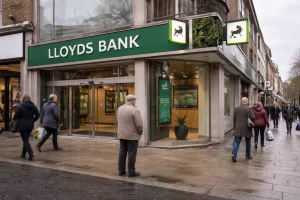
The pace of Lloyds Bank closures continues into February and March 2026, with a mix of market towns, suburban locations and regional centres affected. Below is the complete list of confirmed closures during this period.
February–March 2026 Confirmed Lloyds Bank Closures:
Town/City Branch Address Closure Date
Thornbury Avon 5 High Street, Thornbury BS35 2AE 02/02/2026
Caterham 21 Station Avenue CR3 6YT 03/03/2026
Hucknall 5 High Street NG15 7HQ 04/03/2026
Liverpool Breck Road Liverpool Breck Road, Merseyside 04/03/2026
Brigg 69 Wrawby Street DN20 8JG 05/03/2026
Glossop 2 High Street East SK13 8DA 09/03/2026
Tunstall Tower Square, Stoke-on-Trent ST6 5DL 09/03/2026
Houghton-le-Spring 33 Newbottle Street DH4 4AP 10/03/2026
Seaton The Square EX12 2QH 11/03/2026
Manchester Moston 276 Moston Lane M40 9WB 11/03/2026
Sleaford 2 Northgate NG34 7BL 13/03/2026
Okehampton Fore Street EX20 1HJ 25/03/2026
Peterlee Yoden Way 31 Yoden Way SR8 1AW 03/03/2026
Wymondham 4 Market Place NR18 0AG 13/03/2026
These closures demonstrate a noticeable concentration in the Midlands and Northern England, although southern and coastal communities are also represented.
The distribution reflects Lloyds Banking Group’s broader strategy of consolidating branches in areas where alternative locations or digital usage levels are considered sufficient to support customers.
Which Major Cities and Regions Are Most Affected by Lloyds Bank Closures?
While the closures are nationwide, certain regions stand out due to either the number of branches affected or the strategic importance of the locations:
Birmingham and the West Midlands
Multiple Birmingham locations are scheduled to close, including Kingstanding, Maypole, Bordesley Green and Blackheath. This suggests a strategic consolidation within urban clusters rather than complete regional withdrawal.
London Branch Consolidation
London is also heavily impacted, with closures including:
- Oxford Street
- Tottenham Court Road
- Cheapside
- London Bridge
- Streatham
- Golders Green
The reduction reflects high digital usage rates in metropolitan areas, where mobile adoption is strongest.
Wales and the South West
Cardiff Victoria Park, Ebbw Vale, Swansea Enterprise Park, and other Welsh locations are affected. In the South West, closures span Cornwall, Devon, Somerset and Dorset.
Table 4: Regional Impact Summary
Region Example Locations Impact Type
West Midlands Birmingham (multiple), Wednesbury Urban consolidation
Greater London Oxford St, Cheapside, London Bridge High-density reduction
Wales Cardiff, Ebbw Vale, Swansea Mixed urban/rural
South West Honiton, Penzance, Seaton Coastal & rural impact
North East Peterlee, Houghton-le-Spring Town centre closures
The regional pattern reflects population density, digital adoption and proximity to alternative branches.
What Happens to Your Access to Cash When a Lloyds Branch Closes?
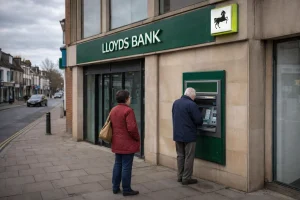
One of the biggest concerns around Lloyds Bank closures is continued access to cash.
Under current regulations, LINK reviews whether an area requires a Banking Hub or additional services. In some communities, a shared hub may be established, allowing customers of multiple banks to access counter services.
Where appropriate, Lloyds may deploy Community Bankers who visit affected areas on scheduled days. Post Office branches, over 11,000 nationwide, also provide everyday banking services, including deposits and withdrawals.
These measures aim to ensure that even if your local Lloyds branch shuts, you retain reasonable access to physical banking.
What Alternatives Do You Have if Your Local Lloyds Branch is Shutting Down?
Lloyds emphasises that customers have multiple channels available, designed to offer flexibility beyond the traditional branch model.
You can manage accounts through:
- The Lloyds mobile banking app
- Online banking via desktop
- Telephone banking support
- 24/7 secure messaging
- Post Office branches
- Halifax and Bank of Scotland branches (co-servicing model)
Co-servicing allows you to use branches across the Lloyds Banking Group network, meaning a Halifax branch can provide services for your Lloyds account and vice versa.
The bank maintains that these expanded options ensure continued service availability, even as the physical branch footprint reduces.
How Could Lloyds Bank Closures Affect You, Local Businesses, and High Streets?
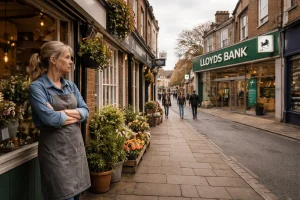
The impact varies depending on how you bank. If you are comfortable using digital services, you may experience minimal disruption. However, elderly customers or those without reliable internet access may face greater inconvenience.
For small businesses, branch closures can complicate cash handling. Travel time to alternative branches may increase, and banking hubs may not initially offer full-service capabilities.
High streets may also feel economic consequences. Bank branches traditionally drive footfall, and their absence can affect surrounding retailers.
While Lloyds states that all affected staff will be offered alternative roles within the group, community concerns about service accessibility remain significant.
What Should You Do Now if Your Branch Appears on the Lloyds Bank Closure List?
If your local branch appears on the Lloyds Bank closure list, taking early action can help minimise disruption.
Reviewing the official closure announcement and the Part 1 Review document will explain the reasons for the closure and highlight alternative banking services nearby, including other Lloyds, Halifax, Bank of Scotland branches, Banking Hubs, or Post Office facilities.
To stay prepared, consider the following steps:
- Register for online and mobile banking for everyday transactions
- Identify the nearest alternative branch or shared banking hub
- Seek help from family or local support if you are unfamiliar with digital tools
Business customers should also review how closures affect cash deposits, coin services, and change requirements. Some locations may offer Community Banker visits or new deposit facilities.
Planning ahead gives you time to adjust your routines and choose the most suitable banking options before the closure date arrives.
What is the Timeline From Announcement to Final Lloyds Branch Closure?
Typically, Lloyds follows a structured and clearly communicated timeline designed to allow for regulatory oversight and community engagement before a branch closes.
- Public announcement
- Publication of Part 1 Review
- LINK Access to Cash assessment
- Community feedback period
- Part 2 Review publication
- Final closure date
From announcement to final closure, the process usually spans several months. This timeframe is intended to provide customers with sufficient notice to review alternative arrangements, raise concerns during consultation and prepare for the transition.
While the timeline does not prevent closures, it ensures transparency and allows both individuals and businesses adequate time to adapt.
What Does This Wave of Lloyds Bank Closures Signal About the Future of Uk High Street Banking?
The latest wave of Lloyds Bank closures highlights a broader shift in UK high street banking, where physical branches are gradually declining while digital services continue to expand.
Customers are increasingly managing accounts through mobile apps, online platforms, and remote support, reducing the need for traditional branch visits.
As a result, shared Banking Hubs are expected to become more common, offering access to multiple banks in one location rather than standalone branches. This change reflects a move toward efficiency and cost reduction across the industry.
The transformation is not limited to Lloyds, as Santander, Halifax, and other major banks have announced similar restructuring strategies, signalling a long-term structural shift in how retail banking operates across the UK.
Conclusion
The 2026–2027 Lloyds Bank closures represent a major shift in how banking services are delivered across the UK.
While over 150 branches across the group are scheduled to close, alternative banking channels, digital platforms, Post Office services, Banking Hubs and co-servicing, are expanding.
For you, the key is preparation. By understanding the timeline, reviewing official closure documents and familiarising yourself with alternative services, you can navigate the transition smoothly.
The high street may look different in the coming years, but banking itself is not disappearing, it is evolving.
FAQs About Lloyds Bank Closures (2026–2027)
Will all Lloyds Bank branches eventually close?
No. Lloyds will continue operating hundreds of branches nationwide, though the overall network is significantly smaller than in previous decades.
Can you still deposit cash after your branch closes?
Yes. You can deposit cash at Post Office branches and, in some areas, through Banking Hubs or deposit services.
What is a Banking Hub?
A shared banking facility operated in partnership with multiple banks, offering basic counter services.
Are staff losing their jobs?
Lloyds has stated that affected employees will be offered roles elsewhere within the group.
How do you check if your branch is closing?
You can check the official Lloyds branch closure webpage and review the published documents.
Will ATM machines be removed?
Not necessarily. ATM provision is assessed separately, and LINK ensures reasonable cash access.
Can you use a Halifax branch if your Lloyds branch closes?
Yes. Through co-servicing, you can use other Lloyds Banking Group branches.