What Does FPO Mean on a Bank Statement? UK Banking Code Explained
 • March 19, 2026
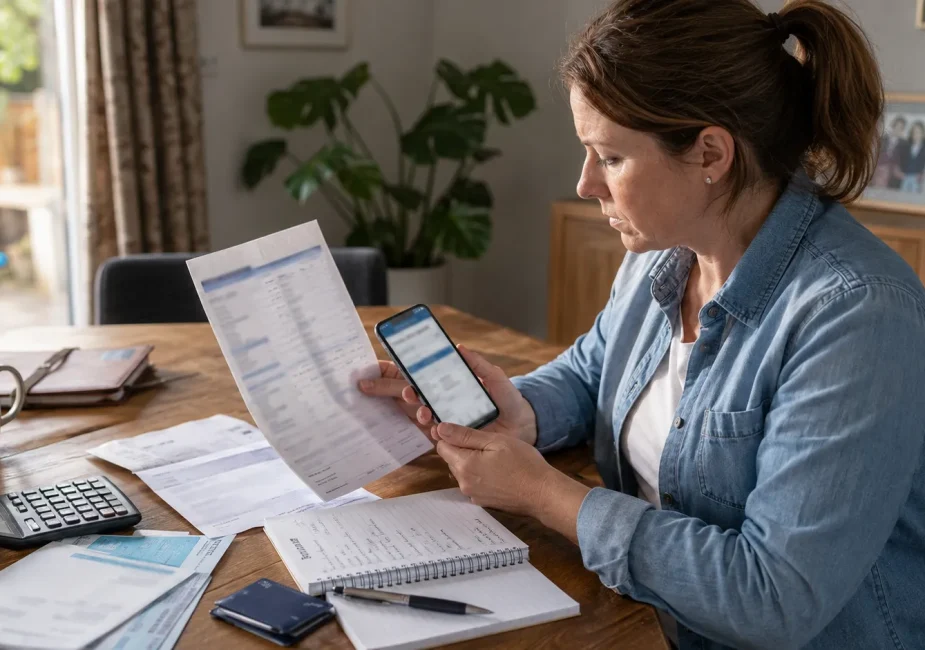
Quick answer: FPO usually stands for Faster Payment Outwards. It means a bank transfer has been sent from your account to another account, normally through the UK Faster Payment System.
FPO is not a separate bank charge, although the wording used to describe the payment can vary between banks.
Key Takeaways:
- FPO usually means Faster Payment Outwards, showing that money has been sent from your account through the UK Faster Payment System.
- FPO is normally a transaction description, not a separate bank fee or warning.
- Different banks may display outgoing Faster Payments as FPO, FP, FPS Out or another similar description.
- Faster Payments usually arrive almost immediately, although some transfers can take up to two hours or longer.
- Check the amount, recipient and payment reference if you do not immediately recognise an FPO transaction.
- Contact your bank promptly if the payment was unauthorised, sent to the wrong account or made after being deceived by a scammer.
- Completed Faster Payments usually cannot be cancelled, although your bank may try to recover money sent by mistake.
What Does FPO Mean on a Bank Statement?

FPO is a transaction description used by some UK banks to identify an outgoing Faster Payment. It may appear after you send money through online banking or a mobile banking app.
The abbreviation can be understood as follows:
- FP means Faster Payment.
- O means Outwards, showing that the money left your account.
For example, an FPO entry could relate to money sent to a friend, a landlord, a tradesperson, a business or another bank account that you own.
The FPO code describes the payment method and the direction in which the money moved. It does not explain why the payment was made, and its appearance alone does not confirm whether the transaction was authorised.
According to MoneyHelper’s guidance on bank statement terminology, FPO means Faster Payment Outwards, while FPI means Faster Payment Inwards.
How Can You Identify an FPO Transaction on Your Statement?
An FPO transaction will normally appear alongside information that can help you identify the payment.
Depending on your bank and the type of statement you are viewing, this may include:
- The date of the payment
- The amount transferred
- The recipient or payee name
- A payment reference
- The transaction status
- A bank-generated reference number
Your mobile banking app may provide more information than a printed or downloaded monthly statement. Open the transaction details and compare the amount, recipient and reference with payments you remember making.
Do not rely only on the FPO code. Banks do not all use identical statement abbreviations, and the same type of transfer may appear as Faster Payment, FP, FPS Out or another bank-specific description.
Example of an FPO entry
| Date | Description | Amount | Balance |
|---|---|---|---|
| 12 March 2026 | FPO, rent payment | £750 | £1,250 |
| 13 March 2026 | Direct Debit, utilities | £60 | £1,190 |
In this example, the rent was transferred manually through Faster Payments. The utility payment was collected separately by Direct Debit.
What Is the Difference Between FPO and FPI?
FPO and FPI describe Faster Payments moving in opposite directions.
| Code | Meaning | Direction |
|---|---|---|
| FPO | Faster Payment Outwards | Money sent from your account |
| FPI | Faster Payment Inwards | Money received into your account |
An FPO normally reduces your available balance because money has left the account. An FPI normally increases the balance because money has been received.
Some banks may use different descriptions, so you should check your bank’s transaction glossary when a statement code is unclear.
How Long Does an FPO Payment Take?
Faster Payments are usually completed almost immediately, which is why an FPO can appear soon after a transfer is made. However, the payment is not guaranteed to arrive within seconds in every case.
Pay.UK explains that Faster Payments are usually available almost immediately but can sometimes take up to two hours.
Some transfers may take longer because of bank processing, security checks or the institutions involved.
You can read more about how Faster Payments work through Pay.UK.
If a payment is urgent, check its status in your banking app and confirm with the recipient that the money has arrived.
The appearance of an FPO entry shows that an outgoing transfer was initiated or processed, but you should not rely on the statement description alone as proof that the recipient has received it.
What Types of Payments May Be Marked as FPO?
An FPO description is most likely to appear when you make a one-off bank transfer through online or mobile banking.
Common examples include:
- Sending money to a friend or family member
- Transferring rent manually to a landlord
- Paying a tradesperson or supplier
- Paying an invoice by bank transfer
- Moving money between bank accounts you own
- Making a one-off payment to a business
- Sending money towards a shared household expense
Not every rent, mortgage or utility payment will be marked as FPO. Payments collected automatically may instead appear as Direct Debits or standing orders.
A refund paid into your account would also normally be an incoming payment rather than an FPO because FPO indicates that money has left the account.
Practical example
Suppose you use your banking app to send £750 directly to your landlord. Depending on your bank, the transaction may appear as “FPO”, “Faster Payment” or another outgoing-transfer description.
If the landlord normally collects the payment automatically by Direct Debit, the statement would use a different transaction description.
The code therefore depends on how the payment was made, not simply on what the payment was for.
Can an FPO Transaction Be Unauthorised or Mistaken?

Most FPO entries relate to legitimate bank transfers. However, an unfamiliar FPO should be checked promptly because several different situations may cause it to appear.
An unfamiliar transaction could be:
- A legitimate transfer you have forgotten
- A payment made from a joint account
- Money accidentally sent to the wrong recipient
- A payment sent for the wrong amount
- A duplicate transfer
- An unauthorised payment made after someone accessed your account
- An Authorised Push Payment scam
An unauthorised payment and an Authorised Push Payment scam are not the same.
An unauthorised payment occurs when someone makes the transfer without your permission, such as after gaining access to your online banking.
An Authorised Push Payment scam occurs when you personally approve the transfer but have been deceived into sending money to a fraudster.
This difference is important because the investigation and reimbursement process may depend on how the transaction happened.
How Do You Verify an FPO Transaction?
Open the transaction in your banking app or online account and check all the available details.
1. Check the amount
Compare the amount with recent purchases, invoices, rent payments or transfers between your own accounts.
2. Review the recipient information
Look for the payee name, recipient details or payment reference. Remember that a business may appear under a different trading or legal name.
3. Check your payment history
Review recent messages, invoices and banking notifications to determine whether you arranged the transfer.
If the account is shared, ask the other account holder whether they made the payment.
4. Check whether the transaction was duplicated
Look for another payment to the same recipient for the same amount. A repeated entry may indicate that the transfer was accidentally submitted twice.
5. Contact the bank when anything remains unclear
Contact your bank through its official mobile app, website or the telephone number shown on the back of your bank card.
Do not call a telephone number contained in an unexpected text message or email claiming to be from your bank.
Can an FPO Payment Be Cancelled or Reversed?
A completed Faster Payment generally cannot be cancelled because the money is transferred quickly.
If you have sent money to the wrong account, contact your bank immediately. Your bank may attempt to recover the payment through the industry’s Credit Payment Recovery process, but successful recovery is not guaranteed.
Do not wait for the recipient to return the money before informing your bank. Acting promptly gives the bank more time to contact the receiving institution and investigate the transfer.
You should provide:
- The payment date
- The amount sent
- The recipient details
- The payment reference
- The reason the payment was made
- An explanation of how the mistake occurred
What Should You Do If You Do Not Recognise an FPO?

Contact your bank immediately when you cannot identify an FPO transaction. Use the bank’s official app, website or verified telephone number.
Tell the bank whether:
- You did not make or approve the payment
- Someone may have accessed your online banking
- You approved the payment after being contacted by a possible scammer
- You sent the money to the wrong account
- The transfer appears to have been duplicated
Keep screenshots or copies of the transaction details, including the amount, date, reference and recipient information.
You should also:
- Change your online banking password when account access may have been compromised.
- Check whether any new payees have been added.
- Review the account for other unfamiliar transactions.
- Follow the bank’s instructions for securing the account.
- Respond promptly to genuine requests for information during the investigation.
Qualifying victims of Authorised Push Payment fraud may be covered by mandatory reimbursement protections for payments made through Faster Payments or CHAPS.
The rules contain eligibility requirements, limits and exceptions, so reimbursement should not be presented as automatic in every case.
Important: Do not send another payment when someone claims that transferring more money is necessary to recover the original amount. Contact your bank independently before taking further action.
What Are the Most Common Bank Statement Codes Besides FPO?
Bank statement abbreviations can help you understand how money entered or left your account. However, the wording is not standardised across every UK bank.
| Code | Usual meaning | Typical use |
|---|---|---|
| FPO | Faster Payment Outwards | Money sent to another account |
| FPI | Faster Payment Inwards | Money received from another account |
| D/D or DDR | Direct Debit | A payment collected by an organisation |
| S/O or STO | Standing Order | A regular payment arranged by the account holder |
| CHG | Bank charge | A fee charged by the bank |
| CHAPS | Clearing House Automated Payment System | A same-day payment, often involving a high-value transaction |
| POS | Point of Sale | A purchase made using a debit card |
These descriptions provide general guidance only. Check your bank’s own statement glossary when you are unsure because the same transaction type may be displayed differently by another institution.
What Tips Can Help You Track FPO Transactions?

Keeping accurate records makes it easier to identify outgoing transfers and spot anything unusual.
Useful steps include:
- Enable notifications for outgoing payments.
- Add a clear reference when making a transfer.
- Save invoices and payment confirmations.
- Check the recipient name before approving a payment.
- Pay attention to Confirmation of Payee warnings.
- Review your statement regularly.
- Remove old payees that you no longer use.
- Keep your banking password and security codes private.
When transferring a large amount, consider sending a small test payment first and confirming that it reached the correct recipient before sending the remaining balance.
Never approve a payment because someone claiming to represent your bank says that your money must be moved to a “safe account”. A genuine bank will not ask you to protect your money by transferring it to another account.
Conclusion
FPO usually means Faster Payment Outwards and identifies money sent from your bank account through the Faster Payment System.
It is normally a routine transaction description rather than a separate fee or warning. However, banks use different statement labels, so you should check the transaction amount, recipient and reference rather than relying on the abbreviation alone.
If you recognise the payment, no further action is normally required. If you sent it to the wrong account, contact your bank immediately because a completed Faster Payment generally cannot be cancelled.
If you did not make the payment or believe you were deceived by a scammer, report it to your bank through an official contact method without delay.
Frequently Asked Questions
Is FPO a bank charge?
No. FPO usually describes an outgoing Faster Payment. It does not normally represent a separate fee charged by the bank.
Does FPO mean the recipient has received the money?
Faster Payments are usually completed almost immediately, but delays can occur. Check the transaction status and confirm with the recipient when the payment is urgent.
Is an FPO the same as a debit-card payment?
No. An FPO normally relates to a bank transfer, while a debit-card purchase may appear under the retailer’s name or with a card-payment description such as POS.
Why does my bank not use the FPO code?
Statement terminology differs between banks. Your bank may use Faster Payment, FP, FPS Out or another description for an outgoing transfer.
Can my bank recover an FPO sent to the wrong account?
Your bank may attempt to recover the money, but recovery is not guaranteed. Contact the bank immediately and provide the payment amount, date, recipient and reference.
Should I be concerned whenever FPO appears?
Not necessarily. Most FPO entries are normal transfers made by the account holder. You should investigate when you do not recognise the amount, recipient or payment reference.
Note: This article has been reviewed and updated to provide a clear explanation of FPO transactions on UK bank statements. Information has been checked against guidance from MoneyHelper, Pay.
UK and the Payment Systems Regulator. Bank statement descriptions and payment procedures may vary between financial institutions, so customers should contact their bank directly about any transaction they do not recognise.