
Enhanced Rate Mobility PIP: Eligibility, Points, Payments and Rules
 • October 30, 2026
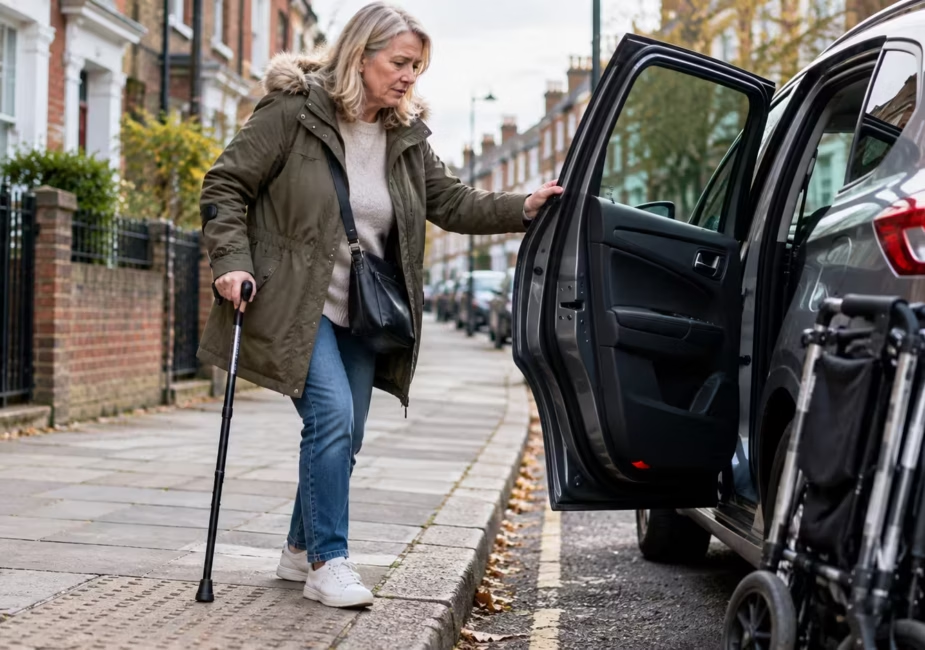
Enhanced Rate Mobility is the higher level of the mobility component of Personal Independence Payment.
A claimant normally needs at least 12 mobility points to qualify. For the 2026/27 benefit year, the enhanced PIP mobility rate is £80 per week, compared with £30.30 at the standard rate.
The award is based on how a long-term physical or mental health condition or disability affects a person’s ability to get around. It is not awarded simply because someone has a particular diagnosis.
PIP mobility is assessed through two activities: planning and following journeys and moving around. Each activity contains descriptors carrying different point scores.
Points from the two mobility activities can contribute towards the overall mobility score, with 8 to 11 points qualifying for the standard rate and 12 or more qualifying for the enhanced rate.
PIP is generally relevant to claimants in England and Wales. Scotland has replaced PIP with Adult Disability Payment, while Northern Ireland operates PIP under its own administrative arrangements.
How Much Is Enhanced Rate Mobility PIP in 2026?
The enhanced rate mobility PIP payment is £80 per week for 2026/27. The standard mobility rate is £30.30 per week.
PIP is normally paid every four weeks, meaning an enhanced mobility award generally represents £320 every four weeks.
A simple 52-week calculation gives an annual equivalent of £4,160, although actual payments depend on the dates and duration of an individual’s award.
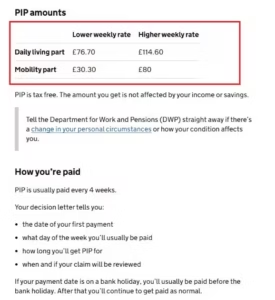
The official GOV. UK PIP payment page confirms the £80 enhanced mobility rate and £30.30 standard mobility rate for 2026/27.
Enhanced vs Standard PIP Mobility Rates
| PIP Mobility Award | Points Required | Weekly Rate 2026/27 | Four-Week Equivalent |
|---|---|---|---|
| Standard Mobility | 8 To 11 | £30.30 | £121.20 |
| Enhanced Mobility | 12 Or More | £80.00 | £320.00 |
The daily living and mobility components are assessed separately. Someone could therefore receive enhanced mobility PIP without receiving the enhanced daily living rate, or vice versa.
PIP is also tax-free, and the amount is not reduced because of income or savings.
Employment itself does not automatically prevent an award, although the activities a person carries out at work can form part of the wider evidence about functional ability.
More detail on how many hours someone can work while receiving PIP explains how employment and PIP can operate together.
Who Qualifies for Enhanced Rate Mobility PIP?
A person generally qualifies for enhanced mobility PIP when the relevant mobility descriptors produce 12 points or more and the wider PIP eligibility conditions are satisfied.
The DWP assessment is concerned with functional difficulties rather than the name or perceived severity of a diagnosis.
Physical, sensory, mental, intellectual and cognitive impairments can all be relevant where they affect the activities being assessed.
For a new PIP claim, a person generally needs to:
- Be Aged 16 Or Over
- Have A Long-Term Physical Or Mental Health Condition Or Disability
- Have Difficulty With Everyday Activities Or Getting Around
- Expect The Difficulties To Last At Least 12 Months From When They Started
- Meet The Relevant Residence And Presence Rules
A new PIP claimant also normally needs to be under State Pension age.
Importantly, PIP entitlement does not depend on proving that a medical condition has a particular label. Two people with the same diagnosis can receive different awards because their functional difficulties differ.
How Many Points Are Needed for Enhanced Mobility PIP?
The mobility scoring thresholds are straightforward:
- 0 To 7 Points — No Mobility Component
- 8 To 11 Points — Standard Mobility Rate
- 12 Points Or More — Enhanced Mobility Rate
One descriptor is selected for each mobility activity. The relevant scores from planning and following journeys and moving around are then used to determine the mobility component entitlement.
This means 12 points do not necessarily have to come from one single mobility descriptor. However, different descriptors within the same activity are not simply added together to create a higher score.
How Are PIP Mobility Points Awarded?
Enhanced rate mobility PIP is determined using two mobility activities.
Planning and Following Journeys
This activity examines a person’s ability to plan a route, leave home and follow the intended route.
The DWP states that it is designed to consider mobility limitations connected with mental health, cognitive and sensory impairments.
The descriptors range from zero points for being able to plan and follow a journey unaided to 12 points where a person cannot follow the route of a familiar journey without another person, an assistance dog or an orientation aid.
Other descriptors consider situations such as:
- Needing Prompting To Undertake A Journey
- Being Unable To Plan A Route
- Being Unable To Follow An Unfamiliar Route Without Support
- Being Unable To Undertake A Journey Because Of Overwhelming Psychological Distress
Claimants preparing for an assessment should describe what actually happens rather than trying to predict what an assessor wants to hear.
Questions about travelling, shopping, driving and daily routines can reveal information relevant to mobility, which is why the context behind PIP assessment questions and answers in 2026 can matter.
Moving Around
The moving around activity focuses on a person’s physical ability to stand and move.
The current statutory descriptors are based on distances including more than 200 metres, 50 to 200 metres, 20 to 50 metres, 1 to 20 metres and no more than 1 metre.
Whether an aid or appliance is needed can also affect the descriptor that applies.
For example:
| Moving Around Ability | Points |
|---|---|
| More Than 200 Metres | 0 |
| More Than 50 Metres But No More Than 200 Metres | 4 |
| Unaided More Than 20 Metres But No More Than 50 Metres | 8 |
| With An Aid More Than 20 Metres But No More Than 50 Metres | 10 |
| More Than 1 Metre But No More Than 20 Metres | 12 |
| Cannot Stand Or Move More Than 1 Metre | 12 |
Distance is important, but the DWP must also consider whether the activity can be completed reliably.
What Is the 20-Metre Rule for PIP Mobility?
The 20-metre PIP rule comes from the moving around descriptors.
A claimant who can stand and then move more than 1 metre but no more than 20 metres, either aided or unaided, can satisfy a descriptor carrying 12 points.
That descriptor alone reaches the threshold for enhanced rate mobility PIP.
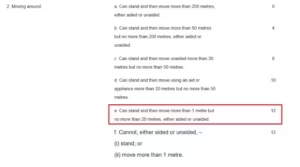
The official PIP Regulations show that moving more than 1 metre but no more than 20 metres carries 12 mobility points.
The rule should not be reduced to the question of whether someone has ever walked farther than 20 metres.
The assessment must consider whether the relevant distance can be covered safely, to an acceptable standard, repeatedly and within a reasonable time.
DWP guidance specifically gives an example of a person who can move 20 metres once but cannot repeat it as reasonably required during the day.
Can Someone Who Walks More Than 20 Metres Still Get Enhanced Mobility PIP?
Yes, potentially.
Walking more than 20 metres does not automatically rule out enhanced mobility PIP. The assessment considers reliability, and mobility entitlement can also involve points from the separate planning and following journeys activity.
For example, someone may physically cover a particular distance but be unable to do so repeatedly because of severe pain, fatigue or breathlessness.
Another claimant may have fewer physical walking restrictions but significant qualifying difficulties with journeys.
The correct descriptor depends on the person’s actual functional ability over the relevant period.
What Does “Reliably” Mean in a PIP Mobility Assessment?
A claimant should not automatically be treated as able to complete an activity simply because it can be performed once.
DWP guidance requires relevant PIP activities to be considered against four reliability principles.
- Safely — The Activity Should Not Create A Relevant Risk Of Harm
- To An Acceptable Standard — The Activity Must Be Completed Adequately
- Repeatedly — The Activity Should Be Repeatable As Often As Reasonably Required
- Within A Reasonable Time — It Should Normally Take No More Than Twice As Long As It Would Take A Person Without The Relevant Limitation
Pain, fatigue and breathlessness can therefore matter even when they do not make the first attempt at walking completely impossible.
Fluctuating conditions also need to be considered across time. Current DWP assessment guidance says a scoring descriptor generally needs to apply on more than 50% of days over the relevant 12-month period.
Can Mental Health Conditions Qualify for Enhanced Mobility PIP?
Mental health conditions can contribute to entitlement to the PIP mobility component where they create relevant difficulties with planning and following journeys.
The DWP’s assessment guidance specifically states that this activity is designed for limitations arising from mental health, cognitive and sensory impairments.
This is different from the moving around activity, which focuses primarily on physical walking ability.
What Is Overwhelming Psychological Distress?
Overwhelming psychological distress is relevant to particular planning and following journeys descriptors.
Under the statutory descriptors, a person who needs prompting to undertake any journey to avoid overwhelming psychological distress can score four points.
A person who cannot undertake any journey because doing so would cause overwhelming psychological distress can score 10 points.
Ten points by itself is below the 12-point enhanced-rate threshold. The full mobility score and the descriptors that actually apply therefore need to be considered.
The DWP must assess the real functional impact rather than assuming that every person with anxiety, depression, agoraphobia or another mental health condition has the same mobility needs.
Can Someone Get Enhanced Mobility PIP If They Can Physically Walk?
Yes. Physical walking is only one part of the PIP mobility assessment. Someone who can walk may still score mobility points because of qualifying problems with planning or following journeys.
Likewise, being unable to travel independently does not automatically guarantee enhanced mobility. The precise descriptor and point score must be established from the evidence.
Which Conditions Can Qualify for Enhanced Mobility PIP?
There is no official list of medical conditions that automatically guarantees enhanced mobility PIP under the normal assessment rules.
The key issue is how the condition affects the relevant mobility activities.
Conditions associated with mobility difficulties can include:
- Musculoskeletal Conditions
- Neurological Conditions
- Respiratory Conditions
- Visual And Sensory Impairments
- Cognitive And Developmental Impairments
- Mental Health Conditions
- Multiple Long-Term Conditions
A diagnosis can provide important medical context, but it does not replace evidence about functional ability.
The latest DWP statistics, covering England and Wales to July 2026, demonstrate why diagnosis alone is not a reliable predictor. Enhanced mobility awards appear across psychiatric, musculoskeletal, neurological, respiratory and other condition categories, with different rates in each group.
What Evidence Can Support an Enhanced Mobility PIP Claim?
Evidence is most useful when it helps explain how a person’s condition affects a specific PIP activity.
Potentially relevant evidence can include:
- Consultant Or Specialist Letters
- GP And Treatment Records
- Occupational Therapy Reports
- Physiotherapy Assessments
- Care And Support Plans
- Prescription And Medication Information
- Evidence About Mobility Aids
- Statements From People Providing Support
- A Diary Of Fluctuating Symptoms
- Specific Examples Of Walking Or Journey Difficulties
Medical evidence confirming a diagnosis may be useful, but it can be more persuasive when combined with practical information about what happens during relevant activities.
For mobility difficulties, specific examples might record the approximate distance travelled, whether an aid was used, whether another person was needed, how quickly symptoms appeared, whether a rest was required and whether the activity could be repeated later.
The same principle applies at an assessment. A brief answer such as “yes, walking is possible” may provide less useful information than an accurate explanation of distance, pace, pain, stopping, assistance and recovery.
Example of How Enhanced Mobility PIP Can Be Awarded
Consider a fictional claimant with a long-term physical condition affecting the lower limbs.
On most days, the claimant can stand and move approximately 15 metres using a walking stick before severe pain requires a stop.
After walking that distance, a significant recovery period is needed, and the journey cannot reliably be repeated several times during the day.
If the evidence supports the conclusion that the claimant can stand and move more than 1 metre but no more than 20 metres reliably, the applicable moving around descriptor carries 12 points. That would reach the enhanced mobility threshold.
The example does not mean everyone who reports walking 15 metres will receive enhanced mobility PIP. The DWP considers the evidence, frequency, reliability and circumstances of each individual claim.
Enhanced Mobility PIP vs Standard Mobility PIP
The main difference between standard and enhanced mobility PIP is the number of mobility points awarded and the amount paid.
| Feature | Standard Mobility PIP | Enhanced Mobility PIP |
|---|---|---|
| Points | 8 To 11 | 12 Or More |
| Weekly Rate 2026/27 | £30.30 | £80 |
| Four-Week Equivalent | £121.20 | £320 |
| Income Or Savings Test | No | No |
| Mobility Activities Used | Planning And Following Journeys, Moving Around | Planning And Following Journeys, Moving Around |
A person’s daily living score does not raise the mobility rate. Each PIP component has its own scoring threshold.
What Can Enhanced Mobility PIP Help With?
An enhanced rate mobility PIP award can provide access to additional mobility-related support, although individual eligibility rules still need to be checked.
Motability Scheme
Someone receiving the enhanced rate mobility part of PIP can apply to join the Motability Scheme if the other scheme conditions are met.
Motability currently says a person applying to join generally needs at least 12 months remaining on the qualifying allowance.
Eligible customers can use their qualifying mobility allowance towards leasing a vehicle, scooter, powered wheelchair or wheelchair-accessible vehicle, depending on the scheme option.
The scheme itself has also undergone changes during 2026. People considering a vehicle, particularly those with younger named drivers, may need to take account of current Motability Scheme black box rules before starting or renewing a lease.
Blue Badge Eligibility
Enhanced mobility PIP does not mean every claimant automatically receives a Blue Badge solely because the overall mobility award is enhanced.
In England, automatic PIP-based eligibility can depend on the particular mobility activity and descriptor.
Current government guidance includes automatic eligibility where a person receives the mobility component of PIP and has at least eight points under the moving around activity.
Another automatic route applies where a claimant has exactly the specified 10-point descriptor for being unable to undertake any journey because of overwhelming psychological distress.
Someone who does not qualify automatically may still be able to apply under other Blue Badge eligibility criteria.
Rules can also differ across UK nations, so the relevant local authority or national scheme should be checked.
What Happens When an Enhanced Mobility PIP Award Is Reviewed?
A PIP award can be reviewed to determine whether the claimant continues to meet the relevant criteria.
A review may consider current evidence, how the condition affects daily living and mobility activities, whether needs have changed and whether the existing descriptors still reflect the claimant’s functional ability.
The decision following a review can:
- Keep The Award The Same
- Increase The Award
- Reduce The Award
- End The Award
The review should therefore describe current circumstances accurately rather than assuming that an earlier award will automatically continue.
DWP statistics to July 2026 show that, over the preceding five years, 79% of planned award reviews resulted in either an increase or no change to the level of award. That is an overall statistic and cannot predict the outcome of an individual review.
Can Enhanced Mobility PIP Be Reduced After a Review?
Yes. If the DWP decides that the evidence supports a lower mobility score, an enhanced award can potentially be reduced to the standard rate or removed.
A claimant may also receive a higher award where evidence supports a different decision. The outcome depends on the descriptors and evidence applicable to the individual case.
What If a PIP Mobility Decision Is Wrong?
Someone who disagrees with a PIP decision can usually ask the DWP to reconsider it through mandatory reconsideration.
The request should normally be made within one month of the date of the decision, although a late request can sometimes be accepted where there is a good reason.
A challenge is generally clearer when it identifies the activity in dispute, the descriptor believed to apply and evidence showing why the original decision may be wrong.
Someone who has received no mobility points, or believes the wrong mobility descriptor was selected, may find the same activity-by-activity approach used for a PIP 0 points mandatory reconsideration useful when reviewing the decision.
If the mandatory reconsideration does not resolve the disagreement, an eligible claimant can normally appeal to the Social Security and Child Support Tribunal.
Conclusion
Enhanced rate mobility PIP provides the higher level of the PIP mobility component to people whose functional difficulties meet the required mobility descriptors.
For 2026/27, it pays £80 per week, normally £320 every four weeks, and requires a mobility score of 12 points or more.
The assessment is broader than a diagnosis or a single walking-distance test.
It considers planning and following journeys, physical movement and whether activities can be completed safely, to an acceptable standard, repeatedly and within a reasonable time.
Anyone relying on the rules for a live claim, review or challenge should check current DWP guidance and the wording of the relevant decision letter, as benefit rates and guidance can change.
Frequently Asked Questions
How Many Points Are Needed for Enhanced Mobility PIP?
A claimant needs 12 or more mobility points for the enhanced rate. Eight to 11 mobility points qualify for the standard rate.
How Much Is Enhanced Rate Mobility PIP in 2026?
The enhanced mobility component is £80 per week for 2026/27 and is normally paid every four weeks.
How Much Is Enhanced Mobility PIP Every Four Weeks?
At the current £80 weekly rate, four weeks of enhanced mobility PIP equals £320.
What Is the 20-Metre Rule for PIP?
A claimant who can reliably stand and move more than 1 metre but no more than 20 metres can meet a moving around descriptor worth 12 points.
Can Mental Health Conditions Qualify for PIP Mobility?
Yes. Planning and following journeys can take account of relevant mental health, cognitive and sensory limitations, including qualifying overwhelming psychological distress.
Can Someone Work and Receive Enhanced Mobility PIP?
Yes. PIP is not means-tested, so working does not automatically prevent entitlement. The claimant must still satisfy the relevant functional criteria.
Does Enhanced Mobility PIP Qualify for Motability?
Enhanced rate mobility PIP is a qualifying allowance for the Motability Scheme. A new applicant generally needs at least 12 months remaining on the award.