£562 DWP Payment Details: What UK Pensioners Need to Know in 2026?
 • August 8, 2026
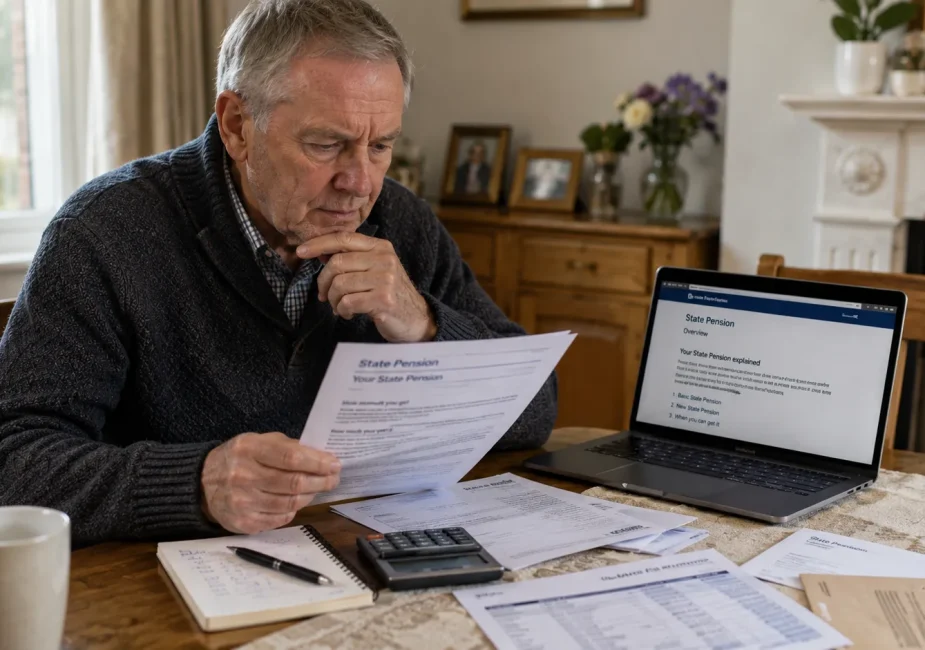
The £562 DWP payment is not a separate one-off payment being issued to all UK pensioners in 2026. The £562 figure came from an earlier estimate of how much the full new State Pension could increase over a year.
The confirmed 2026/27 uprating was 4.8%, taking the full new State Pension to £241.30 a week and increasing it by around £574.60 over 52 weeks. Pensioners therefore should not expect a standalone £562 payment to arrive in their bank account.
- The £562 figure came from an earlier pension estimate
Reports referring to a £562 payment for pensioners were based on a projected 4.7% State Pension increase. The final uprating was subsequently confirmed at 4.8%, meaning the earlier £562 estimate no longer reflects the full-rate annual increase. - There is no separate £562 DWP payment date
The Department for Work and Pensions has not announced a universal £562 lump-sum payment with its own payment date. State Pension increases are instead included in a person’s normal pension payments according to their regular payment schedule. - The confirmed full new State Pension is £241.30 a week
For 2026/27, the full new State Pension increased from £230.25 to £241.30 per week. That £11.05 weekly rise is worth approximately £574.60 across 52 weeks for someone receiving the full rate. - Not every pensioner receives the same increase
Individual State Pension payments depend on entitlement, including a person’s National Insurance record and the pension rules applying to them. Someone receiving less than the full State Pension will not necessarily receive the same cash increase as a person on the full weekly rate. - No special £562 application is required
There is no separate £562 DWP payment eligibility process or application form. Existing State Pension recipients normally receive annual uprating changes through their usual pension payments.
What Is the £562 DWP Payment?
The phrase £562 DWP payment details has attracted attention because earlier reports calculated what a projected State Pension increase could be worth over a full year.
Before the final 2026/27 pension rate was confirmed, some reports used a 4.7% earnings figure and estimated that someone receiving the full new State Pension could gain approximately £562 a year. Those reports presented an expected weekly rate of around £241.05.
That calculation did not mean the Department for Work and Pensions was planning to deposit £562 into pensioners’ accounts at once.
Where the £562 DWP Payment Claim Came From?
The £562 figure was based on an annual calculation. An expected increase in the weekly State Pension rate was multiplied across the year to show how much extra a pensioner receiving the full rate could receive.
Later information showed that average earnings growth used for the 2026/27 uprating was 4.8%, rather than the earlier 4.7% projection. The final increase was therefore larger than £562 for someone receiving the full new State Pension.
Why Some Reports Describe a £562 Payment for Pensioners?
Headlines using phrases such as £562 payment for pensioners, DWP £562 payment or £562 pension boost can make an annual uprating sound like a one-off payment.
The distinction matters. A £562 annual increase would mean additional money spread across normal pension payments during the year, rather than a separate £562 transfer.
Difference Between a DWP Lump-sum Payment and an Annual State Pension Increase
A lump-sum payment is normally a specific amount paid separately under defined eligibility rules. A State Pension uprating instead changes the weekly pension rate.
For 2026/27, the full new State Pension is £241.30 per week, compared with £230.25 in 2025/26. The full basic State Pension increased from £176.45 to £184.90 per week.
Has the DWP Confirmed a £562 Payment in 2026?
No official announcement establishes a universal standalone £562 DWP payment in 2026.
What the Government has confirmed is a 4.8% increase to both the full new State Pension and full basic State Pension.
More than 12 million pensioners were expected to see their State Pension increase, with the Government describing the maximum annual rise for someone on the full new State Pension as up to £575.
What Official DWP and Gov.uk Information Currently Confirms?
The official 2026/27 benefit and pension rates show the full new State Pension at £241.30 a week and the Category A or B basic State Pension at £184.90 a week.
These are weekly rates, not separate £562 payments.
Why the £562 Figure Should Not Be Treated as a Universal Payment?
Even if £562 had remained the final annual increase for the full rate, it would not have meant every pensioner received exactly that amount.
State Pension entitlement differs between individuals. National Insurance records, previous contracting-out arrangements and elements of the pre-2016 pension system can affect what someone receives.
How Later State Pension Figures Changed the Original £562 Estimate?
The earlier £562 calculation was based on a projected 4.7% rise. The eventual 4.8% increase changed the full new State Pension to £241.30 per week.
The difference between £230.25 and £241.30 is £11.05 a week. Across 52 weeks, that is approximately £574.60.
That is why current DWP £562 payment details should be understood in the context of an outdated estimate rather than a newly announced payment.
£562 DWP Payment Details and the 2026 State Pension Increase
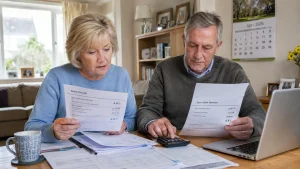
The confirmed State Pension increase began with the 2026/27 uprating.
How the State Pension Uprating Works?
The new State Pension is protected by the triple lock. Under the current rules, it rises according to whichever is highest of average earnings growth, CPI inflation or 2.5%. For 2026/27, the applicable increase was 4.8%, linked to average earnings growth.
What the 2026/27 State Pension Rates Mean for Pensioners?
Someone receiving the full new State Pension rate can receive £241.30 per week before considering any individual adjustments.
Someone receiving the full basic State Pension can receive £184.90 per week.
The increase in the full basic rate is £8.45 a week compared with 2025/26, while the increase in the full new State Pension is £11.05 per week.
Why Individual Pension Increases May Be Different?
The headline annual figures describe people receiving the relevant full rate. Someone receiving less than the full State Pension may see a smaller cash increase.
GOV.UK states that the new State Pension amount depends on a person’s National Insurance record and can also be affected by contracting out before 2016 or Additional State Pension entitlements.
Who Could Be Affected by the DWP £562 Pension Increase?
The original DWP £562 pension increase reporting mainly concerned people receiving the State Pension rather than all DWP benefit recipients.
People Receiving the New State Pension
The new State Pension generally applies to people who reached State Pension age under the post-April 2016 system.
The full rate is currently £241.30 a week, although not everyone receives the full amount.
People Receiving the Basic State Pension
People under the older State Pension system can receive the basic State Pension. Its full weekly rate for 2026/27 is £184.90.
Because this weekly amount is different from the new State Pension, its annual cash increase is also different.
Why National Insurance Records Can Affect Pension Amounts?
Qualifying years on a National Insurance record play a major role in calculating State Pension entitlement.
For people whose National Insurance record began after April 2016, GOV.UK says 35 qualifying years are needed for the full new State Pension. Different rules can apply where a record started earlier or a person was contracted out.
Why Not Every Pensioner Receives the Full Weekly Rate?
A pensioner’s circumstances and contribution history can result in a payment above or below the headline full rate.
This is another reason claims that “all pensioners are getting £562” should be treated cautiously.
Understand the £562 DWP Payment Claim
Explore where the £562 figure came from, calculate the confirmed State Pension increase and identify warning signs around unexpected £562 payment claims.
Where Did the £562 Figure Actually Come From?
Select each stage below to follow how an estimated £562 annual pension increase became widely described as a DWP payment.
The £562 figure started as an estimate
Earlier reports used a projected 4.7% State Pension increase and calculated that someone receiving the full new State Pension could gain roughly £562 across a full year.
See How the Pension Increase Builds Up
Choose a period to see how the £11.05 weekly increase adds up for someone receiving the full new State Pension.
Does a £562 Message Show Warning Signs?
If you have received a text, email, call or online message about a £562 payment, select anything that applies below.
£562 DWP Payment Eligibility: Who Qualifies?
There is no separate £562 DWP payment eligibility test because no universal £562 lump-sum scheme has been announced.
The relevant eligibility question is whether someone qualifies for the State Pension and how much they are entitled to receive.
Is There Separate Eligibility for a £562 DWP Payment?
No separate application or eligibility category has been announced for a £562 pensioner payment.
People already receiving the State Pension normally receive uprated rates through their existing pension payments.
State Pension Eligibility Requirements
State Pension eligibility primarily depends on reaching State Pension age and having the necessary National Insurance record.
The amount actually payable can differ considerably between pensioners, so a headline annual increase should not be treated as a guaranteed personal amount.
How Qualifying Years Can Affect What You Receive?
Someone without enough qualifying years for the full new State Pension may receive a lower weekly amount.
GOV.UK advises people to use their State Pension forecast to see their estimated entitlement and National Insurance record.
What Happens if You Receive a Reduced State Pension?
A person receiving less than the full rate will generally not gain the same cash amount as someone receiving £241.30 per week.
The percentage uprating may apply, but the actual pounds-and-pence increase depends on the pension components and individual entitlement.
When Would the DWP £562 Payment Be Paid?
There is no single £562 DWP payment date because £562 is not a confirmed standalone payment.
State Pension increases are instead reflected through the normal pension payment system.
Why There is No Single £562 DWP Payment Date?
A person receiving a State Pension does not normally receive their annual uprating in one lump sum.
The higher weekly rate feeds through to regular payments after the new pension rate takes effect.
How State Pension Increases Are Reflected in Regular Payments?
The new State Pension is normally paid every four weeks into the recipient’s nominated account. The exact payment day depends on the final two digits of the person’s National Insurance number.
How Your State Pension Payment Schedule Works?
Under the State Pension payment schedule, National Insurance numbers ending 00 to 19 correspond to Monday payments, 20 to 39 Tuesday, 40 to 59 Wednesday, 60 to 79 Thursday and 80 to 99 Friday. Bank holidays can affect when money reaches an account.
Is the £562 DWP Payment Paid Automatically?
Because there is no separate £562 scheme, there is no £562 application to complete.
Whether Pensioners Need to Make a Separate Claim
Existing State Pension recipients do not normally need to make a new claim simply because annual pension rates increase.
A person approaching State Pension age, however, still needs to claim their State Pension because it does not automatically begin solely because they have reached the qualifying age.
When you may need to contact the Pension Service
A pensioner may need to contact the Pension Service if a payment appears incorrect, their bank account has changed or their circumstances affect their pension.
People should use official government contact details rather than telephone numbers or links contained in unexpected messages.
How to Check Whether Your State Pension Amount is Correct?
Compare the amount received with the pension entitlement shown in official correspondence, while remembering that not everyone receives the headline full rate.
£562 DWP Payment vs Confirmed State Pension Increase
| Detail | £562 DWP Payment Claim | Confirmed 2026/27 State Pension Uprating |
|---|---|---|
| What is it? | Earlier estimated annual boost | Official increase in weekly pension rates |
| Universal lump sum? | No | No |
| Full new State Pension | Earlier estimate based on 4.7% | £241.30 per week |
| Increase used in final rates | Earlier reports used 4.7% | 4.8% |
| Separate payment date | No | Paid through normal pension schedule |
| Separate application | No | Existing recipients normally receive uprated rates automatically |
| Maximum annual increase | About £562 under earlier projection | About £574.60, described as up to £575 |
The confirmed figures show why describing the change simply as a £562 payment for pensioners can give the wrong impression.
Why Are People Searching for a £562 DWP Payment?
The search term has survived even though the underlying figure changed.
How Projected Pension Increases Became Payment Headlines?
Before the 2026/27 uprating was finalised, reports calculated a possible 4.7% increase and described the resulting annual gain as around £562.
Why Annual Increases Can Be Mistaken for Lump-sum Payments?
Words such as “payment”, “boost” and “cash increase” can obscure the fact that an annual figure is made up of many regular payments.
For pensioners budgeting month by month, the useful figure is often the change in the weekly entitlement rather than a headline annual total.
How Outdated Reports Can Continue Appearing in Search Results?
Articles based on forecasts can remain searchable after final government figures are published. That means a figure that was reasonable as an estimate at one point may no longer represent the current position.
£562 DWP Payment Fact Check: Claims to Be Careful With
“Every pensioner will receive £562”
This is incorrect. There is no universal £562 payout, and State Pension amounts vary between individuals.
“DWP is sending a £562 bonus payment”
The available official information does not support a separate £562 bonus.
“You must apply before a deadline to receive £562”
There is no official £562 application deadline because no such standalone payment scheme has been announced.
“The £562 payment will arrive on one specific date”
State Pension payments follow individual payment schedules rather than a national £562 payout date.
How to Check Your DWP and State Pension Payment?
Check Your State Pension Entitlement
Use official government services to establish whether you receive the full rate or a different amount based on your National Insurance record.
Review Your Pension Payment Records
Compare recent bank deposits with previous payments and official pension correspondence. A pension uprating should appear as a change to the regular amount rather than an unexplained £562 deposit.
Compare Your Payment With the Current Pension Rate
The headline full new State Pension is £241.30 a week for 2026/27, but a lower or higher personal amount does not automatically indicate an error.
Contact the Pension Service if Something Appears Incorrect
Use official contact channels if your payment differs unexpectedly from your confirmed entitlement.
What Should Pensioners Do About £562 DWP Payment Claims?
Check GOV.UK Before Relying on Payment Headlines
Look for a specific government announcement, eligibility criteria and payment rules before assuming that a widely shared DWP payment claim is genuine.
Avoid Giving Bank Details to Websites Promising a £562 Payment
A message claiming that bank details are needed urgently to release a £562 DWP payment should be treated cautiously.
GOV.UK specifically warns that messages requesting personal information such as bank details or passwords may be scams.
Verify Unexpected DWP Texts, Emails and Calls
Do not rely on the contact details contained in a suspicious message. Use official government channels independently.
Keep Pension and National Insurance Records up to date
Accurate records help ensure pension entitlement is calculated using the correct contribution history.
What Other DWP Payments Could Pensioners Receive?
The absence of a universal £562 payment does not mean pensioners have no access to other support. Eligibility depends on income, health, age, location and personal circumstances.
| Payment or support | Current position | Who it may help |
|---|---|---|
| State Pension | Full new State Pension is £241.30 a week in 2026/27 | Eligible people who have reached State Pension age |
| Pension Credit | Can top weekly income to £238 for a single person or £363.25 for a couple | Some pensioners on lower incomes |
| Winter Fuel Payment | Between £100 and £300 for winter 2026/27, subject to eligibility and income rules | Eligible older people with heating costs |
| Attendance Allowance | £76.70 or £114.60 a week depending on care needs | People of State Pension age with qualifying disability or health-related support needs |
| Housing Benefit | Amount varies | Some pension-age households with eligible housing costs |
| Council Tax Reduction | Rules and amounts vary locally | People meeting their council’s scheme requirements |
Pension Credit is particularly important because eligibility is not determined by State Pension income alone.
Current Pension Credit eligibility rules set the standard weekly income levels at £238 for a single pensioner and £363.25 for a couple, while some people with higher income can still qualify depending on disability, caring responsibilities, savings or housing costs.
For winter 2026/27, GOV.UK says eligible people can receive between £100 and £300 under the Winter Fuel Payment rules.
Most eligible recipients are expected to be paid in November or December 2026, while payments for people with total income above £35,000 are recovered by HMRC under the current rules. Scotland operates a different pension-age winter heating scheme.
Attendance Allowance is separate again. Current 2026/27 rates are £76.70 or £114.60 per week depending on the level of help or supervision required.
Conclusion: What the £562 DWP Payment Really Means?
The most important point about £562 DWP payment details is that the figure should not be interpreted as a new universal £562 cash payment.
The £562 amount came from an earlier estimate of what a proposed State Pension increase could have been worth over a year.
The final 2026/27 uprating was confirmed at 4.8%, raising the full new State Pension to £241.30 per week and producing an annualised increase of around £574.60 for someone receiving the full rate.
There is therefore no separate DWP £562 payment date, no universal £562 payment eligibility rule and no special application pensioners need to complete to claim £562.
Anyone seeing a claim about a £562 DWP payment should distinguish between an annual pension uprating and a genuine lump-sum benefit before supplying personal information or making financial plans.
FAQ
Is the £562 DWP payment confirmed for 2026?
No. The Government has not announced a universal standalone £562 DWP payment. The figure originated from an earlier estimate of the 2026/27 State Pension increase. The final full new State Pension increase is about £574.60 over 52 weeks.
Who is eligible for the £562 DWP payment?
There is no separate £562 DWP payment eligibility category. State Pension recipients receive amounts according to their individual entitlement and National Insurance record.
Is the DWP £562 payment a one-off payment?
No. The £562 figure referred to an estimated annual increase in State Pension income rather than one lump-sum deposit.
When will the £562 payment for pensioners be paid?
There is no specific £562 payment date. State Pension recipients receive their pension according to their normal payment schedule, usually every four weeks.
Do pensioners need to apply for the £562 DWP payment?
No separate £562 application exists. Existing State Pension recipients normally receive annual pension upratings through their usual payments.
Will every State Pensioner receive £562?
No. Pension amounts vary, and the £562 figure itself was an earlier estimate that was superseded by the confirmed 4.8% State Pension uprating.
Why are websites reporting a £562 DWP pension payment?
Many reports were based on an earlier 4.7% projection that suggested the full new State Pension could rise by roughly £562 a year. The confirmed 2026/27 rate subsequently increased by 4.8%, making the full-rate annual increase approximately £574.60 instead.