

UK Pay Rise 2026: Average Regular Pay Growth Is Around 3.5%
 • July 8, 2026
•
1 Comment

UK workers are continuing to see pay increases in 2026, although there is no single pay rise that applies to every employee.
The latest wider earnings picture shows regular pay growing by around 3.5%, while individual increases vary considerably depending on the employer, industry, occupation and whether a worker is in the public or private sector.
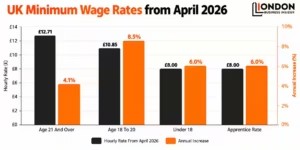
The National Living Wage has increased by 4.1% to £12.71 an hour for workers aged 21 and over from April 2026. Some younger minimum-wage workers received considerably larger percentage increases.
Public-sector earnings have also been growing faster than private-sector earnings in the latest figures. This means the headline UK figure should not be treated as the pay rise every employee can expect.
The important question for workers in 2026 is not simply whether salaries are increasing, but whether those increases are large enough to stay ahead of inflation and improve real household spending power.
Why Are Pay Rises Not Much Higher Than 4%?
Many UK salary increases are currently clustering around the 3% to 4% range because employers are balancing pressure to improve workers’ pay with the rising cost of running a business.
Employers have to consider salaries alongside National Insurance, pensions, energy costs, rent, materials, borrowing costs and other operating expenses.
Increasing salaries substantially above wage growth across an entire workforce can create a significant permanent increase in employment costs.
Inflation also plays an important role. When inflation was particularly high, employees needed much larger increases simply to protect their purchasing power. As inflation has moderated, pressure for very large percentage increases has also reduced.
The labour market matters too. Employers are more likely to offer bigger rises when they struggle to recruit or retain employees with particular skills.
In occupations where there are many applicants for vacancies, businesses may face less pressure to increase salaries aggressively.
That does not mean pay increases cannot exceed 4%. The National Living Wage itself rose by 4.1% in April 2026, while some public-sector settlements, promotions and employer-specific increases can be substantially higher.
Could UK Pay Rises Be Higher Than Last Year?
Whether workers receive a bigger increase than in the previous year depends heavily on their sector and employer.
UK wage growth has slowed from the unusually high levels seen during the period of intense inflation and labour shortages.
As a result, a return to widespread increases of 6%, 7% or more would require stronger wage pressures than are currently evident across much of the economy.
However, individual workers could still receive considerably larger increases.
Higher rises are more likely where:
- Workers Have Scarce Or Specialist Skills
- Employers Are Struggling To Recruit
- Staff Turnover Is High
- Trade Unions Negotiate Stronger Settlements
- Employees Receive Promotions
- Minimum Wage Changes Force Employers To Adjust Pay
- Companies Need To Maintain Pay Gaps Between Junior And Senior Roles
Someone changing employer can also receive a much larger salary increase than an employee receiving a normal annual review.
For this reason, the national wage-growth figure should be viewed as an economic indicator rather than a prediction of an individual’s next pay rise.
What Are the Chances of Bigger Pay Rises Later in 2026?
Large across-the-board increases later in 2026 appear less likely unless economic conditions change significantly.
Regular earnings were growing at around 3.5% in the latest available figures, showing that wage growth remains positive but is considerably calmer than during the peak cost-of-living period.
Several factors could still push pay higher.
A stronger labour market could increase competition for workers.
Persistent inflation could lead employees and unions to seek larger settlements. Skills shortages in particular industries could also force employers to increase starting salaries and retention packages.
On the other hand, weaker economic growth, higher business costs or rising unemployment could limit employers’ willingness to award larger increases.
Workers should therefore expect significant differences between occupations rather than one nationwide percentage increase.
Are UK Pay Rises Beating Inflation?
Pay is currently growing slightly faster than inflation on average, which means workers have seen a modest improvement in real earnings.
Regular earnings growth was around 3.5% in the three months to July 2026.
CPI inflation stood at 2.9% in July 2026, while CPIH inflation was 3.1%. After adjusting for CPIH inflation, regular real pay growth was approximately 0.6%.
This means average wages were increasing faster than prices, but only by a relatively small margin.
For households, the distinction between nominal and real pay is important.
A 3% salary rise might sound positive, but if living costs also increase by 3%, the worker has gained very little additional purchasing power.
If salaries rise faster than prices, real wages increase and households should theoretically have more money available after maintaining the same standard of living.
What Is Considered A Good Pay Rise In The UK?
There is no percentage that automatically counts as a good pay rise.
The most useful comparison is between the salary increase and inflation.
For example:
- Below Inflation: Purchasing power may decline despite earning more money
- Around Inflation: Purchasing power is broadly maintained
- Above Inflation: The employee receives a real-terms improvement
- Significantly Above Inflation: Usually represents a promotion, skills adjustment, retention increase or particularly strong employer settlement
A 4% increase when inflation is around 3% is therefore very different from a 4% increase when inflation is running at 6%.
Workers should also compare their salaries with similar positions in their industry rather than relying only on the national average.
How Will Higher Salaries Affect The UK Economy?
Higher wages can support the economy because households have more income available to spend.
When real wages increase, workers may have more money available for:
- Food And Household Purchases
- Retail Spending
- Restaurants And Hospitality
- Travel
- Housing Costs
- Entertainment
- Savings
- Debt Repayments
Additional consumer spending can increase revenue for businesses, which may encourage companies to invest, recruit more employees or increase production.
Higher earnings can also strengthen household finances. Workers may be able to save more, reduce borrowing or cope more easily with unexpected expenses.
However, the overall economic impact depends on whether wage increases are genuinely higher than inflation.
If someone receives a 4% salary increase but their living costs rise by a similar amount, they may have very little additional money available to spend.
Will Higher Pay Increase Consumer Spending?
Higher real wages usually give households greater capacity to spend.
This matters because consumer spending represents a major part of economic activity in the UK.
Someone receiving an above-inflation pay increase may decide to spend additional income rather than save all of it. If this happens across millions of households, businesses can benefit from greater demand.
Retailers, restaurants, travel companies, entertainment businesses and service providers could particularly benefit when consumers have more disposable income.
However, the effect may be weaker when households are facing expensive mortgages, rent increases, debt repayments or high household bills. Some people may use their additional salary to rebuild savings rather than immediately increase spending.
Higher wages therefore support consumption, but they do not automatically translate pound-for-pound into additional retail spending.
Could Bigger Pay Rises Push Inflation Higher?
Large wage increases can contribute to inflation in some circumstances, particularly if businesses increase prices to cover higher employment costs.
Labour-intensive industries such as hospitality, retail, social care and some service businesses can be particularly sensitive because employee costs represent a significant proportion of total expenditure.
However, higher wages do not automatically create high inflation.
Businesses can respond to higher labour costs in several ways. They can accept lower profit margins, improve productivity, reduce other expenses, automate processes or increase prices.
The effect also depends on how rapidly wages are rising across the entire economy.
Moderate increases that broadly reflect productivity and inflation are less likely to create serious wage-driven inflation than repeated large increases across many sectors.
How Could Higher Wages Affect Businesses And Employers?
For employees, a pay rise means additional income. For employers, the impact extends beyond the basic increase in salary.
Higher salaries can increase:
- Payroll Costs
- Employer National Insurance Costs
- Pension Contributions
- Overtime Costs
- Holiday Pay
- Other Salary-Linked Benefits
This means even a relatively small percentage increase can create a significant additional annual expense for a company with hundreds or thousands of employees.
Businesses may respond by increasing prices, improving productivity, reducing vacancies or limiting other spending.
There are also advantages.
Competitive salaries can help companies attract skilled workers, improve retention and reduce recruitment costs. Better-paid employees may also be more motivated to remain with their employer rather than searching for another position.
Companies therefore have to balance affordability against the risk of losing workers because salaries have fallen behind the market.
Will Higher Salaries Lead To Higher Prices?
Some businesses may increase prices when employment costs rise, but the relationship is not automatic.
Companies with strong profit margins may absorb some of the additional cost. Others may increase productivity or reduce spending elsewhere.
Businesses operating with narrow margins have fewer options and may need to pass part of the cost on to customers.
The National Living Wage can have a stronger effect on industries employing large numbers of lower-paid workers, including retail, hospitality and social care.
However, wages are only one factor affecting prices. Energy, rent, materials, taxes, transportation and borrowing costs can also influence how much businesses charge customers.
Public-Sector Vs Private-Sector Pay Rises In 2026
Pay growth has differed significantly between the public and private sectors during 2026.
In the three months to July 2026, regular earnings growth was approximately:
Sector Regular Earnings Growth
Public Sector 6.3%
Private Sector 2.9%
Whole Economy 3.5%
The higher public-sector figure should be interpreted carefully because the timing of major pay awards can significantly affect annual comparisons.
Public-sector employees are also covered by different arrangements. Teachers, NHS employees, civil servants and other workers do not automatically receive the same settlement.
Private-sector increases depend more heavily on individual companies, profitability, labour shortages, employee performance and market conditions.
UK Minimum Wage And National Living Wage Increase 2026
The statutory minimum wage increased from 1 April 2026.
The current rates are:
Worker Hourly Rate From April 2026 Annual Increase
Age 21 And Over £12.71 4.1%
Age 18 To 20 £10.85 8.5%
Under 18 £8.00 6.0%
Apprentice Rate £8.00 6.0%
The National Living Wage increase for workers aged 21 and over was 50p an hour.
A full-time minimum-wage worker can therefore earn considerably more over the course of a year than under the previous rate.
The percentage increases for younger workers were substantially larger as part of the continuing movement towards narrowing differences between age-based minimum-wage rates.
NHS Pay Rise 2026
NHS pay remains an important part of the wider UK salary picture because millions of healthcare employees work under nationally determined pay arrangements.
Many NHS employees are covered by Agenda for Change, including:
- Nurses
- Healthcare Assistants
- Midwives
- Paramedics
- Administrative Employees
- Allied Health Professionals
An employee’s final salary depends on their pay band, pay point and applicable award.
Doctors and some other medical professionals are covered by separate pay arrangements, meaning there is no single percentage that can accurately describe the increase received by everyone working in the NHS.
Teacher Pay Rise 2026
Teachers in England have a 3.5% pay award from September 2026, followed by a planned 3% increase from September 2027.
The increase affects the national teacher pay framework, although an individual’s final salary can depend on their position, experience, leadership responsibilities and location.
Teacher salaries are important to the wider pay debate because education employers face the same challenge seen elsewhere in the labour market. Pay needs to remain competitive enough to recruit and retain skilled staff while staying within available budgets.
Civil Service Pay Rise 2026
Civil servants do not receive one automatic national percentage increase.
The 2026 Civil Service pay framework allows departments to make decisions within a maximum 3.5% paybill framework.
Individual outcomes can therefore vary depending on:
- Department
- Grade
- Existing Salary
- Recruitment Difficulties
- Retention Requirements
- Workforce Priorities
Some employees may receive a different percentage from the overall paybill figure because departments can decide how the available funding is distributed.
Supermarket And Major Employer Pay Rises In 2026
Large retailers continue to compete on hourly pay as the statutory wage floor increases.
Examples of announced 2026 hourly rates include:
Employer Standard Rate Higher London Rate
Aldi £13.50 £14.88 Inside M25
Sainsbury's £13.23 £14.54 In London
John Lewis And Waitrose £13.25 £14.80 Inside M25
Paying above the statutory National Living Wage can help retailers recruit employees and retain experienced staff.
It can also create pressure on competing employers because workers may move to businesses offering better hourly rates.
How Do Union Pay Deals Affect Salary Increases?
Trade unions can negotiate with employers over salaries through collective bargaining.
Negotiations may cover:
- Basic Salary
- Hourly Rates
- Overtime
- Allowances
- Bonuses
- Working Conditions
- Pension Arrangements
Where workers are covered by a collective agreement, the final negotiated settlement may determine their increase rather than an individual discussion with their manager.
Industrial action or the possibility of industrial action can also influence negotiations, although a larger increase is never guaranteed.
Do Employers Have To Give Workers A Pay Rise?
There is no general UK law requiring every employer to provide an annual salary increase.
An employee may have a stronger entitlement where the increase is required because of:
- National Minimum Wage Changes
- Contractual Terms
- A Collective Agreement
- An Existing Pay Arrangement
If someone’s hourly rate falls below the legal minimum after statutory rates increase, the employer must raise it sufficiently to meet the new minimum.
For employees earning above the minimum wage without a contractual entitlement, annual increases are normally determined by the employer.
How Much Extra Will Workers Take Home After A Pay Rise?
A salary increase does not mean an employee receives the entire additional amount in their bank account.
The additional gross salary may be affected by:
- Income Tax
- National Insurance
- Pension Contributions
- Student Loan Repayments
- Salary Sacrifice Arrangements
- Other Payroll Deductions
For example, someone receiving an extra £1,000 in annual gross salary will normally receive less than £1,000 in additional take-home pay.
The exact amount depends on the worker’s total income, tax code and personal circumstances.
Employees should therefore compare both their new gross salary and expected net monthly salary when evaluating an increase.
How Does A Pay Rise Affect Tax, National Insurance And Pensions?
When salary increases, Income Tax and National Insurance deductions can also increase.
Pension contributions may rise if they are calculated as a percentage of pensionable salary.
A larger salary increase could also move part of someone’s income into a higher tax band. Importantly, this does not mean their entire salary becomes subject to the higher rate.
Only the portion falling within the higher band is taxed at that rate.
Employees should check their first payslip after an increase to make sure the new salary and deductions have been applied correctly.
They should check:
- New Hourly Rate Or Annual Salary
- Effective Date
- Back Pay
- Tax Code
- National Insurance
- Pension Contributions
- Overtime
- Allowances
- Bonuses
What Could Affect UK Pay Rises For The Rest Of 2026?
The direction of salaries during the remainder of 2026 will depend on several economic factors.

Inflation
- If inflation remains elevated, workers may continue asking for increases that protect their real income.
Employment Levels
- A tight labour market normally gives employees more negotiating power because companies find it harder to replace workers.
Economic Growth
- Stronger economic growth could give companies more confidence to increase salaries and recruit.
Business Costs
- Higher taxes, energy costs, borrowing expenses and other operating costs can reduce the amount businesses have available for salary increases.
Skills Shortages
- Employers may need to offer significantly larger increases for occupations where experienced candidates are difficult to find.
Productivity
- Businesses can generally sustain stronger wage growth more easily when workers are producing more value per hour.
Public-Sector Funding
- Government spending decisions will continue to influence future settlements for teachers, healthcare employees, civil servants and other public-sector workers.
What Could UK Pay Rises Look Like In 2027?
It is too early to state one definitive average pay rise for 2027.
The direction will depend largely on inflation, economic growth, employment conditions and the decisions made by individual employers.
For minimum-wage workers, the Government continues to use the National Living Wage’s relationship with median earnings as an important part of determining future rates.
If inflation remains relatively controlled and wage growth continues around current levels, widespread increases substantially above recent averages may be less likely.
However, employees in shortage occupations, workers receiving promotions and people moving employers could continue to secure considerably larger increases.
The important measure will remain real pay growth. A smaller salary increase during a period of low inflation can improve living standards more than a much larger rise during a period of rapidly increasing prices.
FAQs
What Is The Average UK Pay Rise In 2026?
Regular earnings were growing by around 3.5% annually in the three months to July 2026. This is an economy-wide measure rather than a guaranteed individual pay rise.
Why Are UK Pay Rises Around 3% To 4%?
Inflation has moderated and employers are balancing salary increases against National Insurance, pensions and other business costs. The exact increase varies considerably by sector and employer.
Will Pay Rises Be Higher Than In 2025?
Some workers could receive larger increases, but there is no indication that every employee will. Skills shortages, promotions, union settlements and employer performance can produce increases above the national average.
Is A 4% Pay Rise Good In The UK?
A 4% increase can represent a real improvement when inflation is below 4%. Whether it is competitive also depends on the employee’s occupation, current salary and market rate.
Could Pay Rises Reach 5% Or More?
Yes. Individual pay settlements can exceed 5%, particularly following promotions, recruitment difficulties, union negotiations or adjustments to lower-paid roles. This does not mean national average wage growth will reach 5%.
Do Higher Wages Increase Inflation?
They can contribute to inflation if businesses respond to higher labour costs by raising prices. However, wages are only one of many factors affecting inflation.
How Do Higher Salaries Help The UK Economy?
Higher real salaries can increase household disposable income, support consumer spending, improve savings and reduce financial pressure. The benefit is strongest when earnings rise faster than the cost of living.






[…] Increasing employee wages […]