
Nottinghamshire Chocolatier Ceases Trading and Enters Liquidation
 • July 1, 2026
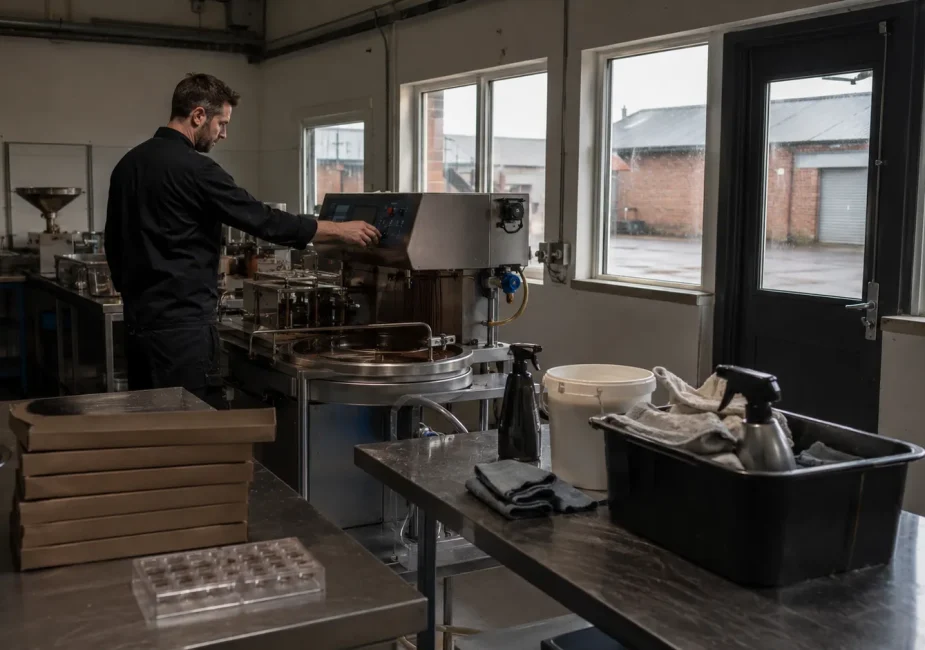
Editorial note: The Gourmet Chocolate Pizza Co has stopped trading, but the registered company has not yet been dissolved. Companies House currently records The Gourmet Chocolate Pizza Co. Limited as being in liquidation.
A Nottinghamshire chocolatier known for handmade chocolate pizzas and novelty confectionery has ceased trading after operating from Cotgrave for many years.
The Gourmet Chocolate Pizza Co confirmed the closure in a short statement on its official website. The registered company, The Gourmet Chocolate Pizza Co. Limited, subsequently entered creditors’ voluntary liquidation on 12 March 2026.
The company remains on the Companies House register with the status “Liquidation”. It was incorporated on 8 July 2008, meaning that normal trading ended after more than 17 years as a registered business.
Quick Answer:
The Gourmet Chocolate Pizza Co has ceased trading and is no longer accepting orders through its official website.
The Gourmet Chocolate Pizza Co. Limited entered creditors’ voluntary liquidation on 12 March 2026. Louise Williams and Luke Brough of Opus Restructuring LLP were appointed as joint liquidators on the same date.
The company’s closure statement thanked customers for their support but did not give a detailed reason for the insolvency. Customers who paid for goods that were not delivered should retain their order records, contact their card or payment provider promptly and ask the joint liquidators how to register any money owed.
Key Takeaways:
- The Gourmet Chocolate Pizza Co has ceased trading: The Cotgrave-based Nottinghamshire chocolatier is no longer accepting orders, and its official website confirms that normal trading has ended.
- The company entered creditors’ voluntary liquidation on 12 March 2026: Companies House records show that Luke Brough and Louise Williams of Opus Restructuring LLP were appointed as joint liquidators.
- The business operated for more than 17 years as a registered company: The Gourmet Chocolate Pizza Co. Limited was incorporated on 8 July 2008 and became known for handmade chocolate pizzas, personalised confectionery and novelty gifts.
- No detailed reason for the closure has been publicly confirmed: The company thanked customers for their support but did not explain the specific financial or commercial pressures that led to the decision.
- Ceasing trading and entering liquidation are different stages: Ceasing trading means the business stopped operating, while creditors’ voluntary liquidation is the formal legal process used to wind up the company and deal with its assets and debts.
- Customers with undelivered orders should act promptly: They should keep order confirmations and payment records, contact their card provider or payment platform, and ask the appointed liquidators how to submit a creditor claim.
- Specialist chocolate-making equipment has been offered for sale: Machinery linked to chocolate tempering, moulding, wrapping and refrigeration was advertised as part of the liquidation process.
- The closure marks the loss of a distinctive Nottinghamshire food producer: The company had built a recognisable local and national presence through its chocolate pizza concept, seasonal products and corporate gifting range.
- There is no verified announcement that the business will reopen: Companies House currently lists The Gourmet Chocolate Pizza Co as being in liquidation, not as an active trading company.
Which Nottinghamshire Chocolatier Has Ceased Trading in Cotgrave?

The business is The Gourmet Chocolate Pizza Co. Limited, a private company registered under company number 06640894.
Companies House lists the company’s business activity as the manufacture of cocoa and chocolate confectionery. It was incorporated on 8 July 2008 and is currently recorded as being in liquidation.
The company operated from Cotgrave in Nottinghamshire and became known for turning solid chocolate into pizza-shaped gifts. Regional business reporting described it as an East Midlands novelty chocolate brand with a recognisable local identity.
What Was The Gourmet Chocolate Pizza Co Known For?
The Gourmet Chocolate Pizza Co specialised in chocolate products designed to look and feel different from conventional boxed confectionery.
Its best-known items were chocolate pizzas made in various sizes and flavours. These were divided into slices, decorated with toppings and placed in pizza-style boxes. The presentation helped make them suitable for birthdays, Christmas, corporate gifts and other celebrations.
The company also produced chocolate slices, popcorn bars and other novelty gifts for retail and corporate customers. Industry reporting from 2018 said its products were sold online, through department stores, by independent shops and through other online retailers.
That distribution reflected the company’s development beyond a small local gift producer. Its products reached customers through several sales channels while manufacturing remained connected to Nottinghamshire.
How Long Did The Gourmet Chocolate Pizza Co Trade?
The Gourmet Chocolate Pizza Co. Limited was incorporated on 8 July 2008. Normal trading therefore ended after the company had been registered for more than 17 years. However, the company remains on the register while the liquidation process continues.
Historical reporting shows that the company invested in production and packaging equipment during its trading years. In 2018, it installed an ULMA FR 200 horizontal flow-wrapping machine at its Nottingham production facility to increase packaging capacity during periods of high demand.
In 2018, The Gourmet Chocolate Pizza Co installed new wrapping machinery at its Nottingham production facility to increase output. At the time, the business reported growing demand for its handmade chocolate pizzas, particularly during the Christmas trading period.
The machinery was intended to improve production speed and packaging efficiency. The company also typically recruited additional seasonal employees to manage festive demand, according to the same industry report.
These details help explain why the closure has been seen as the end of a locally recognised confectionery business rather than the disappearance of a short-lived online brand.
What Did the Company Say About the Closure?
The company posted a short statement on its official website confirming that it had ceased trading. It thanked customers for their custom over the years and offered them its best wishes for 2026.
The message did not explain:
- The immediate events that led to the closure
- Whether all orders had been completed
- How many employees were affected
- Whether a sale or rescue had previously been considered
- The specific commercial pressures behind the insolvency
It is therefore important to separate what has been officially confirmed from broader assumptions about the business.
The company ceased trading, entered liquidation and had specialist production equipment advertised for auction. However, its brief customer statement did not identify one particular event or cost as the reason for the closure.
When Did the Company Enter Liquidation?

Companies House records show that creditors’ voluntary liquidation commenced on 12 March 2026.
Luke Brough and Louise Williams, both of Opus Restructuring LLP, are named as the appointed insolvency practitioners. Their appointments also took effect on 12 March 2026.
The Gazette separately records the winding-up resolution and the appointment of the joint liquidators.
Documents filed at Companies House on 20 March included:
- A statement of affairs
- The appointment of voluntary liquidators
- An extraordinary resolution to wind up the company
- A change to the company’s registered office
The registered office was moved to an address connected with Opus Restructuring LLP as part of the liquidation administration.
Closure and Liquidation Timeline
| Date | Development | Significance |
|---|---|---|
| 8 July 2008 | The company was incorporated | Marks the beginning of its history as a registered limited company |
| 10 March 2026 | Regional reporting confirmed the website closure notice | Public confirmation that normal trading had ended |
| 12 March 2026 | Creditors’ voluntary liquidation commenced | The company formally entered the winding-up process |
| 20 March 2026 | Liquidation documents were filed | The statement of affairs, resolution and appointments became part of the public record |
The timeline shows that the public closure announcement and the formal liquidation process were connected but legally distinct developments.
What Does Creditors’ Voluntary Liquidation Mean?
A creditors’ voluntary liquidation, commonly shortened to CVL, is a formal process used when a company cannot pay its debts and its shareholders agree that it should be wound up.
Government guidance says at least 75 per cent of shareholders by value must support the winding-up resolution. An authorised insolvency practitioner is then appointed to administer the process.
Once appointed, a liquidator takes control of the company’s affairs. The liquidator may:
- Sell company assets
- Deal with outstanding contracts
- Review the reasons for the insolvency
- Keep creditors informed
- Distribute available funds according to insolvency rules
- Complete the process that may eventually remove the company from the register
In a creditors’ voluntary liquidation, the liquidator acts in the interests of creditors rather than the company’s directors.
Ceasing trading is not, by itself, the same as entering liquidation. A company may stop operating before a formal insolvency procedure begins. In this case, however, both developments have been confirmed.
What Happened to the Chocolate-Making Equipment?

Specialist machinery connected with The Gourmet Chocolate Pizza Co was advertised for sale by BPI Auctions on behalf of the proposed liquidator.
The equipment listed included a chocolate tempering machine, a continuous mixing and melting tank, chocolate-wheel moulding machinery, wrapping equipment, tray-sealing machinery and commercial refrigeration.
The sale of machinery is consistent with the normal role of a liquidator, who may realise company assets and use the proceeds to meet liquidation costs and make payments to creditors where funds permit.
The auction listing does not, by itself, show how much money was raised or how much creditors may ultimately receive. Those outcomes depend on asset values, secured claims, liquidation expenses and the wider financial position of the company.
Why Did The Gourmet Chocolate Pizza Co Close?
The most accurate answer is that no detailed cause was given in the company’s public closure message.
The decision to enter a creditors’ voluntary liquidation confirms that the company could not continue meeting its financial obligations. Government guidance defines a CVL as a procedure available when a company cannot pay its debts.
That does not establish which specific pressures caused the financial position.
Independent confectionery businesses can face challenges involving ingredient prices, energy, wages, packaging, delivery costs, changing demand and competition. These factors may provide useful industry context, but they should not be presented as the confirmed explanation for this closure without a direct statement or supporting insolvency evidence.
Similarly, it would be inappropriate to attribute the closure to management decisions, declining orders or cocoa prices alone unless those conclusions are supported by the liquidators’ findings.
Why the Closure Matters to Nottinghamshire?

The loss of The Gourmet Chocolate Pizza Co removes a distinctive producer from Nottinghamshire’s food-manufacturing sector.
Small and medium-sized manufacturers can contribute to local economies by creating skilled roles, buying services from nearby suppliers and building associations between a product and its place of origin.
The company’s products also provided a point of difference. Chocolate pizzas were designed to be visually recognisable, easy to share and suitable for gifting. The packaging and product concept helped the brand stand out in a crowded confectionery market.
Its closure also demonstrates the vulnerability of specialist producers. A company may build a recognisable name and trade for many years but still face circumstances that make continued operation impossible.
For customers who bought the products for birthdays, Christmas or corporate occasions, the closure represents the disappearance of a familiar gifting option. For the local business community, it marks the end of a Nottinghamshire manufacturing operation with a history stretching back to 2008.
What Should Customers with Outstanding Orders Do?
There is no public confirmation that every order placed before the closure was affected. However, anyone who paid for goods that were not supplied should act promptly.
Customers should first collect and retain:
- Their order confirmation
- Payment receipt or bank statement
- Emails exchanged with the company
- Expected delivery information
- Evidence that the order did not arrive
- Any attempts made to contact the business
A customer who has paid for an undelivered product may be treated as a creditor. The appointed insolvency practitioners can explain how to submit evidence of the amount owed.
Customers should also contact their bank, card provider or payment platform.
Section 75 of the Consumer Credit Act may protect qualifying credit-card purchases where the individual item or set of items cost more than £100 and up to £30,000. Chargeback may be available for some debit, credit or prepaid card transactions, although it is a card-scheme process rather than the same statutory protection as Section 75.
Payment-platform protection may also apply where an order was placed through PayPal or an online marketplace. Eligibility and deadlines depend on the payment method and the facts of the purchase.
This information is general guidance and should not be treated as legal or financial advice.
Conclusion
The news that a Nottinghamshire chocolatier ceases trading marks the end of a locally recognised confectionery business that developed an unusual product idea into a long-running brand.
The Gourmet Chocolate Pizza Co built its identity around chocolate pizzas, novelty gifts and products designed for sharing and celebrations. Its longevity, investment in production and presence across several retail channels gave it a distinctive position within Nottinghamshire’s business community.
Its closure is now part of a formal insolvency process. While wider commercial pressures may have influenced events, the exact underlying causes should not be stated as fact unless confirmed through official findings.
For customers and creditors, the practical priority is to keep supporting evidence, use any available payment protection and follow information issued by the liquidators.
Frequently Asked Questions
Which Nottinghamshire chocolatier has ceased trading?
The Gourmet Chocolate Pizza Co, a confectionery manufacturer associated with Cotgrave, has ceased trading and entered liquidation.
Is The Gourmet Chocolate Pizza Co still accepting orders?
No. Its official website states that the company has ceased trading, and Companies House lists its status as liquidation.
Why did The Gourmet Chocolate Pizza Co close?
Its public closure statement did not give a detailed reason, although entering a CVL confirms that the company could not continue paying its debts.
What products was the company known for?
It was best known for handmade chocolate pizzas, slices and other novelty chocolate gifts presented in distinctive packaging.
What should customers do about an undelivered order?
Customers should keep their purchase records, contact their bank or payment platform and ask the liquidators how to register a creditor claim.
Could The Gourmet Chocolate Pizza Co reopen?
There is no verified announcement of a reopening, and the company is undergoing a formal liquidation process.
Has The Gourmet Chocolate Pizza Co been dissolved?
No. As of 1 July 2026, Companies House lists The Gourmet Chocolate Pizza Co. Limited as being in liquidation. It remains on the company register while the winding-up process continues.
How We Checked?
This article was checked using a source hierarchy that prioritised official company records over secondary reporting.
First, the company’s official website was reviewed to confirm that it had ceased trading. The Companies House overview, insolvency record and filing history were then checked to verify the company number, incorporation date, current status, winding-up date and liquidator appointments.
The Gazette was used as an additional official record of the winding-up resolution and insolvency-practitioner appointments. The BPI Auctions listing was checked to confirm that specialist chocolate-production machinery had been offered for sale.