
Evri Scam Text Message: How to Spot Phishing Delivery Fees?
 • June 24, 2026
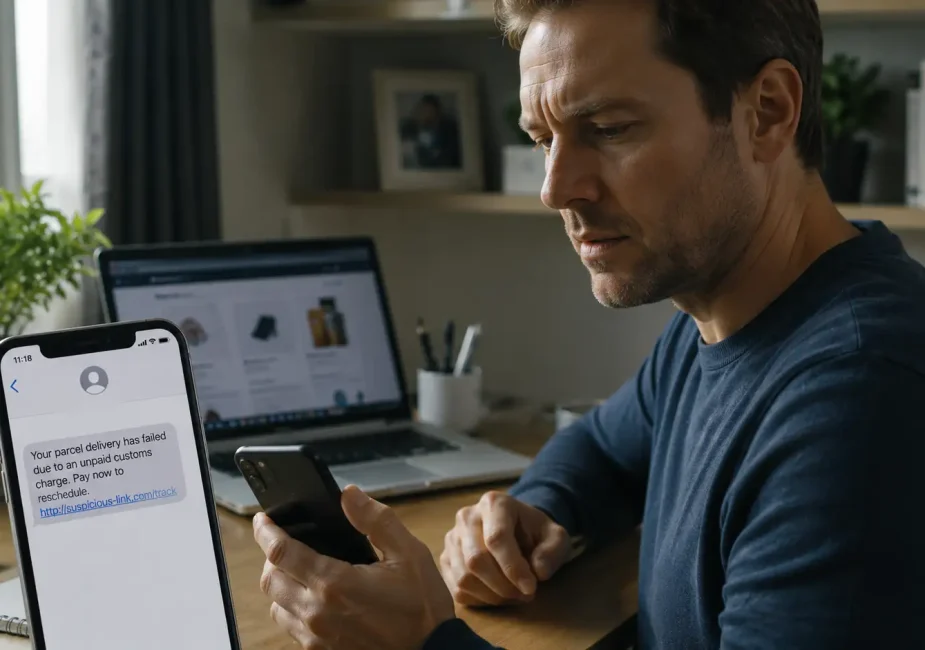
An Evri scam text message is a phishing SMS (smishing) designed by cybercriminals to impersonate the UK delivery service Evri.
These messages manipulate consumers by claiming a parcel cannot be delivered due to an invalid address or an unpaid redelivery fee, directing victims to a malicious website.
Genuine Evri tracking texts originate strictly from the sender ID “Evri” and will never demand a dynamic payment or redirect you to a third-party server (like @datapacket).
If you enter banking details on a suspicious platform, immediately call your bank via 159 and report the text directly to the UK’s reporting ecosystem by forwarding it to 7726
Key Takeaways:
- Verified Sender & Link Formats: True Evri text updates show “Evri” as the alphanumeric sender, not an unknown mobile or international number. Legitimate hyperlinks typically utilise the [https://evri.link/](https://evri.link/) format.
- Zero SMS Fee Policy: Evri explicitly states that they will never request credit card payments, clearance charges, or parcel redelivery fees directly through a text link.
- The “Reply Y” Bypass Tactic: Phishing texts prompting you to reply with “Y” or “Yes” are designed to trick your mobile carrier’s automated spam filter into enabling a malicious hyperlink.
- No Software Mandatory Requirements: Authentic notifications will never contain download links or force you to install third-party applications (.apk files) to trace your parcel status.
- Crucial UK Reporting Channels: Suspicious texts should be forwarded to 7726 (the free mobile spam service), scam emails sent to report@phishing.gov.uk, and financial losses should be reported to Action Fraud on 0300 123 2040.
| Feature / Metric | Genuine Evri Communications | Fraudulent / Scam Texts |
|---|---|---|
| Sender Identification | Displays strictly as "Evri" rather than a standard mobile number. | Often appears from a random mobile number, hidden sender, or international number. |
| Payment Requests | Will never ask customers to pay a redelivery fee through a text message link. | Frequently demands a small payment, usually between £1 and £3, to supposedly release or redeliver a parcel. |
| Hyperlink Intent | Only sends tracking-related links that direct customers to official parcel tracking services. | Redirects users to fake websites designed to collect payment details, passwords, or personal information. |
| Software Requests | Will never prompt customers to install an application to receive or track a parcel. | May encourage app downloads or software installations that could compromise device security. |
| Delivery Updates | Provides genuine parcel status information linked to an active shipment. | Claims there is a delivery problem even when no parcel is expected. |
| Language Quality | Uses clear, professional, and consistent language. | Often contains spelling mistakes, unusual grammar, or awkward wording. |
| Urgency Level | Primarily informational and focused on parcel updates. | Creates pressure using phrases such as "Act Now", "Final Notice", or "Immediate Payment Required". |
| Personal Information Requests | Does not request sensitive banking credentials through SMS. | Attempts to collect card details, passwords, addresses, or banking information. |
| Website Destination | Directs customers to official Evri-related services. | Sends users to lookalike domains that imitate legitimate courier websites. |
| Purpose of Message | Keeps customers informed about parcel delivery progress. | Seeks financial |
Why Are Evri Scam Text Messages Becoming So Common?

Parcel delivery scams have become increasingly common as online shopping continues to grow across the UK. Criminals understand that millions of parcels are delivered every week, making delivery notifications one of the most believable types of phishing attempts.
Scammers exploit the uncertainty that often surrounds parcel deliveries. Many consumers may be expecting multiple deliveries from different retailers and therefore may not immediately question a text claiming that a package requires further action.
The rise of SMS phishing, often referred to as “smishing”, has also contributed to the increase in delivery-related scams. Unlike email phishing, text messages often appear more urgent and are frequently opened within minutes of being received.
Cybercriminals continuously adapt their tactics to mimic trusted brands such as Evri, making fraudulent messages appear increasingly convincing. They often use logos, delivery terminology, and realistic language to persuade recipients to click malicious links.
Lisa Forte, partner at Red Goat Cyber Security and a recognised cybersecurity expert, has repeatedly highlighted that successful phishing attacks often rely on creating urgency and exploiting trust in familiar organisations. Consumers are more likely to react quickly when they believe a parcel delivery may be affected.
Source: https://redgoatcybersecurity.com
How Will Evri Legitimately Contact Customers?
Understanding how Evri genuinely communicates with customers is one of the most effective ways to identify phishing attempts.
Evri may contact customers through email or SMS regarding parcel tracking, delivery updates, ongoing claims, or delivery notifications. These communications generally relate to an active parcel within the company’s network.
Importantly, legitimate communications follow specific patterns that consumers can verify.
Official Email Domains
Evri states that genuine emails typically originate from recognised domains such as:
- @evri.com
- @hermes-europe.co.uk
- @myhermes.co.uk
Emails arriving from unfamiliar or suspicious domains should be treated cautiously.
Genuine SMS Communications
Authentic Evri text messages typically:
- Come from “Evri” as the sender.
- Include tracking-related information.
- Direct users to official Evri tracking services.
- Relate to an existing parcel journey.
The Official Evri SMS Link Format
When Evri sends an authentic text message, the hyperlink included will typically follow a very specific pattern: [https://evri.link/](https://evri.link/)
However, a massive warning remains: Do not rely on the URL format alone. Modern cybercriminals are highly adept at spoofing domain names or using lookalike characters to mimic this exact string. If you feel any uncertainty about a delivery, do not click the link and never enter your personal information. Instead, open your browser, go straight to the official website, and input your tracking code manually.
Evri has also stated that its text messages do not ask customers to pay for delivery rescheduling.
What Are the Most Common Signs of an Evri Phishing Text?
Although phishing messages have become more sophisticated, they often contain warning signs that can help consumers identify them before any damage occurs.
Look for Broken Phrases and Awkward Syntax
While some cybercriminals use sophisticated templates, many international scam campaigns still contain glaring grammatical errors, poorly written sentences, and unusual punctuation.
When analysing a message, keep a lookout for these exact phrases and structural errors commonly flagged in real-world Evri scams:
- Awkward phrasing: Watch out for unnatural terms like “Delivery Informed”, “is missed delivery”, or “wanting to tracking the shipment”.
- Grammar errors: Text alerts that include non-standard grammar like “in the process of transportation” or hyphenating words incorrectly (e.g., “can-not”) are immediate red flags.
- Random placeholders: Many automated scam scripts glitch, leaving random letters or strings like “qqq” inside the body text.
Corporate communications from logistics firms pass through strict quality assurance; random letters and broken syntax are clear indicators of a phishing script.
Generic Greetings
Legitimate organisations often personalise communications using customer information associated with an order.
Scam messages frequently use generic phrases such as “Dear Customer” or avoid using names entirely.
Suspicious Links
One of the most significant warning signs is an unfamiliar web address.
Cybercriminals frequently create domains that resemble official company websites but contain subtle alterations, additional characters, or unusual extensions.
Consumers should avoid clicking suspicious links and instead navigate directly to Evri’s official website.
Unusual Sender Information
Authentic Evri messages generally originate from “Evri” rather than an unknown mobile number.
Messages from random numbers, particularly international numbers, should be approached with caution.
Urgent Calls to Action
Scammers rely heavily on urgency.
Phrases such as:
- “Immediate action required”
- “Final warning”
- “Parcel will be returned”
- “Pay now to avoid cancellation”
are designed to encourage impulsive decisions rather than careful verification.
Genuine Evri Message vs Scam Message
| Feature | Genuine Evri Message | Scam Message |
|---|---|---|
| Sender | Evri | Mobile number or unknown sender |
| Purpose | Parcel tracking updates | Payment requests |
| Language | Professional and clear | Often contains errors |
| Links | Official tracking pages | Suspicious websites |
| Urgency | Informational | High-pressure language |
| Payment Requests | Generally not requested by SMS | Frequently requested |
Why Do Scammers Ask for Small Delivery Fees?
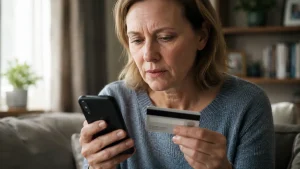
Many consumers wonder why criminals request very small amounts, often less than £5.
The answer lies in psychology.
A small fee appears reasonable and less suspicious than a large request. Recipients may believe that paying a minor charge is the easiest way to resolve a delivery issue.
The payment itself is often secondary. What scammers truly seek is access to payment card details, billing information, and personal data.
By presenting the fee as insignificant, criminals increase the likelihood that victims will proceed without carefully examining the legitimacy of the request.
What Happens If Someone Clicks an Evri Scam Link?
Clicking a phishing link does not automatically mean that information has been compromised. However, it significantly increases the risk of exposure to fraud.
Depending on the scam, the link may:
- Redirect users to a fake website.
- Request personal information.
- Collect payment details.
- Attempt to install malware.
- Harvest login credentials.
Consumers who simply click the link but provide no information may still wish to run security checks on their device and monitor for unusual activity.
However, individuals who submit personal or financial information should take immediate action to secure their accounts.
Can Evri Ever Ask Customers to Pay for Redelivery by Text Message?
According to Evri’s published cybersecurity guidance, its text messages do not request payment for delivery rescheduling.
This is an important distinction because many phishing campaigns specifically claim that a small fee must be paid before delivery can proceed.
Consumers receiving such requests should treat them with caution and independently verify the status of any parcel through official channels.
Graeme Stewart, Head of Public Sector at Check Point Software UK, has noted that cybercriminals frequently exploit trusted brands because familiarity increases the likelihood that recipients will comply with requests without verifying their authenticity.
Source: https://www.checkpoint.com
How Can Customers Verify Whether an Evri Message Is Genuine?
The safest way to verify a message is to avoid using any links contained within it.
Instead, consumers should visit Evri’s official website directly and use the tracking information associated with their order.
Several checks can help determine authenticity:
Verification Checklist for Suspicious Evri Messages
| Verification Step | Why It Matters |
|---|---|
| Check sender name | Genuine SMS usually shows "Evri" |
| Review grammar | Errors may indicate fraud |
| Inspect website address | Fake domains often mimic official sites |
| Verify parcel status independently | Confirms whether delivery issues exist |
| Avoid urgent decisions | Reduces phishing success rates |
| Contact Evri directly | Provides official confirmation |
Consumers should also compare the message against previous legitimate communications received from Evri.
When uncertainty remains, contacting Evri directly through official support channels is always safer than interacting with a suspicious message.
What Are Examples of Fake Evri Text Messages?
Scammers frequently recycle similar templates when impersonating delivery companies. Although the wording may vary, the underlying objective remains the same: convincing recipients to click a link and provide personal or financial information.
Understanding the most common examples can help consumers recognise fraudulent messages before taking action.
Fake Delivery Fee Request
One of the most widespread scams claims that a parcel cannot be delivered until a small fee is paid. The amount requested is often between £1 and £3, making the charge appear legitimate and insignificant.
A typical message may state that a package is being held at a depot and will only be released after payment has been received. The text then includes a link to a fake website that closely resembles Evri’s branding.
Missed Parcel Scam Messages
Another common tactic involves informing recipients that a delivery attempt was unsuccessful. The message encourages the recipient to click a link to arrange a redelivery.
These scams are particularly effective because many consumers are genuinely expecting parcels and may not immediately question the notification.
Fraudulent Tracking Notifications
Some phishing messages focus entirely on parcel tracking. They may claim that a package is delayed, lost, or awaiting customs clearance.
The tracking information often appears realistic, but the associated link redirects users to a fraudulent website designed to collect personal information.
Consumers should remember that legitimate tracking updates can always be verified independently through official delivery channels.
The “Reply Y” Text Tactic
If you receive an SMS that asks you to “Please reply Y” or input a quick text response to confirm a package, exercise extreme caution. Scammers use this specific tactic to bypass the built-in security features added by your mobile phone network provider.
By tricking you into replying, the network’s spam filter assumes you have a trusted relationship with the sender, which subsequently turns a dead, unclickable link into an active, malicious hyperlink.
Legitimate texts from Evri are sent via a verified sender ID and will never be marked as potential spam by your network provider, meaning they never need to request a bypass reply from you.
What Should Someone Do After Receiving an Evri Scam Text Message?
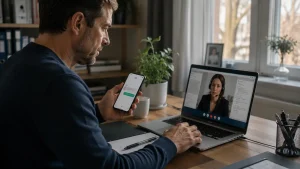
Receiving a suspicious text message does not automatically mean that a person has become a victim of fraud. The most important step is to avoid interacting with the message.
Consumers should refrain from:
- Clicking any links
- Calling numbers included in the message
- Downloading attachments
- Providing personal information
- Making payments
Instead, the message should be independently verified through official channels.
If a parcel delivery is expected, recipients can check the status directly through Evri’s website or the retailer from which the purchase was made.
Deleting the message without taking further action may prevent accidental interaction later. However, reporting the scam can also help authorities and organisations identify emerging fraud campaigns.
What Should Someone Do If They Have Already Clicked the Link?
Many consumers panic after clicking a suspicious link. However, the appropriate response depends on what actions were taken after opening the website.
If no information was entered, the risk may be limited. Nevertheless, running a security scan and monitoring devices for unusual behaviour is advisable.
If personal or financial information was submitted, immediate action becomes much more important.
Immediate Security Steps
Consumers who entered information should:
Change any passwords that may have been compromised, particularly if the same password is used across multiple accounts.
Review account activity for signs of unauthorised access and enable multi-factor authentication where possible.
Any suspicious transactions or login attempts should be investigated promptly.
Protecting Financial Information
If banking or card information was entered, the relevant financial institution should be contacted immediately.
Banks can:
- Monitor for suspicious activity
- Freeze cards if necessary
- Issue replacement cards
- Help prevent unauthorised transactions
Quick action significantly reduces the likelihood of financial losses.
How Can Suspicious Evri Text Messages Be Reported?
Reporting scam messages serves an important purpose beyond protecting the individual recipient. Every report helps organisations identify emerging threats and protect other consumers.
Suspicious messages can often be reported through:
- Mobile network reporting services
- National fraud reporting systems
- Delivery company reporting channels
- Cybercrime reporting portals
Providing screenshots, phone numbers, and website addresses can assist investigations.
Even if no information was shared, reporting remains worthwhile because it helps authorities track phishing campaigns and identify patterns.
How Can Consumers Report Fraudulent Calls, Emails, and Social Media Messages?
Phishing attacks are not limited to text messages. Criminals frequently operate across multiple communication channels.
Consumers who receive suspicious communications should consider reporting them through the appropriate channels.
Common Reporting Options in the UK
| Scam Type | Recommended Reporting Method |
|---|---|
| Suspicious Text Message | Mobile provider spam reporting service |
| Phishing Email | National Cyber Security Centre reporting service |
| Fraudulent Phone Call | Action Fraud or telecom provider |
| Fake Social Media Profile | Report directly to the platform |
| Financial Fraud | Contact bank immediately |
| Identity Theft Concerns | Report to Action Fraud |
Will Evri Ever Ask Me to Download an App via Text?
No. Evri’s official cybersecurity guidelines state clearly that they will NEVER prompt you to download or install an application via an SMS link.
If a text message claims you need to download a tracking app, update a parcel management application, or install a file to view a missed delivery invoice, it is a malicious attempt to install malware on your device.
Only download official applications directly from the Google Play Store or Apple App Store never from a link sent via text.
How Does Evri Protect Customer Data and Online Accounts?
Protecting customer information is a critical responsibility for any delivery company handling large volumes of personal data.
Evri has outlined several measures designed to safeguard customer information and reduce exposure to cyber threats.
These measures include monitoring for suspicious account activity, conducting security testing on systems that process customer data, and working with partners to remove fake websites and fraudulent social media profiles.
The company also implements internal controls that restrict access to customer information and ensure compliance with UK data protection requirements, including GDPR obligations.
While organisations invest heavily in cybersecurity, consumers also play an important role by remaining vigilant and reporting suspicious communications when they arise.
What Practical Steps Can Help Prevent Parcel Delivery Scams?

Preventing parcel delivery scams often comes down to adopting simple online safety habits.
Consumers can significantly reduce their risk by treating unexpected messages with caution and verifying requests independently.
Some of the most effective protective measures include:
Best Practices for Avoiding Delivery Scams
| Safety Measure | Benefit |
|---|---|
| Verify parcel updates through official websites | Avoids fake links |
| Enable multi-factor authentication | Improves account security |
| Keep devices updated | Reduces malware risks |
| Avoid sharing information via SMS links | Prevents data theft |
| Monitor bank accounts regularly | Detects fraud quickly |
| Use strong unique passwords | Protects online accounts |
Cybercriminals continuously adapt their tactics, but these fundamental security practices remain highly effective against most phishing attempts.
Why Is Cyber Security Awareness Important for Online Shoppers?
Online shopping has become a routine part of daily life for many UK consumers. As convenience increases, so does the opportunity for criminals to exploit delivery-related communications.
Cyber security awareness helps individuals recognise warning signs before becoming victims of fraud.
Rather than relying solely on technology to identify threats, informed consumers can make better decisions when confronted with suspicious emails, text messages, or phone calls.
Awareness is particularly important because phishing attacks often target human behaviour rather than technical weaknesses. Understanding how scammers operate makes it easier to identify manipulation tactics such as urgency, fear, and false authority.
As delivery scams continue to evolve, cyber awareness remains one of the most effective forms of protection available to consumers.
Conclusion
An Evri scam text message is designed to imitate genuine parcel delivery communications in order to steal personal information, financial details, or account credentials.
While these scams can appear convincing, there are usually warning signs such as suspicious links, urgent payment requests, unusual sender information, or requests for redelivery fees.
Consumers can significantly reduce their risk by verifying parcel updates through official channels, avoiding unexpected links, and reporting suspicious messages.
As phishing techniques continue to evolve, staying informed and practising good cyber security habits remain essential for protecting personal information and online accounts.
Frequently Asked Questions
Will Evri ever ask for a delivery or redelivery fee via text message?
No. Evri explicitly states that they will never request credit card payments or redelivery fees directly through an SMS text link.
What is the official link format used in genuine Evri text messages?
Legitimate tracking hyperlinks sent by the company typically utilize the [https://evri.link/](https://evri.link/) web address format.
Why do scammers ask me to “Reply Y” or “Yes” to a text message?
Fraudsters use this tactic to trick your mobile carrier’s automated spam filters into marking the sender as safe, which activates the malicious link.
Can a fraudulent delivery text message install malware on my smartphone?
Yes. Phishing links can direct you to unsafe sites that attempt to install malicious software or push harmful application downloads.
How can I report a suspicious Evri scam text message in the UK?
You should forward the suspicious text message directly to 7726, which is a free mobile spam reporting service across major UK networks.
Does Evri investigate reported phishing attempts and scam messages?
Yes. Evri actively analyzes customer reports and works closely with security partners to investigate threats and take down fraudulent websites.