
Carole Railton Islington House Sale: Why a 75-Year-Old Property Owner Chose Renting Over Buying Again?
 • June 5, 2026
Key Takeaways:
- Carole Railton purchased her Islington property in 1989 for approximately £62,000.
- She spent more than 30 years renovating and maintaining the house.
- Health complications following Covid and existing heart conditions influenced her decision to sell.
- The property was sold for around £1 million in 2021.
- Renting allowed her to move into a more accessible home suited to her mobility needs.
- Her story reflects the increasing number of older adults choosing to rent in later life.
- The case highlights changing attitudes towards retirement, housing wealth, and quality of life.
- Private renting among over-65s is expected to continue growing across the UK.
Who Is Carole Railton and Why Has Her House Sale Attracted Attention?

Carole Railton is a body language expert who built a successful career while living in London. Her housing journey has gained attention because it challenges the traditional belief that homeownership should remain the ultimate goal throughout retirement.
Many homeowners spend decades paying off mortgages with the expectation that they will remain in their properties indefinitely. Railton’s experience presents a different perspective. After decades of ownership, extensive renovations, and significant investment in her home, she decided that selling and renting offered a better solution for her changing circumstances.
Her story resonates with many older adults who are reassessing their housing needs as they age. Rising maintenance costs, accessibility concerns, and lifestyle priorities are encouraging some retirees to consider alternatives to long-term ownership.
Unlike many property stories that focus solely on house prices, Carole Railton’s experience attracted widespread attention because it challenged a long-standing retirement assumption. After spending more than three decades improving and living in her Islington home, she chose to sell despite owning it outright.
What surprised many readers was not the sale itself but her decision to become a renter again in later life. By moving into a high-end rental property rather than purchasing another home, she sparked debate about whether homeownership remains the best option during retirement.
What Was Carole Railton’s Islington Property Like?
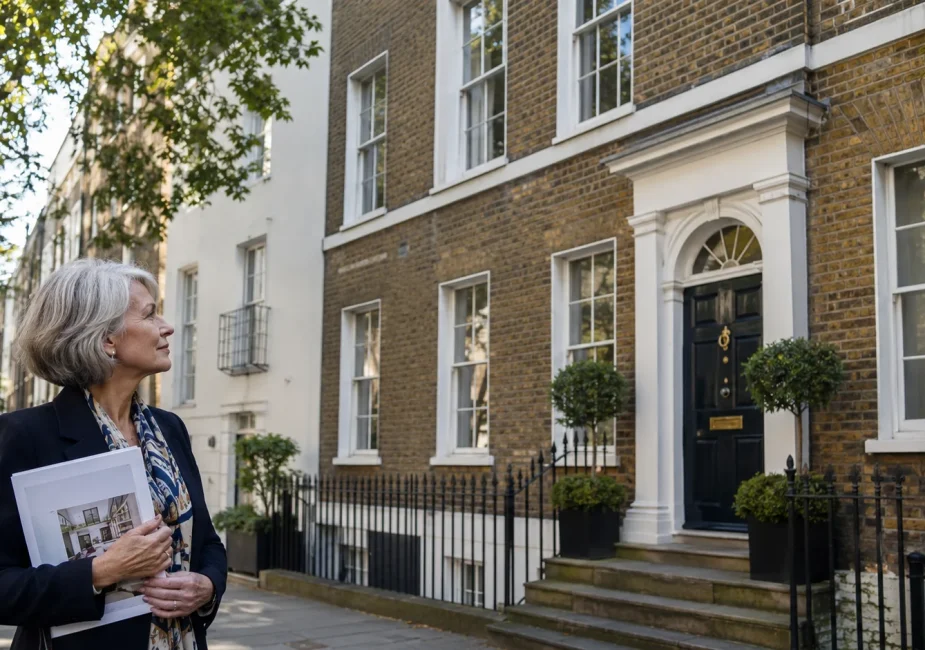
Carole Railton’s Islington property was a Georgian terrace house located in a desirable part of North London. Situated on a quiet no-through road near the canal, the house possessed many of the characteristics that make Islington properties highly sought after.
The home’s attractive location contributed significantly to its long-term value. Islington has consistently remained one of London’s most desirable residential boroughs due to its transport links, historic architecture, local amenities, and proximity to central London.
Although the house eventually became a valuable asset, it was far from ideal when Railton first purchased it.
Georgian Terrace Home in a Prime Islington Location
When Railton purchased the property in 1989, it lacked basic facilities such as gas and electricity. The house required extensive work before it could become comfortable to live in.
Despite these challenges, she recognised the potential of the location. Prime locations often retain strong value regardless of temporary property conditions, and this proved true in her case.
The combination of Georgian architecture, canal-side surroundings, and Islington’s growing popularity helped transform the property into a highly valuable asset over time.
How Did Carole Railton Transform the Property Over 32 Years?
Transforming the house became a long-term project that extended far beyond ordinary home improvements. Railton dedicated more than three decades to upgrading, repairing, and maintaining virtually every aspect of the property.
The renovation journey involved significant personal commitment and financial investment. Rather than viewing the house simply as a place to live, she treated it as an ongoing project that evolved continuously over the years.
This approach reflects how many homeowners build equity not only through market appreciation but also through consistent property improvements.
Renovation, Maintenance and Long-Term Investment
Railton estimated that she invested approximately £500,000 into the property throughout her ownership.
The upgrades included modernising facilities, improving interiors, restoring structural elements, and maintaining the home’s overall condition. Even after decades of improvements, maintenance remained a constant requirement.
She reportedly employed a maintenance specialist regularly during her final years in the property to address ongoing repairs and cosmetic issues.
| Property Investment Area | Description |
|---|---|
| Structural Improvements | Restoration and repairs to maintain building integrity |
| Interior Modernisation | Updated kitchens, appliances and fittings |
| Garden Improvements | Transformation of previously neglected outdoor areas |
| Ongoing Maintenance | Regular repairs, plaster work and cosmetic upgrades |
| Accessibility Considerations | Evaluations for potential future adaptations |
The extensive investment demonstrates how property ownership often involves costs beyond the initial purchase price. While rising house values can generate substantial returns, maintaining older properties frequently requires significant financial commitment.
Why Did Health Challenges Lead to the Sale of the Islington House?

The decision to sell was not driven primarily by financial considerations. Instead, it resulted from major changes in Railton’s health and mobility.
After contracting Covid, she experienced serious health complications that affected her ability to navigate the three-storey property. Existing heart conditions, including heart failure and reliance on a pacemaker, further complicated daily life.
The physical demands of a multi-level home became increasingly difficult to manage.
Dr James, a consultant in geriatric medicine, explains: “Housing suitability becomes increasingly important as people age. Multi-storey homes that once felt comfortable can quickly become challenging when mobility limitations develop unexpectedly.”
How Much Was the Islington House Sold For?
One of the most striking aspects of the Carole Railton Islington house sale is the property’s remarkable appreciation in value.
The house was reportedly purchased for approximately £62,000 in 1989 and later sold for around £1 million.
While London property prices have experienced substantial growth over recent decades, the property’s increase in value also reflects Railton’s extensive renovations and careful maintenance.
From a £62,000 Purchase to a £1 Million Sale
The transformation in value illustrates the combined impact of long-term ownership, location advantages, and strategic property improvements.
| Property Milestone | Approximate Value |
|---|---|
| Purchase Price (1989) | £62,000 |
| Renovation Investment | £500,000 |
| Sale Price (2021) | £1,000,000 |
| Ownership Period | 32 Years |
| Mortgage Status at Sale | Mortgage-Free |
Although the headline figures appear dramatic, it is important to recognise that decades of maintenance expenses, renovation costs, and market conditions all contributed to the final outcome.
The sale nevertheless provided substantial equity that could be used to support retirement and lifestyle choices.
Why Did Carole Railton Choose to Rent Instead of Buy Again?
After selling her Islington home, Railton chose a path that many homeowners might consider unusual. Rather than purchasing another property, she opted to rent.
This decision was influenced by both practical and lifestyle considerations. Renting eliminated many responsibilities associated with property ownership while providing access to a home that better suited her current needs.
The move also allowed her to preserve capital that would otherwise have been tied up in another property purchase.
Retirement planning adviser Eleanor Mitchell notes: “Many retirees focus solely on ownership, but preserving capital can sometimes create greater flexibility. Housing wealth can be used to support lifestyle goals, healthcare needs, and future financial security.”
The choice reflects a growing trend among older adults who prioritise convenience, accessibility, and financial freedom over continued ownership.
What Makes Her Wapping Flat Better Suited to Retirement Living?
Railton’s new home in Wapping offered features that directly addressed the challenges she faced in her previous property.
Accessibility became one of the most important considerations during her search for a new home. The flat provided lift access and a single-level layout, eliminating the need to navigate multiple staircases.
The location also fulfilled a long-standing personal ambition.
Accessibility, Views and Lifestyle Benefits
The property reportedly offers views of both the Thames and London’s skyline, including iconic landmarks.
Beyond aesthetics, the flat provides practical benefits that support independent living. Easy access, reduced maintenance responsibilities, and modern facilities all contribute to a more manageable lifestyle.
For individuals experiencing mobility limitations, these features can have a significant impact on daily comfort and wellbeing.
How Has Renting Changed Carole Railton’s Quality of Life?
The transition from ownership to renting appears to have delivered several lifestyle advantages.
Without the burden of maintaining a large property, Railton can focus more on personal interests and experiences. She has spoken about continuing to travel and enjoying activities that might have been more difficult if substantial resources remained tied up in homeownership.
The ability to redirect capital towards lifestyle goals represents one of the key benefits frequently cited by retirees who choose to rent.
Her experience suggests that housing decisions in later life are increasingly influenced by quality-of-life considerations rather than traditional assumptions about ownership.
Why Are More Over-65s Choosing to Rent in the UK?
Railton’s story aligns with broader housing trends across the United Kingdom.
Research suggests that private renting among older adults is increasing. Several factors contribute to this shift, including longer life expectancy, changing financial circumstances, rising property values, and evolving attitudes towards retirement.
For some individuals, renting provides flexibility. For others, it offers access to homes that would otherwise be unaffordable to purchase.
The Growing Trend of Later-Life Renting
The growing number of older renters reflects changing demographic and economic realities.
Many retirees now seek housing solutions that align more closely with their current needs rather than decisions made decades earlier.
| Housing Consideration | Homeownership | Renting |
|---|---|---|
| Maintenance Responsibility | Owner | Landlord |
| Capital Accessibility | Limited | Higher |
| Flexibility to Relocate | Lower | Higher |
| Upfront Costs | Significant | Lower |
| Long-Term Security | Generally Higher | Depends on Tenancy |
These considerations help explain why renting is becoming a more attractive option for some older households.
What Are the Benefits and Challenges of Renting in Retirement?
Renting during retirement offers both opportunities and potential drawbacks.
One major advantage is financial flexibility. Releasing equity from a property sale can provide funds for healthcare, travel, daily living expenses, or unexpected costs.
Renting can also reduce stress associated with repairs, maintenance, and property management.
However, there are challenges. Tenancy arrangements may provide less long-term certainty than ownership. Rent increases and changing regulations can create concerns for older tenants seeking stability.
What Has Happened Since Carole Railton Sold Her House?
Since Railton sold her Islington property in 2021, the UK housing market has continued to evolve. London rents have increased significantly in many areas, while demand for accessible homes suitable for older residents has continued to grow.
At the same time, discussions surrounding retirement housing have become increasingly prominent. More homeowners are exploring downsizing, relocating, or renting in later life as they reassess how their properties fit their changing circumstances.
Railton’s experience remains relevant because it highlights issues affecting thousands of older homeowners across the country. Accessibility, maintenance costs, mobility considerations, and housing flexibility have become increasingly important factors in retirement planning decisions.
What Does the Carole Railton Islington House Sale Teach Homeowners About Retirement Planning?
One of the most important lessons from this story is the value of adaptability. Life circumstances can change unexpectedly. Health conditions, mobility issues, financial priorities, and lifestyle preferences may evolve significantly over time.
Retirement planning is not simply about accumulating assets. It also involves ensuring that those assets continue to support changing needs. Railton’s experience demonstrates that successful retirement planning sometimes involves making difficult decisions about long-held properties.
Rather than viewing property ownership as an end goal, retirees may benefit from considering how housing choices contribute to overall wellbeing.
How Does This Story Reflect Wider Changes in the UK Housing Market?

The Carole Railton Islington house sale reflects wider changes in the UK housing market. An ageing population, rising property values, and growing demand for accessible homes are encouraging more homeowners to reassess their housing needs during retirement. Her experience illustrates how practical considerations increasingly influence housing decisions later in life.
Should Older Homeowners Consider Renting Instead of Owning?
There is no universal answer to whether renting or owning is better during retirement. The most suitable option depends on an individual’s financial position, health circumstances, lifestyle preferences, and long-term goals.
For some retirees, homeownership provides stability, security, and protection from rising rental costs. Others may find that releasing housing equity and moving into a rented property creates greater flexibility and reduces the burden of maintenance.
Carole Railton’s experience demonstrates that retirement housing decisions are becoming increasingly personalised. Rather than automatically remaining in the same property for life, many older adults are evaluating whether their homes continue to meet their practical and financial needs.
As life expectancy increases and retirement lifestyles evolve, the distinction between renting and owning may become less important than ensuring that housing supports independence, comfort, and overall wellbeing.
Conclusion
The Carole Railton Islington house sale is more than a story about property profit. It reflects changing attitudes towards housing, retirement, and quality of life. After investing decades into transforming a Georgian terrace house, Railton ultimately chose to prioritise accessibility, comfort, and financial flexibility following significant health challenges.
Her decision to rent rather than buy again challenges traditional assumptions about homeownership in later life. As increasing numbers of over-65s enter the rental market, her experience offers valuable insights into how housing decisions can adapt to changing circumstances while supporting a fulfilling and independent retirement.
FAQs
When did Carole Railton sell her Islington house?
Carole Railton sold her Islington property in 2021 following significant health challenges. The decision came after mobility issues made it difficult for her to continue living in a multi-storey home.
How much did Carole Railton pay for the property originally?
She reportedly purchased the property in 1989 for approximately £62,000. At the time, the house required extensive renovation before it became suitable for comfortable living.
Why did Carole Railton decide to move out of her Islington home?
Health complications following Covid and existing heart conditions reduced her mobility. The three-storey layout became impractical, leading her to seek a more accessible property.
What type of property did she move into after selling?
After selling the house, she rented a luxury flat in Wapping. The property offers lift access, single-level living, and views of the Thames and London’s skyline.
Why are more people over 65 choosing to rent?
Many older adults are seeking greater flexibility, easier maintenance, and improved accessibility. Renting can also provide access to housing options that better match changing lifestyle and health needs.
What are the advantages of renting later in life?
Renting can reduce maintenance responsibilities, release housing equity, and improve financial flexibility. It may also allow retirees to move into properties better suited to their current circumstances.
What concerns do older renters face in the UK?
Security of tenure remains a common concern. Some older renters worry about rent increases, tenancy changes, and the possibility of needing to move unexpectedly.
What lessons can homeowners take from Carole Railton’s experience?
Her story demonstrates the importance of aligning housing choices with current needs rather than past expectations. Flexibility and adaptability can play a crucial role in maintaining quality of life during retirement.