
Octopus Energy Social Housing Tariff: Tenant Power Launches Landmark Green Rental Scheme
 • May 29, 2026
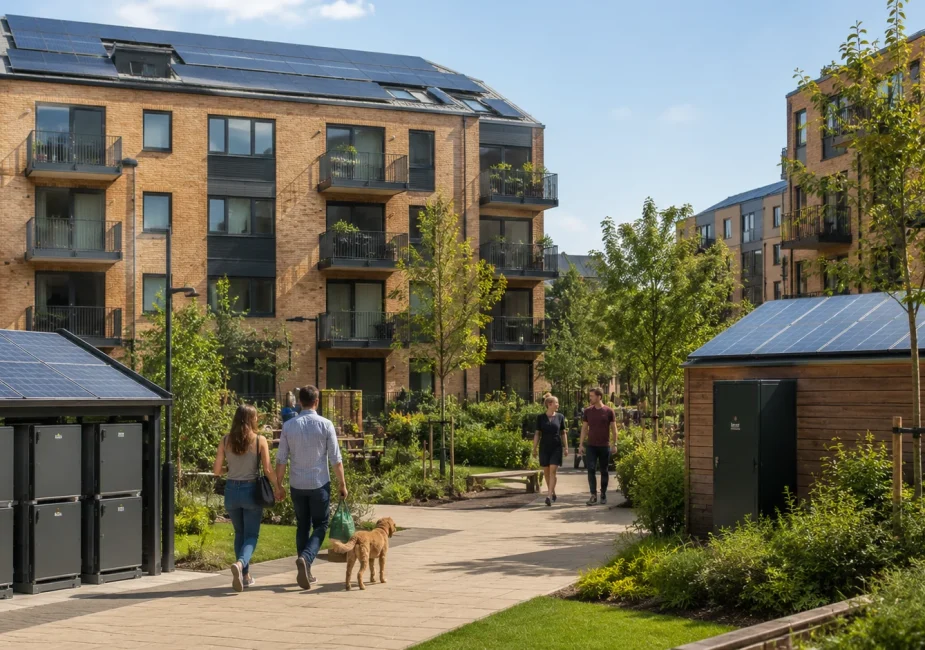
Key Takeaways:
- Tenant Power is the UK’s first dedicated social housing energy tariff.
- Eligible tenants can save up to £200 per year on electricity bills.
- Housing associations benefit financially through energy exports to the grid.
- The scheme relies on solar panels and compatible battery storage systems.
- Tenant Power helps reduce fuel poverty while supporting net-zero goals.
- Several major UK housing associations have already joined the initiative.
- The programme is expanding rapidly across the social housing sector.
What Is the Octopus Energy Social Housing Tariff?

During my conversations with housing professionals, sustainability specialists, and social housing residents, one topic repeatedly surfaced: how can renewable energy directly benefit tenants rather than solely reducing landlords’ operational costs? The answer increasingly points towards the Octopus Energy Social Housing Tariff, known as Tenant Power.
Tenant Power is a specialist energy tariff developed by Octopus Energy to create a shared-benefit model between social housing tenants and landlords.
Unlike traditional energy tariffs that simply charge customers for consumption, this programme integrates renewable energy generation and battery technology into a system designed to lower costs and increase sustainability.
The concept is straightforward. Homes equipped with solar panels and battery storage generate renewable electricity. Instead of excess power being wasted, smart technology stores and manages energy efficiently.
This allows tenants to access discounted electricity rates while landlords gain financial returns from surplus energy sold during peak-demand periods.
What makes the tariff particularly significant is its focus on social housing, a sector that has often faced challenges related to energy affordability and fuel poverty. By linking energy savings directly to renewable infrastructure, the programme creates long-term benefits rather than temporary relief.
Why Is Tenant Power Being Described as a Landmark Green Rental Scheme?
The social housing sector has historically struggled to balance affordability with sustainability. Many housing providers have wanted to invest in green technology but faced concerns about costs and return on investment.
Tenant Power changes this equation.
Instead of viewing renewable technology as a purely environmental investment, the programme turns it into an economic asset that benefits both parties involved.
Tenants receive immediate financial savings, while landlords gain access to a revenue-generating mechanism that can help fund future environmental upgrades.
As I spoke with housing sector representatives, many described the scheme as one of the first examples where renewable energy infrastructure actively creates measurable financial advantages across the entire tenancy ecosystem.
This dual-benefit approach is why many industry observers consider Tenant Power a significant milestone within the UK’s green housing movement.
How Does the Octopus Energy Tenant Power Tariff Work?
The tariff operates through an integrated energy ecosystem combining renewable generation, battery storage, and smart energy management systems.
Rather than relying entirely on electricity imported from the national grid, participating properties generate a portion of their own energy through solar installations.
The system continuously monitors generation, consumption, storage capacity, and market demand to maximise efficiency.
Energy Sharing Through Solar Panels and Battery Storage
Solar panels installed on social housing properties generate electricity throughout daylight hours. When generation exceeds immediate household demand, excess energy is diverted into battery storage systems.
This stored energy becomes available when solar production decreases, such as during evenings or periods of poor weather.
Battery technology plays a crucial role because it prevents valuable renewable electricity from being lost and helps reduce dependence on grid-supplied energy.
How are Renewable Energy Benefits Distributed Between Tenants and Landlords?
The unique element of Tenant Power is how benefits are shared.
| Benefit Area | Tenant Advantage | Landlord Advantage |
|---|---|---|
| Electricity Costs | Discounted energy rates | Improved tenant satisfaction |
| Renewable Energy | Access to locally generated electricity | Better sustainability performance |
| Energy Storage | More efficient power usage | Additional revenue opportunities |
| Environmental Impact | Reduced carbon footprint | Progress towards net-zero targets |
| Long-Term Value | Lower household expenses | Funding for future green investments |
This balanced structure creates incentives for both sides to participate in the programme.
Who Can Benefit From the Octopus Energy Social Housing Tariff?
The primary beneficiaries are social housing tenants living in properties equipped with approved renewable energy systems.
Housing associations benefit from additional revenue streams, local communities benefit from increased renewable energy adoption, and policymakers benefit from progress towards national energy objectives.
For tenants struggling with rising household expenses, the savings can provide meaningful financial relief. For landlords, the programme offers a practical method for generating returns on renewable energy investments.
How Much Can Tenants Save With the Tenant Power Energy Plan?

Financial savings remain one of the biggest attractions of the Tenant Power scheme. Current projections indicate that participating households may save up to £200 annually on electricity bills, although actual savings vary depending on property type, household energy usage, and renewable energy generation levels.
The estimated savings are based on electricity rates that can be significantly lower than standard market tariffs. In some participating developments, residents may receive electricity at rates that are approximately 30% cheaper than conventional alternatives.
Because solar generation and battery storage reduce reliance on grid electricity during expensive periods, households can benefit from greater protection against future energy price fluctuations.
While exact savings vary depending on household consumption patterns, property characteristics, and energy generation levels, the potential reductions are substantial enough to attract significant attention from housing providers.
Average Annual Savings for Social Housing Residents
For many tenants, energy bills represent a significant portion of monthly household expenses.
Savings generated through Tenant Power can help reduce pressure on household budgets while providing greater protection from fluctuating market conditions.
The combination of discounted electricity rates and increased renewable energy usage contributes directly to lower annual costs.
Comparing Tenant Power With Standard Variable Tariffs
| Feature | Tenant Power Tariff | Standard Variable Tariff |
|---|---|---|
| Renewable Energy Integration | Yes | Limited |
| Battery Storage Support | Yes | No |
| Tenant Savings Potential | Up to £200 annually | Varies |
| Smart Energy Management | Included | Limited |
| Landlord Revenue Opportunities | Yes | No |
| Carbon Reduction Benefits | Significant | Moderate |
The comparison highlights why many housing associations view the tariff as a progressive alternative to conventional energy arrangements.
Why Are Housing Associations Supporting the Tenant Power Scheme?
Housing providers face increasing pressure to improve sustainability while maintaining affordability for residents. Tenant Power offers a practical route towards achieving both objectives simultaneously.
By participating in the programme, housing associations can strengthen their environmental credentials while delivering tangible financial benefits to tenants.
The scheme also creates a framework for funding future sustainability projects through revenue generated from exported energy.
Why Were Housing Associations Previously Reluctant to Invest in Solar Panels?
Historically, many housing associations faced a difficult challenge when investing in renewable energy technology. Although landlords funded the installation of solar panels, most of the financial benefit flowed directly to tenants through lower electricity bills.
While supporting tenants remained an important objective, the lack of a sustainable financial return sometimes limited large-scale investment.
Tenant Power addresses this issue by creating a shared-benefit model. Tenants continue receiving cheaper electricity, while housing providers gain revenue opportunities through battery optimisation and energy exports.
This more balanced structure helps justify future investment in renewable infrastructure and encourages wider deployment across social housing portfolios.
Emma Richardson, Head of Energy Strategy at a regional housing association, noted: “The ability to reinvest energy revenues into future housing improvements creates a sustainable cycle of investment that many providers have been seeking for years.”
How Do Landlords Generate Revenue Through the Tenant Power Model?
The financial model underpinning Tenant Power relies on intelligent energy management and market participation. Rather than simply reducing energy consumption, the system actively seeks opportunities to maximise the value of surplus electricity.
Selling Excess Solar Energy Back to the Grid
When stored energy exceeds household requirements, the system can export electricity to the national grid. Exports often occur during peak-demand periods when electricity prices are higher, increasing the value of generated energy.
This process transforms renewable energy infrastructure into a productive financial asset.
Funding Future Sustainability and Green Housing Improvements
Revenue generated through exports can support a wide range of future initiatives.
Potential investments may include additional solar installations, upgraded battery systems, property retrofits, energy-efficiency improvements, and wider decarbonisation programmes.
This creates a long-term pathway towards increasingly sustainable housing stock.
What Role Do Solar Panels and Battery Systems Play in the Tariff?
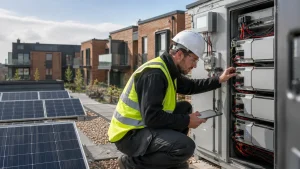
Without solar generation and battery storage, Tenant Power would not function effectively.
Solar panels provide the renewable electricity needed to reduce grid dependency, while batteries ensure generated energy remains available when required.
Together, these technologies improve energy efficiency, increase self-consumption rates, and enhance financial returns. The system’s effectiveness depends on balancing generation, storage, and consumption patterns throughout the day.
What Are the Eligibility Requirements for the Octopus Energy Social Housing Tariff?
Eligibility is tied primarily to property infrastructure rather than individual tenant circumstances. Homes must have appropriate renewable energy systems installed before participation becomes possible.
Property Requirements for Participation
The property must generally belong to a participating social housing provider or housing association that has entered the programme. Suitable installation conditions for renewable energy equipment are also required.
Technology Requirements for Renewable Energy Integration
| Requirement | Purpose |
|---|---|
| Solar Panels | Generate renewable electricity |
| Home Battery System | Store excess energy |
| Smart Energy Technology | Optimise usage and exports |
| Participating Housing Provider | Enable tariff access |
| Suitable Property Infrastructure | Support system installation |
These requirements ensure the programme delivers its intended benefits.
Which Housing Associations Have Already Adopted Tenant Power?
Several major housing associations have already joined the initiative.
Early adopters include organisations such as Together Housing and United Welsh, both of which have demonstrated strong commitments to sustainability and tenant wellbeing.
Their participation provides valuable evidence regarding the programme’s practical implementation and effectiveness.
What Happened When Tenant Power Expanded Into Wales in 2026?
One of the biggest developments for the Octopus Energy Social Housing Tariff occurred in May 2026 when Tenant Power expanded into Wales for the first time. United Welsh became the first Welsh housing association to adopt the scheme, marking an important milestone in the programme’s national rollout.
The expansion demonstrated that Tenant Power is moving beyond pilot projects and becoming a practical solution for housing providers across different regions of the UK.
Through the scheme, social housing residents can benefit from discounted electricity supplied through solar panels, battery storage systems, and smart energy technology.
For housing associations, the Welsh rollout also provided evidence that renewable energy infrastructure can generate measurable financial returns while helping tenants lower household energy costs. Industry observers view the move as a significant step towards wider adoption throughout the social housing sector.
How Is the Tenant Power Scheme Expanding Across the UK?
The programme’s expansion reflects growing interest in renewable energy solutions within social housing.
Reports indicate that numerous housing associations are currently exploring participation, with many already engaged in discussions with Octopus Energy.
Hammersmith & Fulham Becomes the First London Local Authority to Adopt Tenant Power
Another major milestone arrived in 2026 when Hammersmith & Fulham Council became the first London local authority to introduce the Tenant Power model within its social housing portfolio.
The initial rollout covers dozens of social homes equipped with solar panels and battery storage systems. Residents are expected to benefit from lower electricity costs, while the council gains access to additional revenue generated through smart energy exports.
The London launch is particularly significant because it demonstrates how local authorities can use renewable energy infrastructure to address fuel poverty while simultaneously supporting climate targets. Success within London could encourage other councils across England to consider similar programmes.
Current Rollout and Growth of the Programme
The rollout accelerated significantly during 2026 as additional housing associations and local authorities joined the programme. Expansion into Wales through United Welsh and the introduction of Tenant Power within Hammersmith & Fulham Council demonstrate growing confidence in the model.
As more organisations adopt solar generation, battery storage, and smart energy technology, Tenant Power is increasingly being viewed as a scalable solution for reducing tenant energy costs while supporting long-term sustainability goals.
Future Opportunities for Social Housing Providers
Future growth could involve thousands of additional properties across multiple regions.
As installation costs continue to improve and demand for sustainable housing increases, expansion opportunities are likely to accelerate further.
How Does Tenant Power Help Reduce Fuel Poverty in the UK?

Fuel poverty remains a significant concern across many communities. High energy costs can place severe financial pressure on households, particularly during colder months.
Tenant Power addresses this challenge by reducing electricity expenses through renewable generation and discounted tariffs. Lower bills provide direct financial relief while creating greater predictability in household budgeting.
Why Is Renewable Energy Important for Social Housing Communities?
Renewable energy delivers benefits extending far beyond immediate cost savings.
It improves energy security, reduces environmental impact, supports national sustainability goals, and strengthens community resilience against future energy market volatility.
As social housing providers increasingly focus on long-term sustainability, renewable energy has become a central component of strategic planning.
How Does the Tariff Support the UK’s Net Zero and Sustainability Goals?
The UK has established ambitious targets for reducing greenhouse gas emissions and transitioning towards cleaner energy systems.
Tenant Power contributes directly to these objectives through increased renewable generation and reduced reliance on fossil-fuel-based electricity.
Carbon Reduction Benefits for Tenants and Landlords
Renewable electricity generation helps reduce emissions associated with household energy consumption. Over time, widespread adoption could contribute significantly towards sector-wide carbon reduction targets.
Supporting Long-Term Green Housing Strategies
Many housing associations have adopted long-term sustainability roadmaps. Tenant Power aligns closely with these strategies by providing both environmental and financial incentives for renewable energy deployment.
What Advantages Does the Octopus Energy Social Housing Tariff Offer Compared With Traditional Energy Plans?
Traditional energy tariffs typically focus on consumption and pricing.
Tenant Power introduces additional layers of value through renewable generation, battery storage, tenant savings, landlord revenue, and environmental benefits.
The model creates a more integrated and sustainable approach to energy management that extends beyond simple utility provision. This broader value proposition is one reason many experts believe the programme could influence future social housing energy strategies.
What Challenges Could Affect the Adoption of Tenant Power?
Although the programme offers substantial benefits, certain challenges remain.
Initial infrastructure investment represents a significant consideration for housing providers. Installation timelines, property suitability, funding availability, and operational logistics can also influence implementation decisions.
However, as technology costs continue to evolve and successful case studies emerge, many of these barriers may become easier to overcome.
Why Could the Octopus Energy Social Housing Tariff Shape the Future of Affordable Green Energy?
The significance of Tenant Power extends beyond immediate savings.
The programme demonstrates how renewable energy can create shared economic value across multiple stakeholders rather than benefiting a single group.
Its combination of affordability, sustainability, technological innovation, and long-term investment potential offers a compelling model for future energy policy and housing strategy.
If adoption continues to expand, Tenant Power may become an influential example of how social housing can contribute to both environmental progress and financial wellbeing.
Conclusion: Is the Octopus Energy Social Housing Tariff Transforming Social Housing Energy Costs?
After examining the Tenant Power model and speaking with professionals involved in sustainable housing initiatives, I believe the programme represents a significant step forward for social housing energy provision.
By combining renewable electricity generation, battery storage, and intelligent energy management, Octopus Energy has created a system that delivers measurable benefits to both tenants and landlords.
Lower energy bills, reduced fuel poverty, additional funding opportunities for housing associations, and progress towards net-zero goals all contribute to its growing appeal. As adoption expands across the UK, Tenant Power has the potential to become a leading example of affordable, sustainable energy innovation.
FAQs
What Is the Tenant Power Tariff?
Tenant Power is Octopus Energy’s social housing energy tariff that combines solar panels, battery storage, and smart technology to reduce electricity costs for tenants. It also allows housing associations to earn revenue from surplus energy.
How Much Can Social Housing Tenants Save?
Many participating households could save up to £200 per year on electricity bills. Actual savings depend on energy usage, property type, and the amount of renewable electricity generated.
Who Can Access the Tenant Power Scheme?
The scheme is available to tenants living in properties owned by participating housing associations or councils that have installed the required solar and battery systems.
How Does Tenant Power Reduce Energy Bills?
The tariff uses electricity generated by on-site solar panels and stored in batteries. This reduces reliance on grid electricity, helping tenants access lower-cost energy throughout the year.
Which Housing Providers Have Joined the Scheme?
Several organisations have already adopted Tenant Power, including Together Housing, United Welsh, and Hammersmith & Fulham Council. More housing associations are expected to join as the programme expands.
Do Tenants Need Solar Panels Installed Themselves?
No. The renewable energy equipment is usually installed and managed by the housing association or landlord. Tenants simply benefit from the lower electricity costs provided by the scheme.
Is Tenant Power Expected to Expand Further?
The programme has expanded into additional housing developments across England, Wales, and parts of Scotland during 2026.