CarGiant London Dealership Closure – What Happened to a 50-Year-Old Brand?
 • April 25, 2026
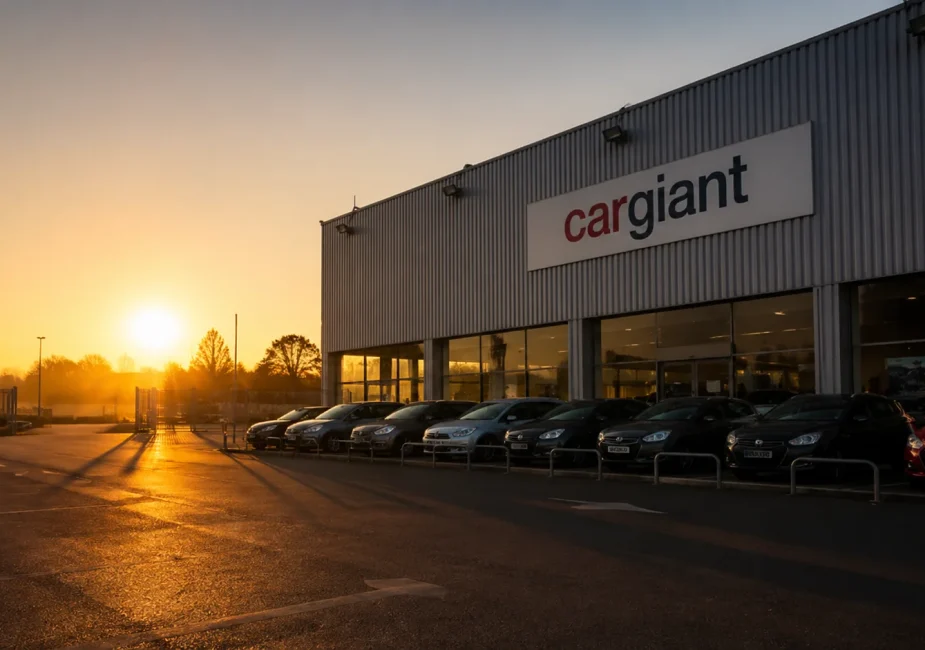
Cargiant permanently closed its retail vehicle sales operation in West London on 24 April 2026 after more than 50 years in business.
The company said the operation was no longer commercially sustainable because of declining used-vehicle supply, rising operating costs and increasing complexity across the UK automotive market.
The closure affected around 500 employees and brought an end to one of Britain’s best-known used-car supermarkets. However, the closure relates primarily to new retail vehicle sales.
Support for existing customers, finance agreements, warranties and other previous commitments may continue through the company’s remaining service arrangements.
Key highlights:
- Cargiant stopped retail vehicle sales on 24 April 2026
- Around 500 employees were affected
- The company cited falling used-car supply and rising costs
- Existing customers may still receive after-sales support
- No confirmed redevelopment plan has been announced for the Park Royal site
This article explains why Cargiant closed, what the decision means for customers and employees, and what could happen to its large West London site.
What Led to the Cargiant London Dealership Closure?

Cargiant closed its retail vehicle sales operation after concluding that the business was no longer commercially sustainable in its existing form.
According to the company’s explanation, several pressures combined to weaken the business model. These included a continuing reduction in the supply of used vehicles, rising operational expenses and growing complexity within the automotive market.
Cargiant had operated a high-volume business that depended on maintaining a large and varied stock of used vehicles. When suitable vehicle supply became more difficult and expensive to secure, the company’s ability to maintain its traditional sales model came under increasing pressure.
The business explored different options before confirming the closure, including the possible sale of the operation and discussions concerning the future of the land. However, no solution was found that would allow retail sales to continue sustainably.
The closure was therefore not attributed to one isolated event. It resulted from a combination of supply constraints, cost pressures and long-term changes in how UK consumers purchase used vehicles.
How Did Market Pressures Affect Cargiant’s Business Model?
Cargiant’s size was once one of its greatest commercial advantages. The company operated from an extensive West London site and carried thousands of vehicles, allowing customers to compare a large number of used cars in one location.
However, maintaining an operation of this scale required significant and continuous spending. The company needed to fund vehicle purchasing, storage, preparation, staffing, administration, customer service, security and property maintenance.
When used-car supply became more restricted, maintaining a large and commercially attractive inventory became more difficult. At the same time, wages, utilities, property-related expenses and general operating costs continued to rise.
A high-volume dealership also depends on selling enough vehicles at sufficient margins to cover substantial fixed costs.
Even a relatively small reduction in vehicle availability, customer demand or profit per sale can have a significant effect when applied across an operation of Cargiant’s size.
These pressures gradually reduced the commercial advantage of operating one of the country’s largest physical used-car retail sites.
Did the Electric-Vehicle Transition Contribute to the Closure?
The transition towards electric vehicles contributed indirectly to the pressures facing Cargiant, particularly through changes to the supply of vehicles entering the used-car market.
Cargiant stated that the reduction in used-vehicle supply was primarily connected to the UK’s zero-emission vehicle policy.
This policy applies mainly to manufacturers and the proportion of new vehicles they sell, rather than directly regulating used-car dealerships.
However, changes in the new-car market eventually affect the used-car market.
When fewer traditional petrol and diesel vehicles are registered or replaced, fewer suitable vehicles may become available to large used-car retailers through trade-ins, fleet disposals and other supply channels.
Used electric vehicles also introduce different commercial considerations. Dealers must evaluate battery condition, charging compatibility, depreciation, customer demand and changing vehicle technology.
The EV transition should therefore be described as one contributing factor rather than the sole reason for the closure. Cargiant also identified rising costs and increasing market complexity as important parts of its decision.
When Did Cargiant Announce Its Closure?
Cargiant’s retail closure followed a managed process rather than an immediate shutdown.
The company entered discussions about the future of the business and began considering options that could protect the operation, its employees and the value of the Park Royal site.
These options included the possible sale of the retail business and consideration of the land’s future.
During March 2026, employees entered a consultation process as the company examined whether retail trading could continue. The closure was publicly confirmed in April 2026.
Cargiant completed its final day of retail vehicle sales on 24 April 2026. A limited number of operations continued after that date to manage customer commitments, administration, finance matters and after-sales enquiries.
Corrected Timeline
| Event | Date |
|---|---|
| Employee consultation and business review | March 2026 |
| Closure publicly confirmed | April 2026 |
| Final day of retail vehicle sales | 24 April 2026 |
| Customer and administrative support | Continued during the wind-down |
This distinction is important because Cargiant did not simply disappear on the final trading date. The retail sales operation closed, while certain responsibilities connected to existing customers continued.
How Many Cargiant Employees Were Affected?

Around 500 employees were affected by the closure of Cargiant’s retail vehicle sales operation.
The decision had a significant impact because the Park Royal business employed staff across sales, vehicle preparation, administration, customer support, logistics, finance and site operations.
Many retail positions were expected to end as the dealership stopped selling vehicles.
A smaller number of employees may have remained temporarily to manage after-sales support, administrative work, complaints, finance enquiries and other existing customer obligations.
The closure represents more than the loss of a well-known automotive business. It also affected employees who had built long-term careers within the organisation and contributed to the local West London economy.
The article should avoid stating that every employee was immediately made redundant unless this can be confirmed. The more accurate wording is that around 500 jobs or employees were affected by the closure process.
What Should Existing Cargiant Customers Do After the Closure?
Cargiant is no longer selling vehicles through its former retail operation, but existing customers should not assume that all previous agreements or support arrangements have ended.
Customers who purchased a vehicle before the closure may still need assistance with warranties, complaints, finance agreements, insurance products, vehicle documentation or unresolved after-sales matters.
The correct next step will depend on the type of agreement involved.
Customers with a third-party warranty or insurance product should check their original documents to identify the company responsible for administering the policy. Customers with vehicle finance should continue making agreed payments unless their finance provider gives different instructions.
Anyone with an unresolved complaint should retain copies of purchase documents, correspondence, finance agreements, repair records and evidence of previous contact with Cargiant.
Customers should also distinguish between Cargiant’s retail sales closure and the legal status of their finance, warranty or insurance provider.
The closure of the dealership does not automatically cancel a customer’s financial responsibilities or contractual rights.
Why Was Cargiant Important to the UK Used-Car Industry?
Cargiant became one of the most recognisable names in the British used-car market because of the scale of its West London operation.
Rather than operating as a traditional local dealership, it developed a car-supermarket model in which customers could compare a large number of vehicles at one location.
This approach helped popularise large-scale used-car retailing in the UK.
The company became particularly well known for the size of its inventory and its extensive Park Royal site.
Its operating model depended on high sales volumes, a continuous supply of vehicles and the ability to process large numbers of transactions efficiently.
Cargiant’s closure is significant because it shows how a business model that succeeded for decades can become more difficult to maintain when supply conditions, costs, regulations and consumer behaviour change.
Important correction
Remove the claim that Cargiant was named the world’s largest car dealership by Guinness World Records in 2007 unless you have a reliable source confirming the exact year and title.
Also verify before retaining these figures:
- More than 5,000 vehicles in stock
- More than one million cars sold
- Among the UK’s most profitable dealers
- Founded by Geoffrey Warren
Do not retain figures simply because they appeared in an older article or marketing page.
Where Was the Cargiant Dealership Located?
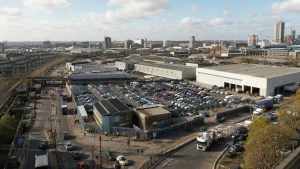
Cargiant operated from a large site in Park Royal, West London. The location was important because Park Royal is one of London’s largest business and industrial areas and is close to several major transport routes.
The site allowed Cargiant to store, prepare and display thousands of vehicles while serving customers from across London and other parts of the UK.
Its position near the wider Old Oak and Park Royal regeneration area also makes the land strategically significant. Major transport and development projects in the surrounding area have increased interest in the future use of large commercial sites.
However, the value and location of the land should not be treated as proof that a particular redevelopment project will proceed.
What Could Happen to the Park Royal Site?
The long-term future of Cargiant’s Park Royal site has not been officially confirmed.
Because the site is large and located within a strategically important part of West London, several outcomes may be considered. These could include continued commercial use, a sale to another operator, industrial development or a broader mixed-use proposal.
Any major redevelopment would depend on land ownership decisions, planning policy, infrastructure requirements and approval from the relevant authorities.
The site’s proximity to Old Oak Common and other regeneration activity makes it commercially valuable, but this does not guarantee that it will be converted into housing or another specific use.
Until a formal planning application, sale or development announcement is made, all suggested future uses should be clearly described as possibilities rather than confirmed plans.
What Does the Cargiant Closure Mean for the UK Used-Car Market?
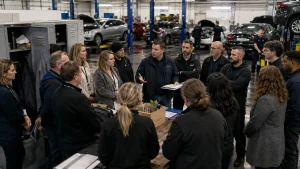
Cargiant’s closure reflects several pressures affecting large used-car retailers, although the experience of one company should not be treated as evidence that every car supermarket faces the same outcome.
Large physical dealerships carry substantial fixed costs. They require extensive property, large inventories, significant staffing and continuous spending on vehicle preparation and administration.
At the same time, consumers increasingly begin their vehicle search online. Buyers can compare prices, specifications, finance options and reviews before visiting a dealership.
This has reduced some of the advantages previously associated with operating the largest possible physical site.
Vehicle supply has also become more complex. Changes in new-car registrations, fleet replacement cycles, electric-vehicle adoption and customer demand can affect which vehicles enter the second-hand market.
Successful used-car retailers may increasingly need to combine physical operations with strong digital services, flexible vehicle sourcing and tighter cost control.
Cargiant’s closure demonstrates the risks faced by businesses that depend on high sales volumes and expensive fixed infrastructure.
Conclusion
Cargiant’s retail closure on 24 April 2026 marked the end of one of the UK’s best-known used-car supermarket operations.
The company attributed the decision to a combination of reduced used-vehicle supply, rising operating costs and increasing complexity within the automotive market.
Around 500 employees were affected, while existing customers may continue to require support with finance, warranties, complaints and previous purchases.
The closure does not necessarily mean that every part of the company immediately ceased to exist. It is more accurate to state that Cargiant permanently ended its retail vehicle sales operation while retaining certain responsibilities connected to existing customers.
The future of its Park Royal site also remains uncertain. Although the land is strategically valuable, no specific redevelopment outcome should be described as confirmed until an official proposal or announcement is made.
Cargiant’s story ultimately illustrates how changing supply conditions, high fixed costs and evolving customer behaviour can challenge even a long-established and highly recognisable business.
Frequently Asked Questions
Why did Cargiant close?
Cargiant closed its retail vehicle sales operation because the business was no longer commercially sustainable. The company cited reduced used-vehicle supply, rising operating costs and increasing complexity within the UK automotive market.
When did Cargiant close?
Cargiant completed its final day of retail vehicle sales on 24 April 2026.
Is Cargiant completely closed?
Cargiant is permanently closed for new retail vehicle sales. However, certain services may continue for existing customers with warranties, finance agreements, complaints or unresolved after-sales matters.
How many Cargiant employees were affected?
Around 500 employees were affected by the closure of the Park Royal retail operation.
What should existing Cargiant customers do?
Existing customers should retain their purchase, warranty, insurance and finance documents. They should contact the relevant provider or Cargiant’s remaining customer-support service regarding unresolved complaints, warranties or finance matters.
Will existing Cargiant finance agreements be cancelled?
No. The closure of the retail dealership does not automatically cancel an existing vehicle finance agreement. Customers should continue making payments unless their finance provider gives them different instructions.
What happened to Cargiant warranties?
The position depends on who issued or administers the warranty. Customers should check their original documents and contact the named warranty provider for information about claims and continuing cover.
What will happen to the Cargiant Park Royal site?
No final use for the site has been officially confirmed. Its size and West London location may attract commercial or redevelopment interest, but any proposed use would require formal decisions and relevant planning approvals.
Did the electric-vehicle mandate cause Cargiant to close?
The electric-vehicle transition was one contributing factor rather than the only cause. Cargiant connected the policy to reduced used-vehicle supply, alongside rising costs and increasing market complexity.
Is Car Giant Limited still an active company?
The closure primarily relates to Cargiant’s retail vehicle sales operation. The legal status of the company should be checked through the latest Companies House records.
Note
This article has been reviewed and updated to reflect Cargiant’s retail closure on 24 April 2026. Earlier timeline information has been corrected, unsupported quotations have been removed, and confirmed facts have been separated from analysis and speculation.
Information relating to customers, employees, the zero-emission vehicle mandate and the Park Royal site has been revised using company statements, government information and public company records.