
Creating a More Comfortable London Office Space
 • March 31, 2026
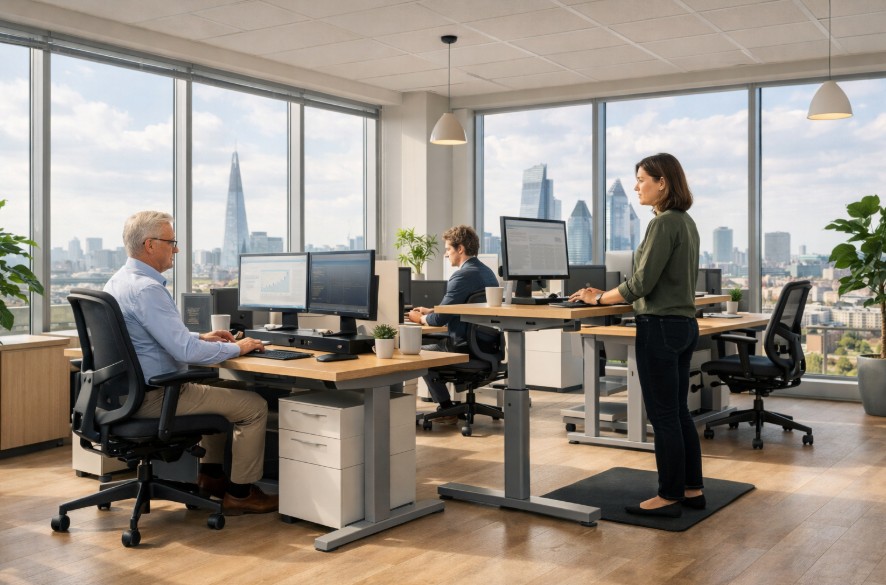
London’s business landscape is bustling, but the physical spaces where professionals spend their days are often left wanting. Long commutes on the Tube followed by eight hours at a rigid workstation can take a serious toll on the body. A well-designed workspace directly influences daily energy levels, focus, and long-term health.
Companies across the capital are beginning to realise that providing a supportive environment is a necessity rather than a luxury. An uncomfortable setup leads to physical strain, frequent breaks, and reduced efficiency. When employees feel physically supported, they can concentrate on their actual work instead of a persistent backache.
Older professionals, in particular, face unique challenges when navigating standard office setups. Joints become less forgiving, and maintaining proper posture requires more conscious effort.
Adapting the working environment to accommodate these physical needs ensures that valuable experience remains within the business, free from preventable daily discomfort.
Why Workspace Comfort Should Be a Priority?

Business owners often view furniture as a static overhead cost. Investing in employee well-being actually yields measurable financial returns. Proper ergonomics reduce the number of sick days taken due to musculoskeletal issues, which cost UK businesses millions annually.
A comfortable London office space also fosters a positive atmosphere. It shows staff that management cares about their physical health, helping retain top talent in a highly competitive job market.
How to Create Comfortable Office Space in London for Better Productivity and Health?
Essential Ergonomic Options
Transforming a rigid workplace into a supportive haven starts with the furniture. A few targeted changes make an enormous difference to daily comfort.
Investing in the Right Office Chairs
The foundation of good posture begins with where you sit. Standard seating rarely accommodates the diverse body types found in a busy team. Upgrading to high-quality office chairs provides necessary lumbar support, which prevents the lower back from flattening out over the course of the day.
For older individuals, this extra support is vital for preventing chronic pain. Look for seating with adjustable tension and breathable materials to keep staff comfortable during long meetings or focused deep-work sessions.
Selecting Supportive Desk Chairs

A dedicated desk chair needs to offer extensive adjustability. Every person requires a slightly different seat depth, armrest height, and tilt angle. When workers can customise their desk chairs, they naturally adopt a more neutral spinal alignment.
This reduces pressure on the hips and spine. Encourage employees to adjust their seating so their feet rest flat on the floor and their knees remain level with their hips.
Simple Tweaks for Better Posture
Even the best furniture requires correct usage to be effective. Small adjustments to the surrounding environment complete the ergonomic picture.
Monitors must sit at eye level to prevent the neck from craning forward. Using monitor arms or basic risers can eliminate the neck and shoulder strain that plagues so many desk workers. Keyboards and mice should be positioned close enough to the body so that elbows rest comfortably by the sides.
Additionally, height-adjustable desks offer a fantastic way to break up prolonged periods of sitting. Alternating between sitting and standing encourages blood flow and keeps muscles active, which is particularly beneficial for older staff members who may experience joint stiffness.
Build a Workplace That Supports Your Team
A thoughtful approach to office design transforms a basic room into a powerful business asset. Prioritising ergonomic options creates an environment where everyone can perform at their best, regardless of their age or physical requirements. Small investments in physical comfort yield significant improvements in staff morale and daily output.
Take a walk around your office this week and ask your team how they feel at their desks. Identify one or two areas for immediate improvement, such as upgrading a batch of old seating or introducing screen risers. These straightforward steps will help build a healthier, more productive workspace for the future.