
Cost Of Living Payment 2026: DWP Payments And Support
 • January 29, 2026

There is no new DWP Cost of Living Payment in 2026. The previous national scheme ended after the final £299 payment in February 2024, and no new £299, £450 or £500 nationwide payment has been scheduled for this year.
However, financial help is still available through Universal Credit, the Warm Home Discount, Winter Fuel Payment, council crisis support, Council Tax Reduction and other targeted schemes. Regular DWP benefits also continue to be paid as normal.
Cost Of Living Support 2026 At A Glance:
Support Area Current 2026 Position Key Detail
DWP Cost Of Living Payment Not Available No new nationwide payment is scheduled
Previous £299 Payment Ended Final payment was made in February 2024
£450 Or £500 Payment Claims Not Confirmed Nationally Check the actual scheme before trusting online claims
Universal Credit Available Regular monthly payments continue
Crisis Support Available Locally England uses the Crisis and Resilience Fund
Warm Home Discount Available £150 electricity bill discount for eligible households
Winter Fuel Payment Available Eligible pension-age households may receive winter support
Council Tax Reduction Available Eligibility and reductions vary by local council
Budgeting Advance Available Repayable help for some Universal Credit claimants
Energy Bill Help Available Supplier support and hardship schemes may apply
The key point is that there is no Cost of Living Payment 2026 payment date because no new national payment exists.
Anyone struggling with household costs should instead check which current benefits, council schemes and energy-support programmes they qualify for.
Last Updated: 10.09.2026
Cost Of Living Payment 2026: September Update
As of September 2026, the government has not restarted the former DWP Cost of Living Payment programme.
The final mainstream means-tested Cost of Living Payment was £299, which was paid to qualifying households in early 2024.
The emergency programme was introduced during the sharp increase in inflation and energy prices, but support policy has since moved towards benefits, pensions, lower household costs and locally administered assistance.
This means phrases such as “September DWP payment”, “Universal Credit payment” or “winter payment” should not automatically be interpreted as a new Cost of Living Payment.
People receiving benefits will continue to receive their normal payments according to the relevant payment cycle.
Is There A £299, £450 Or £500 Cost Of Living Payment In 2026?
No new £299 Cost of Living Payment has been announced for 2026.
The £299 figure comes from the final instalment of the previous Cost of Living Payment programme. It does not describe a new 2026 entitlement.
Claims about £450 or £500 payments should also be treated cautiously unless they relate to a clearly identified local or specialist scheme.
There is no universal DWP payment of those amounts available simply because someone receives Universal Credit, PIP, Pension Credit or another benefit.
There is also no general application form for a Cost of Living Payment 2026.
That point matters because misleading posts and scam messages often tell people they must register, confirm their bank details or follow a link before a supposed payment deadline.
When Will The Cost Of Living Payment 2026 Be Paid?
There is no 2026 Cost of Living Payment date because no new national payment has been scheduled.
Regular benefits are different. Universal Credit, PIP, Child Benefit, Attendance Allowance, Pension Credit, State Pension and other entitlements continue to be paid according to their normal schedules.
People looking for a “next DWP payment date” should first establish which benefit or support scheme the information refers to.
For example, winter support such as the Warm Home Discount or Winter Fuel Payment has its own timetable. These should not be confused with the discontinued Cost of Living Payment programme.
What Financial Support Is Available Instead In 2026?
Although the national Cost of Living Payment has ended, several forms of support remain available.
Support What It Provides Who It May Help
Universal Credit Monthly means-tested support Low-income households
Crisis And Resilience Fund Emergency and housing support Eligible households in England
Winter Fuel Payment Winter heating support Eligible older people
Warm Home Discount £150 electricity bill discount Qualifying households
Budgeting Advance Repayable help with certain one-off costs Eligible Universal Credit claimants
Council Tax Reduction Reduction in council tax liability Eligible low-income households
Social Tariffs Lower-cost broadband, phone or other services Some benefit recipients
Eligibility differs considerably between schemes, so receiving one form of support does not automatically mean a household qualifies for all of them.
People unsure about their entitlement can use the Turn2us Benefits Calculator to estimate whether additional means-tested benefits or related support may be available.
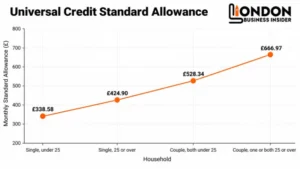
Turn2us lists the 2026/27 Universal Credit standard allowances as £338.58 a month for a single claimant under 25, £424.90 for a single claimant aged 25 or over, £528.34 for a couple both under 25 and £666.97 where one or both members of a couple are 25 or over.
Universal Credit Changes In 2026
Universal Credit has become increasingly important now that separate Cost of Living Payments are no longer being issued.
The 2026/27 standard allowances are:
Household Monthly Standard Allowance
Single, under 25 £338.58
Single, 25 or over £424.90
Couple, both under 25 £528.34
Couple, one or both 25 or over £666.97
Additional elements can be available for children, housing, caring responsibilities, disability and childcare, depending on individual circumstances.
Another significant change took effect on 6 April 2026, when the Universal Credit two-child limit ended.
Universal Credit can now include the relevant child amount for each eligible child in the household, although the overall benefit cap can still restrict the final amount some families receive.
There were also changes to the Limited Capability for Work and Work-Related Activity element.
The amount available to many new claimants is lower than the protected amount available in certain circumstances, including some existing claimants and people who meet specific severe-condition rules.
These changes mean two households receiving Universal Credit may receive very different amounts even when both are described broadly as benefit claimants.
Crisis And Resilience Fund In England
The Crisis and Resilience Fund started in England on 1 April 2026 and replaced the previous Household Support Fund while also incorporating housing-related discretionary support.
This is important because it is not a UK-wide DWP cash payment. It is delivered through local authorities in England, and councils have discretion over how parts of their local schemes operate.
Support may be available for households experiencing a sudden financial crisis, including difficulty paying for:
- Food
- Energy
- Water
- Essential household items
- Emergency living costs
- Some housing-related costs
A person does not necessarily have to receive Universal Credit to qualify for crisis assistance. Local eligibility rules and available support can differ by council.
Households facing immediate difficulty with food, energy, rent or other essentials can also check Citizens Advice cost of living support, which explains the types of council, benefit and bill assistance that may be available.
Winter Fuel Payment And Warm Home Discount 2026
Winter-related assistance remains particularly important as households approach the colder months.
Winter Fuel Payment
Eligible people of State Pension age can receive a Winter Fuel Payment for winter 2026/27, with the amount depending on their circumstances.
Payments are generally made automatically to eligible recipients, with most payments expected during November and December 2026.
People with total income above £35,000 are subject to the current recovery arrangements, meaning the payment may later be recovered through the tax system.
Scotland operates a separate Pension Age Winter Heating Payment rather than the UK Winter Fuel Payment arrangements that apply elsewhere.
Warm Home Discount
The Warm Home Discount remains worth £150 for eligible households.
It is important to understand that this is not normally £150 transferred into someone’s bank account. It is generally applied to the electricity account or provided through the appropriate prepayment arrangement.
The 2026/27 scheme operates over the winter period, and eligibility depends on factors including benefits, household circumstances, location and energy supplier arrangements.
Receiving the Warm Home Discount does not mean a household is receiving a new DWP Cost of Living Payment.
Energy Price Cap October 2026
Energy costs remain one of the biggest pressures on household finances.
From 1 October to 31 December 2026, Ofgem has set the typical annualised price cap at £1,723 for a household paying by Direct Debit and using typical amounts of gas and electricity.
This is up from £1,663 for the July to September period, an increase of around 4%.
According to Ofgem’s October 2026 energy price cap information, average Direct Debit rates from October are approximately:
Charge October To December 2026 Average
Electricity 26.32p per kWh
Electricity standing charge 54.83p per day
Gas 7.97p per kWh
Gas standing charge 29.68p per day
The £1,723 figure is not a maximum household bill. The price cap limits the rates suppliers can charge customers on relevant default tariffs. A household using more energy can still pay considerably more.
Another source of confusion is the government’s energy-policy changes introduced during 2026. Measures designed to reduce policy costs on household bills should not be described as a £150 cash payment.
They affect what households pay for energy rather than creating a new Cost of Living Payment.
Other Help If You Are Struggling With Living Costs
People experiencing an immediate financial shortfall should look beyond the phrase “Cost of Living Payment”, because several smaller or more targeted schemes may be relevant.
Universal Credit Budgeting Advance
Some Universal Credit claimants may qualify for a Budgeting Advance to deal with eligible one-off costs.
The maximum can reach:
- £348 For A Single Person Without Children
- £464 For A Couple Without Children
- £812 For A Household Responsible For Children
A Budgeting Advance is not a grant. It normally has to be repaid through future Universal Credit payments.
Council Tax Reduction
Low-income households may qualify for a reduction in their council tax bill.
Council Tax Reduction is administered locally, so entitlement can differ according to where a person lives, household income, savings and other circumstances.
Someone already claiming Universal Credit should not assume council tax assistance is automatically included in their UC award. A separate application to the council may still be required.
Energy And Utility Support
Anyone unable to keep up with gas or electricity payments should contact their supplier rather than allowing arrears to continue growing.
Depending on circumstances, assistance can include:
- Affordable Repayment Plans
- Temporary Payment Arrangements
- Supplier Hardship Funds Or Grants
- Emergency Prepayment Support
- Warm Home Discount
- Energy Efficiency Assistance
Some households receiving means-tested benefits may also qualify for cheaper broadband, phone or water tariffs.
Cost Of Living Support Across The UK
One weakness in treating “cost of living support” as a single UK system is that emergency assistance is increasingly devolved.
Nation Main Form Of Emergency Support
England Crisis and Resilience Fund through local councils
Scotland Scottish Welfare Fund, including Crisis Grants
Wales Discretionary Assistance Fund
Northern Ireland Discretionary Support and Finance Support arrangements
Universal Credit and many DWP benefits operate across Great Britain, but local crisis assistance can work differently.
Residents should therefore check the rules applying where they live rather than assuming an England-based council scheme is available throughout the UK.
Previous Cost Of Living Payments And Missing Payments
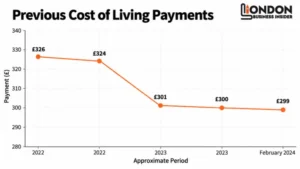
The previous national Cost of Living Payment programme ran between 2022 and 2024.
Major means-tested payments included:
Payment Approximate Period
£326 2022
£324 2022
£301 2023
£300 2023
£299 February 2024
Separate disability and pensioner cost of living support also operated during parts of this period.
The fact that the programme has closed does not necessarily mean every historic payment issue has disappeared.
Someone who believes they qualified for an old payment but did not receive it may need to investigate the original benefit award and qualifying period.
This can be particularly relevant where a benefit decision was changed retrospectively.
Joint benefit claims also did not normally create two separate household Cost of Living Payments. Eligibility depended on the rules applying to the qualifying benefit and assessment period.
Cost Of Living Payment Scams
The absence of a new Cost of Living Payment makes misleading messages particularly important to identify.
Be cautious if a text, email, social media advert or message claims you must urgently “apply” for a 2026 payment.
Warning signs can include:
- Asking You To Enter Bank Details Through An Unsolicited Link
- Claiming A £299, £450 Or £500 Payment Has A Short Application Deadline
- Asking You To Pay A Fee To Release Government Money
- Requesting Passwords Or Security Codes
- Using Urgent Language To Pressure You Into Acting Immediately
There is no general application process for a national Cost of Living Payment 2026.
A genuine benefit, council or energy-support scheme may require an application, but the scheme should have a clear official identity and published eligibility rules.
Cost Of Living Support Timeline From 2022 To 2026
The change from emergency cash payments to targeted support becomes clearer when viewed as a timeline.
Period What Changed
2022 National Cost of Living Payments began
2023 Further £301 and £300 payments were issued
February 2024 Final £299 means-tested payment was issued
2025 Government policy continued moving away from new nationwide payments
April 2026 Crisis and Resilience Fund began in England
April 2026 Universal Credit rates increased
April 2026 Universal Credit two-child limit ended
Summer 2026 Energy and other household-cost measures continued
September 2026 No new DWP Cost of Living Payment is scheduled
October 2026 New £1,723 typical energy price cap takes effect
Winter 2026/27 Winter Fuel Payment and Warm Home Discount support continues
The key change is therefore not that all cost of living assistance has disappeared. Instead, support has become more fragmented, with eligibility increasingly depending on age, income, benefits, household circumstances and location.
What Should You Do If You Need Financial Help Now?
If you are struggling financially, waiting for rumours about another Cost of Living Payment could mean overlooking support that already exists.
Start by checking:
- Your Current Universal Credit Or Benefit Entitlement
- Whether Your Council Offers Crisis Assistance
- Whether You Qualify For Council Tax Reduction
- Whether You Can Receive The Warm Home Discount
- Whether You Qualify For Winter Heating Support
- Whether Your Energy Supplier Has A Hardship Scheme
- Whether A Budgeting Advance Is Appropriate For An Essential Cost
- Whether You Qualify For Social Tariffs Or Other Bill Reductions
The most important point is that there is no new Cost of Living Payment 2026 with a national DWP payment date. However, households should not interpret that as meaning there is no financial support available.
For many people, the help available through Universal Credit, winter assistance, local councils and bill-reduction schemes could be worth more than a single one-off payment, but eligibility needs to be checked individually.
Frequently Asked Questions
Is There A DWP Cost Of Living Payment In 2026?
No. There is no new nationwide DWP Cost of Living Payment scheduled for 2026.
When Is The Next Cost Of Living Payment?
There is currently no next national Cost of Living Payment date. Normal benefits and separate schemes such as winter support continue on their own schedules.
Is The £299 Cost Of Living Payment Coming Back?
No new £299 payment has been confirmed. The £299 figure relates to the final payment under the previous programme in 2024.
Is There A £450 Or £500 Cost Of Living Payment In 2026?
There is no general nationwide £450 or £500 DWP Cost of Living Payment. Claims about these amounts should be checked carefully against the actual scheme being discussed.
What Financial Help Can I Get Instead?
Depending on your circumstances, support may include Universal Credit, local crisis assistance, Winter Fuel Payment, Warm Home Discount, Council Tax Reduction, Budgeting Advances and cheaper social tariffs.