
Child Benefit 2026: HMRC Sets 31 August Deadline for Parents
 • December 20, 2025

Child Benefit 2026 pays £27.05 a week for your eldest or only child and £17.90 for each additional child.
The key immediate issue is the 31 August 2026 deadline for parents of 16- to 19-year-olds who are continuing in qualifying non-advanced education or approved training. If you need to extend the claim and do not respond, payments can stop automatically.
The 2026/27 rates have applied since 6 April 2026. Higher-income households can still claim, although the High Income Child Benefit Charge starts when an individual’s adjusted net income exceeds £60,000 and can recover the full payment at £80,000 or more.
Last Updated: 19.08.2026
What Has Changed With Child Benefit In 2026?
Two developments define Child Benefit 2026: higher payment rates from April and an urgent August deadline affecting some families with teenagers.
From 6 April 2026, the eldest or only-child rate increased from £26.05 to £27.05 a week, while the additional-child rate rose from £17.25 to £17.90. That is an annual increase of £52 for the first or only child and £33.80 for each additional child.
The newer development came on 17 August, when parents were reminded to confirm the plans of eligible 16- to 19-year-olds starting new qualifying education or training in September.
Around 1.5 million parents had been written to, and more than 372,000 had already extended their claims digitally before the deadline.
The important point is that the April rate increase applies broadly to qualifying claims, while the 31 August deadline applies to families who need to confirm a teenager’s continuing eligibility.
How Much Child Benefit Can You Get In 2026?
Your Child Benefit amount depends on whether the child is your eldest or only eligible child, and how many additional eligible children you have. The official Child Benefit rates table confirms the 2026/27 weekly figures of £27.05 and £17.90.
Child Benefit 2026 payment amounts:
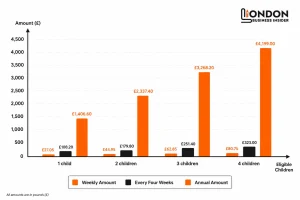
Eligible Children Weekly Amount Every Four Weeks Annual Amount
1 child £27.05 £108.20 £1,406.60
2 children £44.95 £179.80 £2,337.40
3 children £62.85 £251.40 £3,268.20
4 children £80.75 £323.00 £4,199.00
The four-week and annual totals above are calculated from the official weekly rates. Child Benefit is normally paid every four weeks, so a four-week payment should not be described as a calendar-monthly rate.
There is also no Child Benefit limit on the number of children you can claim for, provided each child meets the eligibility conditions.
Who Must Act Before The 31 August 2026 Child Benefit Deadline?
The deadline is particularly important if your teenager is starting a new course or approved training in September and you need Child Benefit to continue. Parents whose teenager is already partway through a course previously reported do not need to notify the department again simply because of this deadline.
Teenagers Continuing In Approved Education Or Training
Child Benefit can continue for eligible young people in full-time, non-advanced education or approved unpaid training.
Full-time education normally means more than an average of 12 hours a week of supervised study or course-related work experience, although different treatment can apply where illness or disability affects study hours. The official teenager eligibility guidance explains the qualifying routes in detail.
Courses that can qualify include:
- A levels and similar qualifications.
- T levels and GCSEs.
- Scottish Highers.
- NVQs and many vocational qualifications up to level 3.
- Home education in qualifying circumstances.
- Certain approved unpaid training programmes.
University degrees and other advanced education do not qualify. An apprenticeship will normally end Child Benefit eligibility, with a specific exception for Foundation Apprenticeships in Wales under the current rules.
What Happens If You Do Not Extend The Claim?
Where action is required, payments can stop automatically after 31 August if the continuing education or training is not reported.
If your teenager later leaves qualifying education, changes course or starts work or training that affects entitlement, you should report the change to avoid an overpayment.
Myrtle Lloyd, Chief Customer Officer at HMRC, said:
“Child Benefit is a vital source of support for many families and we don’t want anyone to miss out.”
The practical priority is therefore to confirm whether your teenager is beginning a new qualifying course before assuming payments will continue.
Who Is Eligible For Child Benefit In 2026?
You normally qualify if you are responsible for bringing up a child under 16 and live in the UK. Child Benefit may continue until the young person turns 20 where they remain in eligible education or training and the relevant conditions are met.
Only one person can receive Child Benefit for the same child. Responsibility usually means the child lives with you or you contribute at least the equivalent Child Benefit amount towards their care, although specific rules can apply to fostering, adoption, separated families and children living elsewhere.
Your salary does not determine whether a child is eligible for Child Benefit. Higher income instead becomes relevant through the separate High Income Child Benefit Charge.
Who claims can also matter for National Insurance. The claimant may receive National Insurance credits towards the State Pension, which can help fill gaps where they are not working or do not earn enough to build contributions in the usual way.
How Does The High Income Child Benefit Charge Affect You In 2026?
The High Income Child Benefit Charge applies according to individual adjusted net income, not simply the combined household salary. For 2026/27, the charge begins when the higher relevant individual’s adjusted net income exceeds £60,000.
The official tax charge guidance states that 1% of the Child Benefit received is repaid for every £200 of adjusted net income above £60,000. At £80,000 or more, the charge is equal to the full Child Benefit amount.
Adjusted net income can include salary and other taxable income such as savings interest and dividends, less certain permitted deductions including some pension contributions and Gift Aid.
For example, adjusted net income of £70,000 is £10,000 over the threshold. Dividing £10,000 by £200 gives 50, so the charge would equal 50% of the relevant Child Benefit for that tax year.
You can receive Child Benefit and pay the charge, or opt out of receiving payments while remaining registered. Eligible taxpayers can now pay the charge through PAYE; Self Assessment remains necessary in some circumstances, including where you need to submit a tax return for another reason.
How Can You Claim, Extend Or Update Child Benefit In 2026?
The process depends on whether you are starting a new claim, extending entitlement for a teenager or reporting a change. Acting promptly is important because new claims can normally only be backdated for up to three months.
Making A New Child Benefit Claim
You can claim after your baby’s birth has been registered; current guidance says a claim can be made from 48 hours after registration.
Only one person can receive Child Benefit for each child, so parents should also consider who would benefit from the associated National Insurance credits.
How To Extend A Teenager’s Child Benefit?
If your teenager is starting qualifying education or training and you need to confirm continued entitlement, you can use the online service or mobile app.
Parents who received a reminder letter may also have a QR code leading to the digital service, while postal or telephone routes remain available for those unable to use digital options.
Changes You Need To Report
Some changes can alter or end entitlement.
Circumstances to report include:
- Your child leaves approved education before completing the course.
- Your child starts education or training that does not qualify.
- Your teenager starts an apprenticeship or job arrangement that changes eligibility.
- Your child starts receiving certain benefits in their own right.
- Responsibility for the child or relevant living arrangements change.
Reporting changes matters because an incorrect continuation of payments can result in an overpayment that may need to be repaid.
When And How Will Your Child Benefit Be Paid In 2026?
Child Benefit is normally paid every four weeks, usually on a Monday or Tuesday. Payment dates can change where the normal date falls on a bank holiday.
Some claimants can receive Child Benefit weekly instead. This can apply if you are a single parent or if you or your partner receive certain other qualifying benefits.
Because Child Benefit is based on weekly rates but generally arrives every four weeks, a family with one eligible child would usually receive £108.20 per standard four-week cycle at the 2026/27 rate. A family with two eligible children would normally receive £179.80 over the same period.
If a bank holiday affects your expected date, check the applicable payment schedule rather than assuming the money is late.
Which Child Benefit Rules Are Most Often Confused In 2026?
The biggest source of confusion in 2026 is the phrase “two-child limit”. The major rule change made in April relates to Universal Credit, not to how many children can qualify for Child Benefit.
Is There A Two-Child Limit On Child Benefit?
No. Child Benefit has no maximum number of children you can claim for, although the eldest or only eligible child attracts the higher rate and additional eligible children attract the lower rate.
The separate Universal Credit two-child limit ended on 6 April 2026. Universal Credit can now include its child amount for every eligible child, although other rules, including the benefit cap, can still affect the household’s overall award.
Child Benefit Versus The High Income Child Benefit Charge
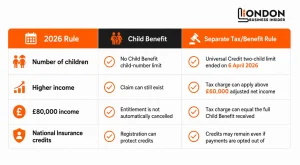
A higher income does not create a two-child restriction, nor does crossing £60,000 automatically make the underlying Child Benefit claim invalid.
How the rules differ:
2026 Rule Child Benefit Separate Tax/Benefit Rule
Number of children No Child Benefit child-number limit Universal Credit two-child limit ended on 6 April 2026
Higher income Claim can still exist Tax charge can apply above £60,000 adjusted net income
£80,000 income Entitlement is not automatically cancelled Tax charge can equal the full Child Benefit received
National Insurance credits Registration can protect credits Credits may remain even if payments are opted out of
These distinctions are important because “claiming”, “receiving payments” and “repaying an amount through tax” are not interchangeable concepts.
What Should You Check About Your Child Benefit Before The End Of 2026?
Your next step should depend on your family circumstances rather than on a single headline about Child Benefit 2026.
Your Child Benefit checklist:
- Check your payment against the £27.05 and £17.90 weekly rates.
- Confirm a teenager’s September course if you need to act before 31 August.
- Do not re-notify solely for the deadline if the teenager is already partway through a previously reported course.
- Make a new claim promptly if you have recently had a baby because backdating is limited.
- Check adjusted net income if you or your partner are above £60,000.
- Report education, training or household changes that could affect entitlement.
- Consider National Insurance credits before opting out of payments because of the tax charge.
The current rules make it particularly important to separate eligibility, payment continuation and higher-income tax treatment when reviewing your position.
Conclusion
Child Benefit 2026 combines higher rates with an immediate action point for some parents of teenagers.
You can receive £27.05 a week for your eldest or only eligible child and £17.90 for each additional child, while families starting new qualifying education or training in September may need to extend the claim before 31 August.
You should also treat the High Income Child Benefit Charge, teenager eligibility and Universal Credit rules as separate issues. Checking the rule that matches your circumstances can prevent missed payments, unnecessary confusion or an avoidable overpayment.
Frequently Asked Questions
How Much Child Benefit Will You Receive For Three Children In 2026?
For three eligible children, the 2026/27 rates total £62.85 a week, or £251.40 every four weeks. Over 52 weeks, that is £3,268.20 before any High Income Child Benefit Charge.
Can Child Benefit Be Backdated If You Claim Late?
A new Child Benefit claim can normally be backdated by up to three months from the date the claim is received. Delaying for longer can therefore mean losing payments for an earlier period.
Can Both Parents Receive Child Benefit For The Same Child?
No, only one person can receive Child Benefit for the same child. If two people are responsible for that child, they should decide who claims, with National Insurance credits being one factor worth considering.
Do University Students Qualify For Child Benefit After Age 16?
A university degree is advanced education and does not qualify for continued Child Benefit. Eligible non-advanced education can include A levels, T levels, Scottish Highers and many vocational qualifications up to level 3.
Does A Paid Apprenticeship Affect Child Benefit Entitlement?
An apprenticeship will normally mean Child Benefit cannot continue, with a specific exception currently listed for Foundation Apprenticeships in Wales. You should report a change promptly where a teenager moves into non-qualifying training or employment.
Can You Receive Child Benefit Weekly Instead Of Every Four Weeks?
Yes, weekly payment can be available if you are a single parent or you or your partner receive certain qualifying benefits. Otherwise, Child Benefit is normally paid every four weeks.
Do Child Benefit National Insurance Credits Count Towards Your State Pension?
Yes, Child Benefit registration can provide National Insurance credits that count towards your State Pension record. Those credits can be particularly relevant if the claimant is not working or does not earn enough to build contributions normally.
Note: Individual entitlement can change when income, education, training or family circumstances change. Check the current official rules before stopping payments, extending a teenager’s claim or making decisions about the High Income Child Benefit Charge.