
When Is the Next Doctors Strike in 2026? – Latest NHS News
 • March 27, 2026
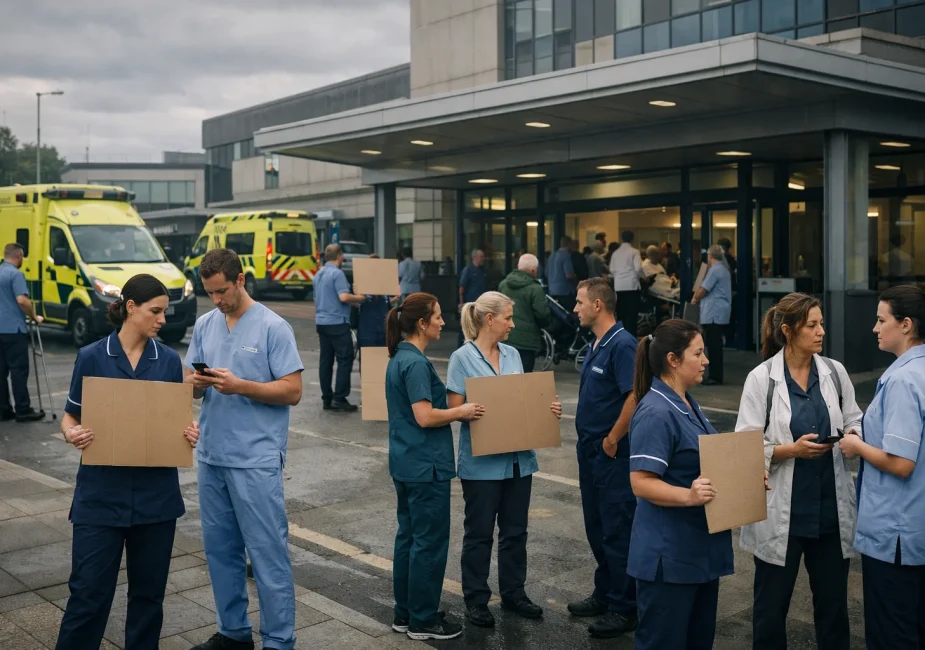
When is the Next Doctors Strike in 2026?

The next NHS doctors strike is scheduled to take place over six consecutive days in April 2026. It involves resident doctors, previously known as junior doctors, working across England.
These doctors form a vital part of the NHS workforce, meaning even a short period of industrial action can have widespread effects.
Key Detail Information
Start date 7 April 2026
Start time 7:00am
End date 13 April 2026
End time 6:59am
Duration 6 days
Who is striking Resident doctors (junior doctors)
Region affected England
This action marks the 15th round of strikes since March 2023, highlighting how prolonged and unresolved the dispute has become. It also signals growing frustration among doctors over the lack of a long-term solution.
Why Are Doctors Striking Again in England in 2026?
The current strike stems from a collapse in negotiations between the British Medical Association (BMA) and the government.
While discussions had been ongoing for months and showed early signs of progress, disagreements over pay structure and long-term financial commitments ultimately led to a breakdown.
At the centre of the issue is how improvements to pay and conditions should be implemented.
Doctors argue that the government changed key elements of the deal late in negotiations, particularly by spreading financial gains over several years rather than delivering meaningful improvements upfront.
Dr Jack Fletcher, chair of the BMA resident doctors committee, stated:
“We have been negotiating in good faith for weeks, but the government began to shift the goalposts at the last moment.”
What Caused the Breakdown in Talks?
- Disagreement over how quickly pay improvements should be delivered
- Concerns about long-term pay erosion and inflation
- Lack of agreement on job availability and training reforms
What Are Doctors Demanding?
- Faster progress towards full pay restoration
- Clearer and fairer career progression structures
- Practical solutions to workforce shortages and bottlenecks
This ongoing tension reflects deeper structural issues within the NHS workforce rather than a single pay disagreement, making the dispute more complex to resolve.
What is the Latest NHS Pay Offer for Doctors in 2026?

In March 2026, the government confirmed it would accept the Doctors’ and Dentists’ Review Body (DDRB) recommendation of a 3.5% pay increase for doctors across England.
This decision applies to multiple groups within the NHS and is part of the annual pay review process.
Key Details of the Pay Award
- 3.5% increase effective from 1 April 2026
- Applies to resident doctors, consultants, and other NHS doctors
- Pay rise expected to be paid in June, backdated
Despite this, the BMA argues the increase does not go far enough to address long-term pay decline or compensate for years of below-inflation increases.
Health Secretary Wes Streeting commented:
“This government has put forward a generous package that would have improved both pay and career prospects.”
However, many doctors disagree, pointing out that inflation and previous pay erosion mean real earnings remain significantly lower than in the past. This gap between perception and reality continues to fuel the dispute.
Pay Element Government Position BMA Position
2026 Pay Rise 3.5% accepted Insufficient
Inflation Comparison Close to the current rate Still below long-term losses
Pay Restoration Not included fully Core demand
Implementation Gradual Should be faster
Who is Involved in the April 2026 Doctors Strike?
The strike involves resident doctors in England, a group that makes up nearly half of the NHS medical workforce. These professionals are still in training but are responsible for a significant portion of frontline patient care, including hospital wards, emergency departments, and outpatient services.
The term “resident doctors” has replaced “junior doctors,” although many people still use the older term. The BMA represents a large proportion of these doctors and is coordinating the industrial action on their behalf.
Because of their central role within hospitals, even a temporary withdrawal of their labour can disrupt services across multiple departments, making their participation highly impactful.
How Long Will the Next NHS Doctors Strike Last?
The April 2026 NHS doctors’ strike will last for six full days, running from the morning of 7 April to early 13 April. This makes it one of the longest periods of industrial action in the ongoing dispute, creating sustained pressure on healthcare services rather than short-term disruption.
This strike is significant for several reasons:
- One of the longest strikes, matching only one previous six-day walkout
- Ongoing dispute since 2023, marking the 15th round of industrial action
- Increasing pressure on NHS services and staff
Extended strikes often force hospitals to delay non-urgent procedures, reassign senior doctors, and prioritise emergency care, leading to longer waiting times and continued disruption even after the strike ends.
What Are the Main Reasons Behind the Doctors Pay Dispute?
The dispute is not just about a single pay rise, it reflects broader concerns about the long-term sustainability of medical careers within the NHS.
Doctors argue that their pay has declined significantly in real terms since 2008, even after recent increases. They are seeking full pay restoration, which aims to reverse years of gradual financial erosion.
In addition to salary concerns, there are ongoing issues related to career progression and job availability. Many doctors face difficulties moving into specialist training roles due to limited positions, creating uncertainty about their future.
A junior doctor working in London recently shared:
“We’re not just striking over pay — it’s about the future of the profession and whether it’s sustainable to stay in the NHS.”
These concerns are further intensified by rising living costs, heavy workloads, and staff shortages, all of which contribute to growing dissatisfaction across the workforce.
How Will the Doctors Strike Affect NHS Services and Patients?
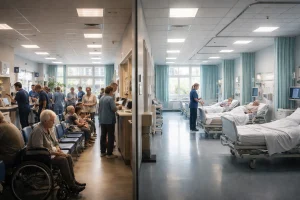
The impact of the doctors strike is expected to be significant, particularly given the length of the walkout and the number of staff involved across NHS hospitals in England.
As resident doctors play a key role in day-to-day patient care, their absence places immediate pressure on services, staffing, and hospital capacity.
What Services Are Likely to Be Affected?
- Non-urgent appointments may be postponed
- Elective surgeries could be delayed
- Diagnostic tests may take longer to schedule or process
- Waiting lists may increase further, adding to existing backlogs
These disruptions are likely to be felt most strongly in routine and planned care, where flexibility allows hospitals to reschedule services in response to staffing shortages.
What Services Will Still Operate?
- Emergency care (A&E) will remain open
- Critical and life-saving treatments will be prioritised
- Urgent cases will continue to receive attention, although delays are still possible
NHS leaders have warned the strike could cost up to £300 million, placing additional financial pressure on an already stretched healthcare system.
This includes the cost of contingency planning, overtime for senior staff, and the longer-term impact of delayed care.
A patient awaiting surgery described their concern:
“I’ve already waited months for my operation. If it gets delayed again, it’s incredibly frustrating.”
While contingency plans will be implemented to maintain essential services, disruption is unavoidable, particularly for non-urgent care. Patients are therefore advised to stay updated and remain prepared for possible changes to their appointments.
Can the April 2026 Doctors Strike Still Be Avoided?
Despite the confirmed dates, there is still a possibility that the strike could be called off if negotiations resume and lead to a revised agreement.
Both the government and the BMA have indicated some willingness to continue discussions, although key disagreements remain unresolved. The outcome will depend on whether both sides can find common ground quickly.
Dr Jack Fletcher noted:
“No strikes need to happen, but the government will need to act quickly to prevent them.”
At present, however, no new deal has been reached, meaning the strike is expected to proceed as planned unless there is a last-minute breakthrough.
What Should You Do if You Have an NHS Appointment During the Strike?

If you have an upcoming NHS appointment during the strike period, it is important to remain cautious but not assume immediate cancellation.
Patients are generally advised to:
- Attend appointments unless told otherwise
- Check for updates from their local NHS trust
- Be prepared for possible delays or rescheduling
Hospitals will prioritise urgent and emergency cases, so routine appointments are more likely to be affected. Staying informed and checking official updates regularly can help reduce uncertainty.
What Does the Next Doctors Strike Mean for the NHS in 2026?
The April 2026 strike highlights ongoing challenges within the NHS, particularly around workforce retention, funding pressures, and working conditions.
Repeated industrial action has already contributed to longer waiting times and increased pressure on healthcare staff. If disputes continue without resolution, the long-term impact could affect both patient outcomes and staff morale.
More broadly, the situation raises important questions about how the NHS can remain sustainable while balancing financial constraints with the needs of its workforce. The outcome of this dispute may shape future negotiations and workforce policies across the healthcare system.
Conclusion
To summarise, the next doctors’ strike is scheduled to take place from 7 April to 13 April 2026, involving resident doctors across England.
This planned industrial action reflects ongoing concerns around pay, working conditions, and wider workforce challenges within the NHS.
While negotiations may still continue, disruption to healthcare services remains likely if the strike goes ahead.
As a result, patients should stay updated with official NHS guidance, plan appointments carefully, and be prepared for possible delays or changes as the situation develops further.
FAQs About Next Doctors Strike in 2026
Will the doctors strike affect all parts of the UK?
No, the April 2026 strike applies specifically to England. Other UK nations may have different arrangements.
Are resident doctors the same as junior doctors?
Yes, resident doctors are the updated term for what were previously known as junior doctors.
Will emergency services remain open during the strike?
Yes, emergency care such as A&E will continue to operate, although services may be under pressure.
Why are doctors unhappy with the 3.5% pay rise?
Doctors argue it does not fully address long-term pay erosion or meet their demand for pay restoration.
How many times have doctors gone on strike since 2023?
This will be the 15th strike action since March 2023.
Can my appointment be cancelled due to the strike?
Yes, particularly for non-urgent care, but you should wait for confirmation from your NHS provider.
Could the strike still be cancelled?
Yes, if negotiations resume and a new agreement is reached before the planned dates.