
UK Free Bus Pass Changes – New Rules, Eligibility Updates and What’s New
 • December 12, 2025

As the UK approaches 2026, the conversation around free bus pass eligibility continues to evolve. Recent policy shifts, financial pressures, and public campaigns have brought renewed attention to how concessionary travel is offered across England and its devolved counterparts.
Millions of older adults in England now face extended waiting periods before qualifying for a free bus pass, while their peers in Scotland, Wales, and Northern Ireland continue to receive free travel from the age of 60. These disparities have fuelled growing public demand for change.
In this in-depth article, we explore the latest confirmed updates, upcoming changes from April 2026, regional policy variations, and what it all means for over-60s in the UK.
Whether you’re nearing retirement age or already eligible, understanding the shifting landscape of free bus pass rules is essential.
What Are the Major Free Bus Pass Changes Happening in 2025 and 2026?
From April 2026, the eligibility age for free bus passes in England will increase from 66 to 67 under the English National Concessionary Travel Scheme (ENCTS). This change aligns with the UK government’s phased increase in the state pension age, which will reach 67 for both men and women by 2028.
While Scotland, Wales, and Northern Ireland continue to offer free travel from age 60, England’s adjustment delays access for thousands of older adults. Rising living and transport costs are adding pressure on mobility and independence for this group.
Key points:
- A public petition with over 100,000 signatures prompted a parliamentary debate in January 2025.
- The government cited budget limits, stating that lowering the age would cost the ENCTS around £700 million annually.
Who Is Eligible for a Free Bus Pass Right Now in England?
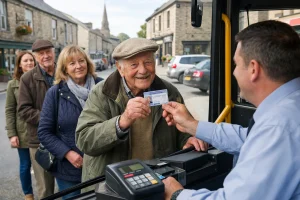
In England, free bus travel is offered through the English National Concessionary Travel Scheme (ENCTS), providing off-peak local bus access to eligible individuals.
This scheme ensures mobility for older adults and those with certain disabilities, although it comes with specific limitations.
Who Qualifies Under ENCTS?
- Individuals who have reached the state pension age, currently 66
- People with eligible disabilities
- Off-peak travel on local buses, typically 9:30 AM–11:00 PM weekdays and all day on weekends/public holidays
- Coverage does not extend to trains or trams unless specified locally
- Some councils offer additional benefits, like earlier access or broader time windows
- London’s Freedom Pass allows travel for 60+ residents on buses, tubes, and trams
- Local schemes in areas like Merseyside provide discretionary early access
Eligibility varies by location, creating differences in access and travel opportunities across England.
What Will Change in April 2026 for Free Bus Pass Eligibility?
From April 2026, the eligibility age in England for a free bus pass will officially increase to 67, matching the revised state pension age.
Why This Matters?
Anyone born after April 1959 will face a delay in accessing free travel benefits. This affects older adults who rely on public transport or live in areas with limited options, potentially increasing travel costs and social isolation.
Critics argue the change disproportionately impacts seniors, particularly since Scotland, Wales, and Northern Ireland retain eligibility from age 60.
Timeline of Changes
| Year | State Pension Age | Bus Pass Eligibility Age (England) |
|---|---|---|
| 2025 | 66 | 66 |
| 2026 | 67 | 67 (from April) |
| 2028 | 67 (fully phased) | 67 |
| 2044–2046 | 68 (expected) | TBD (likely aligned with pension) |
This rising threshold reinforces the importance for those approaching retirement to plan ahead and explore alternative support or subsidies, especially if they reside outside of areas offering earlier access.
Why Do Over-60s in Scotland, Wales, and Northern Ireland Still Get Free Travel?
The disparity between England and the devolved nations lies in the devolved nature of transport policy across the UK.
While the ENCTS applies solely in England, Scotland, Wales, and Northern Ireland operate their own concessionary travel schemes, independent of Westminster’s control.
In these nations, residents are eligible for free bus travel from the age of 60, with some regions also offering multi-modal passes that include trains and ferries. These benefits are universally applied, ensuring that all over-60s enjoy the same level of support regardless of council funding or regional budgets.
In contrast, England’s approach is more fragmented. Local authorities may offer additional concessions, but they are not required to do so, and decisions are often driven by local budget availability. This has led to perceptions of inequity, especially for those living just outside zones like Greater London.
How Did the Petition for Over-60s Free Travel in England Reach Parliament?

Frustration over the growing disparity triggered a grassroots campaign in late 2024, with a petition hosted on the government’s website calling for free bus passes for all over-60s in England, regardless of location.
The petition quickly gained traction, surpassing 100,000 signatures, the threshold required to trigger a formal debate in Parliament.
The issue was debated by MPs in January 2025, placing significant pressure on the Department for Transport to justify its stance.
Although no policy reversal followed the debate, it helped amplify the conversation around accessibility, social equality, and the role of transport in public health for ageing populations.
What Is the Government’s Response to Expanding Free Bus Passes for Over-60s?
The Department for Transport acknowledged public concern but maintained the current eligibility age, citing the financial strain that lowering it would place on the ENCTS. Instead, the government encouraged local councils to use discretionary powers to offer earlier access where feasible.
Supporting this, the 2024 Budget included a £1 billion bus improvement package, with £712 million allocated directly to local authorities. This funding can be used to enhance routes, maintain services, or extend concessionary schemes if prioritised locally.
As a result, universal reform has been avoided, leaving free travel for over-60s in England possible only in areas where councils choose to fund it, creating a patchwork system across the country.
Can Local Councils Still Offer Free Travel at 60 in England?
Yes, local councils retain the power to offer discretionary concessions beyond what the national ENCTS provides. Some areas, including London, Merseyside, and parts of Greater Manchester, continue to offer early access to travel schemes for residents aged 60 and over.
However, this flexibility depends on local funding availability, political will, and the state of the local bus network. In some rural and semi-rural areas, the capacity to offer such schemes is limited, not just due to funding but due to inadequate transport infrastructure.
Examples of Council Flexibility:
- London: Freedom Pass available at 60 for residents; covers TfL services.
- Merseyside: Offers a concessionary scheme for 60+ with local subsidies.
- Other Areas: Councils must balance concession schemes against other public spending priorities.
Are There Enough Bus Services for Older People to Use Their Passes?
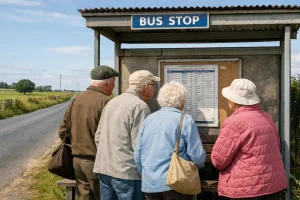
A major concern raised by both campaigners and government critics is the declining availability of local bus routes. A report from the National Audit Office in mid-2025 highlighted that 46% of councils rated their ability to deliver adequate local transport services as “fairly poor” or “very poor.”
Post-pandemic recovery has been sluggish. Data from 2023–2024 shows a 9% decline in bus passenger numbers compared to pre-pandemic levels.
While the £2 fare cap (introduced in 2023) led to a modest 5% increase in usage, this was not enough to counteract issues such as poor reliability, infrequent service, and route cancellations.
As part of its 2025 reforms, the government introduced a £3 fare cap, set to run until March 2027. While these caps help manage costs for users, they do not address the structural issues causing route closures, especially in non-urban areas.
How Does Free Bus Pass Eligibility Compare Across the UK in 2025-2026?
Understanding how free bus pass eligibility varies by region is essential for older adults across the UK, especially as national policy shifts in England begin to widen the divide.
While England aligns eligibility with the rising state pension age, the devolved nations continue to uphold earlier access from age 60. These policy discrepancies have led to a growing sense of unfairness, particularly for those living near regional borders.
The following table illustrates how eligibility is structured across the UK in 2025 and what’s planned for 2026:
| Region | Eligibility Age (2025) | Eligibility Age (2026) | Notes |
|---|---|---|---|
| England | 66 | 67 (from April) | Unless earlier access is granted by local council |
| Scotland | 60 | 60 | Universal across the country |
| Wales | 60 | 60 | Universal across the country |
| Northern Ireland | 60 | 60 | Universal across the country |
| London (Freedom Pass) | 60 (within London only) | 60 | Applies to TfL network only |
The divergence is expected to remain or even grow, unless national policy changes in England are introduced to harmonise with the devolved administrations. For now, older residents in Scotland, Wales, and Northern Ireland benefit from earlier and more accessible travel options.
How Can You Check If You Qualify or Apply for a Free Bus Pass in 2026?

Eligibility depends not only on age but also on where you live. Those who reach the qualifying age can apply through their local council’s website, often using a postcode checker provided by the official UK government portal.
Applications typically require:
- Proof of age (passport, birth certificate)
- Proof of address (utility bill, council tax letter)
- Passport-sized photo for ID purposes (digital or physical)
Once approved, passes are posted within a few weeks. Those who qualify under disability rules may also need supporting documentation, such as a benefits award letter or medical certification.
What Can Over-60s in England Do if They’re Not Yet Eligible in 2026?
For over-60s in England who won’t yet qualify for full free bus pass benefits in 2026, there are still practical ways to save on travel and stay informed.
- Apply for local discounts or council-subsidised schemes where available
- Purchase Senior Railcards or bus company-specific discount cards
- Engage with local consultations to push for improved or earlier access
- Subscribe to council newsletters for updates on transport support initiatives
By exploring these options and staying engaged with local initiatives, over-60s can make the most of available discounts while preparing for full eligibility in the coming years.
What’s the Future of Free Bus Travel in England After 2026?

As the eligibility age increases to 67 in April 2026, public scrutiny is expected to intensify. If the state pension age rises again to 68 by 2046 as projected, bus pass access may also shift upward.
Campaigners argue that this trend may disproportionately affect the most vulnerable elderly, particularly in areas lacking robust transport systems.
Whether the government chooses to realign with devolved nations or maintain its current course depends on future political will, economic conditions, and public engagement.
Conclusion
For older adults in England, the upcoming changes mark a significant shift in when and how they can access free public transport.
The increase in eligibility age to 67 from April 2026 will delay benefits for many, while residents in Scotland, Wales, and Northern Ireland continue to enjoy broader, earlier access.
Navigating these changes will require careful planning, engagement with local councils, and advocacy for fairer policies. As transport continues to shape access to essential services and quality of life in later years, the conversation around free travel must remain a priority for both local and national decision-makers.
Frequently Asked Questions
What is the English National Concessionary Travel Scheme (ENCTS)?
It’s a statutory scheme that offers free off-peak bus travel in England to those of state pension age and eligible disabled individuals.
Will the free bus pass age definitely increase in April 2026?
Yes, the Department for Transport has confirmed the age will rise to 67 in line with the state pension age.
Why is there a difference in eligibility age across the UK?
Transport is a devolved policy area, allowing Scotland, Wales, and Northern Ireland to set their own rules.
Is there a national plan to align England with other UK nations?
Not currently. The government supports local discretion rather than a national change.
Can I still get a pass earlier in England?
Only if your local council funds additional concessions, as in London and Merseyside.
What happens if I turn 66 just before April 2026?
You would qualify under the current rules and should apply before the change takes effect.
Where can I apply for a free bus pass in England?
You can apply via your local council or use the gov.uk postcode checker to be directed appropriately.