One Million More Pensioners to Pay Income Tax – How the Tax Freeze Is Changing Retirement?
 • March 6, 2026
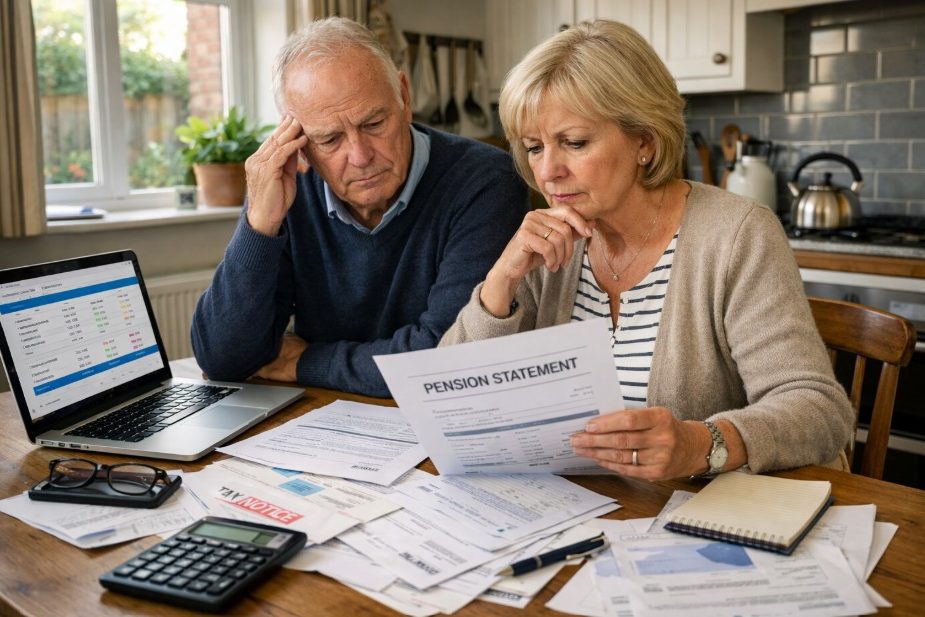
📊 Pension Tax Freeze – Key Facts at a Glance
Short Insight: The number of more pensioners paying income tax is expected to rise sharply because the UK personal allowance remains frozen at £12,570 until 2031 while the state pension continues to increase each year.
📈 Key Forecasts
- Around 600,000 more pensioners expected to pay tax by 2026–27
- Up to 1 million additional pensioners by 2030–31
- State pension projected to exceed the tax-free allowance around 2027
- Millions could face small but new tax bills
💷 Current Thresholds
- Personal allowance: £12,570
- Allowance frozen until April 2031
- Full new state pension nearing tax threshold
- Additional income could trigger income tax
⚠ Why It Matters
As pensions rise under the triple lock while tax thresholds stay frozen, more retirees are slowly being pulled into the tax system through a process known as fiscal drag.
💡 Quick Takeaway: Even a small private pension, savings interest, or part-time income could push your total income above the tax-free limit in the coming years.
Why Are More Pensioners Paying Income Tax in the UK?
The increase in more pensioners paying income tax is primarily the result of a policy known as fiscal drag. Fiscal drag occurs when tax thresholds remain frozen while incomes rise. Over time, more people gradually cross the tax threshold even though the tax rules themselves have not changed.
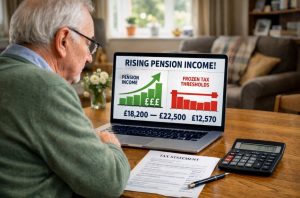
In the UK, the personal allowance, the amount you can earn before paying income tax, has been frozen at £12,570 since the 2021–22 tax year. The government has confirmed that this freeze will remain in place until April 2031.
At the same time, pension incomes are rising. The state pension increases annually under the triple lock, which guarantees growth based on the highest of inflation, average wage growth, or 2.5%.
As a result, many retirees who previously stayed below the tax threshold are gradually moving above it.
The Office for Budget Responsibility estimates:
- 600,000 additional pensioners will pay income tax by 2026–27
- 1 million additional pensioners will pay income tax by 2030–31
While many of these individuals may pay only small amounts of tax, the trend represents a significant shift in how retirement income is treated in the UK.
How Does the Personal Allowance Freeze Affect Pensioners?
The freeze on the personal allowance is one of the biggest drivers behind the rise in pension taxation. Normally, tax thresholds increase gradually to reflect inflation and rising incomes.
However, by holding the threshold steady at £12,570 for nearly a decade, more people are being pulled into the tax system each year.
For pensioners, the impact can be particularly noticeable because retirement income often comes from multiple sources.
The Role of Fiscal Drag
Fiscal drag works quietly. Even small annual increases in income can push individuals above the tax threshold if the allowance does not rise.
For retirees, this may happen as:
- The state pension increases each year
- Private pension payments grow with inflation
- Small additional income sources accumulate
Over time, the gap between pension income and the tax threshold narrows.
Why the Freeze Lasts Until 2031?
The government initially introduced the freeze as a way to stabilise public finances following economic pressures. However, extending the freeze until 2031 means its impact will stretch across nearly an entire decade.
As retirement incomes rise, the number of pensioners who cross the tax threshold will naturally increase.
Why Is the State Pension Increasing While Tax Thresholds Stay Frozen?
One of the most significant factors behind rising pension taxation is the triple lock policy, which guarantees that the state pension increases every year.
Under the triple lock, the state pension rises by whichever is highest:
- Inflation
- Average wage growth
- 2.5%
This policy was introduced to ensure pensioners maintain their purchasing power and are protected from rising living costs. However, when combined with frozen tax thresholds, it creates an unusual dynamic.
While pension income continues to increase, the tax-free allowance remains unchanged. Over time, this means the state pension itself is moving closer to the tax threshold.
As pensions policy expert Steve Webb explained:
“The Government has a clear presentation problem when the new state pension goes above the tax threshold. Millions of pensioners could be dragged into tax for the first time.”
This policy interaction is a major reason the number of retirees paying tax is expected to rise over the next decade.
Will the Full State Pension Soon Exceed the Tax-Free Allowance?
Yes, forecasts suggest that the full new state pension could exceed the personal allowance within the next few years.
Currently, the full state pension sits slightly below the £12,570 threshold. However, annual increases mean the gap is rapidly narrowing.
The following table illustrates projected changes:
| Tax Year | Estimated Full State Pension | Personal Allowance | Tax Position |
|---|---|---|---|
| 2025–26 | ~£11,973 | £12,570 | Below threshold |
| 2026–27 | ~£12,547 | £12,570 | Very close to limit |
| 2027–28 | ~£12,700+ | £12,570 | Likely above threshold |
Once the state pension rises above the personal allowance, pensioners whose only income is the state pension could technically become liable for income tax.
However, the government has indicated it intends to prevent this scenario.
Which Pensioners Are Most Likely to Pay Income Tax in the Coming Years?
Not all pensioners will be affected in the same way. In reality, those most likely to face new tax bills are retirees who have multiple income sources.
Pensioners With Private or Workplace Pensions
Many retirees receive income from occupational pensions or private retirement savings. Even relatively small pension payments can push total income above the personal allowance.
For example, someone receiving the full state pension plus a modest workplace pension could quickly exceed the tax-free limit.
Pensioners With Savings or Part-Time Income
Additional income streams may include:
- Interest from savings outside an ISA
- Part-time employment income
- Investment returns
- Rental income
Even small amounts of additional income may trigger a tax liability.
Retirees Receiving Additional State Pension or SERPS
Those who reached state pension age before April 2016 may receive additional state pension payments, previously known as SERPS.
Some of these pensioners already receive state pension amounts above the personal allowance, meaning they may already be paying income tax.
Will Pensioners with Only the State Pension Have to Pay Income Tax?
The government has indicated that pensioners whose only income is the state pension will not have to pay income tax during this Parliament.
However, the exact mechanism for implementing this promise remains unclear.
Rachel Vahey, head of public policy at AJ Bell, explained:
“We don’t know exactly how the Government is going to tackle this, but it has suggested anyone just taking the state pension won’t have to do a self-assessment or simple assessment and won’t be taxed.”
Despite this assurance, policy experts note that legislation and administrative changes may still be required.
Until those details are finalised, uncertainty remains about how the exemption will work in practice.
Why Are Some Experts Warning About Fairness Between Pensioners?
The potential exemption for pensioners receiving only the state pension has raised concerns about fairness.
Critics argue that different groups of pensioners could be treated very differently depending on the source of their retirement income.
Some of the key concerns include:
- Pensioners with small private pensions may still face tax bills
- Retirees on the old state pension system may already be taxed
- Working-age taxpayers may view special exemptions as unfair
David Brooks, head of policy at consultancy Broadstone, noted:
“While the fiscal gains for the Treasury may be modest, the optics are significant. Exempting certain pension income could raise questions about fairness across generations.”
These concerns highlight the complexity of reforming pension taxation without creating unintended inequalities.
How Is Tax on the State Pension Collected in Practice?
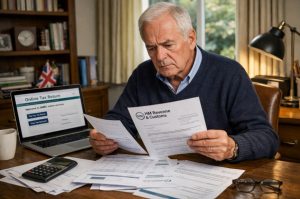
Unlike many other types of income, the state pension is paid without tax being deducted at source. Instead, HMRC collects tax through other mechanisms depending on an individual’s financial situation.
Tax Collected Through Private Pension Tax Codes
If you receive a private or workplace pension, HMRC typically adjusts your PAYE tax code. This allows tax owed on your state pension to be collected automatically through your private pension payments.
Simple Assessment From HMRC
If you do not receive other taxable pension income, HMRC may use a process called simple assessment.
Under this system:
- HMRC calculates how much tax you owe based on available data
- You receive a letter (usually a P800 or PA302 form) explaining the amount due
- The tax must then be paid directly to HMRC
For some pensioners, receiving a tax bill in this way can come as an unexpected surprise.
How Much Extra Tax Could Pensioners Actually Pay?
Although the number of pensioners paying tax is expected to increase significantly, many will pay relatively small amounts.
Government modelling suggests the freeze could raise roughly £100 million annually by 2030–31, a modest figure compared with overall tax revenues.
The amount of tax you pay will depend on your total income.
| Income Sources | Total Income Example | Likely Tax Outcome |
|---|---|---|
| State pension only | £12,500 | Usually no tax |
| State pension + small pension | £13,500 | Small tax bill |
| State pension + multiple pensions | £18,000+ | Larger tax liability |
Even small increases in income could push some retirees just above the tax threshold.
What Can You Do to Avoid an Unexpected Tax Bill in Retirement?

While you cannot avoid tax that is legally owed, you can take steps to reduce surprises and manage your retirement income effectively.
One useful approach is regularly reviewing your income sources and checking how they interact with the tax threshold.
Common strategies include:
- Checking your HMRC tax code to ensure it reflects accurate income estimates
- Reviewing your state pension forecast alongside private pensions
- Using ISA savings, which do not count towards taxable income
- Considering Marriage Allowance if one partner earns below the tax threshold
- Speaking with a financial adviser if your pension income is increasing
Sarah Pennells, a consumer finance specialist at Royal London, emphasised the importance of awareness:
“Knowledge is your best defence. A quick check of your tax position each year can help prevent unexpected bills.”
Real-Life Example:
Take the example of John, a retired worker living in the UK. John receives the full state pension of £12,547 per year and also gets £1,500 annually from a small private pension he built up during his career.
This brings his total yearly income to £14,047, which is £1,477 above the personal allowance. As a result, that portion of his income is taxed at the basic rate of 20%, giving him a small but noticeable annual tax bill.
For retirees like John, even small changes in how pension income is taken can sometimes help reduce the amount of tax they pay.
Conclusion
The rising number of more pensioners paying income tax reflects a broader shift in how retirement income interacts with government policy. Frozen tax thresholds combined with rising state pensions are gradually bringing more retirees into the tax system.
While many pensioners may only face small tax bills, the trend raises important questions about fairness, transparency, and long-term retirement planning.
For individuals approaching retirement, understanding how pension income is taxed is becoming increasingly important. Checking your income sources, monitoring tax thresholds, and staying informed about policy changes can help ensure there are no surprises in the years ahead.
FAQs About More Pensioners Paying Income Tax
Do pensioners automatically pay income tax in the UK?
No. Pensioners only pay income tax if their total annual income exceeds the personal allowance threshold.
Is the UK state pension taxable income?
Yes. The state pension counts as taxable income, although it is paid without tax being deducted.
What is the current personal allowance in the UK?
The personal allowance is currently £12,570 and is expected to remain frozen until April 2031.
Can a small private pension push you into paying tax?
Yes. Even a modest private pension can push total income above the tax-free allowance.
Why are tax thresholds frozen until 2031?
The government extended the freeze to stabilise public finances and increase tax revenue through fiscal drag.
How does HMRC know how much tax pensioners owe?
HMRC receives income data from pension providers and the Department for Work and Pensions.
Should pensioners review their tax position each year?
Yes. Reviewing income and tax codes annually helps prevent unexpected tax bills.