
Is There Going to Be a Petrol Shortage in the UK?
 • March 2, 2026
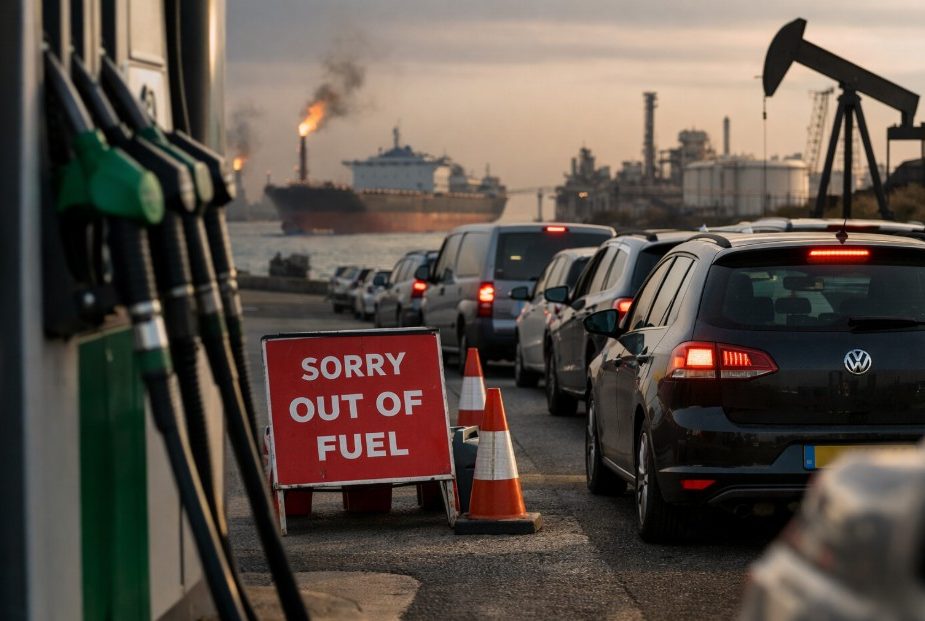
A nationwide petrol shortage in the UK is unlikely right now, but prices are expected to rise. Recent increases at the pumps have been driven by higher global oil prices and escalating tensions in the Middle East, rather than a confirmed breakdown in UK fuel supply.
While headlines suggest worst-case scenarios, the more immediate risk for motorists is higher costs, not empty forecourts. However, short-term local shortages could still occur if panic buying increases.
Key points drivers should know:
- Average petrol prices have edged above 131p per litre.
- Brent crude has climbed above $71 (£55) per barrel.
- Disruption in the Strait of Hormuz could push prices higher.
- £2 per litre is possible only in a severe worst-case scenario.
Here’s what UK drivers and businesses need to understand now, and what could happen next if global tensions escalate.
What Is Causing Concerns About a Petrol Shortage in the UK Right Now?

Concerns about a petrol shortage in the UK are being driven by three connected factors: rising crude oil prices, geopolitical instability in major oil-producing regions, and domestic fuel duty pressures.
After weeks of steady declines, unleaded prices have increased for two consecutive weeks, now averaging around 131.7p to 132.9p per litre. While far below the July 2022 peak of 191.55p, the renewed upward trend has unsettled drivers.
Key drivers behind the anxiety include:
- Brent crude climbing above $71 per barrel
- Escalating Middle East tensions
- Ongoing Russia–Ukraine conflict
- Trade and tariff uncertainty
Edmund King, President of the AA, warned:
“The turmoil and bombing across the Middle East will surely be a catalyst to disrupt oil distribution globally, which will inevitably lead to price hikes. So drivers beware — within the next 10 to 12 days we could be seeing record prices at the pumps.”
Such statements amplify public concern. However, rising prices do not automatically mean physical shortages, an important distinction.
Are Petrol Prices in the UK Already Rising Again?
Yes, petrol prices in the UK are rising again, but moderately. After several months of gradual declines, the recent reversal appears linked to global wholesale movements.
Oil prices had already reached seven-month highs before recent escalations in the Middle East, touching $73 per barrel (around £57).
Below is a snapshot comparison of recent price levels:
| Period | Average UK Petrol Price | Brent Crude Price | GBP Equivalent |
|---|---|---|---|
| July 2022 (record high) | 191.55p per litre | ~$120+ | ~£95+ |
| February (recent low trend) | ~131.46p | ~$67 | ~£52 |
| Current Average | 131.7p–132.9p | $71–$74 | £55–£58 |
Although the increases are currently modest, analysts caution that the “price floor” may have been reached.
Tony Redondo of Cosmos Currency Exchange commented:
“The recent rise to 131.71p per litre signals a definitive pause in the downward trend UK drivers enjoyed earlier this year… Barring a major supply disruption, prices are expected to settle between 133p and 135p in the short term.”
That projection suggests steady increases rather than sudden spikes, unless geopolitical risks escalate further.
How Could the Middle East Conflict Affect UK Fuel Supplies?
Heightened tensions in the Middle East can influence UK fuel markets even without direct supply disruption, largely because oil pricing operates on a global system.
The Role of Global Oil Markets in UK Petrol Pricing
The UK does not need to import most of its oil from the Middle East to feel the effects of instability there. Oil is traded globally, and when supply fears arise in key producing regions, prices typically rise across all markets.
Brent crude, the global benchmark, directly influences European wholesale fuel prices. For example, when prices move from $67 to $74 per barrel, the increase feeds through the supply chain and eventually reaches UK forecourts.
Key impacts include:
- Immediate reactions in wholesale fuel markets
- Retail pump price adjustments within days or weeks
- Greater volatility driven by speculation and risk pricing
As a result, even perceived threats to global supply can translate into higher petrol prices in the UK.
Why Supply Disruptions Influence Wholesale and Retail Costs?
If shipping lanes are threatened or oil production is interrupted, traders anticipate shortages. Even the risk of disruption can move prices sharply. Wholesale fuel markets respond almost instantly, while pump prices follow within days or weeks.
Retailers typically pass on increases faster than decreases. As Redondo noted, “retail prices typically rise much faster than they fall.”
The Impact of Shipping Routes and Insurance Costs
Conflict has increased maritime insurance premiums by an estimated 20% to 50% in affected regions. Tankers have reportedly delayed transit through high-risk zones. Re-routing ships adds freight costs and slows supply chains.
While these disruptions do not automatically cut off UK supplies, they contribute to upward pricing pressure and volatility.
Why Is the Strait of Hormuz So Important for Global Oil and UK Petrol?
The Strait of Hormuz is one of the most critical oil chokepoints in the world. Roughly 20% of global oil supplies and a fifth of liquefied natural gas pass through this narrow waterway between the Persian Gulf and the Gulf of Oman.
Recent threats to close or restrict passage through the Strait have significantly unsettled markets. Even partial disruption could send oil sharply higher.
Consider this scenario modelling:
| Strait Disruption Scenario | Estimated Oil Price | GBP Equivalent | Likely UK Pump Impact |
|---|---|---|---|
| 50% traffic reduction (2 months) | $84/barrel | ~£65 | 140p–150p per litre |
| Sustained closure | $140/barrel | ~£110 | Potential £2 per litre |
| Minor tension, no closure | $75–$80 | £58–£62 | 133p–145p per litre |
Oxford Economics estimates that a prolonged shutdown could push oil toward $140 per barrel (about £110). In such a case, petrol in the UK could realistically approach or exceed £2 per litre.
However, a full closure would also severely damage Iran’s own economy, making it a high-risk and less likely long-term strategy.
Does Rising Oil Prices Automatically Mean a Petrol Shortage in the UK?
No, and this distinction is crucial. A price surge is not the same as a physical petrol shortage.
Higher crude prices raise pump prices, but fuel remains available. A true shortage occurs when stations physically run out due to disrupted supply chains or sudden spikes in demand.
Past UK “shortages” have often been triggered by panic buying rather than actual supply collapse. When drivers rush to fill tanks simultaneously, local forecourts can temporarily run dry even if national stock levels are stable.
In short:
- Rising oil prices = higher costs
- Panic buying = temporary forecourt shortages
- Sustained supply chain disruption = genuine national shortage
Currently, the UK faces price pressure, not confirmed supply depletion.
What Would Need to Happen for a Real Petrol Shortage at UK Pumps?
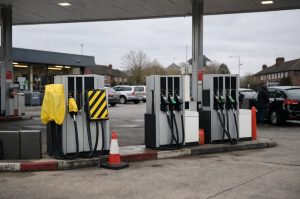
A real petrol shortage at UK pumps would require far more than rising prices, it would need multiple severe disruptions occurring at the same time.
Severe and Prolonged Supply Disruption
A genuine nationwide petrol shortage in the UK would require a sustained and large-scale interruption to global supply. This could involve:
- Long-term closure of the Strait of Hormuz
- Major damage to Gulf export terminals
- Escalation involving multiple oil-producing nations
Domestic Distribution or Refinery Constraints
Even if crude is available globally, domestic refining or distribution issues could create shortages. This includes:
- Refinery outages
- Industrial action in transport networks
- Port shutdowns
Sudden Surge in Consumer Demand
History shows that sudden spikes in demand can empty pumps rapidly. Panic buying magnifies pressure on logistics systems designed for predictable flow, not surges.
The UK has strategic fuel reserves and diversified supply channels, making a prolonged national shortage unlikely unless multiple shocks occur simultaneously.
Could Petrol Really Reach £2 Per Litre in 2026?
Forecasts suggesting petrol could reach £2 per litre in 2026 are based on worst-case scenarios rather than core expectations. While sharp increases are possible under extreme conditions, they are not currently considered the baseline outlook.
Samuel Mather-Holgate noted:
“It’s not unthinkable that we could see up to £2 per litre in the UK by the end of the summer.”
For prices to reach that level, several pressures would likely need to occur simultaneously, including oil rising above $120–$140 per barrel, prolonged Middle East disruption, higher shipping and insurance costs, sterling weakness against the dollar, and a reversal of the 5p fuel duty cut.
Although plausible, £2 per litre would require sustained and severe global instability.
How Would a Petrol Shortage or Price Surge Affect UK Businesses?

Businesses would feel the effects long before a formal shortage declaration.
Transport-heavy sectors such as logistics, construction, trades and last-mile delivery would face immediate margin pressure. In London particularly, small businesses dependent on vans and daily deliveries would experience increased operational costs.
Potential impacts include:
- Higher delivery charges
- Increased product prices passed to consumers
- Reduced profit margins for SMEs
- Inflationary ripple effects
Below is a simplified impact matrix:
| Sector | Impact of 10p Increase | Impact of 50p Increase |
|---|---|---|
| Logistics Firms | Higher fuel bills, minor pricing adjustments | Significant surcharge increases |
| Trades & Construction | Increased job quotes | Reduced competitiveness |
| Retail & Hospitality | Slight price rises | Broader inflationary pressure |
| Commuters | Moderate monthly increase | Substantial cost-of-living strain |
While a temporary spike can be absorbed, sustained high prices could compound existing cost-of-living pressures.
What Signs Should UK Drivers Watch Over the Coming Weeks?
Motorists monitoring whether there will be a petrol shortage in the UK should watch indicators rather than headlines.
Key signals include:
- Sustained Brent crude movement above $80 (£62)
- Confirmed closure or major disruption in the Strait of Hormuz
- OPEC+ failing to offset supply cuts
- Reports of fuel purchase limits at UK forecourts
- Rapid multi-week pump price acceleration
Shipping insurance rates and freight rerouting are also important early-warning indicators. If these factors stabilise, the likelihood of widespread shortages decreases significantly.
So, Is There Going to Be a Petrol Shortage in the UK?
Based on current data, a nationwide petrol shortage in the UK is unlikely in the immediate term, though price increases remain probable.
A more realistic scenario involves gradual rises from around 131–133p per litre toward 140p or higher, with possible short-term spikes if geopolitical tensions escalate. Localised shortages could occur if panic buying disrupts normal distribution patterns.
A sustained national shortage would require severe and prolonged disruption across multiple supply channels at the same time.
For now, the outlook suggests higher fuel costs rather than empty pumps, and drivers are advised to stay informed and avoid reactive purchasing behaviour.
Frequently Asked Questions (FAQs)
How long do petrol shortages usually last in the UK?
When shortages occur, they are often localised and short-lived, typically lasting days rather than weeks. National-level disruptions are rare and usually linked to industrial action or major supply crises.
Can supermarkets run out of fuel before independent stations?
Yes. Supermarket forecourts often experience higher demand due to competitive pricing, meaning they can temporarily run dry faster during periods of panic buying.
How much oil does the UK import from the Middle East?
The UK sources oil globally, including from the North Sea, Norway and international markets. While not wholly dependent on the Middle East, global pricing means disruptions there affect UK pump prices.
What role does OPEC+ play in stabilising prices?
OPEC+ can increase output to offset supply disruptions. However, spare capacity is limited, and geopolitical risks can still drive volatility despite production increases.
Why do petrol prices rise faster than they fall?
Retailers often pass on wholesale increases quickly due to thin margins and competitive pressures. Decreases may be slower as retailers recover previous costs.
Could electric vehicles reduce the risk of fuel shortages?
Over time, increased EV adoption reduces petrol demand, which may lessen vulnerability to global oil shocks. However, the transition remains gradual.
Is it safe to store petrol at home during supply concerns?
Storing petrol at home carries safety and legal considerations. It should only be done within regulated limits and using approved containers to prevent fire risk.