
Is Smoking Haram in Islam? A Detailed Islamic Perspective
 • December 4, 2025

Smoking has long been recognised as a harmful habit, but for Muslims, the question extends beyond its medical dangers and reaches into matters of faith, ethics, and obedience to divine guidance.
As awareness around the physical, financial, and societal consequences of smoking continues to grow, many people seek clarity on whether smoking is considered haram in Islam.
This article provides a comprehensive, structured, and evidence-based exploration of the Islamic perspective on smoking, drawing on established juristic principles, ethical foundations, and scholarly interpretations.
The discussion unfolds in a professional and analytical tone, offering clarity for readers who want to understand how Islamic teachings relate to contemporary issues such as smoking.
What Does “Haram” Mean in Islam and How Is It Determined?

In Islamic jurisprudence, haram refers to anything that is explicitly forbidden by Allah (SWT). The concept originates from the core sources of Islamic law: the Qur’an, Hadith, Ijma (scholarly consensus), and Qiyas (analogy).
Determining whether an action is haram is based not only on textual evidence but also on the overarching goals of Shariah, known as Maqasid al-Shariah, which prioritise the protection of life, health, intellect, wealth, and faith.
Actions considered haram are those that bring clear harm, violate moral boundaries, or obstruct one’s duty to Allah and society. The opposite of haram is halal, meaning permissible. Other classifications include makruh (discouraged), mustahab (recommended), and mubah (permissible but neutral).
To assess whether smoking is haram, one must consider its physical harm, financial implications, and spiritual consequences, all of which are addressed in the Islamic ethical framework.
Is Smoking Considered Haram or Makruh in Contemporary Islamic Scholarship?
Understanding whether smoking is considered haram or makruh requires looking at how Islamic scholarship has evolved from historical interpretations to modern evidence-based rulings.
Historical vs. Contemporary Views
In earlier Islamic discourse, particularly before the detrimental effects of tobacco were fully understood, smoking was often classified as makruh. This meant it was discouraged but not explicitly forbidden.
However, with extensive medical research proving smoking’s destructive impact on health, contemporary scholars across Islamic sects have reached a consensus: smoking is haram.
This conclusion is based on the principles that any act causing self-destruction or harm to others contradicts the objectives of Shariah.
Subcategories in Scholarly Rulings
| Classification | Meaning | Relevance to Smoking |
|---|---|---|
| Haram | Explicitly forbidden | Proven to cause harm |
| Makruh | Discouraged but not sinful | Historical view pre-medical evidence |
| Halal | Permissible | Not applicable |
| Mustahab | Recommended | Quitting smoking |
With contemporary scholarship now firmly grounded in medical science and Shariah principles, the ruling on smoking is clearer than ever, prioritising health and encouraging believers to avoid harmful habits.
What are the Core Islamic Principles That Smoking Violates?

Islamic rulings on harmful behaviours are rooted in well-established principles. In the case of smoking, several critical tenets are compromised:
- Preservation of Life and Health: The Qur’an commands believers not to harm themselves: “Do not kill yourselves, surely Allah is Most Merciful to you” (An-Nisa 4:29).
- Avoiding Harm to Others: Secondhand smoke endangers those nearby, conflicting with the prophetic teaching: “There should be no harm nor reciprocating harm.”
- Prohibition of Wastefulness: Money spent on cigarettes is considered wasteful. The Qur’an advises: “Indeed, the wasteful are brothers of the devils.” (Al-Isra 17:27)
These principles demonstrate that smoking contradicts both physical well-being and moral responsibility in Islam.
Why Is Smoking Considered a Sinful Act in Islam Today?
With the modern understanding of the health risks associated with smoking, it is no longer just discouraged, it is seen as a sinful act due to its extensive consequences:
- Harm to Health: Smoking causes diseases such as cancer, heart disease, and respiratory issues. Islam prohibits self-harm in any form.
- Addiction and Loss of Control: Addiction to nicotine limits a Muslim’s ability to maintain discipline, control desires, and perform religious duties.
- Impact on Worship: The smell and physical effects of smoking can affect prayer, fasting, and participation in communal religious spaces.
- Spiritual Neglect: Choosing to continue smoking despite knowing its harm can be seen as ignoring divine guidance.
These factors elevate smoking from a health concern to a spiritually harmful behaviour, classified under sin in the Islamic context.
Is There Any Mention of Smoking in the Qur’an or Hadith?
While smoking as a product did not exist during the Prophet Muhammad’s time, the Qur’an and Hadith provide universal guidelines that apply to all generations. These general rulings help scholars categorise modern behaviours, such as smoking.
Relevant Qur’anic Verses and Interpretation:
| Verse | Meaning | Application |
|---|---|---|
| Surah Al-Baqarah 2:195 | Do not throw yourselves into destruction. | Prohibits harmful acts like smoking |
| Surah Al-A'raf 7:157 | ... prohibits for them the evil things (Al-Khaba’ith). | Smoking is widely seen as an 'evil thing' |
| Surah An-Nisa 4:29 | Do not kill yourselves... | Includes self-harm from smoking |
These references underline Islam’s preventive stance on behaviours that compromise health and well-being.
How Do Scholars and Fatwas Address the Question: Is Smoking Haram?
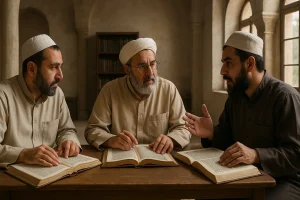
Islamic scholars and major religious councils worldwide have increasingly issued fatwas stating that smoking is haram. Their rulings are based on clear evidence of harm, both to the smoker and to those exposed to second-hand smoke.
Scholars also highlight the financial waste and the spiritual impact of addiction, which contradicts Islamic principles of self-control and responsibility.
Both Sunni and Shia authorities support this position, emphasising that modern medical understanding reinforces the severity of the damage. These rulings often consider not only physical consequences but also broader social and economic effects.
This shift from earlier views reflects Islam’s adaptive approach, applying core Shariah principles to contemporary knowledge and evolving health realities.
How Does Islam View Secondhand Smoke and Its Impact on Others?
Smoking is not just a personal decision in Islam, it becomes an ethical issue when it affects others. The Prophet Muhammad (peace be upon him) placed strong emphasis on respecting the rights of others in shared spaces, especially places of worship.
Secondhand smoke causes serious health risks including asthma, heart disease, and cancer. The act of exposing others to such harm violates Islamic teaching.
Particularly in congregational settings like mosques, the offensive smell and potential harm make smoking even more problematic.
What Role Does Repentance Play in Overcoming the Habit of Smoking?
Islam offers a merciful path to redemption through Tawbah (repentance). For those who have smoked or are struggling with addiction, genuine repentance includes:
- Acknowledging the harm caused by the habit
- Sincerely intending to quit and avoid relapse
- Seeking Allah’s forgiveness with a committed heart
Components of Islamic Repentance:
- Regret over past actions
- Immediate cessation of the sinful act
- Firm resolve never to return to it
Quitting smoking, then, is not merely a health decision but a spiritual transformation, turning away from harm and toward Allah’s mercy.
How Can Muslims Seek Help to Quit Smoking in an Islamic Framework?
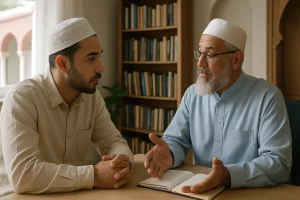
Islam encourages believers to seek both spiritual guidance and practical help when addressing harmful behaviours. Quitting smoking can be challenging, but it is made easier through the support of community and religious resources.
Effective Approaches for Quitting:
- Spiritual Consultation: Engage with scholars or imams who offer religious advice and motivation.
- Health Professionals: Medical guidance can complement religious motivation by addressing addiction from a physical angle.
- Educational Courses: Islamic learning platforms provide resources that strengthen the will to live righteously and healthily.
A faith-driven approach to quitting smoking addresses both the physical dependence and the moral responsibility, making the process holistic and sustainable.
Conclusion
The question “Is smoking haram in Islam?” finds clear answers in the Qur’anic principles, prophetic teachings, and contemporary scholarly consensus. Smoking is harmful to the body, harmful to others, financially wasteful, and spiritually damaging.
Each of these factors independently supports the view that smoking is prohibited in Islam, and together they form an overwhelming case against the habit.
Islam encourages believers to honour the body entrusted to them and to uphold values that benefit both themselves and society.
Quitting smoking therefore becomes not only a health decision but also a spiritual commitment, an act of obedience, self-preservation, and moral responsibility.
Frequently Asked Questions
Is vaping considered haram like smoking?
Vaping also contains harmful substances and addictive chemicals. Since Islamic principles prohibit self-harm, many scholars classify vaping similarly to smoking.
Can someone smoke privately if it doesn’t harm others?
Harming oneself is also prohibited in Islam. Even private smoking violates the principle of preserving health.
Are nicotine patches or gums permissible to use?
These may be allowed when used strictly for quitting smoking, as their purpose is therapeutic rather than recreational.
Is selling cigarettes permissible in Islam?
Selling harmful substances is considered impermissible since it contributes to the harm of others.
Do Muslims have to avoid smoking only during Ramadan?
Smoking is harmful year-round. Abstaining during fasting hours serves as a reminder of the need to quit entirely.
What guidance is given to new Muslims who smoke?
New Muslims are encouraged to take gradual steps toward quitting while strengthening their understanding of Islamic values.
How do Islamic schools address smoking among youth?
Many emphasise moral responsibility, health education, and adherence to Islamic principles to help prevent students from adopting harmful habits.