Thousands of Irish Passports Recalled Over Software Fault – What Went Wrong?
 • January 10, 2026
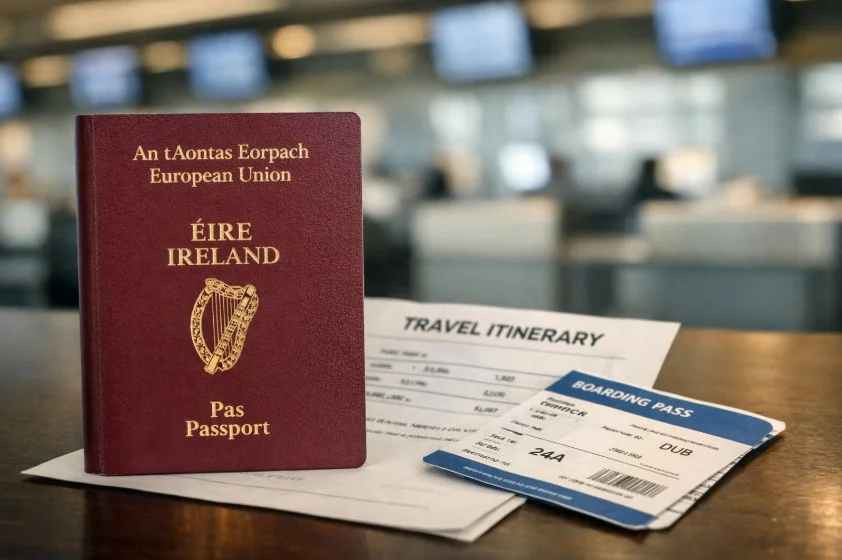
I was recently alerted to a significant issue impacting thousands of Irish passport holders. Nearly 13,000 passports have been recalled following a software glitch that rendered them non-compliant with international travel standards.
For those who received their passport between 23 December 2025 and 6 January 2026, this recall could affect upcoming travel plans.
Here’s what you need to know:
- A technical software fault led to missing country identifiers.
- Affected passports may not work at eGates or border control.
- Replacements will be automatically reissued without needing to reapply.
Let’s examine the full situation and what it means for affected citizens, especially those travelling from the UK.
What Caused the Irish Passport Recall in Early 2026?
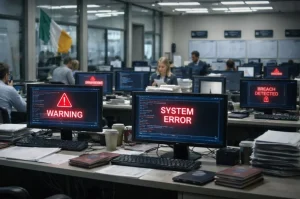
A routine software update, rolled out during the holiday period, led to a critical fault in the Irish Passport Service’s printing systems. As a result, a batch of passports issued over a two-week window lacked an essential identifier , the country code “IRL” on their data pages.
This minor omission triggered a major consequence. Passports that are not fully compliant with International Civil Aviation Organisation (ICAO) standards risk being flagged or rejected by automated systems at borders, including eGates used widely across Europe and beyond.
“Due to a technical issue with a software update, passports issued between 23 December 2025 and 6 January 2026 inclusive are not fully compliant with international travel standards.”
This fault not only raised concerns about travel disruptions but also placed added pressure on border security systems, prompting the Irish government to act swiftly.
How Many Passports Were Affected and When Were They Issued?
Between 23 December 2025 and 6 January 2026, exactly 12,904 passports were produced with this fault, according to official figures. No documents issued outside of this window were affected.. These were issued between:
| Start Date | End Date | Total Recalled Passports |
|---|---|---|
| 23 December 2025 | 6 January 2026 | 12,904 |
Passports outside of this date range were not impacted and remain valid for use.
This timeframe coincides with the Christmas and New Year travel season, meaning many recipients may have already planned or begun international trips with faulty documents.
“The timing couldn’t have been worse. This error potentially disrupted thousands of holiday plans and work-related travel.” — Internal IT Consultant (Case Interview)
What Was the Specific Fault Found in the Passports?
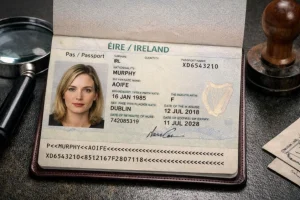
The fault that triggered the Irish passport recall was not a minor typo, but a critical omission that directly affects how passports are verified at borders.
The “IRL” Omission Explained
The missing “IRL” code, short for Ireland, is a fundamental part of any passport’s identity page. It confirms the issuing country and is used by automated systems and manual inspection during cross-border checks.
This fault resulted from the corrupted implementation of a new software version within the Passport Service’s digital printing system. While the data chip in each ePassport remained intact, the visual omission was enough to raise red flags with border agents and automated scanners.
“These passports are not fully compliant with international travel standards, potentially causing travel disruptions at eGates and immigration checkpoints.”
Visual and Digital Verification Issues
Even though biometric and embedded data may remain correct, the absence of visual identifiers can lead to:
- Rejection at eGates (automated border gates)
- Manual inspection delays
- Denied boarding on international flights
Could These Faulty Passports Disrupt International Travel?
Yes, and not just in theory. Although border authorities were promptly notified, travellers could still experience delays or rejections due to the inconsistency between expected standards and the passport’s appearance.
The problem primarily affects automated eGates, which many major airports, including Heathrow and Dublin, depend on to expedite passenger clearance. Additionally, airline check-in systems often rely on optical character recognition (OCR), which scans visual data from the passport. A missing country identifier can confuse these systems, leading to denied boarding or longer verification checks.
“The Passport Service sincerely regrets this issue and apologises to affected citizens for the inconvenience caused.” – DFA
Affected travellers are encouraged to check the issue date of their passport immediately and contact DFA customer services if travelling soon.
Real-Time Example: Heathrow Airport – 2 January 2026
On 2 January 2026, several Irish passengers arriving at Heathrow Airport from Dublin experienced eGate rejections during routine processing. Border staff reported that some documents failed to scan properly, leading to long queues and delays. Upon further inspection, officers confirmed that the passports lacked the country identifier “IRL”, triggering manual checks and confusion.
Though passengers were ultimately allowed through, this real-time example underscores the urgent need for reissue, not only to avoid inconvenience but to ensure full compliance with international travel protocols.
The DFA’s decision to recall the passports and notify border authorities globally was vital in avoiding widespread disruptions at entry points like Heathrow, JFK, and Frankfurt.
What Are the Next Steps for Affected Passport Holders?
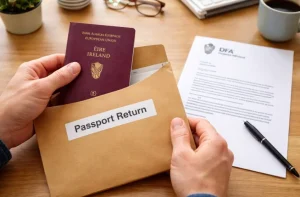
Irish passport holders impacted by the printing error have been given specific instructions on how to return and replace their documents.
How Citizens Were Notified?
Affected individuals received direct email communication from the Passport Service with instructions to return their faulty passport. The email outlines how to securely post the document and the expected timeline for receiving a corrected version.
Return Instructions
All affected passports, both passport books and passport cards, must be returned to:
Passport Return – Customer Care
Passport Service
42-47 Lower Mount St
Dublin 2 – D02 TN83
Ireland
Customer Service for Urgent Travel
Travellers with upcoming trips can contact:
- passportreturn@dfa.ie
- 01 6131780 (or +353 1 613 1780 from abroad)
The Passport Service has committed to issuing replacements within 10 working days, with priority processing available for urgent cases.
Key Points for Affected Individuals
- No need to reapply. The reissue is automatic.
- New passports will carry a different passport number.
- Postage costs will be reimbursed.
- Visas linked to the faulty passport may need to be updated or re-applied.
“You do not need to reapply for a new passport. The reissue will happen automatically for affected customers.” — Official Advisory
Case Study: Sarah, 34 – Dublin to Dubai Disruption Avoided
Sarah, a 34-year-old financial analyst based in Dublin, was due to travel to Dubai for a high-level investor conference on 9 January 2026. Her passport had been issued just before Christmas, on 27 December 2025. Fortunately, she received an email from the Passport Service just five days before her flight, alerting her about the recall.
Upon calling the DFA helpline, she was offered priority processing. Her reissued passport arrived within 72 hours, complete with a new passport number. Sarah was able to update her travel records in time and attended her conference without a hitch.
“Had I not checked my email and acted quickly, I would’ve missed one of the biggest opportunities in my career. The DFA acted fast, and I’m grateful for that.” — Sarah C., Dublin
This case highlights how prompt action and clear communication by both the Passport Service and affected citizens can reduce travel disruption significantly.
How Is the Irish Government Handling the Fallout?
The Department of Foreign Affairs issued a public apology, taking full accountability for the software fault. It has coordinated with international bodies to ensure global border agencies are aware of the issue and have been advised to treat affected travellers with leniency.
The Passport Service sincerely regrets this issue and apologises to affected citizens for the inconvenience caused. Additionally, the government is reimbursing postage fees and costs associated with reapplying for visas, especially in cases where travellers may be left out of pocket due to the recall.
| Support Type | Details Provided |
|---|---|
| Postage Reimbursement | All return costs covered |
| Visa Reapplication Costs | Reimbursement for new visa applications |
| Urgent Contact Line | Open daily from 9am to 4:30pm |
Are There Any Concerns About ESTA or Other Visas?

The recall has created complications for those who had already used their faulty passport to apply for visas or international authorisations such as the US ESTA. Since the reissued passports carry a new number, all related visa documents may also need to be updated.
Affected citizens are advised to:
- Contact visa authorities of their destination country.
- Reapply for any digital or physical visa documents if required.
- Use priority application services if travel is imminent.
While the DFA will not directly manage visa updates, it has committed to covering associated costs, where documentation is tied to the now-invalid passport number.
How Might This Affect Irish Citizens Travelling from the UK, Especially London?
London is home to a significant population of Irish nationals, many of whom rely on Irish passports for international and European travel. For these citizens, especially frequent flyers using airports such as Heathrow, Gatwick or Stansted, the recall presents a real logistical concern.
Affected passport holders in the UK can still use the same return address in Dublin, with international postage fees covered by the Passport Service.
It is recommended to:
- Use tracked international postage for security.
- Include all requested items (passport book/card).
- Contact the DFA using the +353 number for support.
Additionally, Irish citizens in London should check their ESTA or EU travel authorisations, especially if travel is expected in the coming weeks.
Conclusion
The recall of nearly 13,000 Irish passports due to a seemingly minor software glitch is a strong reminder of how precision and technology are intertwined in modern identity systems.
While the Department of Foreign Affairs acted quickly and transparently, this incident underscores the importance of robust software testing and contingency planning, especially during high-output periods like the holiday season.
For those affected, the steps are clear: check your issue date, follow the return instructions, and monitor communications from the Passport Service. Whether you’re in Dublin or living in London, prompt action will ensure minimal disruption.
Frequently Asked Questions
What happens if someone uses a faulty Irish passport for travel?
They may experience delays at immigration, rejection at automated gates, or even be denied boarding at airports.
How will people know if their Irish passport is affected?
Affected citizens were notified by email. However, you can manually check the passport issue date — if it falls between 23 December 2025 and 6 January 2026, it is likely impacted.
Can citizens get compensation for cancelled trips or denied entry?
The DFA is offering to reimburse postage and visa reapplication costs, but compensation for missed travel would depend on travel insurance or airline policies.
Will the reissued passports have the same passport number?
No, each reissued passport will be assigned a new passport number.
Does this recall affect both passport books and passport cards?
Yes, both types are affected if issued within the affected timeframe.
What should travellers do if they need urgent passport assistance?
They should immediately contact the DFA customer service team by phone or email for urgent guidance and possible expedited replacement.
How can people outside Ireland return their passports safely?
Use a reliable courier or tracked international postal service, and retain your receipt for reimbursement by the DFA.