HSBC Banker Train Fare Fraud Exposed: How Former Executive Dodged £5,900 Using Loophole?
 • February 19, 2026

⚖️ HSBC BANKER TRAIN FARE FRAUD – COURT SENTENCE & CASE SUMMARY
💳 Additional Factor: Use of false identities and 50% Jobcentre Plus discount on smartcards
- Primary Keyword: hsbc banker train fare
- Total Avoided: £5,911
- Journeys Affected: 740+
- Rail Operator: Southeastern Railway
- Charge: Fraud by false representation
- Industry Context: UK rail fare evasion costs ~£240m annually
What Happened in the HSBC Banker Train Fare Fraud Case?
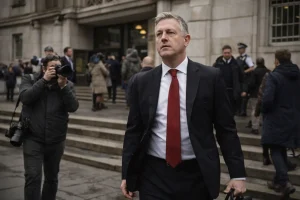
The HSBC banker train fare fraud case centres on a deliberate and repeated manipulation of the UK rail ticketing system. Between October 2023 and September 2024, Joseph Molloy used a method known as “doughnutting” to avoid paying the full cost of his daily commute on Southeastern Railway services.
Instead of purchasing a ticket covering his entire journey, he bought tickets for the outer portions of the route, leaving the middle section unpaid. Despite this gap, he was able to pass through automatic ticket barriers without raising immediate suspicion.
Inner London Crown Court heard that this technique was used at least 740 times over an 11-month period, saving a total of £5,911.
The judge later observed:
“You were in a financial position to pay the fares.”
The case became headline news not only because of the amount involved, but because of Molloy’s professional background and the calculated nature of the scheme.
Who is Joseph Molloy, and What Was His Position at HSBC?
Joseph Molloy was appointed Head of Passive Equity at HSBC Global Asset Management in 2015. After a decade in a senior financial role, he retired last year.
At the time of the offences, he was commuting from his £2 million home in Orpington, south London, travelling via London Bridge to his office in Canary Wharf.
In court, his defence emphasised his previously “distinguished career”, involvement in his church, and role as a supportive father. His barrister stated:
“He was going through a pretty difficult period when he did this. He cannot explain why he did this.”
However, Recorder Alexander Stein described him as a “man of some financial means” and noted that the offending was neither impulsive nor accidental.
The professional context intensified public reaction. This was not a case of financial hardship. It was a case involving a senior executive who had the ability to pay but chose not to.
How Did the “doughnutting” Train Ticket Loophole Actually Work?
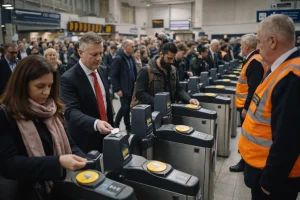
The core of the HSBC banker train fare scheme was a tactic known as “doughnutting” , a term used to describe creating a “hole” in a journey where payment is missing in the middle.
The Structure of a Doughnutting Journey
In simple terms, the method works like this:
- A passenger buys a ticket from Station A to Station B.
- They also buy a ticket from Station C to Station D.
- The actual journey is from Station A to Station D.
- The segment between Station B and Station C remains unpaid.
Because barriers typically validate entry and exit points rather than checking the continuous validity of every segment, the system may not immediately flag the missing middle section.
In Molloy’s case, this meant purchasing tickets that allowed entry and exit through Southeastern’s automatic barriers while avoiding payment for a central part of the commute.
Why Ticket Barriers Failed to Detect the Gap?
Automatic ticket gates primarily verify that a ticket is valid for entry or exit at a specific station. They do not always analyse whether multiple tickets collectively form a legally continuous journey.
This structural weakness is what makes “doughnutting” possible. However, while it may bypass barrier systems, it does not make the journey lawful.
As prosecutors described in court, the fraud was “sophisticated in planning and execution”.
How Much Money Was Avoided and Over What Period Did the Fraud Occur?
The financial and timeline details of the HSBC banker train fare case were central to the prosecution. Below is a summary of the key figures presented in court:
Detail Information
Total avoided fares £5,911
Period of offending October 2023 – September 2024
Number of instances At least 740
Rail operator affected Southeastern Railway
Route Orpington – London Bridge – Canary Whar
The frequency of the offending, more than twice daily across most working days, contributed significantly to the court’s view that this was persistent and deliberate rather than occasional.
Why Was This HSBC Banker Train Fare Case Prosecuted as Fraud by False Representation?
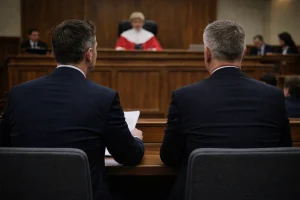
Many commuters might ask: Why wasn’t this treated as simple fare evasion? The legal distinction lies in intent and deception.
Fraud by false representation occurs when someone dishonestly makes a representation, explicitly or implicitly, knowing it to be untrue, with the intent to gain.
By presenting tickets that implied a valid full journey, while knowingly leaving part unpaid, the prosecution argued that Molloy falsely represented that he had covered the required fare.
Recorder Stein stated that:
“An offence of this sophistication warrants a custodial sentence.”
This was not framed as a mistake or misunderstanding. The use of additional measures, such as false identities and discount misuse, reinforced the charge of fraud rather than a regulatory breach.
What Role Did Fake Smartcards and Jobcentre Plus Discounts Play in the Scheme?
Beyond the ticketing gap itself, the HSBC banker train fare case involved additional layers that increased its seriousness.
Use of False Identities and Smart Ticket Uploads
The court heard that Molloy used false names and addresses to obtain two smartcards. Tickets were uploaded onto these cards between October 2023 and September 2024.
Using false personal details indicated premeditation. It also complicates traceability, making the conduct more difficult to detect.
Application of 50% Discounted Fares
In addition to the “doughnutting” technique, he applied a Jobcentre Plus discount, which reduced fares by 50 per cent.
This discount is intended for eligible individuals receiving certain benefits. Applying it while employed as a senior banking executive further undermined any suggestion that the actions were accidental or trivial.
These additional factors contributed to the judge’s conclusion that the offence was “persistent and serious”.
What Sentence Did the Court Impose and Why Was Jail Suspended?

Joseph Molloy pleaded guilty to fraud by false representation at Inner London Crown Court, accepting responsibility for the calculated misuse of the rail ticketing system.
The court imposed:
- 10 months’ imprisonment
- Suspended for 18 months
- 80 hours of approved unpaid work
- £5,000 compensation to Southeastern Railway
- 12-month ban from travelling on Southeastern services
The judge acknowledged that the offence warranted custody, but cited “strong mitigation” as the reason for suspension.
Mitigating factors included:
- Early guilty plea
- Voluntary cessation of offending prior to arrest
- Personal stress and family circumstances
- Previous good character
However, a suspended sentence still carries significant consequences. It remains a custodial sentence that can be activated if further offences occur within the suspension period.
Why Was He Banned From Southeastern Railway and What Does That Ban Mean?
A 12-month ban from Southeastern Railway was included as part of the overall sentence, preventing Molloy from travelling on the operator’s services for one year. This type of restriction is enforceable and can significantly disrupt daily routines, particularly for commuters who rely on a single rail network.
In this case, Southeastern operated the main route between Orpington and central London, making the ban especially impactful. Rail operators have the authority to refuse service following criminal convictions linked to fare fraud or misuse of ticketing systems, meaning the measure acts as both punishment and prevention.
Key implications of the ban include:
- Loss of access to a primary commuting route
- Increased travel costs or alternative transport needs
- A clear accountability message to deter similar behaviour
Overall, the ban reinforces that exploiting transport loopholes can result in losing access to services.
How Does This Case Highlight the Wider Problem of Rail Fare Evasion in the UK?
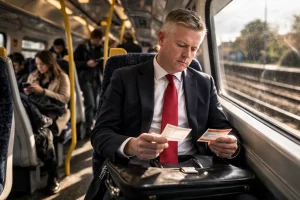
The HSBC banker train fare case sits within a broader industry challenge. According to the Rail Delivery Group, fare evasion costs the UK rail industry approximately £240 million each year.
Below is a contextual comparison:
Issue Estimated Impact
Annual fare evasion losses £240 million
Average commuter annual season ticket (London region) Several thousand pounds
Financial impact per offender (case example) £5,911
While individual cases may appear modest in isolation, aggregated losses significantly affect rail finances.
Operators argue that lost revenue contributes to higher ticket prices for paying passengers. As one industry commentator remarked informally:
“If everyone paid what they owed, fares wouldn’t need to rise as sharply.”
This wider context explains why operators and prosecutors increasingly pursue complex fare evasion cases through criminal courts rather than issuing civil penalties.
Could Digital Ticketing and Gps Tracking Prevent Future Train Fare Loopholes?
Rail companies are now exploring technological solutions to address loopholes like doughnutting.
Emerging measures include:
- GPS-enabled ticketing apps
- Digital barcodes linked to journey data
- Tap-in/tap-out systems similar to Oyster
- Automated anomaly detection on smartcards
East Midlands Railway has begun trialling digital ticketing technology capable of calculating fares based on station entry and exit data.
The aim is to close structural gaps that allow fragmented tickets to be used deceptively.
However, these measures raise separate discussions about data privacy and passenger tracking.
One commuter interviewed outside the court commented:
“It’s surprising the system allowed it in the first place.”
That observation captures the broader debate: responsibility lies both with individuals to act honestly and with systems to reduce exploitation opportunities.
Conclusion
The HSBC banker train fare fraud case illustrates how small, repeated acts can escalate into serious criminal consequences. Over 11 months, a scheme that saved £5,911 resulted in a suspended prison sentence, community service, compensation payments, and a public conviction.
It also highlights structural weaknesses in rail ticketing systems and the growing willingness of prosecutors to pursue complex fare cases through fraud legislation.
For commuters, the message is clear: exploiting loopholes carries risk. For rail operators, the challenge is strengthening systems without compromising passenger trust.
Ultimately, this case is not just about £5,900 in unpaid fares. It is about accountability, deterrence, and the thin line between perceived cleverness and criminal conduct.
Frequently Asked Questions
Can fare evasion result in a criminal record in the UK?
Yes. While minor fare evasion may sometimes be handled through penalty fares or out-of-court settlements, cases involving deliberate deception can lead to criminal charges and a record.
What is the difference between fare evasion and ticketing fraud?
Fare evasion typically involves travelling without a valid ticket. Ticketing fraud involves deliberate deception, such as manipulating ticket combinations or using false details to gain financial advantage.
Are rail companies increasing surveillance to detect loopholes?
Yes. Operators are expanding digital monitoring, smartcard analytics, and exploring GPS-based systems to reduce revenue losses.
Is split-ticketing legal on UK trains?
Yes, when done correctly and transparently. Purchasing multiple tickets for cost savings is legal provided the train stops at the relevant stations and the journey remains continuous and valid.
How do courts determine compensation in railway fraud cases?
Compensation generally reflects financial losses incurred by the operator, though courts may reduce the amount depending on mitigating factors.
What powers do train operators have to ban passengers?
Following criminal convictions, operators may impose travel bans on their services as part of sentencing or contractual enforcement.
Does professional status affect sentencing in fraud cases?
Courts assess factors such as financial means, position of responsibility, and breach of trust when determining seriousness, but sentencing guidelines apply universally.