
FPO on Bank Statement – What Does It Mean and Why Does It Show Up?
 • March 19, 2026
Banking Guide
FPO on Bank Statement – What Does It Mean and Why Does It Show Up?
Understanding FPO transactions can help you manage your UK bank account efficiently and avoid confusion about outgoing payments.
FPO
Faster Payment Out
FPS
Faster Payments Service
Verification
How to Confirm Transactions
FPO Insight
FPO indicates an outgoing payment through the Faster Payments Service, processed within seconds. Understanding this code helps you track transactions accurately and avoid confusion about your outgoing payments.
“FPO is a standard way of showing that money has left your account quickly via Faster Payments. Customers should not be concerned when they see this code.” — UK Banking Official
What Does FPO Mean on a Bank Statement?

FPO stands for Faster Payment Out. Essentially, it is a code used by London banks to indicate that an outgoing payment has been made via the Faster Payments Service (FPS).
Unlike older bank transfer methods such as BACS, which can take several days, FPO transactions are typically processed within seconds, making it easier to track and confirm your payments in real time.
Different banks may display FPO slightly differently on their statements, but the meaning remains consistent. For example, you might see it as FPO, Faster Payment Out, or occasionally paired with a reference number.
According to a Starling Bank spokesperson:
“FPO simply identifies that funds have left your account via the Faster Payments Service. It is not an error or unusual transaction.”
How Can You Identify an FPO Transaction on Your Statement?
Spotting an FPO transaction is usually straightforward once you know what to look for. Knowing the signs can help you quickly confirm whether a payment is authorised or requires further attention.
Key identifiers include:
- Transaction code: Most UK banks will display FPO in the description field.
- Date and amount: FPO payments are shown with the exact time the transaction was processed.
- Reference details: This might include the recipient’s name, account number, or a payment reference provided by the sender.
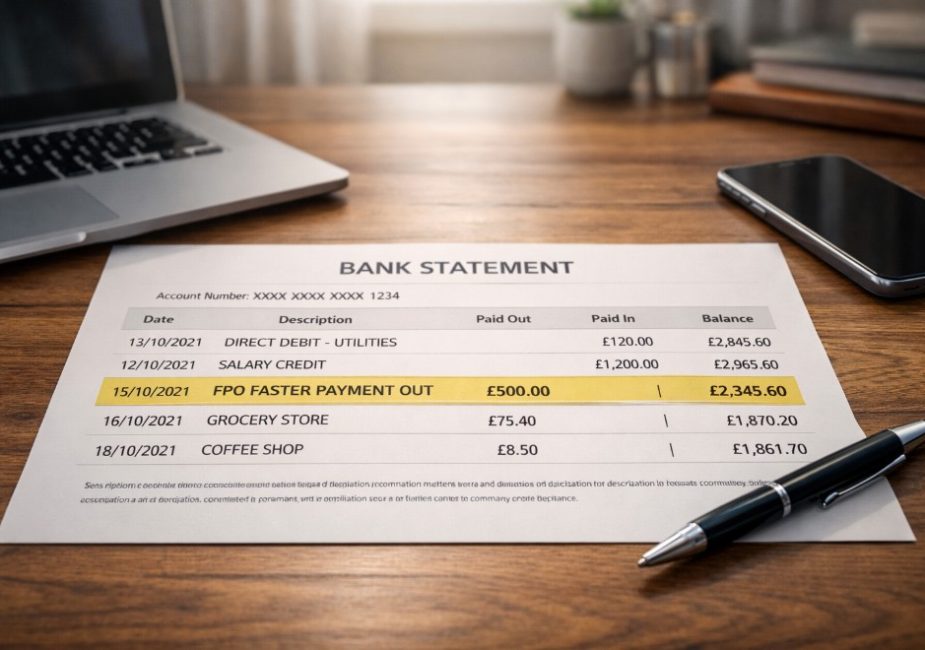
Here’s an example of how an FPO transaction might appear on a typical UK bank statement:
| Date | Description | Amount | Balance |
|---|---|---|---|
| 12/03/2026 | FPO – Rent Payment | £750 | £1,250 |
| 13/03/2026 | Direct Debit – Utilities | £60 | £1,190 |
By recognising the code and cross-referencing with your expected payments, you can quickly identify whether the transaction is authorised.
Why Do FPO Transactions Appear Instantly?

The Faster Payments Service (FPS) is designed to move money between UK bank accounts almost instantly. Unlike traditional bank transfers, which can take two to three business days to process, FPO payments are executed within seconds, including outside of normal business hours, weekends, and bank holidays.
This rapid processing is why FPO transactions appear on your statement immediately after the payment is sent.
A MoneyHelper official explains:
“FPO and other FPS transactions are designed to give customers immediate visibility of outgoing payments. This improves transparency and allows faster reconciliation of accounts, helping individuals and businesses manage cash flow efficiently.”
This system is particularly useful for urgent payments such as rent, bills, or transferring money between accounts, giving both the sender and recipient immediate assurance that the payment has been made.
What Types of Payments Are Usually Marked as FPO?
FPO codes are applied to a variety of outgoing transactions, most commonly those sent through online banking or mobile apps. Typical scenarios include:
- Rent or mortgage payments: Many landlords and letting agencies use FPS for fast processing.
- Utility bills: Gas, electricity, and water providers often receive payments via FPS.
- Online shopping refunds or payments: Retailers may send refunds or receive payments labelled as FPO.
- Transfers between personal accounts: Sending money between your own accounts or to family members.
For instance, if you transfer funds to a friend using your mobile banking app, that outgoing payment may be marked as FPO on your statement.
Real-time Example:
Sarah from Manchester shared her experience after noticing “FPO” on her bank statement following a rent payment. Initially, she was concerned and thought it might be a bank error.
However, after checking with her bank, she learned that FPO simply stands for Faster Payment Out. This clarified that the transaction was a normal bank transfer she had made, and she felt reassured knowing that the payment had reached her landlord immediately.
Can an FPO Transaction Be Unauthorised or Mistaken?

While FPO (Faster Payment Out) is a standard banking code used for legitimate transfers, there are situations where such transactions may appear unauthorised or mistaken.
For example, you might accidentally send money to the wrong recipient due to incorrect account details, or a technical glitch could result in duplicate payments being processed.
In more serious cases, an unfamiliar FPO transaction could indicate potential fraud, especially if someone has gained unauthorised access to your bank account. This is why it’s essential to review your bank statements regularly.
If you notice any transaction you don’t recognise, contact your bank immediately. Using mobile banking alerts and monitoring your account activity can help you quickly detect and prevent unexpected issues.
How Do You Verify an FPO Transaction with Your Bank?
Verifying an FPO transaction is usually simple thanks to online banking and mobile apps. Most banks provide detailed transaction information including reference numbers, recipient details, and the exact time the payment was made.
Steps to verify FPO transactions include:
- Check the reference: Match the payment reference with your intended transaction.
- Review the amount: Ensure the payment amount matches what you intended to send.
- Contact your bank: If the transaction appears suspicious, notify your bank immediately.
Here’s a quick table summarising the verification steps:
| Verification Step | What to Do |
|---|---|
| Check reference | Match payment reference with your intended transaction |
| Review amount | Ensure it matches the intended outgoing payment |
| Contact bank | Call or message your bank if suspicious |
According to Lloyds Bank guidance:
“If you spot a transaction that you don’t recognise, contact your bank immediately. You have the right to dispute unauthorised transactions, and the bank will investigate promptly.”
What Are the Most Common Bank Statement Codes Besides FPO?
Understanding common bank codes can help you make sense of your statements and identify routine versus unusual payments.
Some common codes include:
- DDR – Direct Debit Received: Regular automated payments such as utility bills.
- CHAPS – Clearing House Automated Payment System: For high-value or urgent transfers, often for property purchases.
- BGC – Bank Giro Credit: Commonly used for employer salaries.
- FPS – Faster Payment Service (incoming): Quick receipt of funds.
- FPO – Faster Payment Out: Outgoing payments sent via FPS.
| Code | Meaning | Typical Use |
|---|---|---|
| DDR | Direct Debit Received | Utility bills, subscriptions |
| CHAPS | High-value transfers | Property purchase, business payments |
| BGC | Bank Giro Credit | Employer salaries |
| FPS | Faster Payment In | Receiving funds quickly |
| FPO | Faster Payment Out | Sending money to another account |
By familiarising yourself with these codes, you can quickly determine whether a transaction is routine or needs further attention.
How Should You Respond If You Don’t Recognise an FPO Payment?

If you notice an unfamiliar FPO (Faster Payment Out) transaction on your bank statement, it’s important to act quickly rather than ignore it. Unauthorised payments can escalate if left unchecked, so reviewing the details as soon as possible is essential.
Start by contacting your bank immediately to report the issue and request an investigation. Make sure to keep a record of the transaction, including the date, amount, and any reference details, as this information will help the bank trace the payment more efficiently.
In the London, banks are legally required to investigate unauthorised transactions under the Payment Services Regulations. Taking prompt action increases your chances of recovering any lost funds and protecting your account.
What Tips Can Help You Avoid Confusion with FPO Transactions?
Keeping track of FPO payments can prevent misunderstandings and give you better control over your finances.
Simple strategies make it easier to monitor outgoing transactions:
- Enable transaction alerts via SMS or email
- Keep a personal ledger or note of regular payments
- Review statements weekly to reconcile outgoing and incoming payments
Additional practical tips:
- Set up automated alerts for all outgoing payments through your banking app.
- Label recurring payments clearly in your app, so you immediately know what each transaction represents.
- Check balances regularly to quickly detect discrepancies or unexpected payments.
By incorporating these habits into your routine, you can reduce anxiety about unexpected FPO transactions, avoid unnecessary confusion, and maintain full control over your financial activity.
These practices not only enhance clarity but also strengthen your confidence in managing both personal and business accounts efficiently.
Conclusion
Understanding FPO on a bank statement helps you manage your finances more confidently. These Faster Payment Out transactions are standard in the UK, offering speed and transparency for outgoing payments.
By recognising the code, verifying transactions, and keeping track of your finances, you can ensure your money is where it should be and act promptly if anything seems unusual.
FPO may look confusing at first glance, but once you know its purpose and how it fits into your banking routine, it becomes a simple tool for managing your account efficiently.
Frequently Asked Questions
Can FPO payments be reversed once processed?
Yes, but only under specific circumstances such as errors or fraud. Contact your bank immediately if you believe a payment is unauthorised.
Are all UK banks required to use FPO for Faster Payments?
No, FPO is a labelling convention. All banks use Faster Payments, but codes may vary slightly in description.
How long does it take for an FPO payment to appear for the recipient?
Typically within seconds, though in rare cases, delays may occur due to technical issues.
Is an FPO payment safer than other types of bank transfers?
FPO payments follow the same banking security protocols as other Faster Payments, making them highly secure.
Can businesses schedule FPO payments in advance?
Yes, many UK banks allow businesses to schedule Faster Payments to go out automatically.
Why might an FPO transaction show a different reference on my statement?
The bank or recipient may include additional reference details, or your bank may format it differently internally.
How do recurring FPO payments work for regular bills?
Recurring FPOs are automated Faster Payments set up to go out on a schedule, often for rent, subscriptions, or supplier invoices.