UK Foreign Office Travel Warnings 2026: Which Countries Are on the “Do Not Travel List”?
 • March 4, 2026

🚨 UK FOREIGN OFFICE TRAVEL WARNINGS 2026
Latest Update: The UK Foreign Office (FCDO) has issued travel warnings for several countries due to conflict, terrorism risks and political instability.
📍 Do Not Travel Countries: Afghanistan, Belarus, Burkina Faso, Haiti, Iran, Iraq, Israel, Mali, Niger, Palestine, Russia, South Sudan, Syria, Venezuela and Yemen.
✈️ Travel Advice: Always check the latest FCDO travel advice before travelling and follow guidance from local authorities.
⚠️ Important: Travelling against Foreign Office advice may invalidate travel insurance and limit UK consular support.
- Authority: UK Foreign, Commonwealth & Development Office (FCDO)
- Main Warning: Avoid travel to high-risk countries
- Risks: Conflict, terrorism, political instability
- Traveller Tip: Check GOV.UK travel advice before booking
Why Are Foreign Office Travel Warnings Important for UK Travellers in 2026?
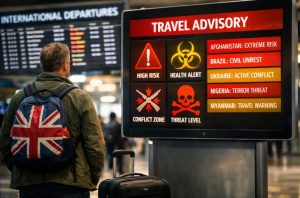
Foreign Office travel warnings help British travellers make safe and informed decisions when planning trips abroad. These warnings are issued when a destination poses serious risks due to conflict, terrorism, civil unrest, health threats, or natural disasters.
The Foreign, Commonwealth & Development Office (FCDO) continuously monitors global developments and provides travel advice for more than 226 countries and territories.
This guidance helps travellers determine whether a destination is safe to visit or if certain regions should be avoided.
In 2026, rising instability in parts of the Middle East, Africa, and Eastern Europe has led to more travel advisories.
Travellers should remember:
- Travel insurance may become invalid if travel goes against official advice.
- Access to British consular support may be limited during emergencies.
An FCDO spokesperson recently emphasised:
“Foreign travel advice is the most reliable source of safety information for British nationals. Travellers should always check our guidance before planning or undertaking any overseas journey.”
Staying informed through official updates helps travellers protect both their safety and travel plans.
What Is the UK Foreign Office and How Does It Issue Travel Advice?
The Foreign, Commonwealth & Development Office (FCDO) is the UK government department responsible for foreign affairs, international relations, and consular support for British nationals abroad.
One of its most important responsibilities is providing travel guidance to help citizens stay safe when travelling internationally.
Foreign Office travel advice is based on information gathered from British embassies, intelligence agencies, international partners, and local authorities. When safety conditions deteriorate in a country, the government updates its official travel guidance accordingly.
These updates can include warnings about:
- Military conflict
- Terrorist threats
- Civil unrest or political instability
- Health emergencies
- Natural disasters
- Legal risks affecting foreign nationals
Officials continuously review global events to determine whether new advisories should be issued.
“Our priority is the safety of British nationals overseas. Travel advice is reviewed constantly and updated whenever risks change,” a UK government official noted in a recent briefing.
Travellers can access these updates through the official GOV.UK travel advice portal, which provides detailed country-by-country safety information.
How Does the UK Government Classify Different Travel Warning Levels?
Not all travel warnings are the same. The UK government categorises risk levels depending on the severity of the threat and the geographical area affected.
FCDO Advisory Categories
The Foreign Office generally uses three primary advisory levels:
| Advisory Level | Meaning | What It Means for Travellers |
|---|---|---|
| Advice Against All Travel | Severe risks such as war, terrorism, or extreme instability | Travel should not be undertaken under any circumstances |
| Advice Against All But Essential Travel | High risks exist but travel may be unavoidable for certain reasons | Only urgent or necessary travel should be considered |
| Regional Restrictions | Risks limited to specific areas within a country | Some regions may remain safe to visit |
These classifications help travellers quickly understand the seriousness of a situation and whether a destination should be avoided entirely.
For example, war-affected countries such as Syria or Yemen fall under the strictest category, while other countries may only have restrictions near specific border regions.
Which Countries Are Currently on the UK Foreign Office “Do Not Travel” List?
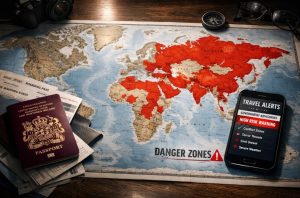
As of 2026, the UK government advises against all travel to several countries due to severe security threats. These destinations are considered extremely dangerous for foreign visitors and are placed on the official “do not travel” list.
Countries with Full “Do Not Travel” Warnings
The following countries currently fall under the strictest FCDO travel advisory:
- Afghanistan
- Belarus
- Burkina Faso
- Haiti
- Iran
- Iraq
- Israel
- Mali
- Niger
- Palestine
- Russia
- South Sudan
- Syria
- Venezuela
- Yemen
These countries face a combination of security threats ranging from armed conflict and terrorism to political instability and detention risks.
For example, the UK government warns that travel to Afghanistan remains extremely dangerous due to ongoing violence and instability. Meanwhile, Iran has been highlighted for the heightened risk of detention for British nationals, particularly dual citizens.
“British nationals in high-risk countries face unpredictable security conditions and limited access to consular assistance,” the FCDO cautions.
Travellers are strongly advised to avoid visiting these destinations until government guidance changes.
Why Has the UK Issued New Foreign Office Travel Warnings Across the Middle East?
Recent geopolitical developments have led to an increase in foreign office travel warnings across the Middle East. Rising tensions between several regional powers have created an unpredictable security environment.
Missile strikes, drone attacks, and military operations have affected several countries, including Iran, Israel, Palestine, Qatar, Kuwait, Bahrain, and the United Arab Emirates. As a result, the FCDO has issued updated safety advice for British nationals travelling to or residing in the region.
Airspace disruptions and flight cancellations have also affected travellers heading to popular destinations such as Dubai and Doha. Airlines have temporarily grounded flights in response to military activity and security concerns.
The UK government has urged British citizens in the region to remain vigilant.
“If you are in an affected area, remain indoors in a secure location and follow instructions from local authorities,” the Foreign Office advised in a recent update.
The rapidly evolving situation means travel guidance may change quickly, making it essential to monitor official updates.
Which Countries Have Partial Travel Restrictions for British Citizens?
While some destinations carry full travel bans, others only have restrictions in specific regions where security risks are higher.
Countries With Regional Travel Warnings
Examples include:
- Egypt: Travel discouraged near the Libya border and North Sinai region.
- Turkey: Areas within 10 km of the Syria border considered unsafe.
- Pakistan: Border regions near Afghanistan and India flagged as high risk.
- Saudi Arabia: Areas close to the Yemen border restricted.
- India: Travel discouraged near the Pakistan border and parts of Jammu and Kashmir.
- Kenya: Northern regions near Somalia carry security warnings.
- Philippines: Western and central Mindanao flagged for safety concerns.
- Ukraine: Most regions considered unsafe due to the ongoing war.
Examples of Regional Risk Areas
| Country | Restricted Region | Main Risk |
|---|---|---|
| Egypt | North Sinai & Libya border | Terrorism and militant activity |
| Turkey | Syria border region | Cross-border conflict |
| Pakistan | Afghanistan border | Terrorism and insurgency |
| Kenya | Somalia border areas | Kidnapping and militant threats |
In many cases, major tourist destinations remain unaffected. For example, holiday resorts in Egypt such as Sharm el-Sheikh remain far from restricted areas.
What Risks Are Driving the Latest Foreign Office Travel Warnings?

Travel warnings are usually issued when a country experiences a sharp increase in security threats. In 2026, several global factors have contributed to the growing number of advisories.
Some of the key risks include:
- Armed conflict and military escalation
- Terrorist attacks or extremist activity
- Political unrest and protests
- Kidnapping or detention risks
- Organised crime
- Natural disasters and infrastructure breakdown
These risks vary significantly depending on the country or region involved.
Common Factors Behind Travel Warnings
| Risk Type | Example Locations | Impact on Travellers |
|---|---|---|
| Armed conflict | Syria, Ukraine, Yemen | Military activity and unsafe travel conditions |
| Terrorism | Sahel region of Africa | Threats of kidnapping or attacks |
| Political instability | Haiti, Venezuela | Civil unrest and government instability |
| Detention risk | Iran, Belarus | Risk of arrest or questioning for foreign nationals |
Understanding these factors helps travellers assess the safety of potential destinations before booking trips.
What Should British Travellers Do Before Visiting Countries with Travel Warnings?
Travellers planning international trips should always check government guidance before departure. This is especially important when visiting destinations where travel warnings exist.
Key Safety Steps Before Travelling
- Check the official FCDO travel advice website.
- Register travel details with the UK government.
- Ensure travel insurance covers the destination.
- Monitor airline updates and flight disruptions.
- Follow guidance from local authorities and embassies.
British nationals travelling in sensitive regions such as the Middle East are often advised to register their presence with the government so they can receive emergency updates.
Countries where registration has been strongly recommended include:
- Bahrain
- Israel
- Kuwait
- Palestine
- Qatar
- United Arab Emirates
This allows the government to provide direct communication during crises or evacuation situations.
What Happens If You Ignore UK Foreign Office Travel Advice?

Travelling against government advice can significantly increase personal risk and may also affect your ability to receive assistance.
One of the most important consequences involves travel insurance. Most insurance providers automatically invalidate policies when travellers visit destinations under “do not travel” warnings.
This means medical expenses, emergency evacuation costs, or lost property claims may not be covered.
Potential Consequences of Ignoring Travel Advice:
In extreme cases, evacuation may become difficult if security conditions deteriorate rapidly.
Where Can Travellers Find the Latest Foreign Office Travel Warnings?
The most reliable source of travel safety information is the official GOV.UK travel advice website. This platform provides real-time updates on every country around the world.
Travellers can search their destination and find detailed guidance on:
- Entry requirements
- Safety and security risks
- Local laws and customs
- Health information
- Emergency contact details
The government also offers email alerts so travellers receive notifications when travel advice changes. Staying informed is particularly important during international crises, when conditions can change within hours.
Conclusion
Foreign Office travel warnings are one of the most important resources available to British travellers. In an increasingly unpredictable world, understanding the risks linked to certain destinations can help prevent serious safety issues and travel disruptions.
In 2026, several countries remain under strict “do not travel” advice, including Afghanistan, Belarus, Haiti, Iran, Russia, South Sudan, Syria, and Yemen due to ongoing conflict or security risks.
Before booking flights or planning overseas trips, travellers should always check official FCDO travel advice. Monitoring updates, registering travel plans, and following government guidance can help ensure safer and more informed journeys abroad.
FAQs About UK Foreign Office Travel
What is the difference between “all travel” and “essential travel only” warnings?
An “all travel” warning strongly advises against visiting a destination, while “essential travel only” allows travel for urgent reasons but indicates serious risks.
How often does the UK Foreign Office update travel advice?
The UK Foreign Office updates travel advice whenever new information becomes available, especially during conflicts or emergencies.
Can airlines still operate flights to countries with travel warnings?
Yes, airlines may still operate flights, but they can suspend routes if security risks increase.
Do dual nationals face higher risks in some countries?
Yes, in some countries like Iran, dual nationals may face greater scrutiny or detention risks.
Is it possible to receive emergency help from the UK government abroad?
British embassies can provide assistance such as emergency travel documents and guidance, though help may be limited in high-risk areas.
Why do some countries only have regional travel restrictions?
Some travel warnings apply only to certain regions because conflicts or security threats are limited to specific areas.
How can British travellers receive emergency alerts while overseas?
Travellers can subscribe to FCDO email alerts or register with the UK government for emergency updates.