
DWP PIP Review Changes in 2026 – What Every UK Claimant Must Know
 • April 7, 2026
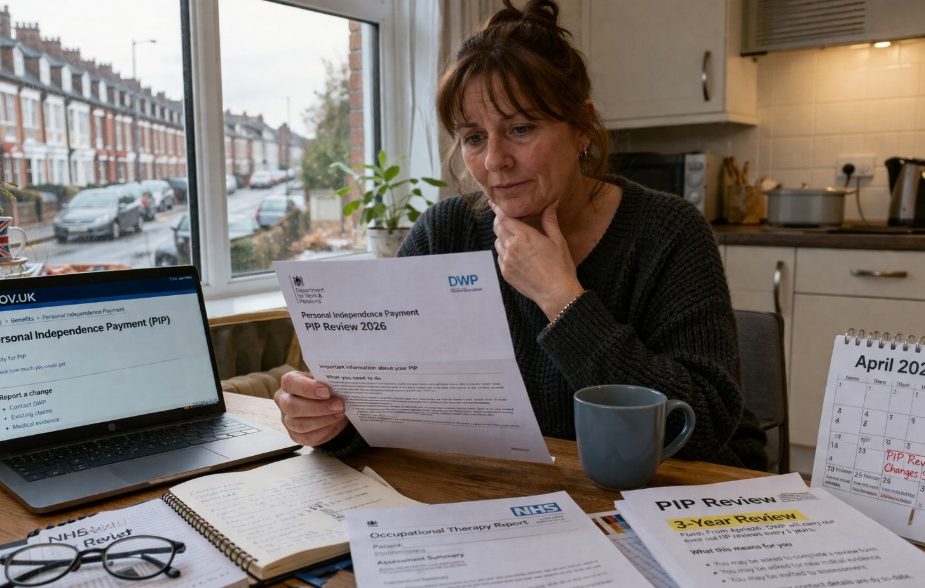
The DWP PIP review changes coming in 2026 mainly affect new Personal Independence Payment claims. From April 2026, most new claimants aged 25 and over are expected to receive a minimum three-year award before their first review, instead of being reassessed after as little as nine months.
If you still qualify at that point, your next award could last up to five years. These changes are designed to reduce the Work Capability Assessment backlog and allow more face-to-face assessments.
However, they are separate from the wider Timms Review of PIP, which is still examining whether the system is fair and fit for the future.
Key points you need to know:
- New PIP awards may last longer from April 2026
- Existing claimants may not automatically be affected
- Face-to-face assessments are likely to increase
- The Timms Review could bring further changes later in 2026
What Are the DWP PIP Review Changes in 2026?
The biggest DWP PIP review changes in 2026 relate to how often new claimants are reassessed. At present, some PIP claimants are reviewed after only nine months, even when their condition is unlikely to improve.
From April 2026, the Department for Work and Pensions plans to extend the period between reviews for most new claimants aged 25 and over. Instead of facing an early PIP reassessment, you are more likely to receive a longer award from the start.
The Government says this change is intended to reduce pressure on the welfare system and create a more practical review process for people with long-term conditions and disabilities.
Pat McFadden, Secretary of State for Work and Pensions, said:
“We’re committed to reforming the welfare system we inherited, which for too long has written off millions as too sick to work.”
Importantly, this is not a complete redesign of PIP. The rules for qualifying, the assessment criteria and the amount you receive remain the same for now.
Who Will Be Affected by the New PIP Review Rules?

The new review rules are expected to apply mainly to fresh PIP claims made from April 2026. If you already receive PIP, your existing award and review date are unlikely to change automatically.
The DWP has said the changes will mainly affect:
- New PIP claimants aged 25 and over
- People receiving a standard reviewable award rather than a short-term or ongoing award
- Claimants whose conditions are expected to remain broadly stable
You may still receive a shorter review period if:
- Your condition is likely to improve
- The DWP needs more evidence before making a longer award
- You are under 25
- Your case involves changing or fluctuating circumstances
That means not every claimant will see the same outcome. The DWP will still decide the length of your award individually.
How Long Will PIP Awards Last Under the 2026 Changes?
Under the current system, many PIP awards are reviewed after one to two years, and some after only nine months. From April 2026, the review period for many new claims is expected to increase significantly.
For most people affected by the new rules:
- Your first PIP award may last at least three years
- If you still qualify after that review, the next award may last up to five years
- You must still report any major change in your condition before the review date
Old PIP Review Periods vs New PIP Review Periods
| Type of Claim | Current Review Period | New Review Period From April 2026 |
|---|---|---|
| New claim for claimant aged 25+ | 9 months to 2 years | Minimum 3 years |
| Second review after continued eligibility | Usually 1 to 3 years | Up to 5 years |
| Claimant with likely improvement | Often under 12 months | May still remain shorter |
| Existing PIP claim | Current review date remains | No automatic change |
A longer review period may provide more stability and less stress, but it does not mean your PIP becomes permanent. You must still tell the DWP if your circumstances change.
Why Is the DWP Changing the PIP Review Process?
The DWP says the current system places too much pressure on healthcare professionals and creates long delays for Work Capability Assessments. By reviewing stable PIP claims less often, the Government hopes to free up staff and reduce waiting times.
The changes are linked to wider welfare reforms, including changes to Universal Credit and the eventual removal of the Work Capability Assessment.
According to the Government, the new approach could save £1.9 billion by 2030/31.
A DWP spokesperson said:
“Reassessments play an important role in taking account of how changes in health conditions and disabilities affect people over time.”
The Government argues that longer awards for stable claimants will allow assessors to focus on people whose circumstances are changing more rapidly.
Will Face-to-Face PIP Assessments Increase in 2026?

Yes. One of the main reasons behind the DWP PIP review changes is to make more room for face-to-face assessments.
Since the pandemic, most PIP assessments have been carried out remotely. However, the Government now wants a much larger proportion to take place in person.
Planned Increase in Face-to-Face Assessments
| Assessment Type | 2024 In-Person Rate | Planned Rate in 2026 |
|---|---|---|
| PIP assessments | 6% | 30% |
| Work Capability Assessments | 13% | 30% |
The DWP believes in-person assessments may provide more accurate evidence in some cases. However, many disability groups have expressed concerns that face-to-face appointments may create extra pressure for claimants with mental health conditions, mobility issues or fluctuating illnesses.
Pat McFadden also stated:
“That is why we are ramping up the number of assessments we do face-to-face and taking action to tackle the inherited backlog of people waiting for a Work Capability Assessment.”
If you are invited to a face-to-face assessment, you can still request reasonable adjustments, including home visits, accessible venues or support during the appointment.
Is the April 2026 Change Different from the Timms Review?
Yes. This is one of the most important points for claimants to understand.
The April 2026 changes are already being introduced and only affect how often some people are reviewed. The Timms Review is separate and may lead to future recommendations, but it has not yet changed the law.
The Timms Review was launched to examine whether PIP still works properly in modern Britain. It is looking at everything from the assessment process to the types of conditions covered.
At the moment:
- Longer review periods are a confirmed operational change
- The Timms Review is still gathering evidence
- No final decision has been made on future PIP eligibility rules
Many headlines have mixed the two issues together, which has created confusion and unnecessary anxiety among claimants.
What Is the Timms Review of Personal Independence Payment?
The Timms Review was launched by the Government to consider whether PIP is fair, accessible and suitable for the future.
It is being led by Sir Stephen Timms, together with disability experts and people with lived experience. The Government says the review is being “co-produced” with disabled people, carers, clinicians and charities.
The call for evidence opened on 19 March 2026 and closes on 28 May 2026.
What the Timms Review Is Looking At?
The Timms Review focuses on whether PIP still reflects modern life and supports disabled people effectively.
It looks at four key areas:
- The purpose of PIP and whether it helps people live independently
- Eligibility and fairness, including current assessment criteria
- The overall claims process, from application to appeals
- How society has changed since PIP began in 2013
The review is also examining challenges faced by people with fluctuating or multiple conditions, the role of additional evidence in assessments, and how technology could improve the system.
What Deadlines and Dates Do Claimants Need to Know?
The official call for evidence opened on 19 March 2026 and will close at 11:59pm on 28 May 2026. Until then, individuals and organisations can send their views directly to the DWP.
You can respond in several ways:
- Online through the official DWP form
- By email
- By post
The Government has also said that evidence can be submitted in a range of accessible formats, including:
- British Sign Language
- Audio
- Braille
- Large print
- Welsh
After the deadline passes, the DWP will review the evidence and produce a summary for the steering group. Further recommendations are expected later in 2026.
What Should You Do If You Receive a PIP Review Letter in 2026?
Receiving a PIP review letter does not automatically mean your benefit will stop. It simply means the DWP wants to check whether you still qualify.
When you receive a review form, you should read it carefully and answer every question honestly. Avoid simply writing “no change”. Instead, explain how your condition affects you day to day.
What Evidence Should You Send with a PIP Review Form?
The strongest evidence usually includes:
- Recent GP or consultant letters
- Prescription records
- Occupational therapy reports
- Care plans
- Evidence of how your condition affects daily living and mobility
- Notes showing how symptoms vary over time
A London-based claimant from Croydon, who receives PIP for multiple sclerosis, recently explained:
“When I filled in my review form, I included a diary showing how my condition changes from day to day. That made it much easier to explain why I still needed support.”
This is especially important if you have a fluctuating condition, because a single appointment may not reflect your everyday reality.
Can Your PIP Be Reduced, Stopped or Challenged After a Review?

Yes. After a review, the DWP can decide to leave your award unchanged, increase it, reduce it or stop it completely.
If you disagree with the decision, you have the right to challenge it.
The first stage is called a mandatory reconsideration. You normally have one month to ask the DWP to look at the decision again. If that is unsuccessful, you can appeal to an independent tribunal.
What Are Your Rights if You Disagree with the DWP Decision?
Many successful appeals are won because claimants provide better evidence or explain their condition more clearly.
You should:
- Request a mandatory reconsideration quickly
- Send any additional evidence you have
- Explain exactly why the decision is wrong
- Consider getting help from Citizens Advice or a welfare adviser
Tribunals are independent of the DWP, and many claimants are successful when they pursue an appeal.
What Should UK Claimants Watch for Next After the DWP PIP Review Changes?
The current changes are only the beginning. Once the Timms Review closes in May 2026, the Government may publish recommendations later in the year.
Future reforms could include changes to how fluctuating conditions are assessed, how evidence is used, and whether technology or artificial intelligence should play a greater role in the review process.
For now, the best thing you can do is stay informed, keep your medical evidence up to date and respond promptly to any DWP letters.
The key message is simple: longer awards may reduce the stress of regular reassessments, but you should still prepare carefully for any future review.
Conclusion
The DWP PIP review changes in 2026 are designed to give many new claimants longer periods between reassessments, with three-year awards becoming the new standard for many people aged 25 and over.
However, these changes are separate from the wider Timms Review, which could bring further reforms later.
While longer awards may provide more certainty, you should still keep evidence up to date, report changes in circumstances and be ready to challenge any decision that seems unfair.
FAQs About DWP PIP Review Changes
Will existing PIP claimants automatically receive a three-year award?
No. The April 2026 changes mainly apply to new PIP claims. If you already receive PIP, your current review date is likely to stay the same unless the DWP changes it later.
Do longer PIP awards mean my benefit cannot be stopped?
No. A longer award only means you will be reviewed less often. The DWP can still reduce or stop your PIP if you no longer meet the criteria.
Is the Timms Review changing PIP rules right now?
No. The Timms Review is still gathering evidence and has not yet changed any official PIP rules.
Will everyone have to attend a face-to-face assessment in 2026?
No. Although the number of in-person assessments is expected to rise, many assessments may still be carried out by telephone or video.
What happens if my condition gets worse before my review date?
You should tell the DWP as soon as possible if your condition changes significantly. Your award may be reviewed earlier if your needs increase.
How can I respond to the Timms Review?
You can respond online, by post or by email before 28 May 2026. The Government is accepting evidence from claimants, carers and organisations.
Can I appeal if the DWP reduces my PIP after a review?
Yes. You can first request a mandatory reconsideration and then appeal to an independent tribunal if necessary.