DWP 2026 State Pension Increase – How Much More Will You Receive?
 • December 19, 2025

The UK Government’s Department for Work and Pensions (DWP) has confirmed a rise in the State Pension in April 2026. This increase, supported by the Triple Lock system, will provide a meaningful boost to both the New State Pension and the Basic State Pension.
Many pensioners are asking how much more they will receive and whether this change could affect taxes or eligibility for other benefits.
In this article, we explain what the 2026 State Pension changes mean, how the increases are calculated, and clarify key details, helping pensioners plan their finances with confidence.
Why Is the State Pension Increasing in April 2026?

The increase is being made under the Triple Lock mechanism, a safeguard designed to ensure that the State Pension keeps up with the cost of living and average income levels.
Introduced in 2010, the Triple Lock promises that each April, the State Pension will rise by the highest of the following:
- Consumer Price Index (CPI) inflation in September
- Average earnings growth (measured May to July of the previous year)
- A fixed rate of 2.5%
For 2026, average earnings growth between May and July 2025 came in at 4.8%, making it the highest among the three indicators. This figure therefore became the deciding factor for the 2026/27 pension increase.
This mechanism ensures that pensioners’ incomes retain their purchasing power and rise in line with the broader economy. The Triple Lock plays a central role in long-term pension sustainability and fairness, particularly during periods of economic volatility.
What Is Changing with the State Pension in 2026?
As a result of the 4.8% increase, both the New State Pension and the Basic (Old) State Pension will rise from April 2026. The new rates are as follows:
Updated State Pension Rates for 2026
| Type of State Pension | Weekly Rate (2025) | Weekly Rate (2026) | Annual Amount (2026) |
|---|---|---|---|
| New State Pension | £230.25 | £241.30 | £12,547.60 |
| Basic State Pension | £176.45 | £184.90 | £9,614.80 |
The New State Pension applies to those who reached pension age on or after 6 April 2016, while the Basic State Pension applies to those who reached pension age before that date.
It’s important to note that these are maximum rates. Not all recipients receive the full amount, as entitlement depends on each individual’s National Insurance contribution record.
How Much Will Pensioners Actually Receive Weekly and Annually?

To give a clearer picture of the changes, here is a side-by-side comparison of the old and new rates for 2026:
Year-on-Year Pension Comparison:
| Pension Type | 2025 Weekly | 2026 Weekly | Increase (£) | Annual Increase |
|---|---|---|---|---|
| New State Pension | £230.25 | £241.30 | £11.05 | £574.60 |
| Basic State Pension | £176.45 | £184.90 | £8.45 | £439.40 |
For many pensioners, this increase offers welcome relief amid rising utility bills, food prices, and general inflation. However, the precise amount received will depend on factors like NI contributions, any overlapping benefits, and whether the individual has chosen to defer their pension.
Those with partial contribution records may receive proportionately lower payments, while individuals entitled to Pension Credit or other benefits could see a more complex calculation.
Who Will Get the Full State Pension in 2026?
Eligibility for the full State Pension is not just about age, it’s heavily dependent on your National Insurance (NI) contribution record and the date you were born.
As of 2026, there are also changes underway regarding when individuals can actually claim their pension, with the State Pension age gradually rising from 66 to 67, and eventually to 68 in the future.
Understanding Eligibility Requirements
To receive the full New State Pension, you must have 35 qualifying years of NI contributions. For the Basic State Pension, applicable to those who reached pension age before 6 April 2016, 30 qualifying years are usually required.
However, many individuals receive less than the full amount if they have gaps in their contribution history. Additional elements such as deferring your pension, or being eligible for Additional State Pension, can also affect the final payment received.
Changes to State Pension Age: 66 to 67
Starting from April 2026, the State Pension age will gradually increase from 66 to 67. This will impact those born between 6 April 1960 and 5 April 1977.
Here is the schedule of when different age groups will reach their State Pension eligibility:
Increase in State Pension Age from 66 to 67:
| Date of Birth | State Pension Age Reached |
|---|---|
| 6 April 1960 – 5 May 1960 | 66 years and 1 month |
| 6 May 1960 – 5 June 1960 | 66 years and 2 months |
| 6 June 1960 – 5 July 1960 | 66 years and 3 months |
| 6 July 1960 – 5 August 1960 | 66 years and 4 months |
| 6 August 1960 – 5 September 1960 | 66 years and 5 months |
| 6 September 1960 – 5 October 1960 | 66 years and 6 months |
| 6 October 1960 – 5 November 1960 | 66 years and 7 months |
| 6 November 1960 – 5 December 1960 | 66 years and 8 months |
| 6 December 1960 – 5 January 1961 | 66 years and 9 months |
| 6 January 1961 – 5 February 1961 | 66 years and 10 months |
| 6 February 1961 – 5 March 1961 | 66 years and 11 months |
| 6 March 1961 – 5 April 1977 | 67 years |
Note: Individuals born after 5 April 1969 but before 6 April 1977 were already set to retire at age 67 under existing legislation.
For example, someone born on 31 July 1960 will reach pension age at 66 years and 4 months, which falls on 30 November 2026. Similarly, someone born on 31 January 1961 will reach their pension age of 66 years and 10 months on 30 November 2027.
Changes to State Pension Age: 67 to 68
Looking further ahead, the State Pension age is also scheduled to rise from 67 to 68 between 2044 and 2046.
While this is part of existing law, there may be adjustments following ongoing Government reviews, which are conducted at least every five years to assess life expectancy and other key factors. Here’s the planned schedule based on current legislation:
Increase in State Pension Age from 67 to 68:
| Date of Birth | State Pension Age Reached |
|---|---|
| 6 April 1977 – 5 May 1977 | 6 May 2044 |
| 6 May 1977 – 5 June 1977 | 6 July 2044 |
| 6 June 1977 – 5 July 1977 | 6 September 2044 |
| 6 July 1977 – 5 August 1977 | 6 November 2044 |
| 6 August 1977 – 5 September 1977 | 6 January 2045 |
| 6 September 1977 – 5 October 1977 | 6 March 2045 |
| 6 October 1977 – 5 November 1977 | 6 May 2045 |
| 6 November 1977 – 5 December 1977 | 6 July 2045 |
| 6 December 1977 – 5 January 1978 | 6 September 2045 |
| 6 January 1978 – 5 February 1978 | 6 November 2045 |
| 6 February 1978 – 5 March 1978 | 6 January 2046 |
| 6 March 1978 – 5 April 1978 | 6 March 2046 |
| 6 April 1978 onwards | On 68th birthday |
While there have been discussions about accelerating the timetable, the Government has not yet legislated for such changes. These tables, therefore, reflect the most accurate publicly available schedule under current law.
Are the Headlines About £750 Per Week State Pension True?

You may have seen headlines claiming that pensioners could receive up to £750 per week from April 2026. While attention-grabbing, these figures are often misleading or exaggerated for most people.
Such higher amounts usually refer to combined income from multiple sources, including private or workplace pensions, individuals who deferred their State Pension for several years, or recipients with significant Additional State Pension or Pension Credit top-ups.
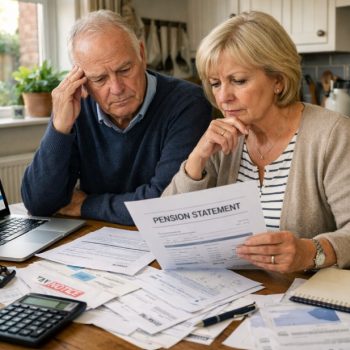
The actual maximum New State Pension for 2026 is £241.30 per week, far lower than some headlines suggest. These inflated figures often assume ideal scenarios or combine various pension components, which do not reflect the average pensioner’s situation. It’s important to check your personal pension statement to know your true entitlement.
Will the 2026 Pension Increase Push More Pensioners Into Paying Tax?

The New State Pension annual total of £12,547.60 in 2026 comes very close to the personal allowance threshold of £12,570. This means many pensioners are only £22.40 below the point where they would begin paying income tax.
Tax Implications to Consider:
- No tax is due if your only income is the State Pension and it remains below £12,570
- Any additional income, even small amounts from savings or investments, could trigger a tax obligation
- The Government has pledged to exempt pensioners with only State Pension income from Self Assessment requirements, using Simple Assessment instead
- From 2027/28, if the Triple Lock continues and the State Pension surpasses the personal allowance, more retirees could face taxation for the first time
This emerging tax crossover highlights the importance of monitoring all sources of retirement income, especially as personal allowance thresholds have been frozen in recent fiscal policies.
What About Pension Credit and Other Related Benefits?
The April 2026 increase will also impact means-tested benefits like Pension Credit, which provides additional income support to low-income pensioners.
Key Benefits Updates
- Pension Credit’s standard minimum guarantee will increase by 4.8%, helping align with the new State Pension levels
- Helps bridge the gap for those with lower pension entitlements
- Recipients may also gain access to:
- Free NHS dental care
- Housing Benefit
- Cold Weather Payments
- Reduced Council Tax bills
- Free TV Licence for over-75s (for those receiving Pension Credit)
If you’re unsure whether you qualify, it’s advisable to check online or contact a local advice centre. Many pensioners who are eligible for Pension Credit don’t claim it, potentially missing out on hundreds of pounds annually.
How Do These Changes Reflect the Government’s Long-Term Pension Policy?

The 4.8% increase highlights the Government’s ongoing commitment to the Triple Lock, a policy designed to protect pensions from losing value, even during economic fluctuations.
For the Labour Government, maintaining the Triple Lock and shielding pensioners from complex tax changes aligns with promises to support vulnerable retirees.
However, experts have raised questions about long-term fairness. As State Pension income approaches or exceeds tax thresholds, those without private pensions remain exempt, while savers with additional pensions could face taxation on similar total income.
This raises debates about intergenerational equity and fairness between pensioners and working-age taxpayers. While the 2026 increase is welcomed, future reforms may be needed to keep the system fair and sustainable.
What Can Pensioners Do to Prepare for These Changes?
With April 2026 approaching, pensioners and soon-to-be retirees can take proactive steps to ensure they’re ready for the upcoming changes.
Practical Steps to Prepare:
- Check your forecast: Use the State Pension forecast tool to confirm your projected payments
- Fill NI gaps: Consider making voluntary NI contributions to increase your entitlement
- Understand tax exposure: Track all income sources, especially if they might push you over the £12,570 threshold
- Review benefit entitlements: See if you’re eligible for Pension Credit or other support schemes
- Defer strategically: Delaying your pension could increase future payments
- Seek guidance: Services like Pension Wise and financial advisers can provide tailored support
Preparation is key, not just for maximising your entitlement, but also for avoiding unexpected tax bills or benefit losses.
Conclusion
The DWP 2026 State Pension increase is a significant moment for UK pensioners. Driven by 4.8% earnings growth and the continued support of the Triple Lock, this change means real money in the pockets of over 13 million people.
While the rise offers welcome relief amid economic uncertainty, it also brings complexity, particularly around tax thresholds, benefit eligibility, and long-term policy impacts. For some, the increase may bring them closer to taxation for the first time; for others, it may simply mean greater financial security.
What’s clear is that the 2026 changes are not just numbers, they reflect broader themes of fairness, sustainability, and political commitment. Pensioners should stay informed, review their records, and plan ahead to make the most of this evolving landscape.
Frequently Asked Questions
How can I find out my exact State Pension amount for 2026?
Individuals can check their forecast using the official GOV.UK State Pension forecast tool, which considers your personal National Insurance record and deferral choices.
Will the 2026 pension rise affect other means-tested benefits?
Yes, it may impact eligibility for means-tested benefits like Pension Credit or Council Tax Support, depending on your overall income level after the increase.
Can pensioners living abroad benefit from the 2026 State Pension increase?
This depends on the country they reside in. Increases may not apply if the country doesn’t have a social security agreement with the UK.
What happens if I haven’t paid enough National Insurance?
You may not receive the full amount of the State Pension. However, you can often make voluntary contributions to fill gaps in your record.
When will the 2026 pension changes officially take effect?
The new rates will come into force in April 2026, following confirmation in the November 2025 Ministerial Statement.